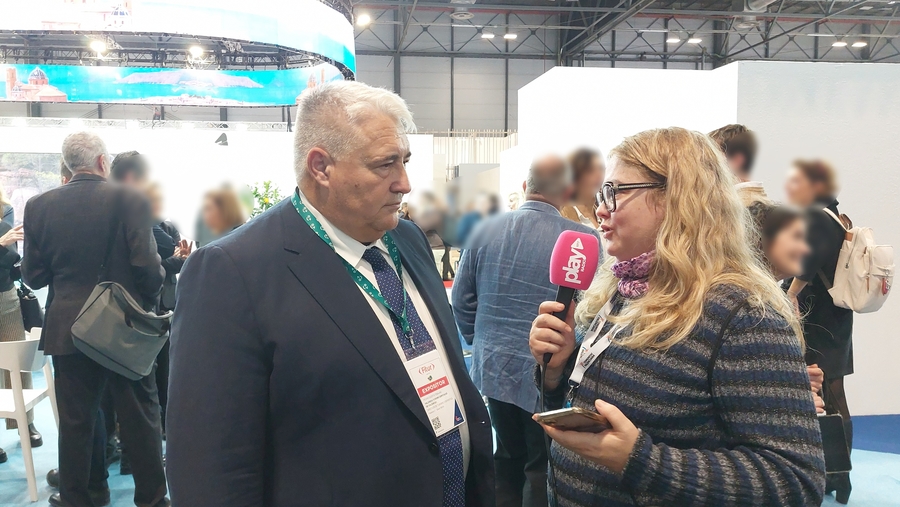
The Provincial Council of Valencia, through its Tourism Department, has granted a direct subsidy of 15,000 euros to the Cultural Association "The Way of the Holy Grail."
VALENCIA, SPAIN, December 24, 2025 /24-7PressRelease/ -- "This is with the aim of consolidating and promoting this route as a strategic cultural and tourist resource, as well as positioning as many Valencian municipalities as possible within the European Cultural Route "The Way of the Holy Grail, Route of Knowledge, Path of Peace. "
The aid has been granted by Presidential Decree No. 13616, dated November 7, 2025, within the framework of file 109/25/STU, in accordance with the provisions of the Annex of Nominative Subsidies of the General Budget of the Provincial Council of Valencia for the year 2025, and in accordance with the current regulations on subsidies, transparency and good governance.
The Deputy for Tourism of the Provincial Council of Valencia, Mr. Pedro Cuesta, has highlighted the importance of supporting initiatives that, like The Way of the Holy Grail, connect heritage, identity, European culture and sustainable tourism development, promoting territorial cohesion and the external projection of the province.
The Cultural Association El Camino del Santo Grial has expressly accepted the grant awarded, committing to comply with all the conditions established in the grant decree, especially those relating to institutional publicity, transparency, execution of the subsidized actions and technical and economic justification of the expenses.
The funded actions are mainly focused on promotion, communication and dissemination activities, as well as the territorial consolidation of the route, reinforcing the presence of Valencian municipalities in a cultural route of European scope that articulates history, scientific research, spirituality and cultural tourism.
FUTURE ADVANTAGES FOR THE PROVINCE OF VALENCIA
The Holy Grail Way as a strategic opportunity for territorial development
The passage of the Holy Grail Way through the province of Valencia represents a structural opportunity for the future, with positive medium and long-term impacts in different areas:
1. International positioning of Valencia as a European cultural destination
Valencia is positioned as the epicentre and culmination of the route, as its Cathedral houses the Holy Chalice, venerated as the Holy Grail. This unique status makes the province a singular point of reference worldwide, reinforcing its international visibility within European cultural networks.
2. Territorial structuring and cohesion between municipalities
The Camino forms a continuous axis connecting valleys, orchards, the coast, and the metropolitan area, integrating municipalities large and small into a shared cultural narrative. This structure fosters inter-municipal cooperation and territorial balance.
3. Diversification and deseasonalization of tourism
The itinerary promotes a model of cultural, spiritual and regenerative tourism, complementary to traditional tourism, which attracts visitors throughout the year and generates sustained flows beyond the high seasons.
4. Enhancement of tangible and intangible heritage
Throughout the provincial route, historical, religious, landscape and ethnographic heritage resources are activated , from the Palancia valley to the orchard and the coast, promoting their conservation, interpretation and transmission to future generations.
5. Local economic development and cultural economy
The Camino fosters the creation of opportunities linked to the local cultural and tourist economy: accommodation, restaurants, cultural guides, local products, crafts, educational activities and cultural events.
6. Strengthening European values of peace, knowledge and cultural dialogue
As a European Cultural Route, The Way of the Holy Grail promotes shared values such as peace, hospitality, the search for knowledge and intercultural understanding, aligning itself with European cultural policies and sustainable development goals.
7. Future projection in European and international networks
The consolidation of the Valencian section strengthens the candidacy and development of the Holy Grail Route within the Council of Europe's Cultural Routes Programme, opening new opportunities for institutional, academic and tourism cooperation on an international scale.
INSTITUTIONAL COMMITMENT
The Provincial Council of Valencia and the Cultural Association El Camino del Santo Grial reaffirm, through this collaboration, their commitment to transparency, good management of public resources and the promotion of a sustainable cultural development model, based on respect for heritage, local identity and cooperation between territories.
The subsidy will be subject to a single payment, after justification of the correct execution of the actions and the expenses made, in accordance with the deadlines and requirements established in the applicable regulations.
MUNICIPALITIES ON THE ROAD OF THE HOLY GRAIL
Province of Valencia
1. Algimia de Alfara
The gateway to the Holy Grail Route in the province of Valencia, starting from Castellón and passing through the Palancia Valley. It is notable for its Moorish-era hydraulic heritage, the parish church of San Juan Bautista, and its surrounding traditional orchards. It actively participates in cultural events and pilgrimage routes to Sagunto.
2. Torres Torres
A municipality of great scenic and archaeological value in the middle Palancia valley. It preserves the remains of its medieval castle and Arab baths, historically linked to the passage of travelers and pilgrims. Its natural surroundings make it an ideal location for cultural and regenerative tourism experiences.
3. Algar de Palancia
A transitional enclave between the mountains and the plains of Camp de Morvedre. The Camino runs through its riverine and agricultural surroundings, highlighting heritage elements such as the parish church of San Jaime, traditional washhouses and old mills.
4. Albalat dels Naranjos
A historic town on the way to the coast, surrounded by orange groves and traditional rural architecture. It is notable for its castle and medieval tower. It actively collaborates on regional signage projects and, together with the Provincial Council of Valencia, has published the official pilgrimage credentials for the Way of the Holy Grail.
5. Estivella
This emblematic town on the route in the province of Valencia boasts official signage for the Holy Grail Way and hosts regular cultural activities related to the pilgrimage. It is situated in the natural surroundings of the Garbí and the Sierra Calderona mountain ranges, and features notable heritage sites such as the Church of San Juanes.
6. Sagunto
A key historical and heritage hub on the Camino de Santiago. The route passes through its old town, the Roman theater, the archaeological museum, the castle, and the medieval Jewish quarter. Sagunto symbolically links the Holy Grail with the Roman and Jewish heritage of the Mediterranean, with the Hermitage of the Blood standing out for its connection to the Holy Chalice of Valencia Cathedral.
7. Port of Sagunto
The coastal extension of the Camino and a symbolic opening to the Mediterranean Sea. A space for cultural dissemination with tourist potential, connected to the Ojos Negros Greenway and the network of Camino de Santiago routes. The Marjal dels Moros offers pilgrims their first glimpse of the Mediterranean after descending from Aragon, in a wetland of high ecological value.
8. Puçol
Puçol is a municipality located along the historical corridor between Sagunto and El Puig. It boasts significant religious heritage and a protected environment in the Marjal dels Moros wetlands. In 1959, during the great commemorative pilgrimage of the Holy Grail, the returning convoy passed through Puçol, an event recorded in local photographs and documents.
9. El Puig de Santa Maria
The Royal Monastery of Santa María del Puig, a National Monument and Site of Cultural Interest, is a spiritual center of the coastal section of the Camino de Santiago and an essential stop on the route. It is traditionally believed that the Holy Chalice was displayed or stayed overnight in El Puig during its journey to Valencia, reinforcing its symbolic and spiritual significance.
10. The Town of Farnals
This coastal municipality acts as a link between El Puig and the agricultural towns north of Valencia. It offers services, a coastal environment, and historical heritage such as its medieval tower.
11. Massamagrell
Home to the Cultural Association "The Way of the Holy Grail." A pioneering municipality in organizing the Way's Cultural Week and promoting the European route. It boasts signage, regular exhibitions, and annual cultural events, demonstrating a strong institutional commitment to the project.
12.Emperador
The smallest municipality on the Holy Grail Way and one of the most active in promoting it. It stands out for its handcrafted route signage, promoted by the Housewives of Emperador, and for its pilgrim welcome center in the municipal gymnasium.
13. Albalat dels Sorells
A characteristic section of traditional Valencian farmland. It preserves towers, historic farmhouses, and agricultural landscape. It collaborates on signage and heritage education initiatives related to the Camino de Santiago.
14. Meliana
A town located between the northern agricultural plains and the capital. The Way of the Holy Grail runs alongside the Vía Churra and the metropolitan bike path. It is notable for its heritage of farmhouses, Nolla mosaics, and traditional architecture. In November 2025, its religious heritage was officially marked with a "rajola" (a type of paving stone) for the Way of the Holy Grail.
15. Almàssera
A farming municipality in the northern metropolitan area of Valencia. It forms part of the route towards Tavernes Blanques, with an agricultural environment and industrial heritage linked to traditional farmhouses.
16.Tavernes Blanques
A town bordering the city of Valencia. It represents the urban area before entering the capital, integrating peri-urban farmland and local religious heritage.
17. Alboraya
The last major municipality before entering Valencia. A coastal-market stretch of high scenic and cultural value. Known for its orchards, hermitages, and traditions, such as the Miracle of Els Peixets, and for its symbolic connection to regenerative gastronomic experiences associated with the Camino.
18. Valencia – Cathedral of the Holy Chalice
The culmination and final destination of the Holy Grail Way. The Chapel of the Holy Chalice in the Cathedral houses the relic venerated as one of the oldest in Christianity. Valencia stands as the spiritual, cultural, and institutional epicentre of the route, hosting international events and serving as a global reference point for the Holy Grail.
Report by Will McCarthy
'24/7 Valencia' magazine
---
Press release service and press release distribution provided by https://www.24-7pressrelease.com