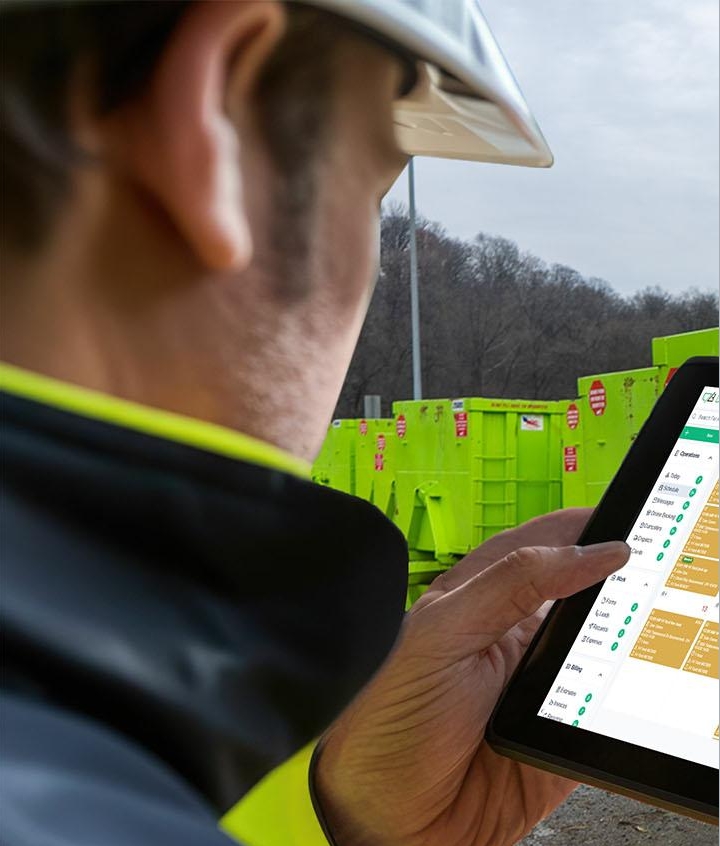
The waste management sector has long been characterized by early mornings, heavy diesel trucks, and a gritty determination to get the job done. For decades, it was an industry largely untouched by the rapid technological advancements transforming other business sectors. However, the landscape is shifting dramatically. At the forefront of this digital revolution is a fascinating story of rapid growth, operational bottlenecks, and a massive technological pivot. This is the story of how a local hauling operation scaled to a seven-figure revenue run rate in just three years, only to discover that the tools needed to sustain that growth simply did not exist. Facing a logistical nightmare born of their own success, the founders did what true entrepreneurs do: they built the solution themselves. Today, we are exploring the evolution from a wildly successful local dumpster company to the creation of a specialized Software as a Service (SaaS) product that is fundamentally changing how independent fleet owners operate across the nation.
The Breaking Point of Rapid Expansion
When Todd Atkinson launched his Ohio-based enterprise, Pack Mule Dumpsters, the initial goal was straightforward: provide reliable, on-time roll-off container rentals to local contractors and homeowners. By applying rigorous military precision to a historically chaotic industry, the company experienced explosive growth. Within thirty-six months, the operation expanded to encompass over eighty roll-off dumpsters, rapidly crossing the coveted million-dollar revenue mark.
However, scaling a logistics-heavy business at that velocity comes with a massive hidden cost. The physical labor of hauling the waste was entirely manageable, but the internal administrative operations began to fracture under the sheer weight of the daily transaction volume. The traditional methods of managing a hauling business—relying heavily on massive dry-erase whiteboards, overflowing filing cabinets, and frantic group text messages—were actively destroying the company's profit margins. When you manage five dumpsters, a visual board works perfectly. When you manage eighty dumpsters spread across multiple counties, a single smudge on that whiteboard can result in a lost twenty-yard container or a missed commercial delivery. This phenomenon, often referred to in the industry as the "complexity wall," creates a massive barrier for local haulers trying to scale. They simply reach a point where their human infrastructure cannot handle any more moving parts without things falling through the cracks. The dispatch office quickly transforms into a war room of reactive problem-solving rather than a hub of proactive logistics.
Bridging the Gap Between Heavy Steel and Cloud Computing
Realizing that the physical whiteboard was a massive liability, the company began a desperate search for technological help. The initial assumption was that a robust, off-the-shelf software program could instantly solve their dispatching and inventory tracking woes. However, they quickly discovered a glaring gap in the market. The software industry was flooded with generic field service applications designed primarily for plumbers, electricians, or residential HVAC technicians.
These generic tools were completely inadequate for the highly specific nuances of waste management. They could not process or track landfill weight tickets. They did not understand the logistical difference between a live-load and a standard swap. Most importantly, they had absolutely no mechanism for tracking a massive physical asset that is dropped off at a property and left behind for weeks at a time. Trying to force a standard calendar application to manage complex heavy-duty logistics was an exercise in utter frustration. It became abundantly clear that to truly scale without losing their sanity, they needed a digital nervous system designed exclusively for the roll-off sector. This frustrating lack of industry-specific tools sparked a massive technological pivot. Instead of trying to force a square peg into a round hole, the decision was made to build the perfect tool from scratch, leading directly to the development of Bin Boss Dumpster Software. This innovative platform was engineered to act as a highly specialized service, intimately understanding the unique daily language and operational hurdles of the hauling sector.
Engineered From the Trenches, Built for the Industry
What separates a successful SaaS product from a mediocre one is often the lived experience of its creators. Because this new platform was born out of the painful, expensive growing pains of a rapidly scaling hauling company, every single feature represents a real-world problem effectively solved in the field. The software was not designed by tech developers guessing at what a waste management company might need; it was coded by industry veterans who intimately know the smell of a landfill and the panic of a Friday afternoon dispatch board.
One of the core innovations introduced by this software is real-time algorithmic route density. Inefficient routing is a silent killer of profit margins in the hauling industry. When dispatchers rely purely on instinct to plan the day, trucks end up crisscrossing the city, sitting in heavy traffic, and driving empty for miles—a costly phenomenon known as deadheading. The new platform tackles this by utilizing advanced algorithms to sequence drop-offs, pickups, and landfill runs in the most geographically efficient order possible.
Furthermore, the software completely overhauled how inventory is managed. A roll-off container is a dedicated, revenue-generating financial asset. When a customer rents a bin for a one-week demolition project but keeps it for three weeks because the office forgot to schedule a final pickup, the company actively hemorrhages money. The platform introduced a digital map that shows owners exactly where every single piece of their inventory is located at any given second, maximizing the turnover rate of the entire fleet.
Automating the Financial and Communicative Lifeline
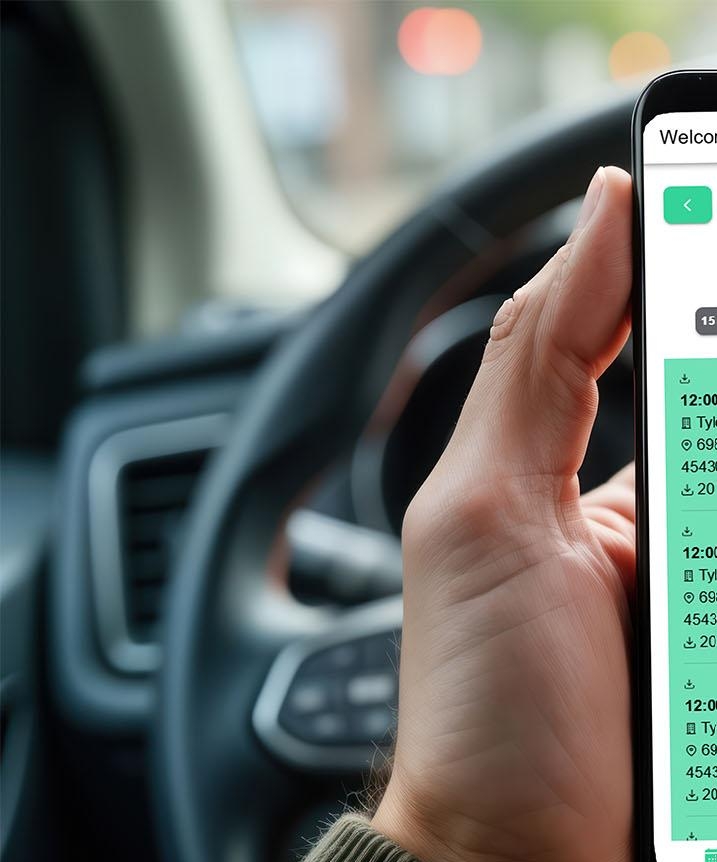
Beyond just moving steel boxes, a massive hurdle for the rapidly scaling seven-figure company was managing the constant influx of customer communication and the vital flow of cash. In a high-volume service business, dispatchers can easily spend half of their day fielding phone calls from contractors asking for an estimated time of arrival. This constant barrage of interruptions prevents the team from focusing on strategic growth. The SaaS platform addressed this by building relentless automation directly into the workflow. The software can trigger automated text messages or emails the very moment a driver is dispatched. When a customer receives a notification that their bin is en route, complete with an estimated time of arrival, the incoming phone calls practically disappear, creating a highly professional, seamless experience.
Equally important was the overhaul of the billing cycle. Cash flow is the oxygen of any growing business. When managing a rapidly expanding fleet, manually calculating tonnage overages based on landfill weight tickets, deciphering messy handwritten driver notes, and creating individual invoices takes hours of tedious labor. It also leads to inevitable human errors. The new digital platform was engineered to instantly generate an invoice the second a driver marks a job as complete on their mobile device. Speeding up this invoicing process ensures that capital flows back into the business much faster, allowing owners to confidently purchase more trucks and heavily dominate their local service territory.
Democratizing Operational Efficiency for Local Haulers
The transition from operating a highly successful local hauling company to developing a specialized SaaS product has broader implications for the entire waste management sector. Historically, massive national conglomerates held a distinct advantage over independent operators simply because they had the massive capital required to build proprietary logistical software. They could afford to optimize their routes and track their massive fleets, while local haulers were left relying on pen and paper.
By packaging their hard-earned operational blueprint into a deployable digital service, the creators have essentially leveled the playing field. Local and regional haulers can now access enterprise-level logistical sophistication for a predictable monthly subscription fee. They do not have to suffer through years of chaotic dispatching, continuously lost inventory, and severe administrative burnout to build a highly successful company. By strategically leveraging Bin Boss Dumpster Software, independent fleet owners can plug their businesses into a fully optimized, battle-tested system. This democratization of technology empowers smaller operators to compete fiercely on efficiency, customer service, and sheer operational agility rather than just raw financial capital. It allows them to reclaim their weekends from tedious invoicing tasks and refocus their energy on securing massive commercial contracts.
The Future of Waste Management Technology
The narrative that the dumpster rental industry is resistant to technological innovation is rapidly becoming a total myth. The incredible journey from launching a local hauling company with a single truck to establishing a nationwide software platform proves that the sector is thoroughly ripe for disruption. As cities grow and the demand for efficient waste removal increases, the companies that thrive will be those that embrace cloud-based automation.
The future of the heavy hauling industry undeniably belongs to operators who treat their dispatch offices with the same level of care and investment as their physical trucks. We are witnessing a fundamental shift from manual labor to intelligent, data-driven management. By automating the most tedious and error-prone aspects of the business—such as schedule generation, customer notifications, and invoice creation—software allows human workforces to handle a significantly higher volume of work. This transition is not merely a passing trend; it is the new baseline for survival and sustainable growth in a highly competitive market.
The Bottom Line: From Local Hauler to Tech Innovator
The evolution from a seven-figure local dumpster enterprise to a nationwide software provider is a powerful testament to the necessity of innovation. When traditional methods fail under the pressure of rapid growth, true industry leaders build entirely new systems. By transforming real-world logistical headaches into a streamlined, cloud-based SaaS product, this journey has provided independent hauling operators with the ultimate competitive advantage. The days of lost inventory, chaotic dispatching, and administrative burnout are numbered. As the waste management industry continues to modernize, the integration of specialized operational software stands as the most critical investment an owner can make to secure their company's profitable future.
Media Contact
Company Name: Bin Boss Software LLC
Email: Send Email
Country: United States
Website: https://mybinboss.com/