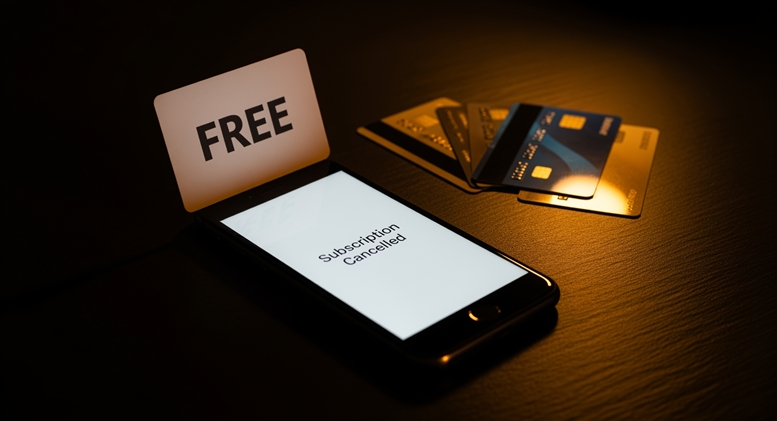
The subscription purge has begun. The average U.S. household went from 4.1 paid subscriptions to 2.8 in 2025, a drop of nearly one-third in twelve months, according to a Self Financial survey reported by Vice. The headline from Vice captured the mood: "The Subscription Era Is Over. The Purge Has Begun in America."
Consumers are not canceling because they ran out of money. They are canceling because they ran out of patience. Subscription fatigue is the growing consumer tendency to cancel recurring digital services due to accumulated cost, redundancy, or perceived low value. Forty-one percent say they experience it directly. A CivicScience survey of 4,800 U.S. consumers in late 2025 found that 42% had cancelled at least one subscription in the past six months, with more than half citing "declining perceived value relative to the subscription fee." Deloitte's 2025 Digital Media Trends survey put the figure at 47% for streaming services alone. The average American adult spends $91 per month on subscriptions (CNET, 2024), and 93% report greater awareness of that spending in the past year (Recurly, 2025).
What happens when companies ignore this
The backlash is showing up where it hurts companies most: retention numbers.
Research from ChurnAnalyzer breaks the gap into specifics:
|
Conversion type |
60-day churn rate |
6-month retention |
|
Forced converters (auto-billed after trial) |
~45% churn |
Low |
|
Committed converters (chose to upgrade) |
~70% less likely to churn |
High |
Converting users through friction keeps them for weeks. Converting them through a product they chose keeps them much longer.
A freemium model is a pricing structure where a product's core features are permanently free, with optional paid tiers for advanced functionality. When one SaaS company switched from a trial model to freemium, monthly churn dropped from 4.2% to 3.1%, according to a CloudMetrics case study. That single percentage point compounds over twelve months.
Rob Walling, author of The SaaS Playbook, notes that only 17% of SaaS products maintain a freemium tier. But the ones that do tend to generate outsized revenue relative to their category. Giving something away for free builds a user base large enough that even a small conversion rate produces substantial recurring revenue.
Free can scale
The numbers back this up.
|
Company |
Annual revenue |
Free tier users |
Growth model |
|
Canva |
$3.5B ARR (2025) |
260M monthly active |
Unlimited free designs, paid for teams/premium |
|
Figma |
$1B+ run rate (pre-acquisition) |
Unlimited free files for individuals |
Free personal use, paid at org level |
|
Slack |
80% of paid workspaces from free teams |
Millions of free workspaces |
Free teams convert to enterprise accounts |
|
Notion |
Enterprise contracts ($100K-$1M+) |
Generous free personal tier |
Community virality into enterprise deals |
Sources: Aakash Gupta (product growth analyst) for Canva; company reporting for Slack; public reporting for Figma and Notion.
Canva reported $3.5 billion in annual recurring revenue in 2025 with 260 million monthly active users, according to product growth analyst Aakash Gupta. Growth exceeded 40% year over year. Free users can create unlimited designs and export finished work. The paid tiers exist for teams and premium assets.
Figma took a different path to the same place. It offered unlimited files for individual users at no cost. Designers used it at home, brought it to work, and their employers became enterprise accounts. Before its acquisition bid, Figma had crossed $1 billion in annual revenue.
At Slack, 80% of paid workspaces originated as free teams by 2025, according to company reporting. One employee would adopt it, then a team, then the whole organization would start paying for administrative controls. The free tier did not cannibalize revenue. It was the pipeline.
Notion reached six- and seven-figure enterprise contracts through a similar mechanism, but starting from the bottom. Individual users recommended it to colleagues and built shared templates. The company monetized at the organizational level what had spread at the personal level.
What these companies share is a willingness to let people use the product without paying, sometimes for years, on the theory that good software sells itself. None of them needed expiring trials to generate revenue.
One industry where the trap still runs
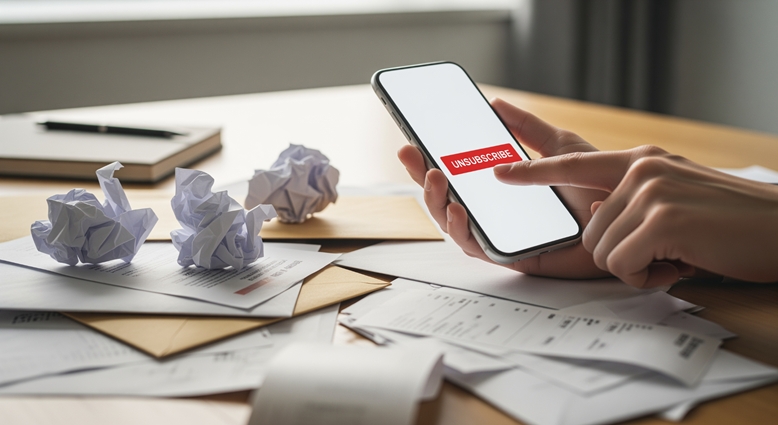
For an industry built on convenience, there's a remarkably inconvenient catch: trial codes don't last.
The QR code market, valued at $13 billion and projected to reach $33 billion by 2031 (Mordor Intelligence), is one sector where the subscription trap model remains standard practice. Most QR code platforms offer a free trial of 7 to 14 days. During that window, businesses create dynamic QR codes. A dynamic QR code is a code that routes scans through a platform's servers rather than encoding a fixed URL, allowing the destination to be edited and tracked after printing, but also giving the platform control over whether the code works. Businesses print these codes on packaging, signage, and marketing materials. When the trial expires, the codes stop resolving. The printed materials become waste.
Some platforms are open about it. Scanova, one of the larger QR code generators, states on its own website: "You will need an ongoing subscription to prevent QR codes from deactivating once the free trial ends." Unlike a streaming service a consumer can replace in five minutes, a QR code printed on 10,000 product labels cannot be swapped without reprinting. The platform knows this. The user finds out after the fact.
Not every company in the space operates this way. Platforms like FreeQR have built their model around permanent free tiers where dynamic QR codes stay active whether the user upgrades or not. No credit card required, no deactivation deadline. The bet is the same one Canva and Figma made: if the free product works, some users will pay for more on their own terms.
Legislators are responding
California's Automatic Renewal Law, updated in July 2025, now requires companies to send annual reminders before auto-renewing subscriptions. Minnesota's updated subscription law, effective January 2025, prohibits "save" offers during the cancellation process, the retention screens designed to make quitting harder than signing up.
Enforcement actions are landing. In October 2025, 33 states reached a $4.8 million settlement with TFG Holding over allegations of enrolling consumers in subscriptions without clear consent.
The backlash has reached physical products, too. CarBuzz reported that drivers have begun hacking their own vehicles to unlock features that manufacturers locked behind monthly subscription paywalls: heated seats, performance modes, navigation, in cars the drivers already own.
Where this goes
The subscription model is not dying. Plenty of services justify recurring payments through continuous value. What is dying is the version that depends on inertia and cancellation friction rather than a product worth renewing.
Consumers have already voted. A third of household subscriptions disappeared in a single year. Regulators in multiple states have written new rules. And a handful of companies have shown that a genuinely free starting point does not destroy revenue. It builds the kind of user base that pays voluntarily.
The companies still running trial traps are not competing against free alternatives. They are competing against consumers who have learned to cancel first and evaluate later.
Media Contact
Company Name: Freeqr
Contact Person: Media Relations
Email: Send Email
Country: United States
Website: https://freeqr.com