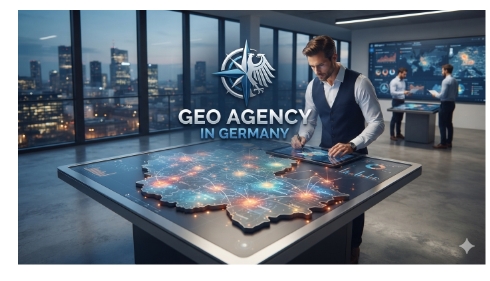
In an era dominated by big data, businesses worldwide are constantly searching for innovative ways to convert raw information into actionable strategies. While traditional analytics provide a solid foundation of 'what' is happening within a market, they often leave a critical question unanswered: 'Where' is it happening? This is where the concept of Global Economic Optimization and Geomarketing (GEO) comes into play. By blending geographical data with corporate business intelligence, companies are transforming how they approach market expansion, customer acquisition, and localized branding. At the forefront of this digital transformation is the specialized expertise of a GEO-Agency in Germany bridging the gap between location intelligence and sustainable business growth.
Understanding the Power of GEO in Today's Market:
Geomarketing, or GEO, is far more than just plotting points on a digital map. It is a highly sophisticated discipline that analyzes demographic data, consumer purchasing power, regional sales trends, and competitor density through a geographical lens. When a business understands the spatial dynamics of its target market, it can optimize supply chains, target advertising campaigns with surgical precision, and select retail or office locations that guarantee high foot traffic and maximum return on investment (ROI).
For decades, companies relied on broad national or state-level data to make critical decisions. However, modern consumer behavior is hyper-local. A strategy that achieves phenomenal success in one neighborhood might completely fail in another just a few kilometers away due to subtle shifts in demographics, income levels, or cultural preferences. Utilizing GEO frameworks allows organizations to visualize these micro-markets, minimizing risks and uncovering hidden opportunities that standard spreadsheets fail to reveal.
The Strategic Role of a Specialized Agency:
Implementing a robust geomarketing framework requires deep technical expertise, access to specialized spatial databases, and advanced software capable of processing complex geographical layers. For enterprises looking to penetrate European markets, partnering with an experienced GEO-Agency in Germany has become a strategic necessity. Germany, as Europe’s largest economy, possesses a highly fragmented consumer landscape with significant regional economic variations between the north, south, east, and west.
A dedicated agency helps businesses navigate these regional nuances by developing custom geographic models. Whether it is a logistics company trying to optimize its delivery network across Bavaria, or a digital brand trying to launch a hyper-targeted localized mobile ad campaign in Berlin, a localized GEO agency provides the precise data layers required for success. These agencies utilize advanced Geographic Information Systems (GIS) to overlay corporate sales data with public demographic records, creating clear, visual heat maps that guide executive decision-making.
Key Benefits of Incorporating GEO Into Corporate Strategy
When businesses collaborate with top-tier spatial data consultants, they unlock several competitive advantages that directly impact their bottom line:
Optimized Location Planning: Opening a new branch, warehouse, or retail outlet involves massive capital expenditure. GEO analysis ensures that new locations are chosen based on empirical data—such as proximity to the core target audience, ease of access, and lack of intense competitor clusters.
Precision Advertising and Marketing Spend
Instead of launching broad, expensive advertising campaigns that reach irrelevant audiences, GEO enables hyper-local targeting. Digital ads can be served exclusively to individuals within specific postal codes or geofenced perimeters, significantly reducing cost-per-acquisition (CPA).
Enhanced Sales Territory Management:
For B2B enterprises and companies with field sales teams, dividing territories fairly and efficiently is always a challenge. Geomarketing structures sales boundaries based on actual market potential and workload rather than arbitrary geometric shapes on a map, boosting sales team productivity.
Risk Mitigation: Entering a new country or region is inherently risky. Advanced geographical modeling simulates various market scenarios, allowing executives to forecast demand and assess competitor strength before committing financial resources.
The Future of Spatial Intelligence: AI and Real-Time GEO Data
As we look toward the future, the field of GEO is evolving at an unprecedented pace, driven by artificial intelligence (AI) and the proliferation of real-time mobile data. Modern geomarketing is shifting from static, historical data analysis to dynamic, predictive modeling.
Tomorrow's market leaders will not just look at where their customers were last year; they will predict where their customers will be tomorrow afternoon By integrating machine learning algorithms with real-time location data, businesses can dynamically adjust their digital storefronts, local promotions, and supply chain distributions on the fly.
In a highly competitive corporate environment, location is no longer just a physical address—it is a vital stream of business intelligence. Organizations that choose to ignore the spatial dimension of their data risk falling behind competitors who operate with absolute geographic clarity. By aligning with a professional GEO-Agency in Germany forward-thinking brands are securing the precise insights, localized data layers, and strategic mapping tools necessary to dominate the European economic landscape.
Media Contact
Company Name: Timo Specht
Contact Person: Media Relations Team
Email: Send Email
City: Berlin
Country: Germany
Website: https://timospecht.de/