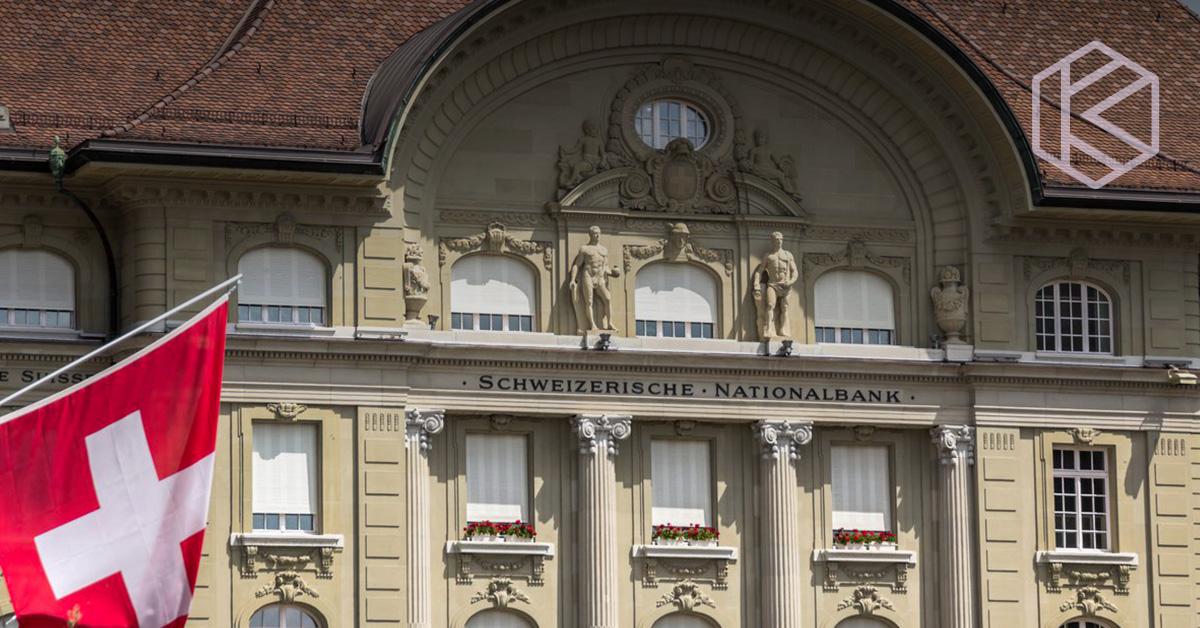
SINGAPORE, SG / ACCESS Newswire / September 29, 2026 / The Swiss National Bank (SNB) holds its policy rate at zero on 24 September while raising inflation forecasts across its three-year horizon. The quarterly assessment widens the gap with the European Central Bank and the Federal Reserve, both of which have tightened over recent months. Singapore-based Kinzey Capital Management Pte. Ltd. reads the decision through its cost to different pools of capital, from operating cash to long-duration holdings.
The revised projections put average inflation at 0.7% for 2026, up from a 0.6% forecast three months earlier. Forecasts for each of the two following years are revised up to 0.8%. On a zero-rate assumption, the SNB expects inflation to stay within its zero to 2% price stability range across the horizon. It also forecasts a further rise in inflation in the fourth quarter, followed by a decline through next year as energy inflation eases.
Energy accounts for most of the near-term pressure, with Swiss consumer prices up 0.8% year-on-year in the latest monthly reading against 0.4% a month earlier. Petroleum product prices sit 25.2% above their level a year earlier, and goods inflation turns positive for the first time in more than two years. Chairman Martin Schlegel attributes most of the rise since the previous assessment to energy, while the SNB's upward revision also reflects a weaker franc, above-forecast second-quarter global growth and elevated inflation abroad. Vice Chairman Antoine Martin judges that inflation is likely to stay elevated for some time, even as policymakers call the rise in medium-term pressure slight.
The SNB names the widening rate differential as the primary explanation for the franc's recent decline. With the ECB deposit rate at 2.5% as of last week, the spread over the Swiss rate reaches 250 basis points, and Schlegel acknowledges that relatively low rates make the franc less attractive than the euro and the dollar. The currency loses roughly 3% on a trade-weighted basis over the three months between assessments and sits at its weakest level against the dollar in around 16 months. The central bank softens its language on foreign exchange operations, signalling less need to sustain franc strength. Analysts at Union Bancaire Privée add that the franc's still-elevated valuation is unlikely to hold if the risk of a wider regional conflict over Gaza recedes.
Cash held at a zero policy rate earns nothing in nominal terms and, with inflation at 0.8% year-on-year, loses a similar share of its real value over a year. The Director of Private Clients at Kinzey Capital Management Pte. Ltd., David Nilson, frames the policy gap as a cost that lands differently on each portfolio. The rate decision, Nilson argues, "is the same for every investor", but what it costs "depends on what the capital has to do and when it may be called on". A reserve that must stay accessible bears the resulting loss as a cost of liquidity, whereas capital with a longer call date is not bound by the same constraint.
Income portfolios face a similar problem, because a fixed coupon keeps its nominal value while its purchasing power erodes. On an illustrative basis, a bond portfolio yielding 2% a year against inflation of 2.5% a year returns roughly negative 0.5% a year in real terms. Nilson treats real rather than nominal returns as the relevant test for income set against spending, noting that "a coupon that never moves can still buy less every year".
Market pricing departs from the SNB's conditional path, which assumes an unchanged policy rate across the forecast horizon. Traders see close to even odds of an increase at the next quarterly assessment and a probability above 90% that tightening begins by early next year. They place the policy rate at 0.75% or higher by this time next year.
Long-duration capital has the clearest exposure to the normalisation path traders now price, since duration magnifies a holding's sensitivity to each step higher in rates. That exposure weighs differently on a family account with staggered withdrawals and a foundation with fixed annual spending, each bound by its own obligation. Kinzey Capital Management reads the widening gap through the obligation each book carries, and Nilson describes the SNB's rate path as "one input into that reading, not the whole of it".
Kinzey Capital Management, on the Record
Kinzey Capital Management manages discretionary multi-asset portfolios out of Singapore for private individuals, businesses, families and foundations, combining shares, bonds, funds and cash in a single book. Every portfolio is calibrated to the task its capital must perform, the moment it may be drawn and the breadth of outcomes it can absorb, with instruments selected to match. Growth Portfolios, Income and Withdrawals, Corporate Reserves and Joint and Family Accounts remain in place while the underlying obligation endures, whereas Concentrated Shareholdings and Second-Opinion Reviews run as single engagements built around existing positions.
Reporting across every mandate measures each portfolio against the duty it was assigned. The registered entity, Kinzey Capital Management Pte. Ltd., holds UEN 202105652G. Further information is available at https://kinzey.com, and Chloe Lim handles press enquiries at c.lim@kinzey.com.
SOURCE: Kinzey Capital Management
View the original press release on ACCESS Newswire