March 20, 2026
Introduction
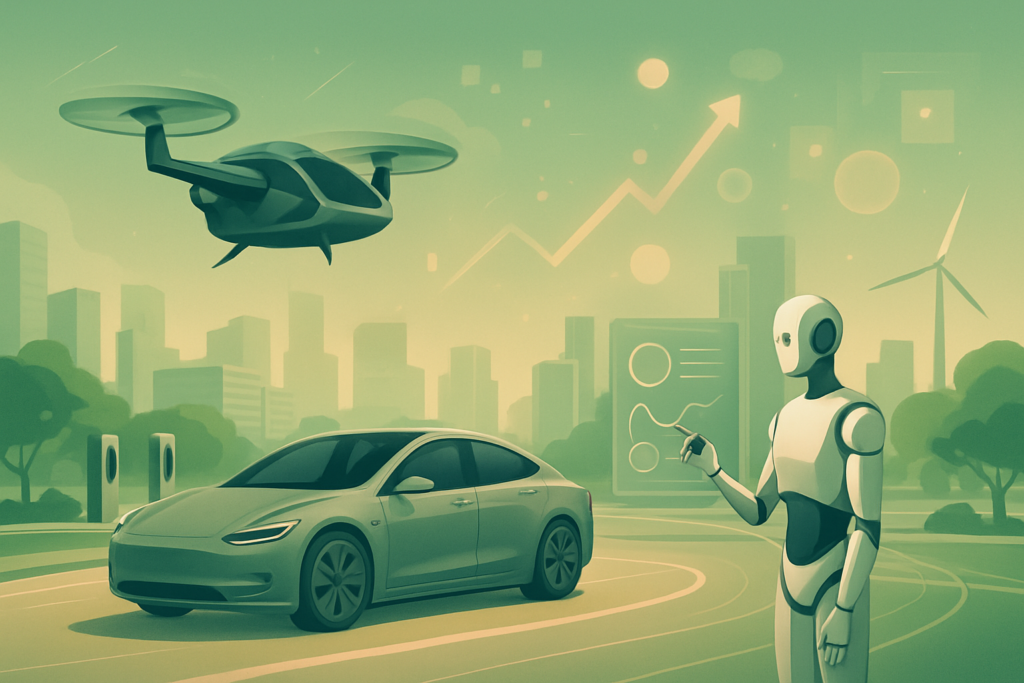
In the rapidly evolving landscape of global mobility, few companies have undergone a transformation as profound as XPeng Inc. (NYSE: XPEV; HKEX: 9868). Once regarded simply as one of the "three musketeers" of Chinese electric vehicle (EV) startups alongside NIO and Li Auto, XPeng has spent the mid-2020s pivotally repositioning itself. By March 2026, the Guangzhou-based firm is no longer just an automaker; it has emerged as a "Physical AI" powerhouse. With a product portfolio that now spans mass-market EVs, luxury smart sedans, modular flying cars, and humanoid robotics, XPeng is at the center of a high-stakes bet that software, not hardware, will define the next decade of transportation.
Historical Background
Founded in 2014 by He Xiaopeng, Xia Heng, and He Tao, XPeng (Xiaopeng Motors) was born from the vision of merging internet-sector agility with automotive engineering. Early backing from e-commerce giant Alibaba and tech titan Foxconn provided the capital necessary to challenge established global players.
The company’s journey has been a series of high-stakes pivots. After the successful launch of the G3 SUV in 2018 and the breakthrough P7 sedan in 2020, XPeng faced a near-existential crisis in 2022. Struggling with supply chain disruptions and a convoluted product lineup, the company underwent a massive internal restructuring in 2023. This "renaissance" was marked by the appointment of Wang Fengying—a veteran from Great Wall Motor—as President, which signaled a shift from pure R&D experimentation toward operational efficiency and manufacturing discipline.
Business Model
XPeng’s business model in 2026 is uniquely diversified compared to its domestic peers. While vehicle sales remain the primary revenue driver, the company has successfully monetized its technological intellectual property (IP).
- Vehicle Sales: A tiered brand strategy consisting of the premium XPeng brand (P7+, G9, X9) and the mass-market MONA (Made Of New AI) series.
- Technology Services: A high-margin revenue stream stemming from its strategic partnership with Volkswagen (OTC: VWAGY). XPeng earns technical service fees for providing its G9 platform and "China Electrical Architecture" (CEA) to the German giant.
- Software as a Service (SaaS): Revenue from its XNGP (XPeng Navigation Guided Pilot) subscriptions and AI-driven features.
- Future Frontiers: Emerging segments in AeroHT (flying cars) and XPeng Robotics, which are expected to begin contributing to the bottom line by late 2026.
Stock Performance Overview
The journey for XPEV shareholders has been nothing short of a roller coaster. Since its NYSE IPO in August 2020 at $15 per share, the stock has experienced extreme cycles:
- The Mania (2020): Driven by the EV "gold rush," the stock peaked at an all-time high of $72.17 in November 2020.
- The Trough (2022): Macroeconomic headwinds and delisting fears pushed the stock to a nadir of $6.41 in late 2022.
- The Recovery (2024–2026): Following the Volkswagen investment in 2023 and the successful launch of the MONA brand in late 2024, the stock has stabilized. As of March 20, 2026, XPEV trades in the $18–$21 range, reflecting a more mature valuation based on narrowing losses and AI leadership rather than pure speculative growth.
Financial Performance
XPeng’s fiscal year 2025 marked a historic milestone: its first-ever quarterly net profit in Q4.
- Revenue: Total 2025 revenue reached RMB 76.72 billion (~$10.97 billion), an 88% surge year-over-year.
- Margins: Gross margins improved to 18.9%, a significant leap from the single digits seen in 2023. This was aided by the high-margin "tech fees" paid by Volkswagen.
- Balance Sheet: With RMB 47.66 billion ($6.81 billion) in cash and equivalents, XPeng maintains one of the strongest liquidity positions among Chinese EV "insurgents," providing a cushion for its aggressive R&D into L4 autonomy and robotics.
Leadership and Management
Chairman and CEO He Xiaopeng remains the visionary heart of the company, often compared to Elon Musk for his obsession with end-to-end AI. However, the "secret sauce" behind XPeng’s 2025 turnaround is President Wang Fengying. Her focus on "anti-involution"—reducing internal waste and optimizing the supply chain—has allowed XPeng to remain price-competitive in China’s brutal EV market without sacrificing its long-term R&D goals. The board remains tightly aligned with a strategy that prioritizes "Smartness" over "Volume at any cost."
Products, Services, and Innovations
XPeng’s 2026 lineup is a testament to its "Physical AI" philosophy:
- P7+ Sedan: The company’s flagship "AI Car," featuring the in-house Turing AI Chip which delivers 2250 TOPS of computing power—surpassing industry standards.
- MONA M03: A mass-market success story that captured the sub-¥200,000 segment in 2025.
- AeroHT "Land Aircraft Carrier": A 6×6 modular vehicle with a detachable flight module. Customer deliveries are slated for late 2026, with over 7,000 pre-orders already secured.
- IRON Humanoid Robot: Currently training on XPeng’s own assembly lines, the IRON robot is scheduled for commercial release in late 2026, utilizing the same "VLA" (Vision-Language-Action) brain as the vehicles.
Competitive Landscape
In 2026, the competitive battlefield has shifted. While BYD (OTC: BYDDY) dominates in volume, XPeng’s primary rival for "tech supremacy" is now Xiaomi (OTC: XIACY).
- Xiaomi vs. XPeng: Xiaomi’s SU7 and YU7 models have challenged XPeng on ecosystem integration. XPeng has responded by doubling down on "no-map" autonomous driving, where it still holds a perceived 6–12 month lead in urban navigation complexity.
- Tesla (NASDAQ: TSLA): Tesla remains the global benchmark, but in the Chinese market, XPeng’s XNGP system is often cited by local users as more adapted to the chaotic, high-density urban environments of Beijing and Shanghai than Tesla's FSD.
Industry and Market Trends
The Chinese EV market has entered its "Post-Subsidy" era. By 2026, the government has transitioned from general purchase incentives to "AI Plus" initiatives. This policy shift favors companies like XPeng that develop domestic high-end semiconductors and autonomous software. Furthermore, the industry is seeing a trend toward "Extended Range" (EREV) models to solve range anxiety, a segment XPeng is now entering to compete with Li Auto (NASDAQ: LI).
Risks and Challenges
Despite its technical prowess, XPeng faces significant headwinds:
- Geopolitical Friction: Increasing tariffs in the US and EU threaten XPeng’s international expansion plans, forcing a heavier reliance on the Middle East and SE Asia markets.
- Financial Volatility: With a Beta of nearly 2.0, XPEV is highly sensitive to shifts in global risk sentiment.
- Execution Risk: The simultaneous launch of flying cars and humanoid robots is an immense capital and managerial drain. Any failure in these "moonshot" projects could sour investor sentiment.
Opportunities and Catalysts
- L4 Autonomy (Q4 2026): XPeng has publicly targeted the fourth quarter of 2026 for the rollout of L4-capable software in select Chinese cities. Success here would be a "ChatGPT moment" for the automotive industry.
- Volkswagen Expansion: Rumors persist that the VW partnership may expand beyond China, potentially giving XPeng a royalty-based entry into the European market.
- Robot Sales: The successful commercialization of the IRON robot could open a multi-billion dollar B2B market entirely separate from passenger cars.
Investor Sentiment and Analyst Coverage
Wall Street remains "Cautiously Bullish" on XPEV. As of March 2026, the consensus rating is a Moderate Buy.
- Bulls point to the 2025 profitability milestone and the "Physical AI" moat as reasons for a $30+ price target.
- Bears argue that the Chinese price floor regulations and the "Altman Z-Score" (indicating potential financial distress in high-capex environments) warrant a "Wait and See" approach.
Regulatory, Policy, and Geopolitical Factors
China's 15th Five-Year Plan (2026–2030) has redefined NEVs as a mature industry, shifting focus toward "New Quality Productive Forces"—specifically AI and Robotics. XPeng is a direct beneficiary of this pivot, receiving state support for its Turing chip development. However, the company must navigate the "Clean Network" and data security laws that make exporting its advanced AI software to Western markets a complex legal challenge.
Conclusion
As of March 2026, XPeng Inc. stands at a crossroads. It has successfully navigated the "Valley of Death" that claimed many of its early peers, emerging as a leaner, more profitable, and technically superior entity. By anchoring its future in "Physical AI"—the convergence of EVs, robotics, and aviation—XPeng is positioning itself as a diversified technology conglomerate rather than a mere car manufacturer. For investors, XPEV represents a high-beta, high-reward play on the future of autonomous systems. The coming twelve months, marked by the delivery of flying cars and the push toward L4 autonomy, will determine whether XPeng becomes the "Apple of Mobility" or remains a niche innovator in a crowded field.
This content is intended for informational purposes only and is not financial advice.