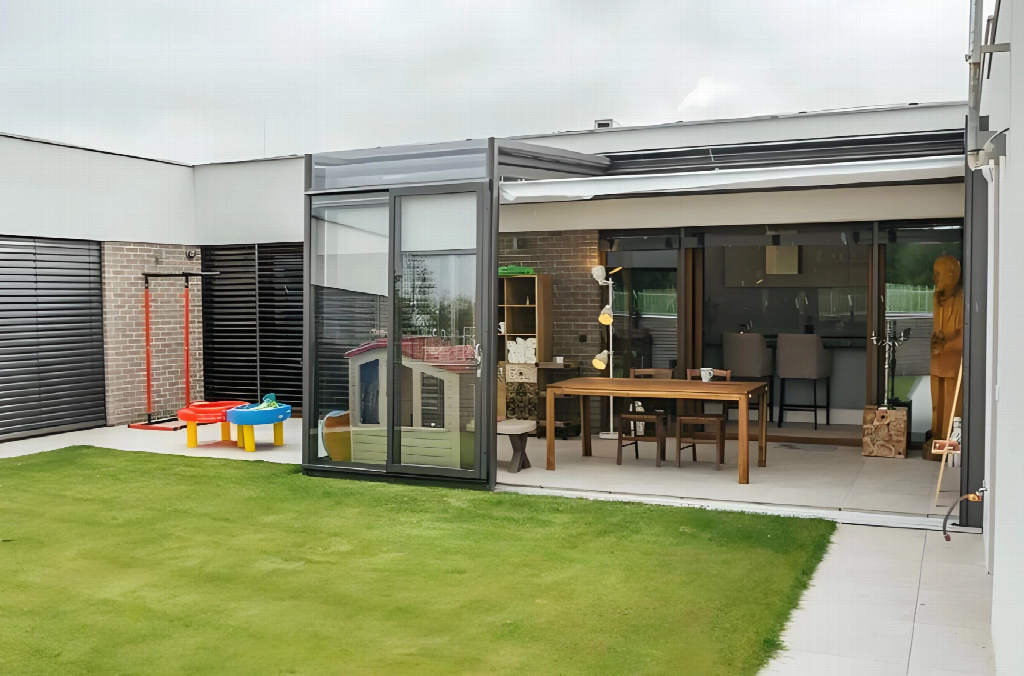
Imagine stepping into a light‑filled room that offers sweeping, uninterrupted views of your backyard, garden, or local landscape. Now imagine that with the touch of a button or a gentle manual push, the walls and roof smoothly glide away, opening your living space directly to the fresh air and warm sun.
This is the promise of retractable sunrooms. Far beyond static glass additions or traditional patio covers, retractable sunrooms are dynamic architectural structures designed to adapt instantly to changing weather conditions, personal preferences, and seasonal shifts. Whether integrated as an extension of a home's primary living area, constructed as a freestanding sanctuary, or adapted as retractable pool enclosures, these versatile systems are redefining modern indoor‑outdoor living.
1. What Is a Retractable Sunroom?
A retractable sunroom—often referred to as a dynamic glazed structure or telescopic sunroom—is an enclosed architectural space featuring movable roof panels, side walls, or entire structural sections. Unlike standard sunrooms or three‑season porches, which are fixed permanently in place, retractable sunrooms utilize engineered track systems, telescopic framing, and smooth‑gliding rollers.
These structures consist of multiple telescoping modules. When closed, they lock securely into place to provide a fully weatherproof, insulated, and wind‑resistant environment. When opened, the modules stack neatly over or behind one another, exposing the interior directly to the open sky and surrounding landscape.
Core Architectural Components
Structural Framing: Typically fabricated from high‑grade aluminum alloys (such as 6060 or 6063 T6) treated with powder coating or anodization for maximum corrosion resistance and structural integrity.
Glazing Options: Includes impact‑resistant solid or multi‑wall polycarbonate sheets, tempered safety glass, or double/triple‑glazed low‑emissivity (Low‑E) insulated glass units (IGUs).
Track & Motion Systems: Precision‑engineered floor or wall tracks equipped with stainless‑steel or heavy‑duty synthetic rollers, weather‑sealing gaskets, and internal locking pins.
Operation Mechanisms: Available in smooth manual pull‑push systems for smaller residential enclosures, or integrated motorized drives controlled via remote, smartphone apps, or automated weather sensors (wind, rain, and temperature sensors).
2. Key Applications: From Living Spaces to Retractable Pool Enclosures
The true beauty of retractable glazing systems lies in their exceptional versatility across residential, commercial, and recreational applications.
Residential Living Extensions
Homeowners use retractable sunrooms to bridge the gap between their interior floor plans and outdoor landscaping.
Year‑Round Patio Covers: Turn an underutilized backyard deck into an all‑weather dining or relaxing area.
Flexible Dining & Kitchen Areas: Create indoor‑outdoor kitchen setups where smoke and heat escape effortlessly when the roof is retracted.
Home Gyms & Wellness Spaces: Exercise under natural light without worrying about rain, UV exposure, or cold winds.
Retractable Pool Enclosures
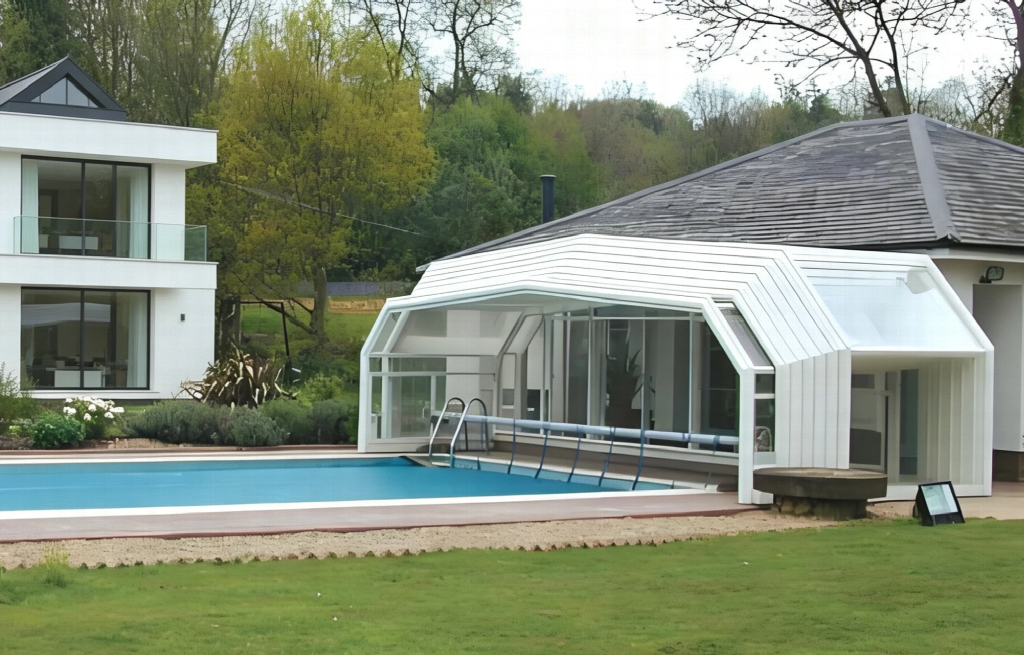
One of the most valuable and popular applications of this technology is retractable pool enclosures. Swimming pools are fantastic investments, but in many climates, their usability is strictly limited to 3 to 5 summer months.
Installing a retractable pool enclosure transforms a outdoor swimming area into a year‑round aquatic retreat:
Extended Swimming Seasons: By trapping solar heat inside a closed canopy, pool enclosures maintain warmer water and air temperatures, allowing for comfort even during late autumn or early spring.
Significant Maintenance Reduction: When closed, the structure acts as a protective barrier against leaves, dirt, insects, pollen, and debris. Pool owners save dozens of hours on manual cleaning and substantially cut back on pool chemicals.
Enhanced Safety: Lockable retractable structures create a secure perimeter around the pool, helping prevent unsupervised access by pets or small children.
Energy Efficiency: A closed enclosure prevents evaporative heat loss—the primary cause of swimming pool heat reduction—slashing water heating costs significantly.
Open‑Air Summer Swimming: When summer arrives, simply slide the enclosure back to enjoy an authentic open‑air swimming experience without any overhead obstructions.
Commercial and Hospitality Spaces
For restaurants, cafes, hotels, and event venues, floor space directly translates to revenue. Retractable sunrooms allow commercial operators to maximize seating capacity regardless of weather forecasts. Diners can enjoy an al fresco patio atmosphere during clear summer evenings, while the venue can seal off the space within seconds during a sudden rainstorm.
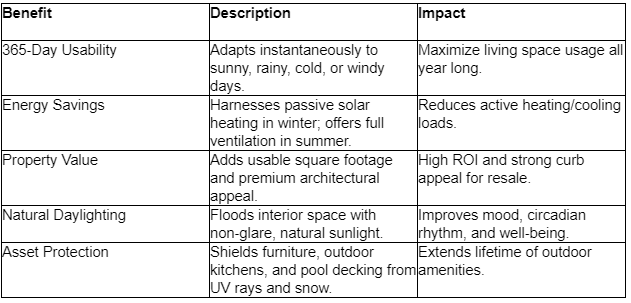
3. Top Benefits of Installing a Retractable Sunroom
Investing in a retractable structure delivers immediate operational advantages and long‑term financial returns.
Climate Resilience and Weather Protection
Modern retractable sunrooms are engineered to handle extreme environmental demands. Reinforced aluminum profiles can sustain high wind loads (often exceeding 100 mph) and heavy snow loads in cold climates. High‑grade rubber gaskets and interlocking seals prevent rainwater infiltration and cold drafts.
Thermal Comfort & Passive Solar Heating
During winter months, the glass or polycarbonate panels act as a giant solar collector, absorbing warmth from sunlight and retaining it naturally. In summer, opening the telescopic sections creates cross‑ventilation, preventing the heat‑trapping effect typical of traditional glass greenhouses.
4. Materials and Engineering Considerations
Selecting the right materials determines the durability, aesthetics, and thermal efficiency of your retractable structure.
Framing Materials: Structural Aluminum vs. Wood
Extruded Aluminum: The industry standard. Aluminum provides an exceptionally high strength‑to‑weight ratio, ensuring modules slide easily without placing excessive stress on floor tracks. It does not rot, warp, rust, or require regular painting.
Timber/Wood Laminates: Occasionally used on interior structural layers for a warmer aesthetic, often paired with exterior aluminum capping for weather protection.
Glazing Options: Polycarbonate vs. Tempered Glass
Polycarbonate Panels (Solid or Multi‑Wall)
Pros: Extremely lightweight, virtually unbreakable (200x stronger than standard glass), excellent UV blocking, lower cost.
Cons: Can scratch if cleaned improperly; multi‑wall varieties obscure views slightly.
Best for: Retractable pool enclosures and roof profiles where impact resistance and light weight are paramount.
Tempered Safety Glass & Insulated Glass Units (IGUs)
Pros: Crystal‑clear optical clarity, scratch resistance, superior sound insulation, premium aesthetic.
Cons: Heavier weight (requires heavy‑duty tracks and motors); higher initial cost.
Best for: Residential sunrooms directly attached to living rooms or bedrooms where thermal insulation and panoramic views matter most.
5. Architectural Designs and Profiles
Retractable sunrooms come in a wide range of aesthetic profiles to match different architectural styles.
Low‑Profile Enclosures: Designed to hug the ground, these minimalist structures are common for retractable pool enclosures where preserving an unobstructed view of the surrounding landscape is desired.
High‑Profile / Walk‑Through Structures: Offer ample headroom, allowing users to walk, sit, furnish, and comfortably live inside the enclosure even when fully closed.
Lean‑To / Attached Designs: Sloped roof structures attached directly to an existing house exterior wall, seamlessly expanding the home's floor plan.
Freestanding Sunrooms: Independent structures built anywhere on the property—ideal for pool houses, detached garden lounges, or spa shelters.
6. Installation, Maintenance, and Planning Considerations
Before embarking on a retractable sunroom project, several technical factors should be planned carefully:
Foundation Requirements
Retractable structures require a solid, level, and structural base to ensure smooth tracking operation. Reinforced concrete slabs, continuous concrete footings, or reinforced steel‑frame decking are required to support structural loads and track alignment.
Permitting and Zoning
Because retractable sunrooms can open completely, local building authorities in some municipalities treat them differently than permanent structural home additions. However, building permits, local zoning setbacks, snow/wind load calculations, and homeowners association (HOA) approvals are still typically required.
Maintenance Best Practices
To ensure smooth operation over decades, follow these straightforward upkeep guidelines:
Track Cleaning: Keep bottom tracks clear of gravel, leaves, snow, and dirt using a vacuum or hose.
Glazing Care: Wash panels periodically with mild soap, soft microfiber sponges, and water. Avoid abrasive chemicals or stiff brushes.
Hardware Inspection: Annually inspect rubber seals, wheel bearings, and locking mechanisms; apply silicone‑based lubricants to moving parts as recommended by the manufacturer.
A retractable sunroom is more than just a home improvement project; it is a lifestyle enhancement that redefines how you interact with your living space. By effortlessly bridging the gap between indoor comfort and outdoor freedom, these structures give you complete control over your environment. Whether you want to extend your swimming season with high‑performance retractable pool enclosures, create an all‑weather entertaining patio, or enjoy a sun‑drenched home office, retractable sunrooms deliver long‑term value, dynamic flexibility, and timeless architectural beauty.