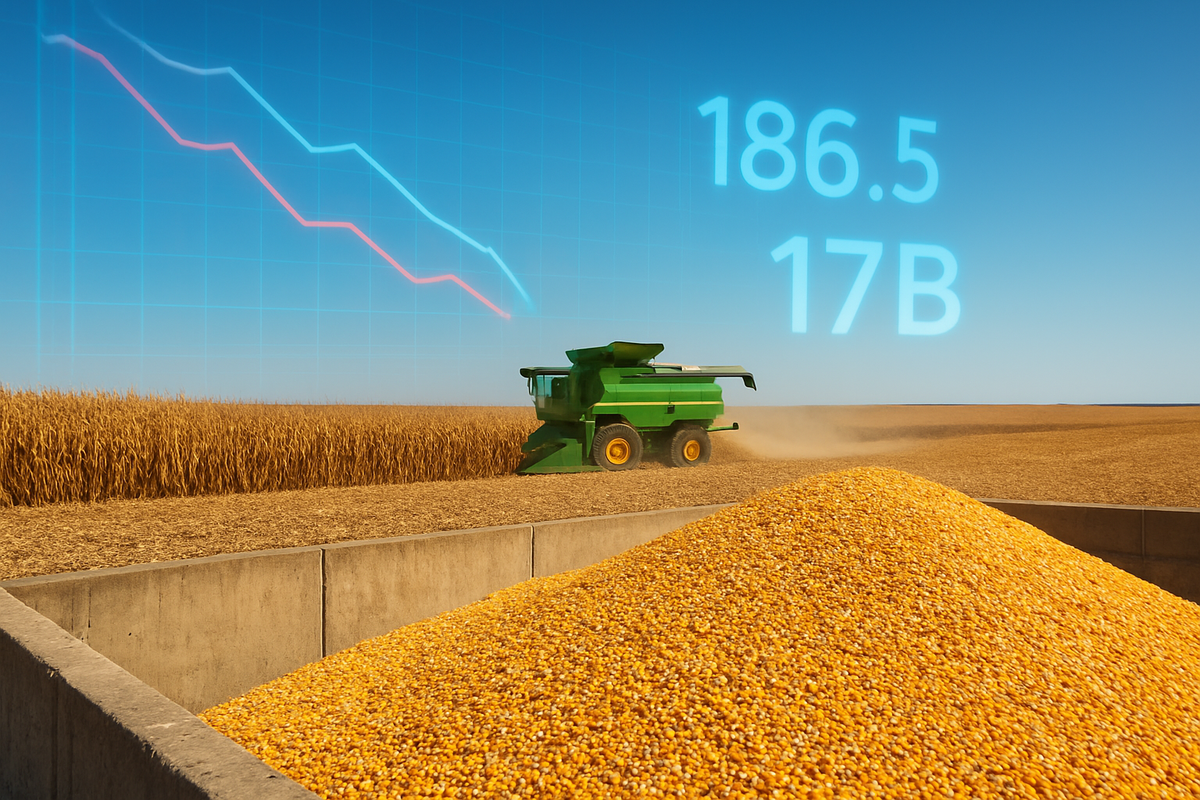
The agricultural sector is reeling this week following the release of the United States Department of Agriculture (USDA) January 2026 Crop Production Annual Summary and World Agricultural Supply and Demand Estimates (WASDE). In a move that caught even seasoned commodity traders off guard, the USDA confirmed a record-shattering corn harvest, with yields reaching an unprecedented 186.5 bushels per acre (bpa). This massive output has pushed total U.S. production past the 17 billion bushel mark for the first time in history, fundamentally altering the global supply-and-demand landscape for the 2025/2026 marketing year.
The immediate fallout has been a "sea of yellow" across trading screens, as corn futures plunged to multi-year lows. For the American farmer, the news is bittersweet; while the harvest represents a triumph of modern agronomy and favorable late-season weather, the resulting surplus has triggered a collapse in cash prices that threatens the financial stability of the heartland. With supply now vastly outstripping demand, the focus of the market has shifted from "how much can we grow?" to "where can we possibly put it all?"
A Record-Shattering Report: The Numbers Behind the Surplus
The January 12 reports from the USDA provided a definitive look at the 2025 harvest, and the figures were staggering. Total corn production was pegged at 17.021 billion bushels, a 14% increase from the previous year. This was driven by a record yield of 186.5 bpa, which surged past the December estimate of 186.0 bpa. Furthermore, the USDA revised the harvested area upward to 91.3 million acres, an addition of 1.3 million acres over previous projections. This combination of increased acreage and record yields has created a supply glut that many analysts are calling a "supply tsunami."
The reaction on the CME Group (NASDAQ: CME) trading floor was instantaneous and aggressive. The March 2026 corn contract plummeted more than 5% on the day of the release, shedding over 24 cents to settle near $4.21 per bushel. In the physical cash markets, the situation is even more dire. Reports from the Midwest indicate that grain elevators have reached maximum capacity, leading to massive "ground piles" of corn exposed to the elements. In some regional markets, cash bids have slipped below the psychological $4.00-per-bushel floor, a level that analysts say is below the break-even point for a significant percentage of U.S. corn growers.
The timeline leading to this moment was marked by a deceptive calm. Throughout the summer of 2025, concerns over late-season dryness led many to believe that yields would be tempered. However, a series of perfectly timed rains in August and a historically long, warm autumn allowed the crop to finish with maximum weight. By the time the January WASDE was released, the market realized it had significantly underestimated the resilience of the 2025 crop, leading to the dramatic "price discovery" phase currently underway.
The Corporate Winners and Losers of the Surplus
The impact of the record harvest is creating a stark divide among publicly traded companies in the agricultural value chain. Deere & Company (NYSE: DE) has emerged as one of the primary casualties of the sentiment shift. Following the report, the equipment giant issued a cautious outlook for 2026, forecasting a 15–20% decline in large agricultural equipment sales. With corn prices depressed, farmers are expected to tighten their belts and defer high-ticket purchases like tractors and combines. Deere's management suggested that 2026 could represent a cyclical bottom for the industry as producer net income takes a substantial hit.
On the other side of the ledger, grain processors and livestock producers are finding opportunity in the abundance. Archer-Daniels-Midland (NYSE: ADM) and Bunge Global (NYSE: BG) stand to benefit from the sheer volume of grain moving through the system. While lower prices can sometimes compress trading margins, the record 13.3 billion bushels in December 1 grain stocks ensures that these "middlemen" will be operating at high utilization rates. Furthermore, livestock giants like Tyson Foods (NYSE: TSN) are seeing a significant reduction in input costs. Corn is the primary component of animal feed, and the drop in prices provides a much-needed tailwind for margins in the poultry and pork segments, which have struggled with high costs over the past three years.
Investors tracking the broader agricultural sector through the Invesco DB Agriculture Fund (NYSE Arca: DBA) have seen the fund reflect this bearish trend. Corn futures make up a significant portion of the fund's diversified holdings, and the post-report sell-off contributed to a stagnant year-to-date performance. For investors, the DBA now serves as a gauge for whether the market can find a bottom or if the surplus will continue to weigh on the entire agricultural commodity complex.
Biofuels and Policy: The Wider Significance
The 2026 corn surplus is not just a market event; it is a catalyst for renewed political and industrial debates. The National Corn Growers Association has already begun leveraging the report to push for urgent legislative action, specifically regarding the year-round sale of E15 (a 15% ethanol blend). Proponents argue that expanding ethanol mandates is the only viable way to "chew through" the 2.227 billion bushel ending stocks projected by the USDA. If successful, this move could provide a floor for corn prices and benefit the renewable fuels sector.
Historically, the market has seen similar gluts, notably in the mid-2010s, but the scale of the 17-billion-bushel harvest is unprecedented. It highlights the rapid advancement in seed technology and precision agriculture that has allowed yields to continue climbing even in the face of variable weather. However, this productivity comes at a cost: it places the U.S. in a vulnerable position if export demand does not keep pace with production. With major competitors like Brazil also projecting strong harvests, the global market is becoming increasingly crowded, making domestic policy—such as Sustainable Aviation Fuel (SAF) initiatives—more critical than ever for maintaining the health of the American ag economy.
The Path Forward: Strategic Pivots and 2026 Planting
Looking ahead to the spring of 2026, the primary question is how farmers will respond to the current price signals. Early projections suggest a massive strategic pivot is already underway. Many agronomists expect a "flight from corn" as producers look to more profitable alternatives. Initial estimates for the 2026 planting season suggest a potential drop of up to 4 million acres in corn as farmers shift toward soybeans or specialty crops. This reduction in supply will be necessary to balance the market, but it will take at least a full growing season for the effects to be felt.
In the short term, market participants will be closely watching the February USDA Outlook Forum for more concrete planting intentions. The logistical challenge of moving the 2025 surplus will also remain a key theme. If export demand picks up—perhaps spurred by the lower prices—it could mitigate some of the storage issues. Conversely, if the surplus remains "stuck" in the domestic market, we could see further downward pressure on cash prices through the spring.
Summary and Investor Outlook
The January 2026 USDA reports have fundamentally reset the agricultural market. The record 186.5 bpa yield and 17-billion-bushel production have created a challenging environment for producers and equipment manufacturers like Deere & Company (NYSE: DE), while offering a cost-saving boon to processors like Archer-Daniels-Midland (NYSE: ADM) and livestock producers like Tyson Foods (NYSE: TSN).
For investors, the key takeaways are clear: volatility in the grain markets is likely to remain high as the industry grapples with the logistics of this surplus. The Invesco DB Agriculture Fund (NYSE Arca: DBA) will continue to be a primary tool for monitoring how the commodity complex absorbs this supply shock. Moving forward, the most important factors to watch will be the 2026 planting intentions, any movement on E15 and SAF policy, and the pace of export shipments. The 2025/2026 season will be remembered as the year American productivity outpaced the market's capacity to consume it, a milestone that will shape agricultural policy and investment for years to come.
This content is intended for informational purposes only and is not financial advice.