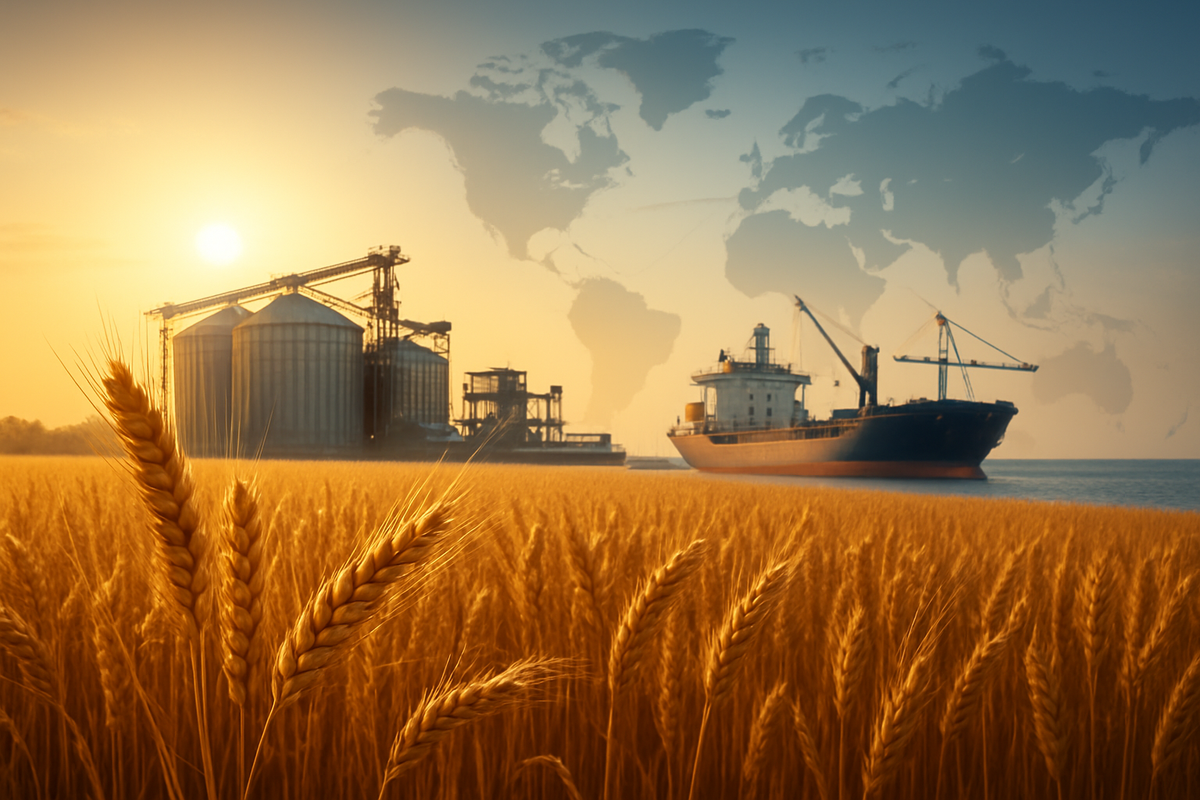
As the world grapples with escalating tensions in the Middle East and the looming threat of a global fertilizer shortage, India has emerged as an unexpected stabilizer for international commodities markets. The Indian Ministry of Agriculture confirmed this week that the country is on track for a historic 120.2 million metric ton wheat harvest for the 2025-26 season. This unprecedented yield arrives at a critical juncture, offering a much-needed buffer against the extreme price volatility that has plagued global food supplies since early 2026.
The record-breaking production has already prompted a major policy pivot in New Delhi, where officials recently moved to lift a nearly four-year-old ban on wheat exports. By introducing a calibrated quota system, India is positioning itself to fill the supply gaps left by traditional breadbaskets currently hamstrung by logistics disruptions and conflict. For the MarketMinute community, this shift represents more than just a local bumper crop; it is a fundamental realignment of the global agricultural trade landscape.
Harvesting a Milestone: The Road to 120.2 Million Tons
The projected 120.2 million metric ton harvest is the culmination of a multi-year effort to modernize Indian agriculture through climate-resilient seed varieties and expanded irrigation. According to data released in March 2026, the total area under wheat cultivation grew by 3% this season, reaching 33.41 million hectares. Favorable weather during the critical grain-filling stage in the Raby season further bolstered yields, allowing India to surpass its previous record of 117.94 million tons set just a year prior.
This agricultural success story comes after a period of intense caution. Since May 2022, India had largely retreated from the international wheat market to prioritize domestic food security following a series of heatwaves. However, with central pool stocks now projected to hit 18.2 million metric tons—well above the mandatory buffer of 7.5 million—the government has authorized the export of 2.5 million tonnes of wheat and 500,000 tonnes of processed products. The timeline of this release is strategic, designed to cool global futures while preventing a "price crash" for domestic farmers who are currently benefiting from a high Minimum Support Price (MSP).
The market reaction has been immediate. Chicago Board of Trade (CBOT) wheat futures, which had been trending upward due to Black Sea instability, have seen a "price ceiling" effect as traders price in the arrival of Indian grain. While Indian wheat remains slightly more expensive than some global benchmarks at approximately $280 per tonne, its availability is serving as a vital insurance policy for importing nations in North Africa and Southeast Asia.
Corporate Winners and Losers in the New Grain Order
The lifting of the export ban and the record harvest have created a clear set of winners among domestic Indian conglomerates. ITC Limited (NSE: ITC) is perhaps the most significant beneficiary, leveraging its vast "e-Choupal" digital sourcing network to secure high-quality grain directly from farmers. Analysts expect ITC’s agri-business segment to see a double-digit revenue boost as it re-establishes dominance in the Southeast Asian export markets. Similarly, Adani Enterprises (NSE: ADANIENT), through its subsidiary Adani Wilmar, is positioned to dominate the logistics chain. With its proprietary port infrastructure and massive storage silos, Adani is the primary candidate to execute the large-scale shipments required under the new government quotas.
On the global stage, the impact is more nuanced for the "ABCD" quartet of grain traders. Archer-Daniels-Midland (NYSE: ADM) and Bunge Global (NYSE: BG) face a complex margin environment. While the return of Indian wheat increases overall trade liquidity—a positive for volume-based businesses—it also reduces the price volatility that these firms typically exploit for profit. Bunge, in particular, has issued a cautious outlook for 2026, noting that a "global grains glut" could compress trading margins even as total tonnage increases.
Conversely, global food manufacturers like Nestlé (OTC: NSRGY) may find relief in the stabilized raw material costs. For these companies, a predictable supply of wheat from a non-conflict zone like India reduces the "risk premium" they must pay for ingredients, potentially aiding margin recovery after years of input cost inflation.
Geopolitics, Fertilizers, and the Global Ripple Effect
The significance of India’s record harvest is magnified by the current crisis in the Middle East. The early 2026 disruptions in the Strait of Hormuz have sent shockwaves through the fertilizer market, with urea prices spiking by 26% to nearly $585 per tonne. Since this region is responsible for nearly 30% of global fertilizer exports, the cost of the next planting cycle is already under threat. India’s current surplus provides a "time buffer," allowing the world to absorb these fertilizer shocks without an immediate collapse in food availability.
Historically, India has been a swing producer, often moving in and out of the market based on domestic needs. However, the 2026 season marks its transition into a more permanent "Global Food Security Beacon." This shift is consistent with broader industry trends toward "near-shoring" and diversifying supply chains away from high-risk geopolitical zones like the Black Sea.
Furthermore, India’s move carries significant regulatory weight. By maintaining a controlled export quota rather than an open-market free-for-all, New Delhi is demonstrating a "middle path" in agricultural policy—balancing the needs of its 1.4 billion citizens with its aspirations as a global leader. This model may serve as a blueprint for other emerging economies facing the dual pressures of domestic inflation and global responsibility.
The Horizon: Challenges and Strategic Pivots
Looking ahead, the short-term outlook remains tied to the logistics of getting 2.5 million tons of wheat to market. Shipping disruptions in the Red Sea and volatile freight rates from Indian ports to East Africa remain the primary hurdles. Investors should watch for whether the Indian government expands its export quotas in the second half of 2026; if the 120.2 million ton figure holds or is revised upward, a further release of 2 to 3 million tons is highly probable.
However, a long-term challenge looms in the form of the 2027 planting cycle. If fertilizer prices remain elevated due to Middle East tensions, the "yield cliff" could become a reality by next year. Agricultural technology firms specializing in precision farming and nutrient efficiency will likely see increased demand as farmers in India and elsewhere look to maintain record yields with fewer, more expensive inputs.
Strategic pivots will also be required from global traders who must now integrate Indian origin wheat back into their long-term supply contracts. The ability to navigate India’s "monthly application slots" for export will separate the most agile players from those still relying on traditional, less regulated origins.
Market Outlook and Final Thoughts
India’s 120.2 million metric ton harvest is a landmark event that has effectively de-risked the global food market at a moment of extreme geopolitical peril. By transitioning from a closed market to a calibrated exporter, India has provided a "safety valve" for global wheat prices, tempering the inflationary pressures coming from the Middle East and the fertilizer supply chain.
For investors, the key takeaways are clear: domestic Indian agri-players like ITC Limited and Adani Enterprises are entering a period of significant growth, while global giants like ADM and Bunge must navigate a lower-volatility, higher-competition environment. Moving forward, the market will be hyper-focused on two metrics: the actual execution speed of India’s export quotas and the trend of global urea prices.
In a world where food security is increasingly synonymous with national security, India has proven that its agricultural engine is not only running—it is leading. Investors should maintain a close eye on New Delhi’s policy updates throughout the summer of 2026, as any further opening of the "grain gates" could provide the final piece of the puzzle for a stabilized global commodities market.
This content is intended for informational purposes only and is not financial advice.