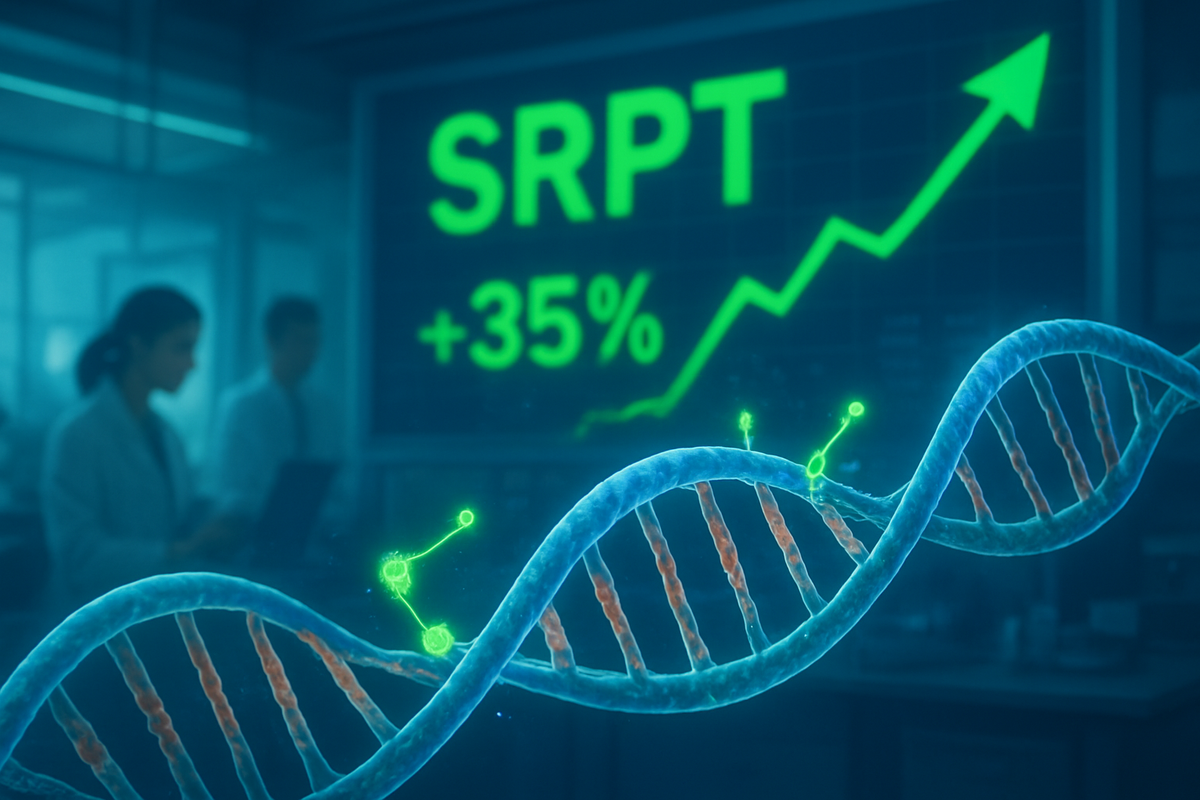
CAMBRIDGE, MA — March 26, 2026 — Shares of Sarepta Therapeutics (NASDAQ: SRPT) skyrocketed 35% in early trading today, reaching levels not seen since the company’s early days in Duchenne Muscular Dystrophy (DMD). The massive rally follows the release of highly anticipated Phase 1/2 clinical data for its next-generation siRNA candidates, SRP-1001 and SRP-1003. The results, which exceeded even the most bullish analyst projections, demonstrate a profound biological "knock-down" effect in treating two devastating muscle-wasting conditions: Facioscapulohumeral Muscular Dystrophy (FSHD) and Myotonic Dystrophy Type 1 (DM1).
For years, Sarepta was categorized by investors as a "one-trick pony," tethered almost exclusively to its Duchenne franchise and the regulatory controversies surrounding its initial gene therapy approvals. Today’s data effectively shatters that narrative. By validating its pivot into a diversified RNA technology powerhouse, Sarepta has positioned itself to dominate a multi-billion dollar genetic medicine market that extends far beyond its DMD roots.
A Breakthrough in Genetic Silencing
The market reaction was triggered by the presentation of top-line results from the ongoing Phase 1/2 trials of SRP-1001 (formerly ARO-DUX4) and SRP-1003 (formerly ARO-DM1). For SRP-1001, Sarepta reported an "unprecedented" 92% reduction in DUX4-regulated gene expression in the high-dose cohort after a single administration. DUX4 is the toxic protein responsible for muscle cell death in FSHD patients, and previous attempts by competitors to safely silence it have faced significant hurdles.
The timeline leading to this milestone began in late 2024, when Sarepta pivoted its strategy following the discontinuation of its second-generation Duchenne candidate, SRP-5051. Recognizing the limitations of its older platform, the company struck a landmark $10 billion licensing deal with Arrowhead Pharmaceuticals (NASDAQ: ARWR) in February 2025. This deal granted Sarepta access to the TRiM™ (Targeted RNAi Molecule) platform, specifically an integrin-targeted delivery system that allows siRNA to penetrate muscle tissue with far greater efficiency than earlier technologies. Today's data confirms that this massive bet on the Arrowhead collaboration has paid off, as both candidates showed significant biomarker improvements and a clean safety profile, with no signs of the kidney or magnesium issues that plagued earlier candidates.
Market Winners and Industry Fallout
The primary winner in today’s session is undoubtedly Sarepta Therapeutics (NASDAQ: SRPT), whose market capitalization increased by billions in a matter of hours. However, the ripple effects were felt across the entire biotechnology sector. Arrowhead Pharmaceuticals (NASDAQ: ARWR) saw its shares climb 12% in sympathy, as the positive data triggers hundreds of millions in near-term development milestones and secures a future stream of low-double-digit royalties for the company.
On the other side of the ledger, the news cast a shadow over competitors who have enjoyed a lead in the FSHD and DM1 clinical space. Avidity Biosciences (NASDAQ: RNA) and Dyne Therapeutics (NASDAQ: DYNE), both of which are developing their own RNA-based treatments for these indications, saw their stocks trade lower as investors weighed the competitive threat of Sarepta’s highly potent siRNA data. While Avidity remains ahead in the clinical timeline with its Phase 3 trials, Sarepta’s 90%+ gene knockdown in FSHD sets a remarkably high bar for efficacy that may be difficult for others to match. Meanwhile, the ghost of Fulcrum Therapeutics (NASDAQ: FULC) looms large; that company’s exit from the FSHD market in late 2024 after a Phase 3 failure has left a void that Sarepta now seems poised to fill.
The Dawn of the siRNA Dominance
The wider significance of this event cannot be overstated. It marks a decisive shift in the genetic medicine landscape, moving away from the "hit-or-miss" nature of early gene therapies toward the precision of RNA interference (RNAi). For the industry, the success of the TRiM™ platform in muscle tissue—a notoriously difficult target for drug delivery—proves that siRNA can be used for more than just liver-based diseases. This validation is expected to spark a new wave of investment in targeted RNA delivery technologies.
Historically, Sarepta’s journey was marked by intense debates with the FDA over small-scale trials and surrogate endpoints. Today’s data suggests a new era of "hard data" for the company. By showing massive reductions in the toxic transcripts that drive FSHD and DM1, Sarepta is following a regulatory path cleared by successful RNAi drugs in other fields. The event also highlights the trend of consolidation in the sector, where established leaders like Sarepta use their cash reserves to buy into next-generation platforms rather than relying solely on internal R&D.
The Path to Commercialization
Looking ahead, the next 12 to 18 months will be critical for Sarepta. The company is expected to move both SRP-1001 and SRP-1003 into global registrational trials by the end of 2026. Given the high unmet need in FSHD and DM1—neither of which currently has an FDA-approved disease-modifying therapy—investors are already speculating on the possibility of an accelerated approval pathway.
Strategically, the success of these programs gives Sarepta the leverage to expand its siRNA platform into other tissues, including the central nervous system (CNS) and cardiac muscle. Challenges remain, however, particularly in the scaling of manufacturing for these complex molecules and the need to maintain long-term safety data across larger patient populations. The competitive landscape will also remain fierce as Avidity and Dyne push to maintain their first-mover advantages in certain sub-populations.
A New Chapter for Sarepta
Today’s 35% surge is a clear signal that the market finally views Sarepta as a diversified leader in RNA technology rather than a niche Duchenne player. By successfully integrating Arrowhead’s siRNA technology and delivering knockout Phase 1/2 data, the company has provided a credible path toward multi-billion dollar revenue streams outside of its traditional core business.
As the market digests these results, investors should keep a close eye on the upcoming Phase 3 trial designs and the pace of patient enrollment. If the high levels of protein knockdown seen in these early trials translate into functional improvements in patients' muscle strength, Sarepta may not only dominate the FSHD and DM1 markets but also redefine the standard of care for genetic neuromuscular diseases for decades to come.
This content is intended for informational purposes only and is not financial advice.