Pangaea Logistics (NASDAQ: PANL) beat Wall Street’s revenue expectations in Q3 2026, with revenue up 29.9% year on year to $219.1 million. Its non-GAAP profit of $0.52 per share was 70.5% above analysts’ consensus estimates.
For more on Pangaea, read our free full research report.
Pangaea (PANL) Q3 2026 highlights:
- Revenue $219.1 million vs S&P analysts’ consensus estimates of $204.9 million (29.9% year-on-year growth, 6.9% beat)
- Adjusted EPS $0.52 vs S&P analysts’ consensus estimates of $0.31 (70.5% beat)
- Adjusted EBITDA $52.38 million vs analysts’ consensus estimates of $38.67 million (23.9% margin, 35.5% beat)
- Operating margin 19.9%, up from 9.8% in the same quarter last year
- Free cash flow margin 0%, down from 14.6% in the same quarter last year
- Market capitalization $491.7 million
"The third quarter represents our strongest period for Arctic ice-class activity, and this year that seasonal strength was reinforced by a strengthening dry bulk market," stated Mads Boye Petersen, President and Chief Executive Officer of Pangaea Logistics Solutions. "Together, these factors drove a significant increase in TCE rates and profitability, with our fleet earning a 13% premium to the benchmark indices. Our performance demonstrated the operating leverage inherent in our model when our niche ice-class fleet and broader commercial platform are performing in tandem, resulting in record quarterly Adjusted EBITDA and Adjusted Net Income."
Revenue growth
A company’s long-term revenue performance is one signal of its overall quality. Any business can report a good quarter or two, but many enduring ones grow for years. Over the last five years, Pangaea grew its revenue at a tepid 5% compounded annual growth rate, falling short of the industrials sector benchmark.
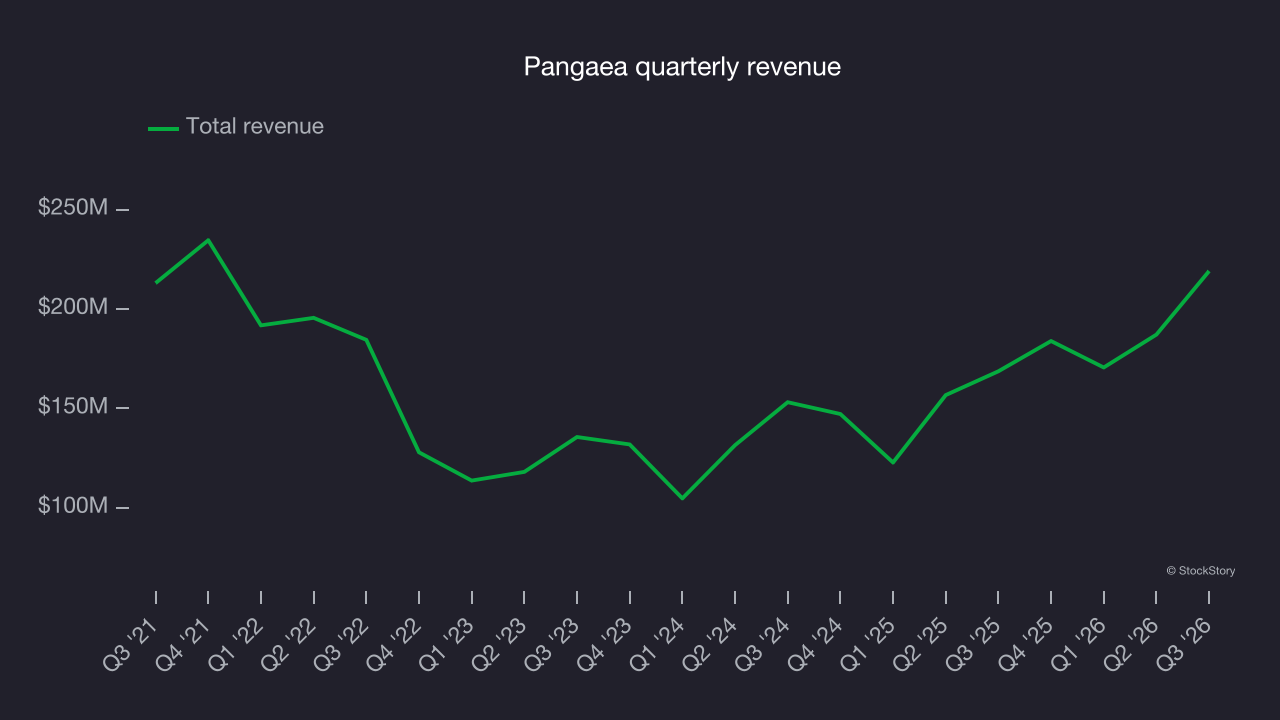
Long-term growth is the most important, but within industrials, a half-decade historical view may miss new industry trends or demand cycles. Pangaea’s annualized revenue growth of 20.8% over the last two years is above its five-year trend, suggesting its demand recently accelerated. 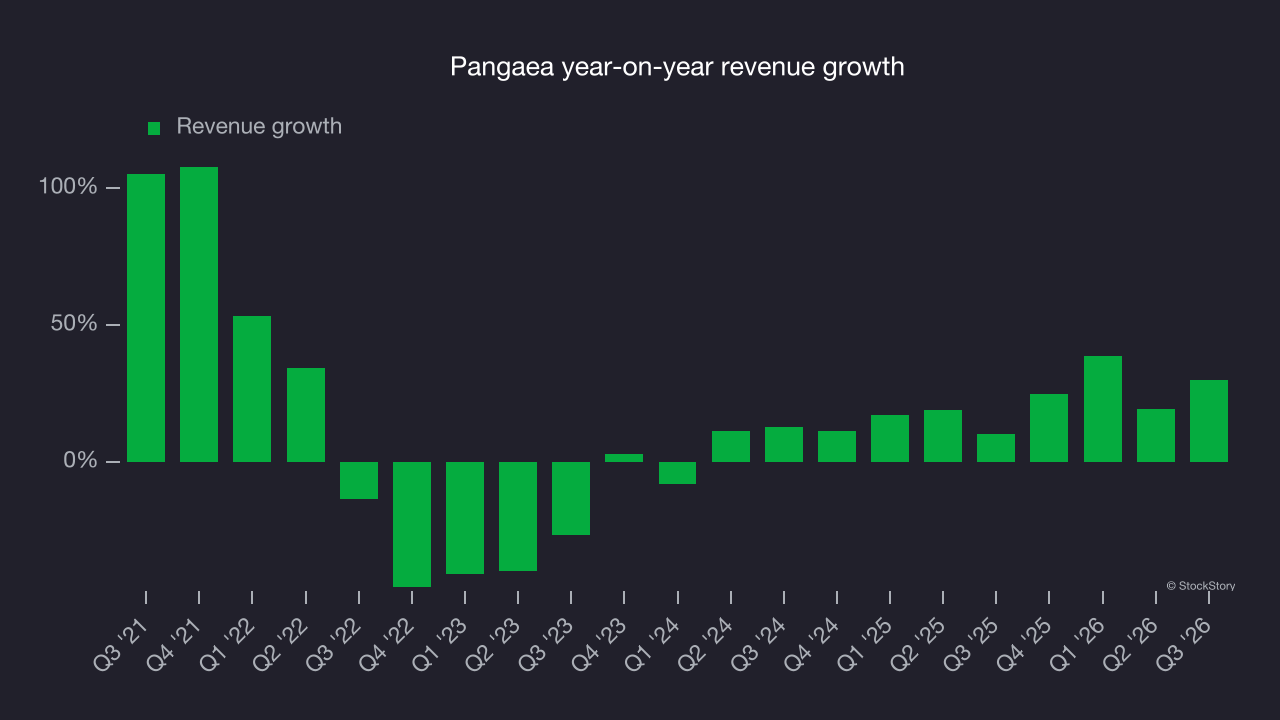
This quarter, Pangaea reported strong year-on-year revenue growth of 29.9%, and its $219.1 million of revenue topped Wall Street’s consensus estimates by 6.9%.
Looking ahead, sell-side analysts expect revenue to grow 2.8% over the next 12 months, according to S&P, a deceleration versus the last two years. This underwhelming projection suggests its products and services will see some demand headwinds.
Operating margin
Operating margin is an important measure of profitability as it shows the portion of revenue left after accounting for all core expenses, from the cost of goods sold to advertising and wages. It’s also useful for comparing profitability across companies with different levels of debt and tax rates because it excludes interest and taxes.
Pangaea has managed its cost base well over the last five years. It demonstrated solid profitability for an industrials business, producing an average operating margin of 11%. This result was particularly notable given its low gross margin, which largely reflects what it sells and requires substantial shifts to change meaningfully. Companies have more control over their operating margins, and high operating margins paired with low gross margins indicate well-managed operations.
Analyzing the trend in its profitability, Pangaea’s operating margin decreased by 3.1 percentage points over the last five years. This raises questions about the company’s expense base because its revenue growth should have given it leverage on its fixed costs, resulting in better economies of scale and profitability.
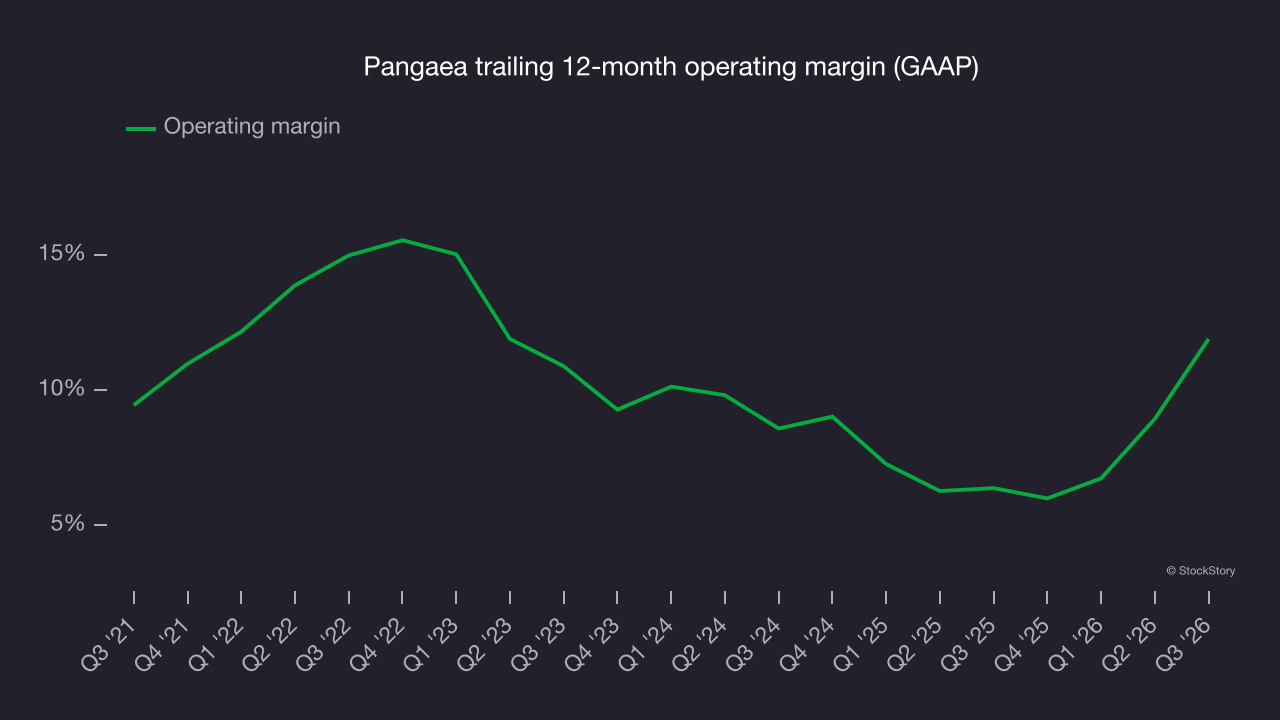
In Q3, Pangaea generated an operating margin of 19.9%, up 10.1 percentage points year on year. The increase was solid, and its operating margin rose more than its gross margin, indicating greater efficiency in expenses such as marketing, R&D and administrative overhead.
Earnings per share
Revenue trends explain a company’s historical growth, but the long-term change in earnings per share, or EPS, points to the profitability of that growth – for example, a company could inflate its revenue through excessive spending on advertising and promotions.
Pangaea’s flat EPS over the last five years was below its 5% annualized revenue growth. However, its operating margin improved during this time, indicating that non-fundamental factors such as interest expenses and taxes affected its ultimate earnings.
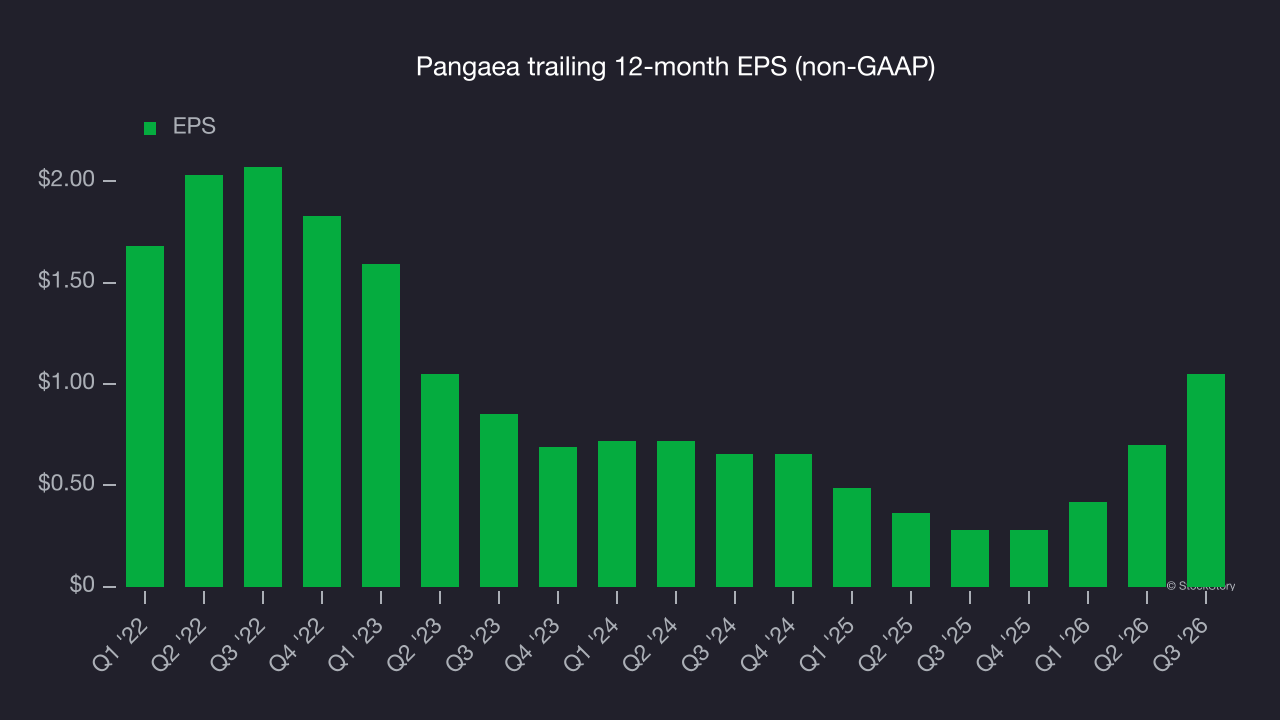
We can take a deeper look into Pangaea’s earnings to better understand the drivers of its performance. As we mentioned earlier, Pangaea’s operating margin expanded this quarter but declined by 3.1 percentage points over the last five years. Its share count also grew by 44.5%, meaning the company not only became less efficient with its operating expenses but also diluted its shareholders. 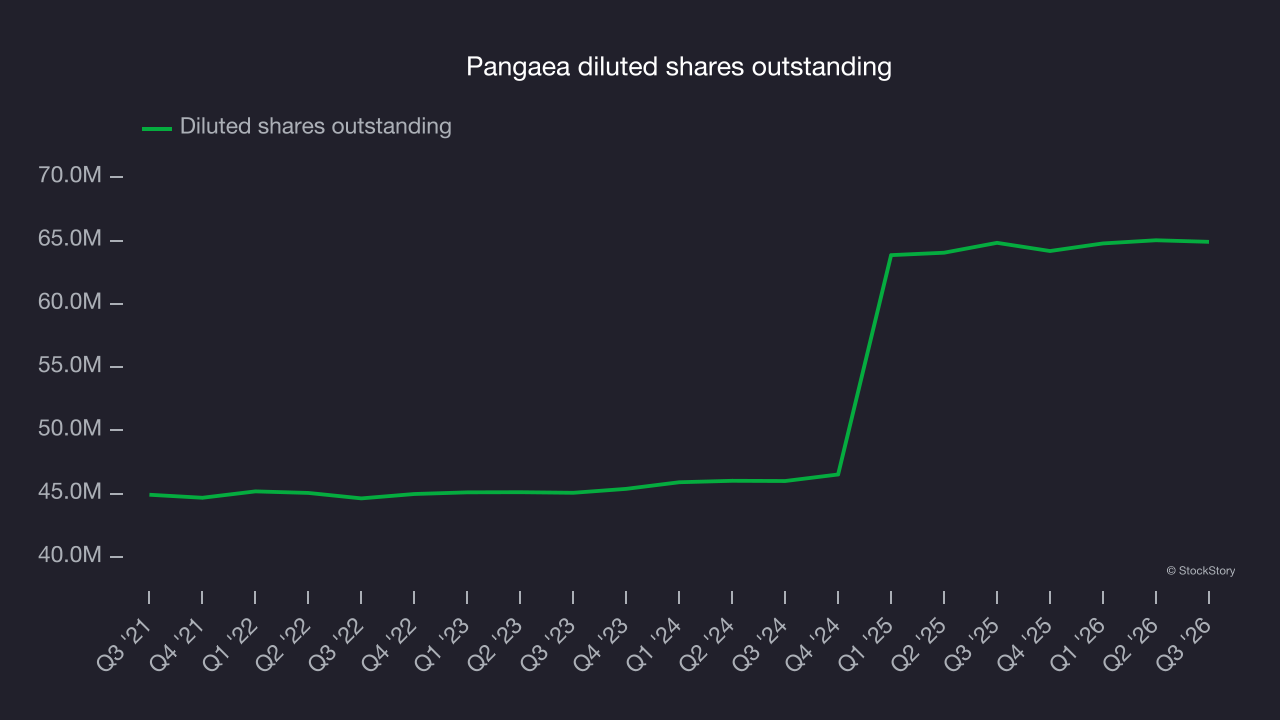
Like with revenue, we analyze EPS over a more recent period because it can provide insight into an emerging theme or development for the business.
For Pangaea, its two-year annual EPS growth of 26.6% was higher than its five-year trend. This acceleration made it one of the faster-growing industrials companies in recent history.
In Q3, Pangaea reported adjusted EPS of $0.52, up from $0.17 in the same quarter last year. This result came in well above analysts’ consensus estimates, a positive outcome for shareholders. Over the next 12 months, Wall Street expects Pangaea’s full-year EPS to shrink by 10.5% from $1.05 to $0.94, according to S&P.
Key takeaways from Pangaea’s Q3 results
Pangaea delivered a solid quarter, with EBITDA beating Wall Street’s consensus estimates by a wide margin and EPS also topping analysts’ consensus expectations. Shares rose 3.3% to $7.60 immediately after the results.
Pangaea had a solid quarter, but one earnings result doesn’t necessarily make the stock a buy. The latest quarter is only one piece of the longer-term business quality puzzle. Quality, when combined with valuation, can help determine if the stock is a buy. For more on Pangaea, read the full research report here (it’s free).