Voice artificial intelligence technology company SoundHound AI (NASDAQ: SOUN) fell short of the market’s revenue expectations in Q3 2026, but revenue rose 48.5% year on year to $62.43 million. Its GAAP loss of $0.10 per share was 14.9% above analysts’ consensus estimates.
For more on SoundHound AI, read our free full research report.
SoundHound AI (SOUN) Q3 2026 highlights:
- Revenue $62.43 million vs S&P analysts’ consensus estimates of $65.79 million (48.5% year-on-year growth, 5.1% miss)
- EPS (GAAP) -$0.10 vs analysts’ consensus estimates of -$0.12 (14.9% beat)
- Operating margin -74.5%, up from -276% in the same quarter last year
- Free cash flow -$44.04 million compared to -$34.07 million in the previous quarter
- Billings $44.65 million at quarter end, up 9.8% year on year
- Market capitalization $1.92 billion
Revenue growth
A company’s long-term performance is an indicator of its overall quality. Any business can post a good quarter or two, but many enduring ones grow for years. SoundHound AI’s revenue grew at a strong 61.6% compounded annual growth rate over the last five years. Its growth beat the average software company and shows its offerings resonate with customers.
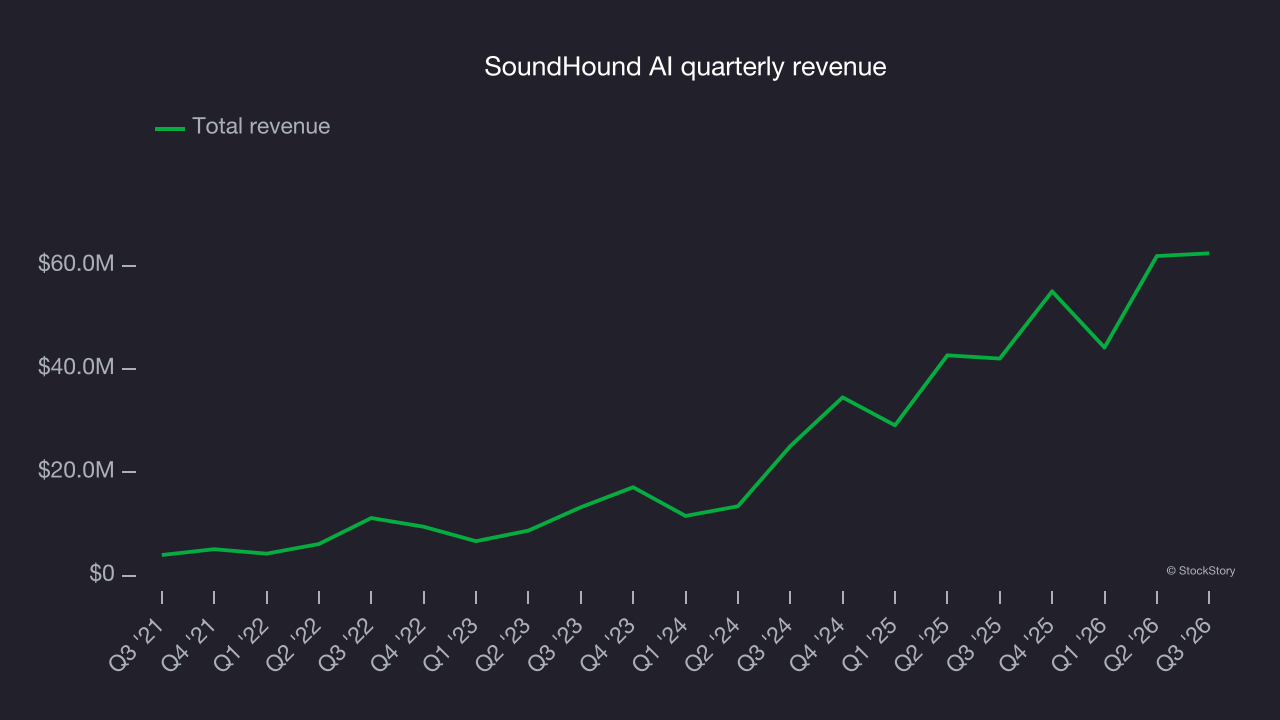
Long-term growth matters most, but within software, a half-decade historical view may miss recent innovations or disruptive industry trends. SoundHound AI’s annualized revenue growth of 82.3% over the last two years is above its five-year trend, suggesting its demand was strong and recently accelerated. 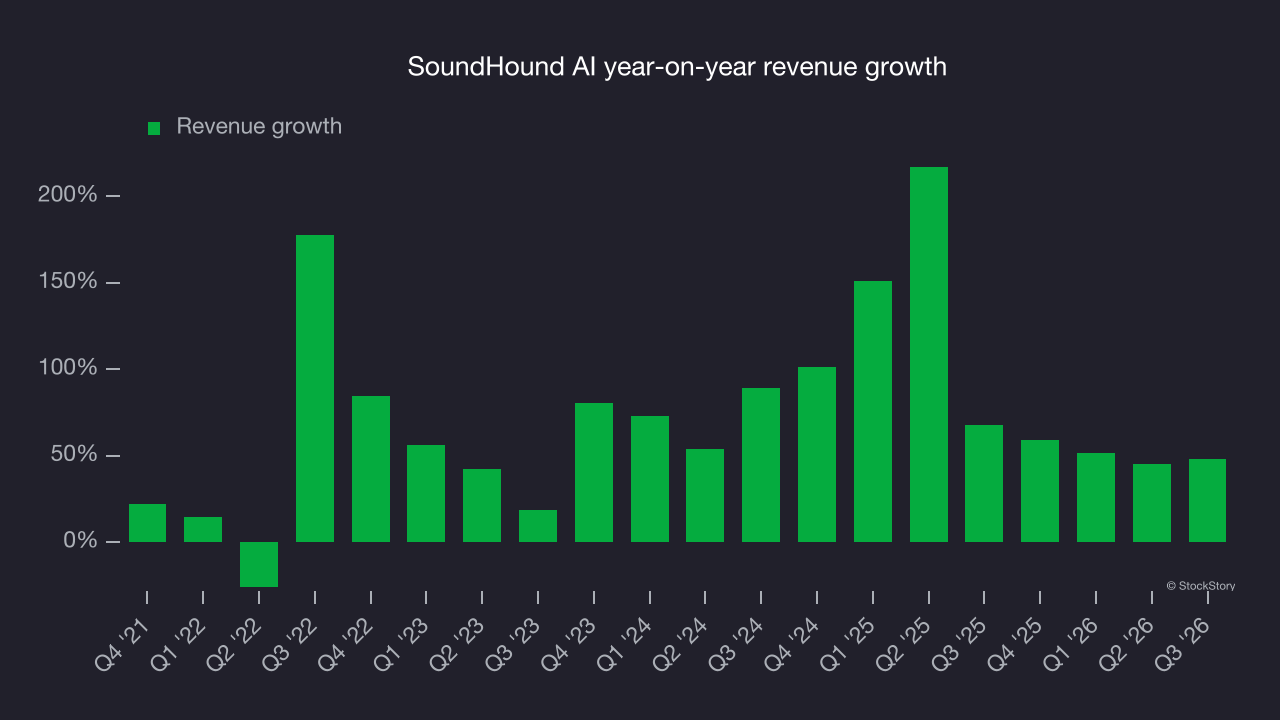
This quarter, SoundHound AI posted strong year-on-year revenue growth of 48.5%, but its $62.43 million of revenue fell short of Wall Street’s consensus estimates.
Looking ahead, sell-side analysts expect revenue to grow 45.4% over the next 12 months, according to S&P, a deceleration versus the last two years. Despite the slowdown, the forecast still points to substantial growth and indicates the market sees success for its products and services.
Billings
Billings is a non-GAAP metric that is often called “cash revenue” because it shows how much money the company has collected from customers in a certain period. This is different from revenue, which must be recognized in pieces over the length of a contract.
SoundHound AI’s billings totaled $44.65 million in Q3, and growth over the last four quarters was strong, averaging 39% year on year. This alternative top-line metric grew more slowly than total revenue, meaning the company recognizes revenue faster than it collects cash – a headwind for its liquidity that could also signal a slowdown in future revenue growth. 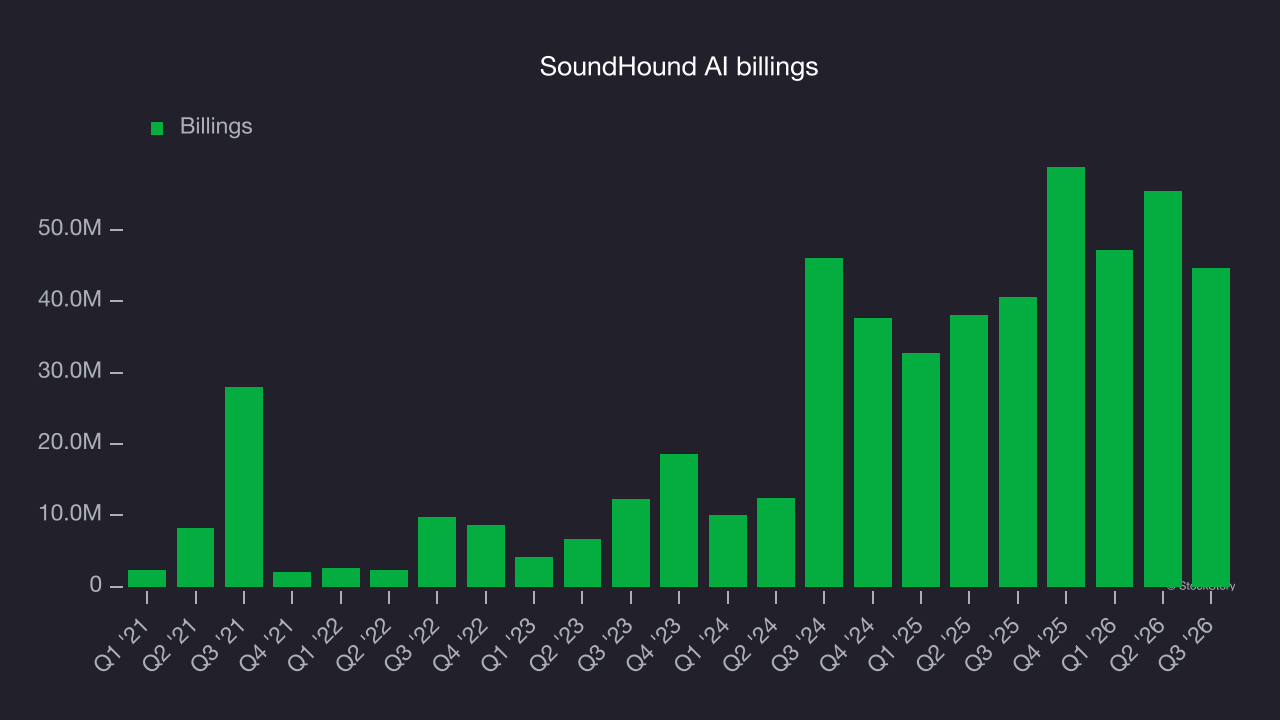
Customer acquisition efficiency
The customer acquisition cost, or CAC, payback period represents the months required to recover the cost of acquiring a new customer. Essentially, it’s the break-even point for sales and marketing investments. A shorter CAC payback period is ideal, as it implies better returns on investment and business scalability.
It’s expensive for SoundHound AI to acquire new customers as its CAC payback period was 69.2 months this quarter. The company’s slow recovery of its sales and marketing expenses indicates it operates in a competitive market. On the positive side, once it acquires customers, they typically don’t leave.
Key takeaways from SoundHound AI’s Q3 results
SoundHound AI’s Q3 results offered few positives: Both revenue and billings fell short of Wall Street’s consensus estimates, making for a disappointing quarter. Shares tumbled 6.2% to $4.01 immediately after the report.
SoundHound AI’s latest earnings report disappointed. One quarter doesn’t define a company’s quality, so assessing the stock at its current price requires considering its valuation, business quality and latest quarterly results. For more on SoundHound AI, read the full research report here (it’s free).