Cloud analytics platform Teradata (NYSE: TDC) reported Q3 2026 results beating Wall Street’s revenue expectations, but revenue fell by 4.1% year on year to $399 million. The company expects next quarter’s revenue to be around $400 million, close to analysts’ consensus estimates. Its non-GAAP profit of $0.70 per share was 21% above analysts’ consensus estimates.
For more on Teradata, read our free full research report.
Teradata (TDC) Q3 2026 highlights:
- Revenue $399 million vs S&P analysts’ consensus estimates of $395 million (4.1% year-on-year decline, 1% beat)
- Adjusted EPS $0.70 vs S&P analysts’ consensus estimates of $0.58 (21% beat)
- Adjusted operating income $87 million vs analysts’ consensus estimates of $77.76 million (21.8% margin, 11.9% beat)
- Revenue guidance $400 million at the midpoint for Q4 2026, roughly in line with what analysts were expecting
- Adjusted EPS guidance Management raised its full-year adjusted EPS guidance to $2.88 at the midpoint, a 7.1% increase
- Operating margin 13.5%, down from 14.7% in the same quarter last year
- Free cash flow margin 21.3%, down from 31% in the previous quarter
- Annual recurring revenue $1.51 billion vs analysts’ consensus estimates of $1.52 billion (1.5% year-on-year growth, in line)
- Billings $304 million at quarter end, down 28% year on year
- Market capitalization $3.22 billion
"In Q3, Teradata marked another quarter of progress against the goals we set at the start of the year, driving total ARR growth, improving profitability and delivering strong free cash flow," said Steve McMillan, president and CEO, Teradata. "The increased pace of new product innovation and new AI service capabilities is driving positive interest from customers."
Revenue growth
A company’s long-term performance is an indicator of its overall quality. Even a bad business can perform well for one or two quarters, but a top-tier one grows for years. Teradata’s demand was weak over the last five years as its revenue fell at a 2.8% annual rate. This was below our standards and is a sign of poor business quality.
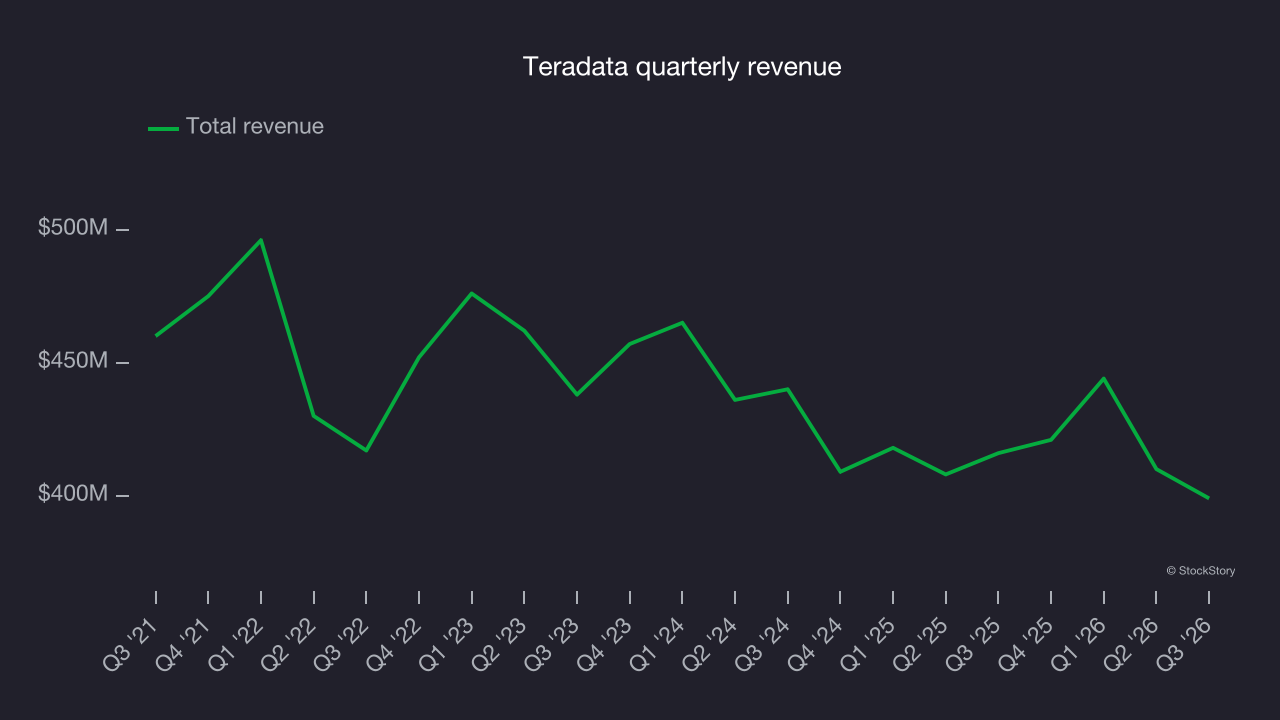
Long-term growth is the most important, but within software, a half-decade historical view may miss new innovations or demand cycles. Teradata’s annualized revenue declines of 3.5% over the last two years align with its five-year trend, suggesting its demand has consistently shrunk. 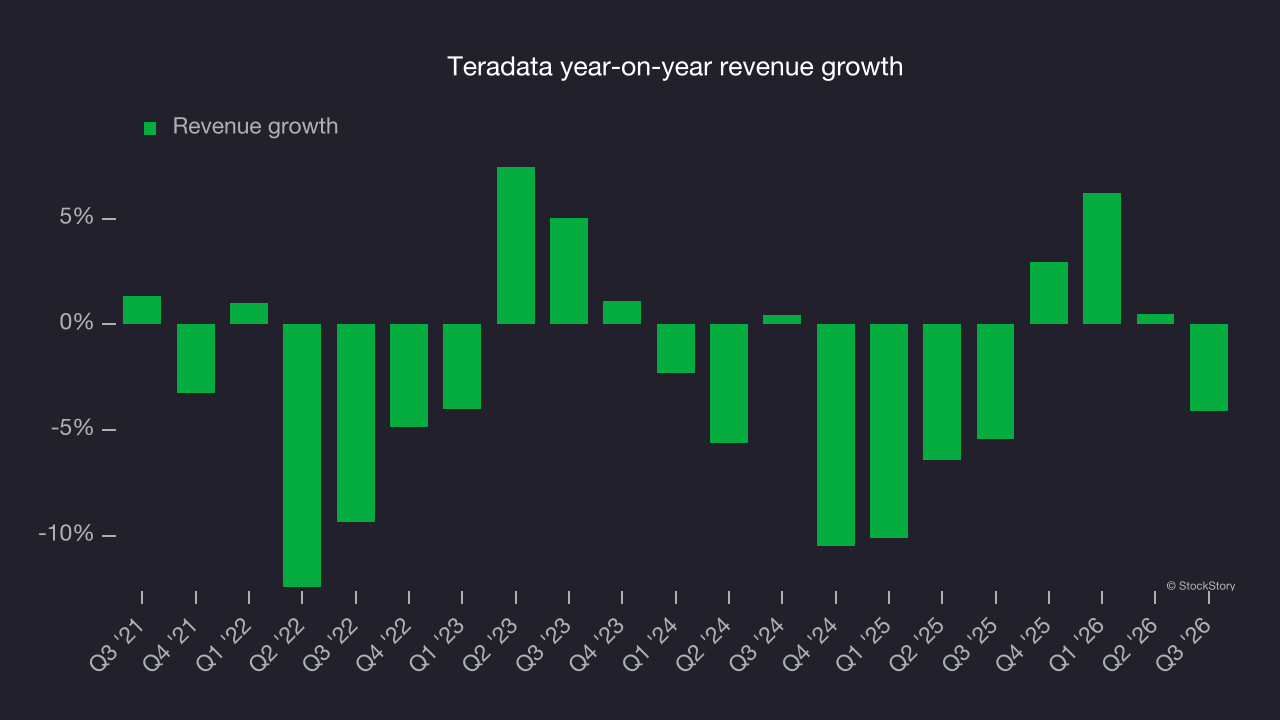
This quarter, Teradata’s revenue fell by 4.1% year on year to $399 million but beat Wall Street’s consensus estimates by 1%. Management is guiding for a 5% year-on-year decline in revenue next quarter.
Looking further ahead, sell-side analysts expect revenue to decline by 1.1% over the next 12 months, according to S&P. Although this projection is better than its two-year trend, the company’s continued demand struggles remain a concern.
Annual recurring revenue
While reported revenue for a software company can include low-margin items like implementation fees, annual recurring revenue, or ARR, is a sum of the next 12 months of contracted revenue purely from software subscriptions, or the high-margin, predictable revenue streams that make software-as-a-service businesses so valuable.
Teradata’s ARR came in at $1.51 billion in Q3, and over the last four quarters, its growth was underwhelming as it averaged 2.4% year-on-year increases. This performance mirrored its total revenue and suggests that increasing competition is causing challenges in securing longer-term commitments. 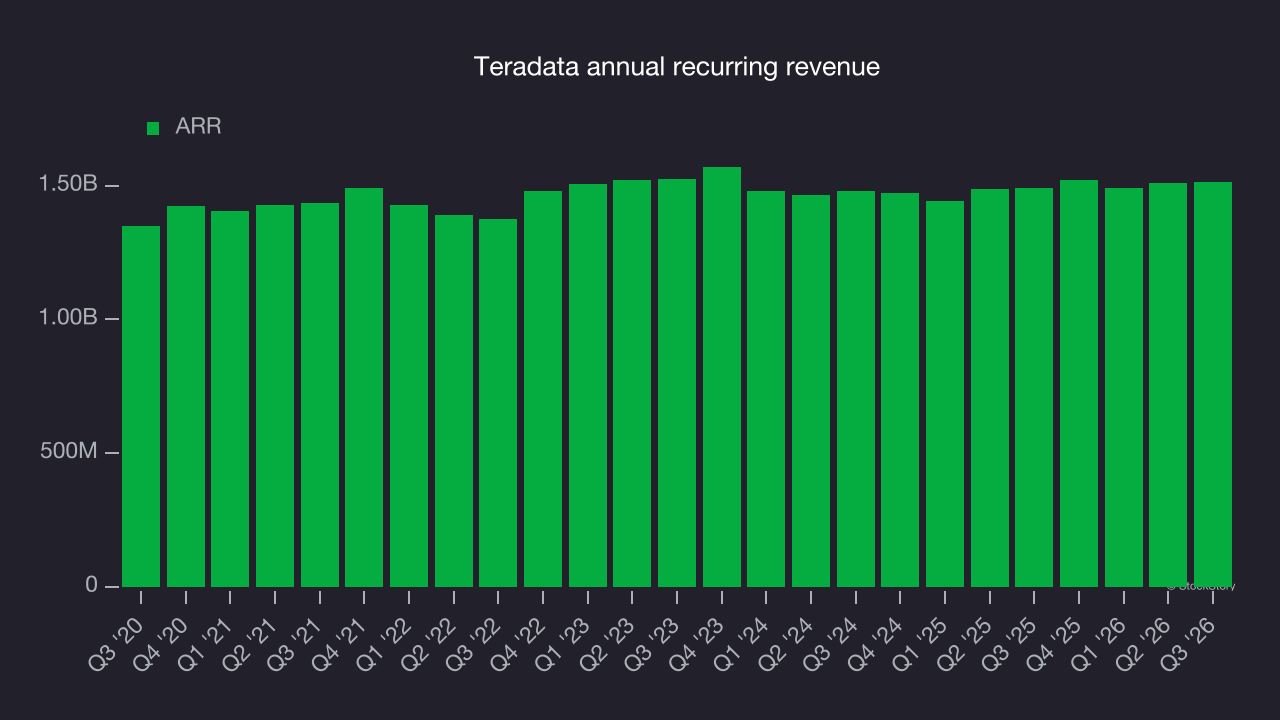
Customer acquisition efficiency
The customer acquisition cost, or CAC, payback period measures the months a company needs to recoup the money spent on acquiring a new customer. This metric helps assess how quickly a business can break even on its sales and marketing investments.
It’s relatively expensive for Teradata to acquire new customers as its CAC payback period was 72.9 months this quarter. The company’s slow recovery of its sales and marketing expenses indicates it operates in a highly competitive market and must invest to stand out, even if the return on that investment is low.
Key takeaways from Teradata’s Q3 results
Teradata’s Q3 results were mixed, with key positives in profitability and the earnings outlook. Adjusted operating income beat Wall Street’s consensus estimates by a wide margin, and EPS guidance for next quarter was well above analysts’ consensus expectations. But billings missed estimates, and annual recurring revenue was in line with Wall Street’s consensus. Shares remained flat at $32.64 immediately after the results.
An investment decision should take into account valuation, business quality and the latest earnings. Read the full research report here (it’s free).