In a move that has fundamentally reshaped the landscape of the pharmaceutical industry, Isomorphic Labs—the London-based drug discovery arm of Alphabet Inc. (NASDAQ: GOOGL)—has solidified its position at the forefront of the AI revolution. Through landmark strategic partnerships with Eli Lilly and Company (NYSE: LLY) and Novartis (NYSE: NVS) valued at nearly $3 billion, the DeepMind spin-off is moving beyond theoretical protein folding to the industrial-scale design of novel therapeutics. These collaborations represent more than just financial transactions; they signal a paradigm shift from traditional "trial-and-error" laboratory screening to a predictive, "digital-first" approach to medicine.
The significance of these deals lies in their focus on "undruggable" targets—biological mechanisms that have historically eluded traditional drug development. By leveraging the Nobel Prize-winning technology of AlphaFold 3, Isomorphic Labs is attempting to solve the most complex puzzles in biology: how to design small molecules and biologics that can interact with proteins previously thought to be inaccessible. As of early 2026, these partnerships have already transitioned from initial target identification to the generation of multiple preclinical candidates, setting the stage for a new era of AI-designed medicine.
Engineering the "Perfect Key" for Biological Locks
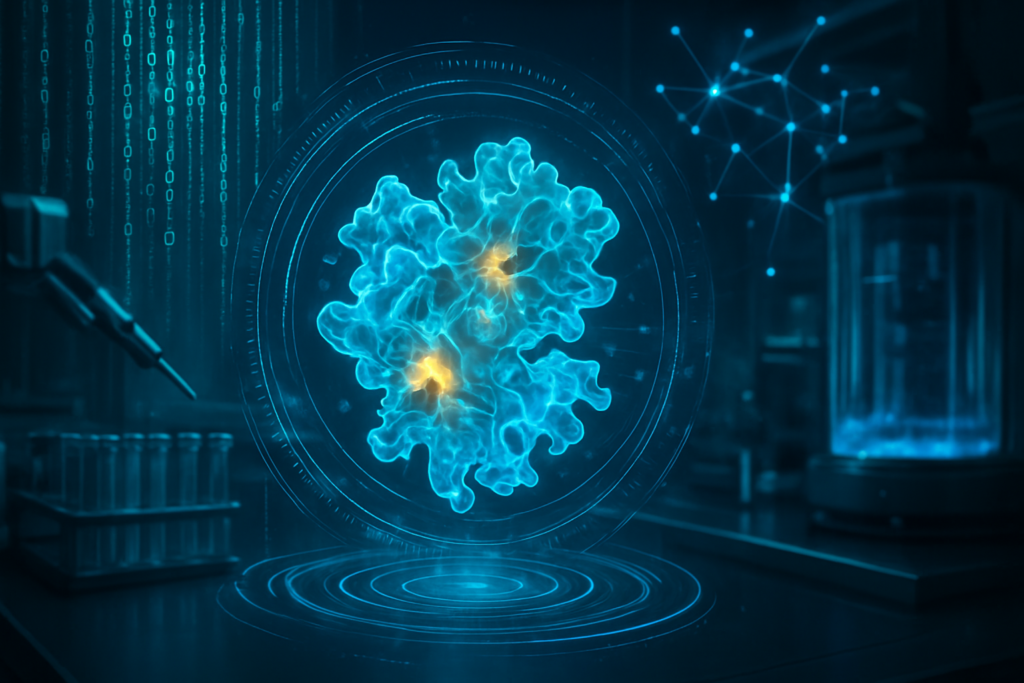
The technical engine driving these partnerships is AlphaFold 3, the latest iteration of the revolutionary protein-folding AI. While earlier versions primarily predicted the static 3D shapes of proteins, the current technology allows researchers to model the dynamic interactions between proteins, DNA, RNA, and ligands. This capability is critical for designing small molecules—the chemical compounds that make up most traditional drugs. Isomorphic’s platform uses these high-fidelity simulations to identify "cryptic pockets" on protein surfaces that are invisible to traditional imaging techniques, allowing for the design of molecules that fit with unprecedented precision.
Unlike previous computational chemistry methods, which often relied on physics-based simulations that were too slow or inaccurate for complex systems, Isomorphic’s deep learning models can screen billions of potential compounds in a fraction of the time. This "generative" approach allows scientists to specify the desired properties of a drug—such as high binding affinity and low toxicity—and let the AI propose the chemical structures that meet those criteria. The industry has reacted with cautious optimism; while AI-driven drug discovery has faced skepticism in the past, the 2024 Nobel Prize in Chemistry awarded to Isomorphic CEO Demis Hassabis and Chief Scientist John Jumper has provided immense institutional validation for the platform's underlying science.
A New Power Dynamic in the Pharmaceutical Sector
The $3 billion commitment from Eli Lilly and Novartis has sent ripples through the biotech ecosystem, positioning Alphabet as a formidable player in the $1.5 trillion global pharmaceutical market. For Eli Lilly, the partnership is a strategic move to maintain its lead in oncology and immunology by accessing "AI-native" chemical spaces that its competitors cannot reach. Novartis, which doubled its commitment to Isomorphic in early 2025, is using the partnership to refresh its pipeline with high-value targets that were previously deemed too risky or difficult to pursue.
This development creates a significant competitive hurdle for other major AI labs and tech giants. While NVIDIA Corporation (NASDAQ: NVDA) provides the infrastructure for drug discovery through its BioNeMo platform, Isomorphic Labs benefits from a unique vertical integration—combining Google’s massive compute power with the specialized biological expertise of the former DeepMind team. Smaller AI-biotech startups like Recursion Pharmaceuticals (NASDAQ: RXRX) and Exscientia are now finding themselves in an environment where the "entry fee" for major pharma partnerships is rising, as incumbents increasingly seek the deep-tech capabilities that only the largest AI research organizations can provide.
From "Trial and Error" to Digital Simulation
The broader significance of the Isomorphic-Lilly-Novartis alliance cannot be overstated. For over a century, drug discovery has been a process of educated guesses and expensive failures, with roughly 90% of drugs that enter clinical trials failing to reach the market. The move toward "Virtual Cell" modeling—where AI simulates how a drug behaves within the complex environment of a living cell rather than in isolation—represents the ultimate goal of this digital transformation. If successful, this shift could drastically reduce the cost of developing new medicines, which currently averages over $2 billion per drug.
However, this rapid advancement is not without its concerns. Critics point out that while AI can predict how a molecule binds to a protein, it cannot yet fully predict the "off-target" effects or the complex systemic reactions of a human body. There are also growing debates regarding intellectual property: who owns the rights to a molecule "invented" by an algorithm? Despite these challenges, the current momentum mirrors previous AI milestones like the breakthrough of Large Language Models, but with the potential for even more direct impact on human longevity and health.
The Horizon: Clinical Trials and Beyond
Looking ahead to the remainder of 2026 and into 2027, the primary focus will be the transition from the computer screen to the clinic. Isomorphic Labs has recently indicated that it is "staffing up" for its first human clinical trials, with several lead candidates for oncology and immune-mediated disorders currently in the IND-enabling (Investigational New Drug) phase. Experts predict that the first AI-designed molecules from these specific partnerships could enter Phase I trials by late 2026, providing the first real-world test of whether AlphaFold-designed drugs perform better in humans than those discovered through traditional means.
Beyond small molecules, the next frontier for Isomorphic is the design of complex biologics and "multispecific" antibodies. These are large, complex molecules that can attack a disease from multiple angles simultaneously. The challenge remains the sheer complexity of human biology; while AI can model a single protein-ligand interaction, modeling the entire "interactome" of a human cell remains a monumental task. Nevertheless, the integration of "molecular dynamics"—the study of how molecules move over time—into the Isomorphic platform suggests that the company is quickly closing the gap between digital prediction and biological reality.
A Defining Moment for AI in Medicine
The $3 billion partnerships between Isomorphic Labs, Eli Lilly, and Novartis mark a defining moment in the history of artificial intelligence. It is the moment when AI moved from being a "useful tool" for scientists to becoming the primary engine of discovery for the world’s largest pharmaceutical companies. By tackling the "undruggable" and refining the design of novel molecules, Isomorphic is proving that the same technology that mastered games like Go and predicted the shapes of 200 million proteins can now be harnessed to solve the most pressing challenges in human health.
As we move through 2026, the industry will be watching closely for the results of the first clinical trials born from these collaborations. The success or failure of these candidates will determine whether the "AI-first" promise of drug discovery can truly deliver on its potential to save lives and lower costs. For now, the massive capital and intellectual investment from Lilly and Novartis suggest that the "trial-and-error" era of medicine is finally coming to an end, replaced by a future where the next life-saving cure is designed, not found.
This content is intended for informational purposes only and represents analysis of current AI developments.
TokenRing AI delivers enterprise-grade solutions for multi-agent AI workflow orchestration, AI-powered development tools, and seamless remote collaboration platforms.
For more information, visit https://www.tokenring.ai/.