Experienced Tucson criminal defense attorney explains what qualifies as disorderly conduct in Arizona, the legal consequences, and how these charges can be challenged in court.
TUCSON, AZ / ACCESS Newswire / March 31, 2026 / Disorderly conduct is one of the most frequently charged offenses in Arizona, yet it remains widely misunderstood. According to Tucson criminal defense attorney Edward F. Cohn, many individuals face charges without fully understanding what behavior qualifies under state law or how these cases are evaluated in court.
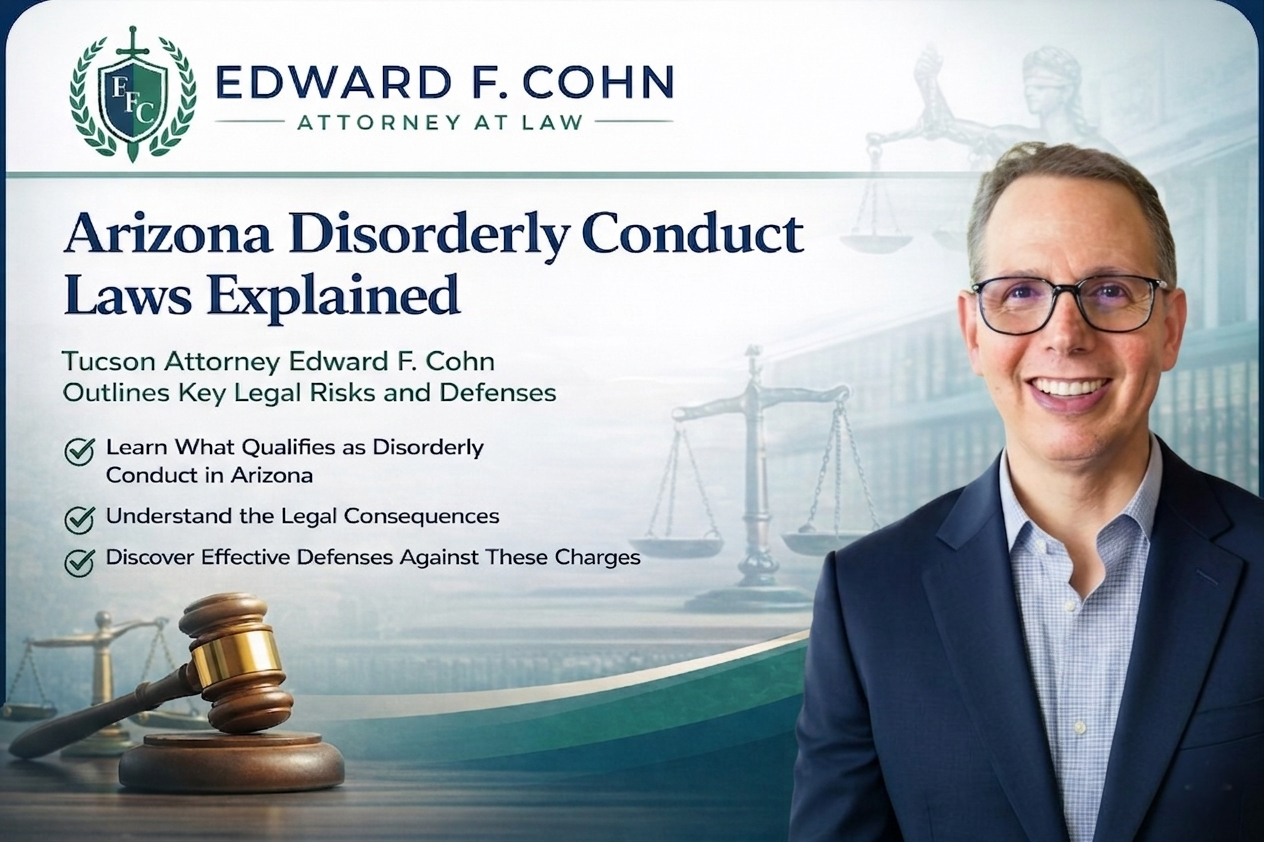
What Qualifies as Disorderly Conduct in Arizona?
Disorderly conduct in Arizona refers to behavior that disturbs the peace or quiet of another person, including fighting, excessive noise, or other disruptive conduct, and is typically prosecuted as a misdemeanor.
Why Disorderly Conduct Charges Are More Complex Than They Appear
Unlike more clearly defined criminal offenses, disorderly conduct often depends on context and interpretation. Law enforcement officers and courts evaluate whether the behavior:
Created a public disturbance
Escalated into a potential threat
Provoked a reaction from others
Violated public order standards
Because of this, similar situations can lead to different outcomes depending on how the incident is perceived and documented.
"Disorderly conduct is not always as straightforward as people assume," said Edward F. Cohn. "Two individuals can describe the same situation very differently, which makes the evidence and context especially important."
Legal Classification and Potential Consequences
In Arizona, disorderly conduct is usually charged as a misdemeanor, but the penalties can still include fines, probation, or jail time depending on the circumstances.
Even without jail time, a conviction may:
Remain on a criminal record
Appear in background checks
Influence future legal matters
When Does Behavior Cross the Line Into a Criminal Charge?
Certain actions are more likely to result in a disorderly conduct charge, including:
Physical altercations or threats
Loud or disruptive arguments in public
Use of language intended to provoke confrontation
Ignoring lawful instructions from law enforcement
However, not every heated situation meets the legal threshold, which is why each case must be carefully evaluated.
Can Disorderly Conduct Charges Be Challenged?
Yes, disorderly conduct charges can be challenged by questioning the evidence, the intent behind the behavior, and whether the legal definition of the offense has been met.
Defense approaches often focus on:
Lack of intent to disturb the peace
Misinterpretation of the situation
Insufficient or conflicting evidence
The Role of Evidence in These Cases
Disorderly conduct cases frequently rely on police reports, witness statements, and video or audio recordings. Because these sources can conflict, building a defense often involves identifying inconsistencies or gaps in the narrative presented.
"What matters is not just what happened, but what can be proven," Cohn noted. "That distinction is critical in disorderly conduct cases."
Common Misconceptions About Disorderly Conduct in Arizona
A common misconception is that disorderly conduct is a minor issue that does not require legal attention, when in reality it can carry lasting legal and personal consequences. Other misconceptions include:
Believing the charge will automatically be dropped
Assuming no defense is necessary for a misdemeanor
Thinking intent does not matter in the outcome of the case
Frequently Asked Questions
Is disorderly conduct a felony or misdemeanor in Arizona? In most cases, disorderly conduct in Arizona is charged as a Class 1 misdemeanor, though certain circumstances involving weapons can elevate the charge to a felony.
Can a disorderly conduct charge be dismissed in Arizona? Yes. A disorderly conduct charge can be dismissed if there is insufficient evidence, lack of proven intent, or procedural errors in how the arrest was handled.
Do I need a lawyer for a disorderly conduct charge in Arizona? Yes. Even misdemeanor charges can result in a criminal record, fines, and probation. An experienced attorney can identify weaknesses in the case and pursue reduction or dismissal of charges.
About Edward F. Cohn
Edward F. Cohn is a criminal defense attorney based in Tucson, Arizona, with more than 23 years of experience handling misdemeanor and felony cases, including disorderly conduct, orders of protection, and injunctions against harassment. He is recognized among the National Trial Lawyers Top 100 and holds an AV Preeminent rating from Martindale-Hubbell, awarded consecutively from 2022 through 2026. He also holds an Avvo 10.0 Superb rating and is a Platinum Client Champion on Lawyers.com.
He represents clients throughout Tucson, Pima County, Marana, Oro Valley, Green Valley, and Vail.
Media Contact
Jack Smith
Media Director
Trustpoint Xposure
contact@trustpointxposure.com
SOURCE: Edward F. Cohn
View the original press release on ACCESS Newswire