NEW YORK CITY, NY / ACCESS Newswire / July 25, 2026 / Robinhood co-founder Baiju Bhatt shared his vision for Cowboy Space Corporation during an interview with The Frontier Ledger, outlining the company's long-term plans to develop space-based AI computing infrastructure powered by solar energy in low Earth orbit.
Bhatt, who stepped back from his operating role at Robinhood in 2024, said Cowboy Space is focused on addressing one of artificial intelligence's emerging infrastructure challenges: the growing demand for energy required to support high-performance computing.
According to the company, Cowboy Space raised $275 million in financing in May 2026 at a reported $2 billion valuation. The company is developing launch vehicles and spacecraft designed to support GPU-based computing platforms powered by solar energy in orbit.
"One of the biggest constraints on AI is access to reliable power," said Bhatt. "We believe space presents an opportunity to rethink where high-density computing can take place by utilizing abundant solar energy available in orbit."
Addressing Growing AI Infrastructure Demand
Global demand for data center capacity continues to increase as organizations deploy larger AI models and compute-intensive workloads. Industry forecasts indicate rising electricity consumption by AI infrastructure, while new terrestrial data centers often face extended timelines for grid interconnection and other infrastructure constraints.
Bhatt said Cowboy Space is exploring an alternative architecture that performs certain latency-tolerant AI workloads directly in orbit rather than transmitting power back to Earth.
"Our goal is to consume the energy where it is generated," Bhatt said. "Instead of transmitting solar power to Earth, we believe there may be advantages to performing suitable compute workloads in space."
Integrated Orbital Computing Platform
According to Bhatt, Cowboy Space is designing an integrated system in which the launch vehicle's upper stage transitions into an operational orbital computing platform after reaching orbit.
The proposed architecture combines solar arrays, power systems, thermal management, GPU computing hardware, and optical communications into a single platform intended to maximize mass efficiency.
The company believes this integrated approach could reduce structural redundancy while increasing the amount of usable computing capacity deployed during each launch.
Development Roadmap
Cowboy Space stated that its development program will advance through multiple demonstration phases before commercial deployment.
According to the company, planned milestones include:
A subscale demonstration mission later in 2026 in partnership with Apex Space to evaluate infrared wireless power transmission technologies.
An initial "Galactic Brain" orbital compute demonstration targeted for 2027 utilizing NVIDIA space-qualified computing modules.
A proprietary launch vehicle carrying a production-scale orbital compute platform targeted for 2028.
The company also stated that it is pursuing regulatory approvals related to a proposed satellite constellation intended to support future orbital computing operations.
Bhatt emphasized that the company's long-term objective is to complement existing terrestrial data centers rather than replace them, with an initial focus on compute-intensive workloads that can tolerate higher communication latency.
Engineering and Leadership
Cowboy Space has established an engineering office in Seattle and is expanding its technical team across spacecraft engineering, propulsion, avionics, software, and mechanical systems.
The leadership team includes David Larson, formerly of SpaceX and Amazon, as head of satellite engineering; Warren Lamont, previously with Blue Origin, leading propulsion; and Tyler Grinnell, formerly of SpaceX launch operations, supporting launch system development.
"We ask 'why' at every stage," Bhatt said. "Why does a data center have to look the way it does today? Why should launch vehicles and payloads remain separate systems? Those questions guide our engineering approach."
Technical Challenges
Bhatt acknowledged that significant engineering challenges remain before orbital AI infrastructure can become commercially viable.
Among the technical considerations are thermal management in vacuum, radiation protection for computing hardware, reliable optical communications, launch economics, and long-term orbital sustainability.
"The physics are demanding," Bhatt said. "Our approach is to validate each technology incrementally before scaling."
Investor Support
According to the company, Cowboy Space's recent financing included participation from investors focused on climate technologies and AI infrastructure, including Breakthrough Energy Ventures, Andreessen Horowitz, NEA, and Index Ventures.
The company said the funding will support continued technology development, engineering hiring, and upcoming demonstration missions.
Entrepreneurial Lessons
Reflecting on his experience building Robinhood, Bhatt said rapid iteration and customer feedback were central to the company's early development.
"Every week we'd build something, show it to users, learn from their reactions, and improve it," he said.
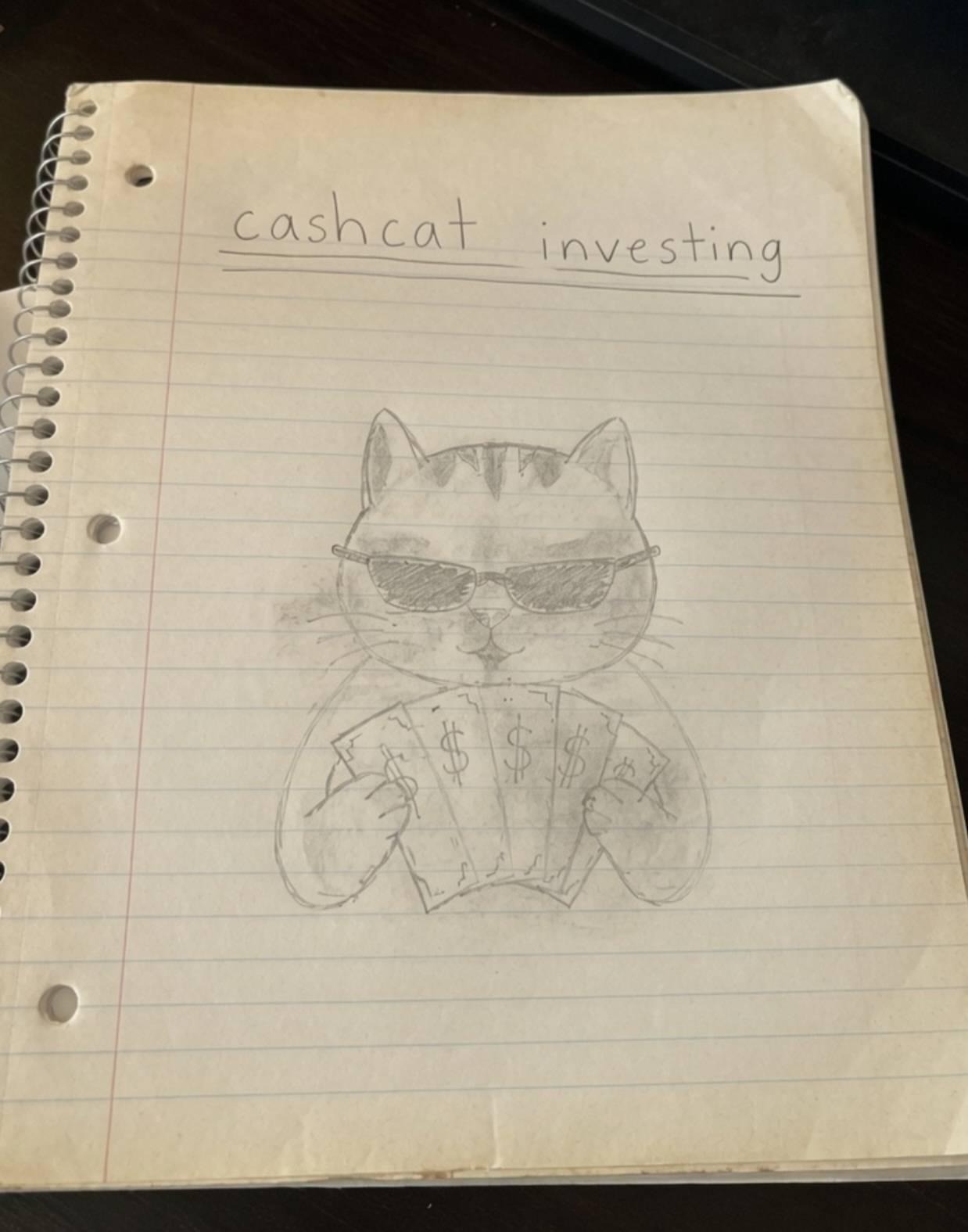
Bhatt also recalled that, before settling on Robinhood, the team explored a range of branding concepts-including an internal mascot idea known as "Cash Cat." The concept was little more than a rough pencil sketch of a cat clutching a stack of bills, with the nickname "Penny" floating around for the character. For a brief moment, the team even considered building the company's personality around it before the Robinhood name ultimately prevailed. Bhatt said he still keeps the original sketch tucked away among old notebooks and early prototypes. "It's funny because at the time it felt like a serious idea," he said. "That's just how startups work. You throw hundreds of ideas at the wall, and maybe one becomes the thing everyone remembers. The others become stories."
He added that building exceptional teams remains one of the most important factors in creating successful companies.
"Founders don't build great companies alone," Bhatt said. "They build teams capable of solving difficult problems together."
Looking Ahead
Cowboy Space said its immediate focus remains on demonstrating core technologies before pursuing larger-scale deployment.
"The constraints facing AI infrastructure continue to grow," Bhatt said. "We believe it's worth exploring new approaches that expand the world's computing capacity."
About Cowboy Space Corporation
Cowboy Space Corporation is developing space-based infrastructure intended to support next-generation AI computing. The company is pursuing an integrated approach that combines launch systems, spacecraft, and orbital computing platforms powered by solar energy.
About Osso Magazine
Osso Magazine is a digital publication covering business, entrepreneurship, technology, and culture through interviews and feature reporting.
Media Contact
Charles Dunn
Osso Magazine
Email: charlesdunn@ossomagazine.com
Website: ossomagazine.com
SOURCE: Osso Magazine
View the original press release on ACCESS Newswire