If you’re buying gold (GCM26) ETFs for inflation protection, check your math.
We witnessed the “yellow metal” go parabolic during 2025. And essentially straight up during the early part of this year. Now? Not so much.
This chart of the SPDR Gold Trust (GLD) going back two years is chock full of information that helps me characterize its current state and price trend. And, by association, how much risk am I taking to pursue return?
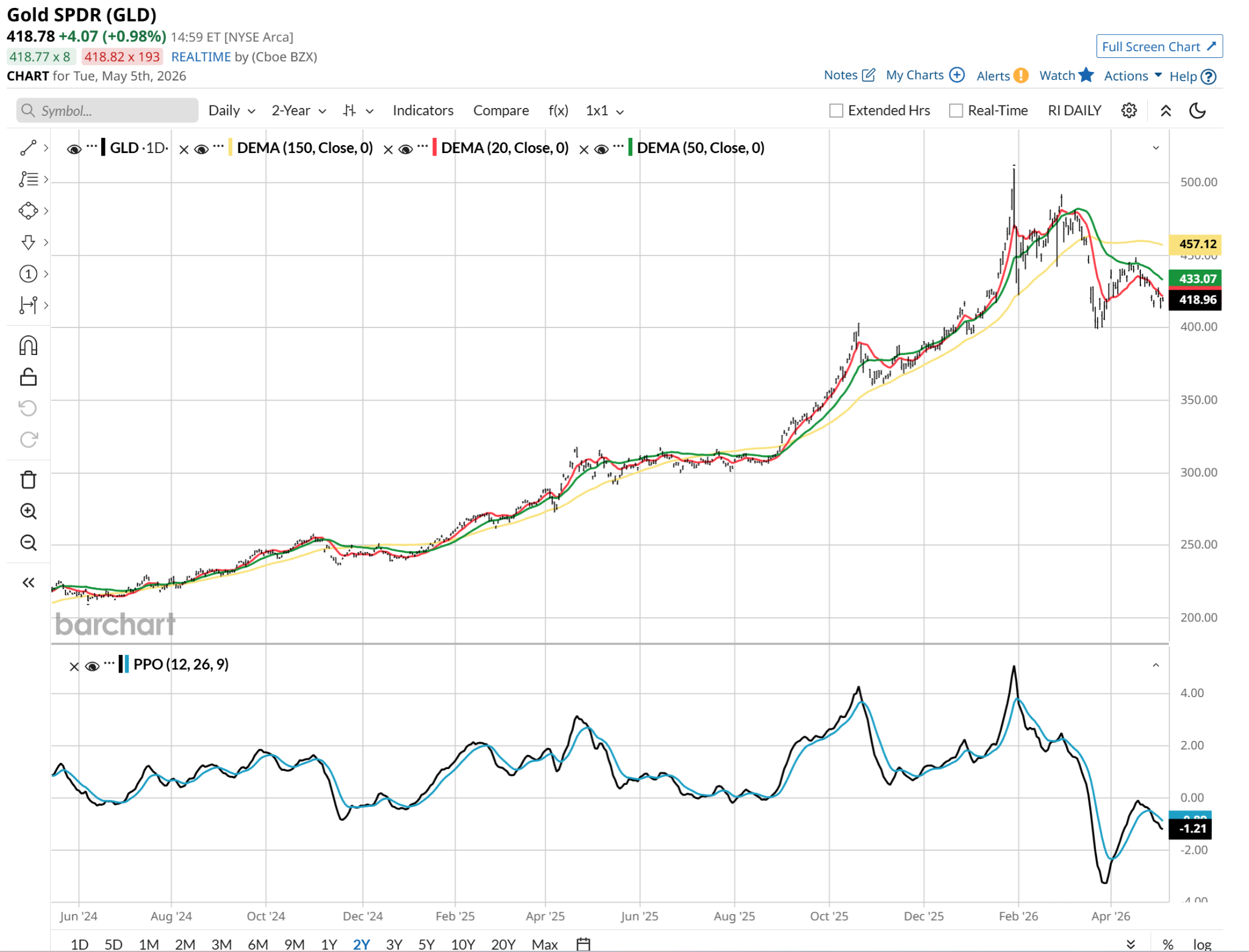
GLD is no stranger to wild and volatile moves. It sprinted from $250 to $300 before you could say “Midas.” Then, it rested like it was the Sabbath.
Wake Me Up When September Ends
That prompted another string of “green days” for GLD, as it became the “obvious” trade everyone bragged about. Whether they actually bought it cheap or not. $300 to $500 in about five months’ time.
Yet just as quickly, as the chorus of gold bugs and gold speculators came out in droves, GLD did what it typically does when the hype gets loud: it comes right back down to earth. $500 to $400, and almost to the dollar.
As much as the price of gold matters, the price of the GLD ETF also matters. It didn’t always used to be this way, but I think that the ETF-ization of the markets has made “magic numbers” like $500 and $500 around stop-order levels a real thing.
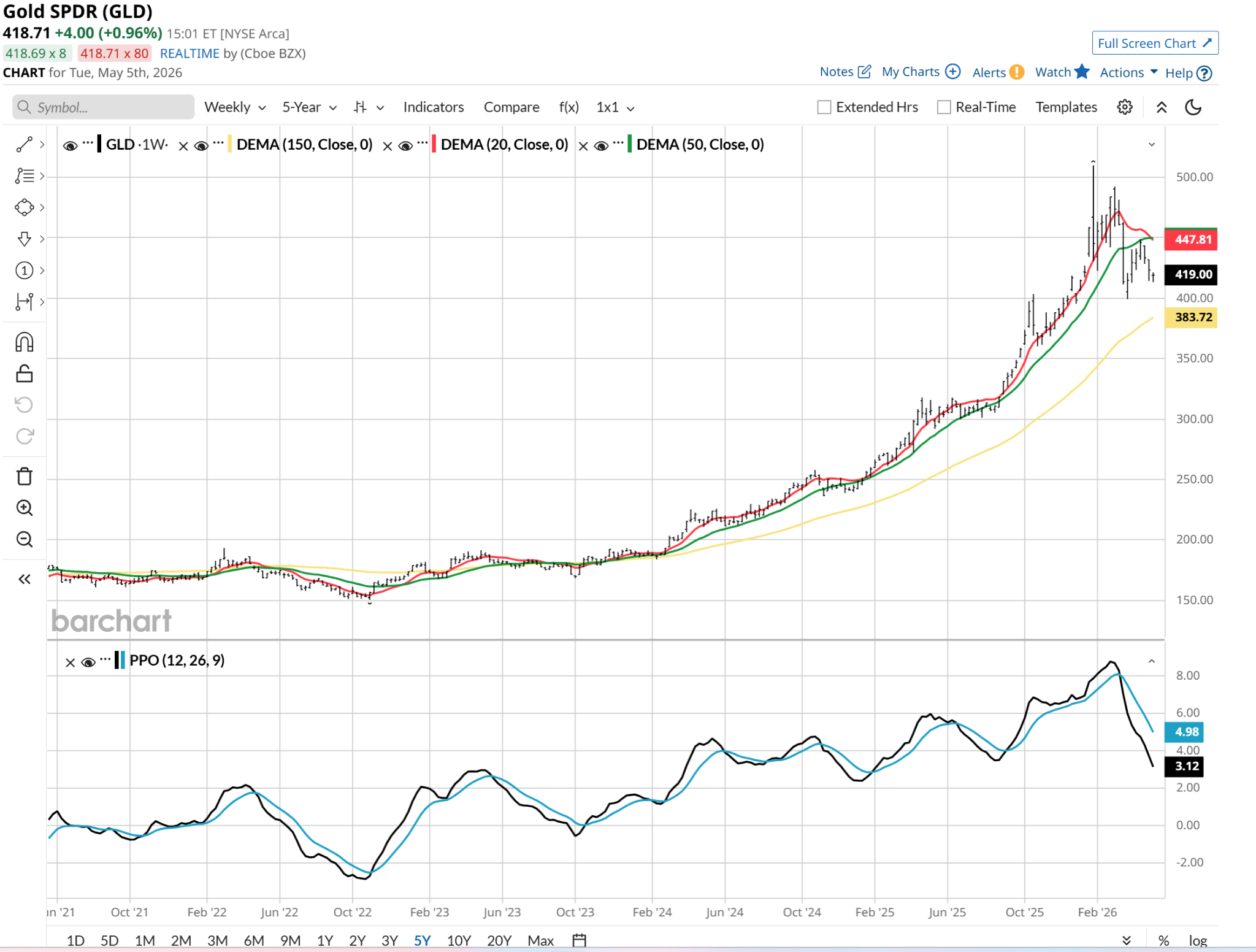
That’s all just price talk. GLD currently is showing serious price weakness via the percentage price oscillator (PPO) indicator at bottom, which is sliding on both the daily and weekly charts I showed you above. So, now what? And why is this happening?
For decades, the “gold bugs” have sold the yellow metal as the ultimate inflation hedge. And while that narrative seems logical during a CPI spike, it misses the true nature of gold in a contemporary portfolio. It is not the inflation factor I’m so concerned with, it is the market now viewing it as a diversifier. That’s regardless of inflation fears. And it works both ways, making gold another asset we can add to the list of risk on/risk off trades.
Except unlike other asset classes, it does tend to move on its own. That makes GLD and its peers very valuable ETFs to consider. The way I do it in my ROAR 10 ETF model portfolio is to keep GLD on my “active roster,” like a sports team. That is, I always own it, even just a little. And I cap the weight in it as well. I use my ROAR Score to adjust the position, along with the other 9 ETF “dials” in that portfolio.
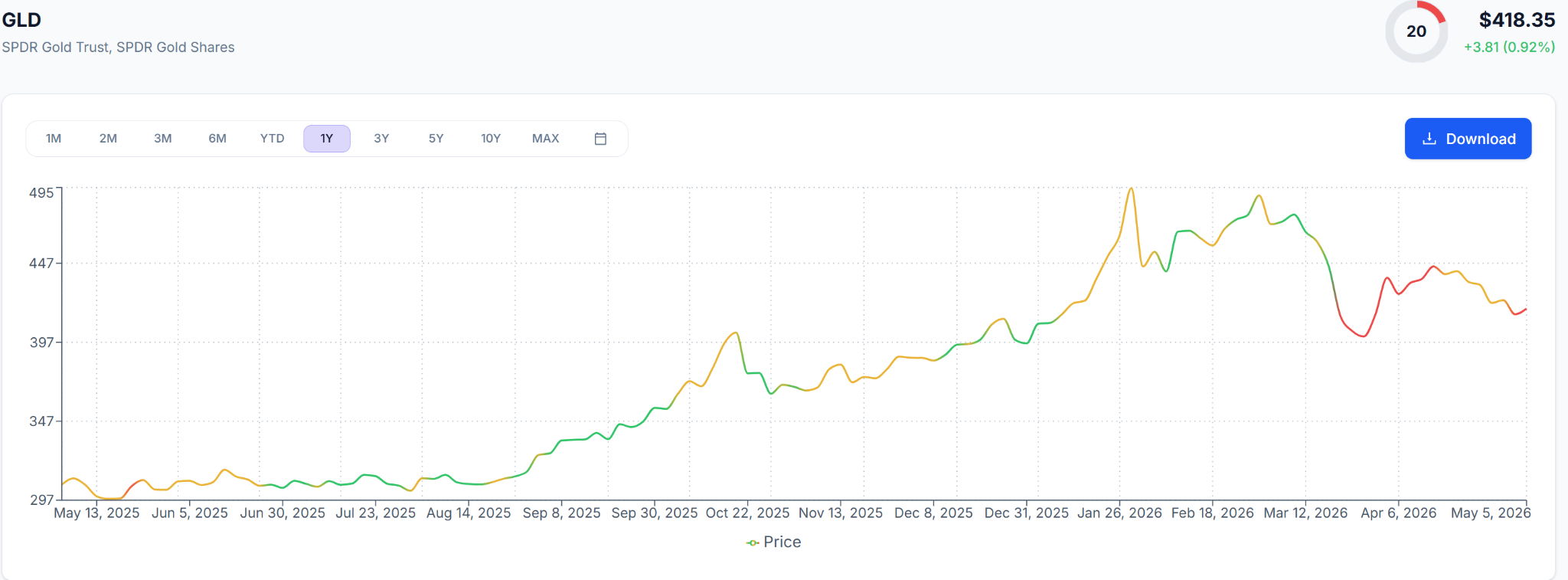
Looking at this chart of GLD’s price and ROAR Score color coding, we see that it has been a de-emphasized position for a couple of months now. That score of 20 implies that while there will eventually be another strong opportunity to load up on GLD, it isn’t right now.
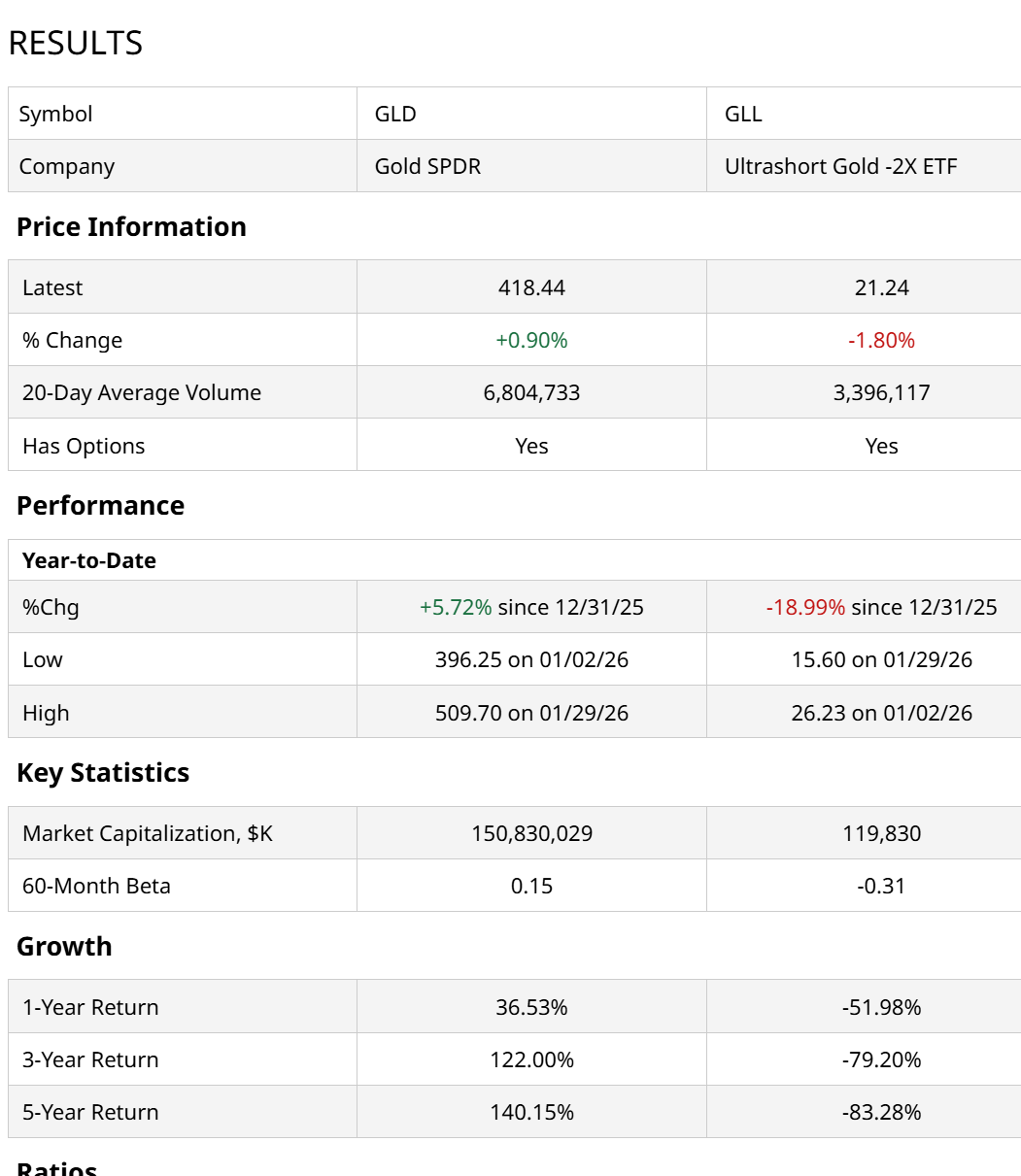
That might tempt some to look at shorting gold through an ETF like the ProShares UltraShort Gold (GLL), which is 2x the inverse move of ETFs like GLD. The math of inverse ETF investing is compounded by the leverage here. So GLL is for smallish positions, and strong intestinal fortitude. Still, we can see in the beta row above that it has done its job over the past five years. Its beta is -2x that of GLD, which itself has a very low 0.15% beta to the stock market.
And that’s precisely my point! GLD and the other ETFs like it have a more mixed record as inflation fighters. But a strong record as low-correlation ETFs. This is what I’m searching for now in a market burdened with sameness.
Rob Isbitts created the ROAR Score, based on his 40+ years of technical analysis experience. ROAR helps DIY investors manage risk and create their own portfolios. For Rob’s written research, check out ETFYourself.com.
On the date of publication, Rob Isbitts did not have (either directly or indirectly) positions in any of the securities mentioned in this article. All information and data in this article is solely for informational purposes. For more information please view the Barchart Disclosure Policy here.
More news from Barchart
- If You’re Still Buying Gold ETFs to Protect Against Inflation, Stop
- Is Gold Inexpensive at $4,550 per Ounce?
- 3 Under-the-Radar Gold Mining Companies Analysts Think Will Surge More Than 50%
- Silver Prices Have Pulled Back, But Bank of America Predicts They Could Soar to $309 Before the End of 2026. How?