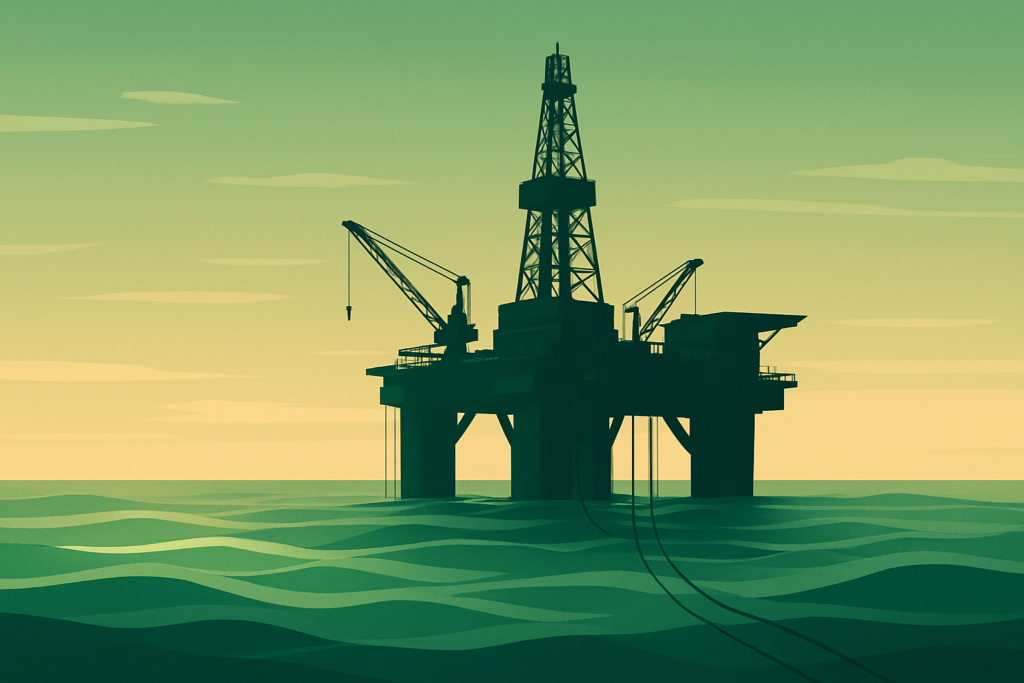
As of February 20, 2026, the offshore drilling industry is witnessing a tectonic shift, and at its epicenter stands Transocean Ltd. (NYSE: RIG). After a decade defined by brutal restructuring and a fight for survival following the 2014 oil collapse, Transocean has re-emerged not just as a survivor, but as a consolidator. The company’s recent announcement of a $5.8 billion all-stock merger with Valaris has sent shockwaves through the energy sector, signaling the start of a "disciplined duopoly" era in offshore services. With day rates for ultra-deepwater (UDW) rigs flirting with the $500,000 mark and a multi-year backlog of work in Brazil and West Africa, Transocean is currently the primary proxy for the global "offshore renaissance."
Historical Background
Transocean’s history is a mirror of the offshore industry’s evolution. Founded through a series of mergers involving pioneering firms like Sonat Offshore and Sedco Forex, the company has always aimed for the technological "bleeding edge." It was the first to drill in the deepwater Gulf of Mexico and pioneered the use of dual-activity drilling.
However, the company’s legacy is also inextricably linked to the 2010 Deepwater Horizon tragedy, which led to years of litigation and a fundamental overhaul of safety protocols. Following that era, the 2014-2020 period was a "dark age" for offshore drillers as U.S. shale dominated capital flows. Transocean spent those years aggressively "high-grading" its fleet—scrapping dozens of older, mid-water rigs to focus exclusively on the highest-specification, 7th-generation drillships. This high-stakes bet on deepwater technology is only now beginning to pay off in full.
Business Model
Transocean operates as a pure-play offshore drilling contractor. Its primary revenue source is the "day rate"—a daily fee paid by oil majors (like Shell, Chevron, and Petrobras) for the use of its massive, floating drilling platforms.
The company segments its fleet into two primary categories:
- Ultra-Deepwater (UDW): Rigs capable of drilling in water depths over 10,000 feet. This is Transocean’s crown jewel, hosting the most technologically advanced rigs in the world, such as the Deepwater Titan.
- Harsh Environment: Specialized rigs designed for extreme conditions, such as the Norwegian North Sea, where high winds and massive waves are constant.
The pending merger with Valaris adds a third significant pillar: High-Spec Jackups. This move marks a strategic pivot, as Transocean had previously divested most of its jackup fleet to focus on deepwater. By re-entering the jackup market via Valaris, Transocean aims to offer a "one-stop shop" for national oil companies (NOCs) in the Middle East and Southeast Asia.
Stock Performance Overview
The performance of RIG stock over the last decade has been a tale of two halves.
- 10-Year View: On a 10-year horizon, the stock remains significantly down from its pre-2014 highs, reflecting the massive dilution and debt restructuring required to stay afloat during the downturn.
- 5-Year View: The 5-year chart shows a jagged but clear recovery, rising from the "penny stock" levels of the 2020 pandemic to a more stable trading range as oil prices stabilized above $70.
- 1-Year View: Over the last 12 months (Feb 2025–Feb 2026), RIG has outperformed the broader energy index (XLE) by approximately 15%, driven by the "clearing of the runway" for its debt maturities and the surprise Valaris merger announcement.
Financial Performance
In the fiscal year 2025, Transocean reported operating revenues of $3.965 billion, a 13% increase year-over-year. The company’s revenue efficiency—a key metric measuring actual vs. maximum potential revenue—stood at a robust 96.5%.
While the company reported a GAAP net loss of $2.915 billion in 2025, this was primarily due to a massive $3.04 billion non-cash impairment charge as they retired older assets to prepare for the Valaris integration. On an adjusted basis, Transocean turned its first annual profit in years, with an adjusted net income of $37 million ($0.04 per share). Most importantly, free cash flow surged to $626 million in 2025, allowing the company to tackle its debt wall.
Leadership and Management
In mid-2025, Transocean executed a seamless leadership transition. Keelan Adamson, a 30-year veteran who began his career on the drill floor, was named CEO, succeeding Jeremy Thigpen. Thigpen remains active as the Executive Chairman.
Adamson is widely respected for his operational expertise and was the architect of the company’s recent "Smart Rig" initiatives. His strategy focuses on operational excellence and "contract discipline"—refusing to sign long-term deals at low rates, a mistake that plagued the industry in previous cycles. Following the close of the Valaris merger, the board is expected to expand, integrating two directors from the Valaris side to ensure a smooth transition.
Products, Services, and Innovations
Transocean’s competitive edge lies in its "8th-Generation" capabilities. The Deepwater Atlas and Deepwater Titan are the only rigs in the world equipped with 20,000 psi (20k) blowout preventers, allowing them to drill in high-pressure, high-temperature reservoirs that were previously unreachable.
Innovation focuses on automation:
- HaloGuard: A wearable technology that integrates with the rig's operating system to stop machinery if a crew member enters a "red zone."
- Robotic Riser Systems: Reducing the time required to deploy drilling equipment, which can save operators millions in "non-productive time" (NPT).
- Emissions Reductions: Integrating battery storage and fuel additives to reduce the carbon footprint of its massive diesel engines.
Competitive Landscape
The industry has consolidated into a "Big Three": Transocean, Noble Corporation (NYSE: NE), and Seadrill.
- Transocean: Following the Valaris merger, it becomes the undisputed leader by rig count (73 units) and backlog ($10 billion combined).
- Noble Corporation: Remains the leanest competitor with high utilization and a strong presence in the North Sea.
- Seadrill: After its own restructuring, it remains a potent force but lacks the 20k-psi ultra-deepwater niche that Transocean dominates.
Industry and Market Trends
The "Mid-Cycle Pause" of early 2026 has seen some day rates plateau at $480,000–$500,000, down from peak whispers of $600,000. However, the macro-drivers remain bullish.
- Energy Security: Geopolitical tensions have forced European and Asian nations to look for stable offshore sources rather than relying on pipeline gas from volatile regions.
- New Frontiers: Namibia has emerged as the "next Guyana," with massive discoveries by TotalEnergies and Shell creating a new, long-term demand center for UDW rigs.
- Supply Scarcity: No new drillships have been ordered in nearly a decade. With a lead time of 3-4 years for a new-build, the existing fleet of high-spec rigs is all the world has for the foreseeable future.
Risks and Challenges
Despite the optimism, Transocean is not without significant risks:
- Debt Load: Even with refinancing, Transocean still carries $5.68 billion in debt. High interest rates make servicing this load expensive, leaving little room for operational errors.
- Execution Risk: Merging with Valaris is a monumental task. Integrating two massive fleets, corporate cultures, and IT systems could lead to short-term operational friction.
- Commodity Volatility: Offshore projects require oil prices to stay consistently above $60-$70 for long-term viability. A global recession that crashes oil prices would dry up the backlog of new contracts.
Opportunities and Catalysts
- Synergy Realization: Management expects $200 million in annual cost synergies from the Valaris merger by late 2027.
- Namibian Boom: As Namibia moves from exploration to development, Transocean is the front-runner for multi-year "fleet-wide" contracts.
- Debt De-leveraging: If day rates hit $550k in 2027 as some analysts predict, Transocean could theoretically clear its net debt within 4-5 years, potentially opening the door for its first dividend since 2015.
Investor Sentiment and Analyst Coverage
Wall Street sentiment is currently "Cautiously Bullish." Following the merger announcement, several analysts upgraded the stock, citing the increased scale and pricing power. Hedge funds have been increasing their positions in RIG, viewing it as a "coiled spring" for 2027. Retail sentiment remains volatile, often tied to daily swings in Brent Crude prices, but institutional ownership has climbed back above 65% for the first time in years.
Regulatory, Policy, and Geopolitical Factors
The regulatory environment is a double-edged sword. While the "Green Transition" creates long-term headwinds, current policy in the U.S. and Brazil has pivoted toward "Energy Pragmatism."
- Geopolitics: The "Golden Triangle" (U.S. Gulf, Brazil, West Africa) remains the most stable region for offshore drilling.
- Environmental Policy: Transocean is under increasing pressure to reduce rig emissions. While this increases R&D costs, it also creates a barrier to entry, as older, dirtier rigs cannot compete for contracts with "ESG-conscious" majors like BP or Equinor.
Conclusion
Transocean Ltd. enters 2026 as a significantly different company than it was just two years ago. By swallowing its largest rival, Valaris, it has positioned itself as the "800-pound gorilla" of the offshore world. For investors, the thesis is clear: Transocean is a high-leverage bet on the longevity of the deepwater oil cycle. While its debt remains a shadow over the balance sheet, the combination of record day rates, a massive $10 billion combined backlog, and a technological monopoly on 20k-psi drilling makes it the primary beneficiary of the global push for energy security. Investors should closely watch the integration of the Valaris fleet and the 2026 debt repayment milestones as the key indicators of long-term success.
This content is intended for informational purposes only and is not financial advice.