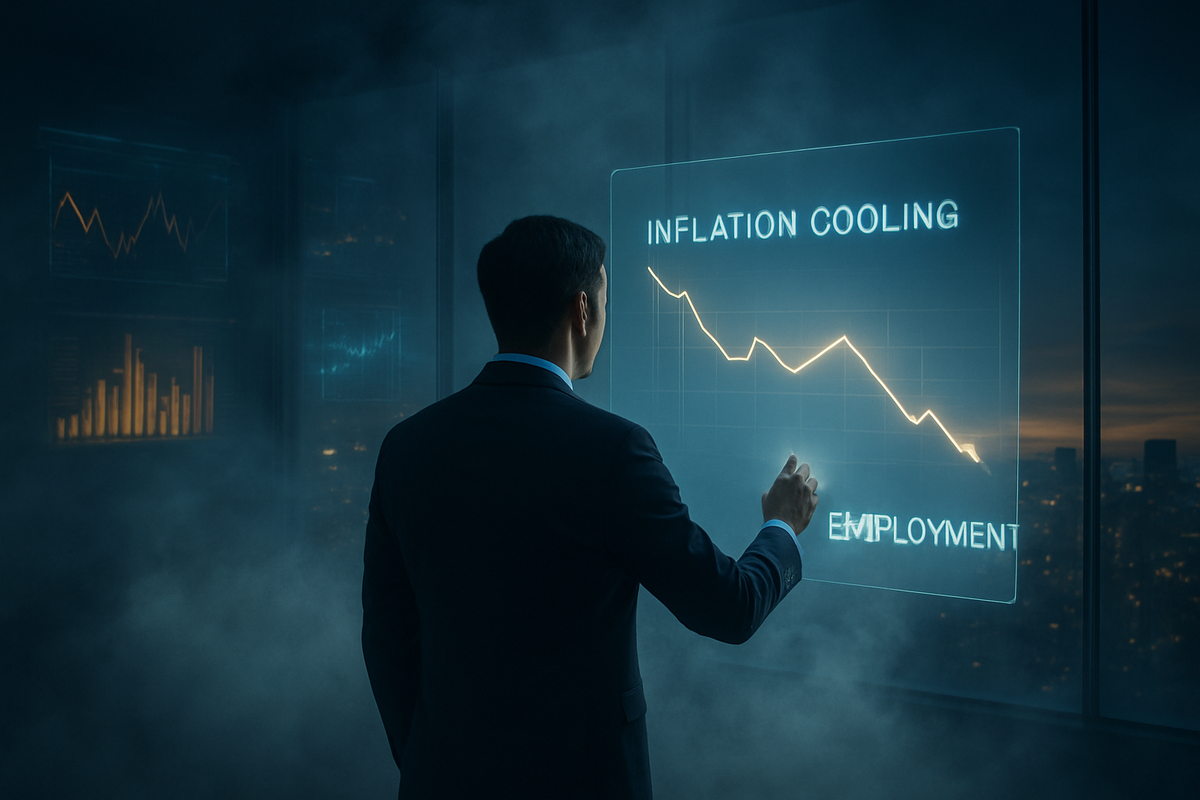
As of December 19, 2025, the financial world is finally emerging from a period of unprecedented economic opacity. Following a historic 43-day government shutdown that paralyzed federal agencies from October through mid-November, the Bureau of Labor Statistics (BLS) has released a series of "catch-up" reports that have fundamentally shifted the market's outlook on the Federal Reserve’s next moves. The latest figures, which combine delayed October data with fresh November metrics, reveal a labor market that is cooling faster than anticipated and an inflation rate that has dipped to levels not seen since early 2021.
The immediate implications for Wall Street have been a volatile mixture of relief and skepticism. While the headline Consumer Price Index (CPI) of 2.7% suggests that the battle against inflation may finally be over, the underlying "catch-up" data—riddled with revisions and non-survey estimates—has led many analysts to question the true health of the American economy. With the unemployment rate hitting a multi-year high of 4.6%, the conversation in boardrooms has pivoted sharply from "higher for longer" to "how fast will they cut?"
The December Data Dump: A Tale of Two Months
The release of the mid-December "catch-up" reports was the most anticipated economic event of the year, ending a "data fog" that had left investors trading on sentiment rather than statistics. The November jobs report, released on December 16, showed an addition of 64,000 non-farm payrolls. While this technically beat the consensus forecast of 50,000, it was heavily overshadowed by the massive downward revision of October’s figures. The BLS reported that the economy actually lost 105,000 jobs in October, a decline largely attributed to a sweeping "DOGE" (Department of Government Efficiency) initiative that saw a sudden purge of over 160,000 federal employees.
Simultaneously, the CPI report released on December 18 provided a surprising downside miss. Headline inflation for the 12 months ending in November came in at 2.7%, significantly lower than the 3.1% that many institutional desks at JPMorgan Chase & Co. (NYSE: JPM) and Goldman Sachs Group Inc. (NYSE: GS) had modeled. Core CPI, which excludes the volatile food and energy sectors, dropped to 2.6%. However, the methodology behind these numbers has come under fire; because the shutdown prevented standard data collection in October, the BLS was forced to use "carry-forward" methods and third-party data for key components like vehicle prices and shelter.
The reaction from the Federal Reserve has been one of cautious acknowledgment. Fed Chair Jerome Powell, in a recent press briefing, noted that while the "catch-up" data provides a clearer picture, the "noise" from the shutdown makes it difficult to distinguish between a soft landing and a more serious contraction. This uncertainty has led to a spike in weekly jobless claims, which hit 236,000 in early December, though they have since retreated slightly to 224,000 as the private sector attempts to find its footing in a post-shutdown environment.
Market Winners and Losers in the Wake of the Pivot
The primary beneficiaries of this cooling data have been the mega-cap technology stocks, which are highly sensitive to interest rate expectations. Companies like Apple Inc. (NASDAQ: AAPL) and Microsoft Corp. (NASDAQ: MSFT) saw their shares rally as the 10-year Treasury yield retreated on the news. Investors are betting that the lower-than-expected inflation print gives the Fed the "green light" to resume rate cuts as early as the January 2026 meeting. Growth-oriented sectors, which have struggled under the weight of high borrowing costs, are now being viewed as the "safe haven" for 2026.
Conversely, the banking sector has faced immediate headwinds. Large lenders such as Bank of America Corp. (NYSE: BAC) and Citigroup Inc. (NYSE: C) saw their stock prices underperform as the prospect of a narrowing net interest margin (NIM) became more likely. If the Fed is forced to cut rates aggressively to stave off a recession triggered by the 4.6% unemployment rate, the "easy money" made from high interest rates on loans will evaporate. Additionally, the federal employee purge has created localized economic depressions in the D.C. metro area, impacting regional banks and real estate investment trusts (REITs) focused on that corridor.
Retailers have presented a mixed bag. While lower inflation is generally good for consumer purchasing power, the "catch-up" data suggests that the labor market's weakness is beginning to sap consumer confidence. Discount retailers like Walmart Inc. (NYSE: WMT) have seen steady gains as shoppers trade down, but luxury goods and discretionary spending categories are bracing for a difficult first quarter in 2026. The "wealth effect" from the stock market rally is currently the only thing keeping high-end consumption afloat.
The Significance of the 'Data Fog' and Historical Precedents
The current situation bears a striking resemblance to the post-2013 and post-2018 government shutdowns, but with a critical difference: the sheer scale of the 2025 "DOGE" layoffs. Historically, shutdowns cause a temporary dip in GDP followed by a "catch-up" bounce. However, the permanent nature of the recent federal workforce reductions suggests that the 1.0% to 2.0% hit to Q4 2025 GDP might not be as "transitory" as the Fed hopes. This event marks a shift in the broader industry trend toward radical fiscal consolidation, which is now clashing with the Fed’s mandate for maximum employment.
Furthermore, the skepticism surrounding the "doctored" nature of the 2.7% CPI figure highlights a growing trust deficit between Wall Street and federal statistical agencies. Analysts at firms like BlackRock Inc. (NYSE: BLK) have pointed out that the BLS’s birth-death model—used to estimate new business creation—is likely overstating job growth by at least 60,000 per month. If this "catch-up" adjustment is applied, the U.S. economy may have already entered a private-sector recession in late 2025, masked only by the statistical anomalies created by the shutdown.
The ripple effects are also being felt globally. As the U.S. dollar fluctuates based on these erratic data releases, international markets are struggling to price in the global cost of capital. The "catch-up" data has effectively exported volatility to the Eurozone and Asian markets, as central banks there wait to see if the U.S. will lead the world into a synchronized easing cycle or if the "data fog" is hiding a more persistent inflationary undercurrent in the services sector.
What Comes Next: The Road to January 2026
In the short term, the market will be hyper-focused on the January 9, 2026, jobs report. This will be the first "clean" report since the shutdown, free from the carry-forward estimates that have plagued the December releases. If payrolls come in below 100,000 and unemployment remains at or above 4.6%, the Fed will be under immense pressure to deliver a 50-basis-point cut. However, if the "catch-up" bounce in GDP is stronger than expected, we could see a "no-landing" scenario that keeps rates higher than the market currently anticipates.
Strategically, public companies are already beginning to pivot. We are seeing a surge in corporate bond issuance as firms like Amazon.com Inc. (NASDAQ: AMZN) look to lock in lower yields before any potential year-end volatility. The "catch-up" data has also accelerated the adoption of AI and automation in the service sector, as businesses seek to insulate themselves from the labor market's unpredictability. For investors, the challenge will be distinguishing between companies that are truly growing and those that are merely benefiting from a temporary "relief rally" in the bond market.
Final Wrap-Up and Investor Outlook
The December "catch-up" data has provided a much-needed, albeit blurry, snapshot of an economy at a crossroads. The headline takeaways—2.7% inflation and 4.6% unemployment—suggest that the "inflation monster" has been tamed, but at the cost of a significantly weakened labor market. The 43-day government shutdown has left a permanent mark on the 2025 economic calendar, creating a statistical vacuum that is only now being filled with sobering reality.
Moving forward, the market is likely to remain in a "bad news is good news" regime, where weak economic data is celebrated as a catalyst for Fed intervention. However, investors should watch closely for any signs that the "catch-up" in inflation was an illusion caused by faulty data collection. If prices begin to re-accelerate in early 2026 while the job market continues to slide, the Fed will find itself in the unenviable position of facing stagflationary pressures.
The key for the coming months will be "quality." In a landscape defined by "data fog" and fiscal upheaval, companies with strong balance sheets and predictable cash flows will likely outperform. Investors should remain vigilant, looking past the headline "catch-up" numbers to the underlying health of the private sector, as the true impact of the 2025 shutdown continues to reveal itself in the new year.
This content is intended for informational purposes only and is not financial advice