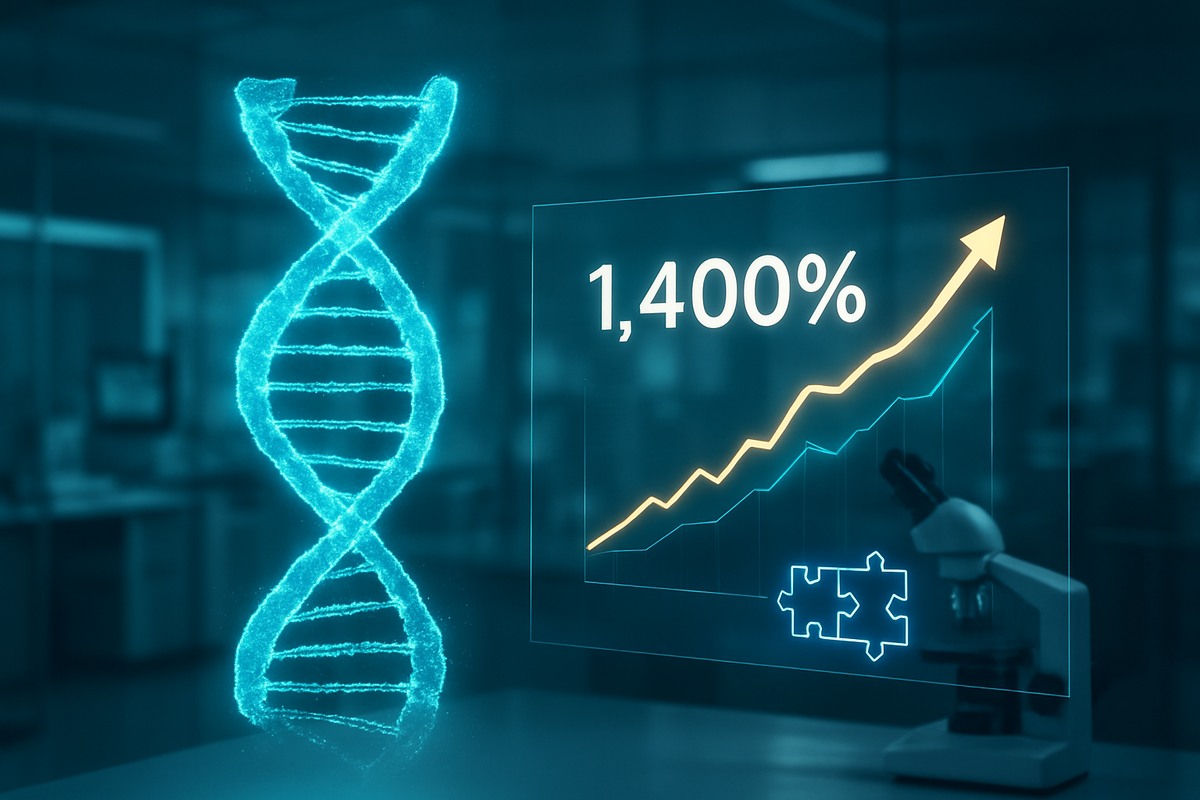
As the biotech sector closes out a transformative 2025, one name has risen to the top of every institutional investor's watchlist: Abivax (NASDAQ: ABVX). Following a year of stellar clinical results and a staggering 1,400% year-to-date rally, the French biotechnology firm has been officially crowned the most likely acquisition target for 2026. A recent high-profile survey from Truist Securities (NYSE: TFC) highlights a growing consensus that the company’s lead asset, obefazimod, is the "missing piece" for a Big Pharma giant looking to dominate the multi-billion dollar inflammatory bowel disease (IBD) market.
The implications of a potential Abivax acquisition extend far beyond a single payout for shareholders. With the pharmaceutical industry facing a massive $200 billion "patent cliff" by 2030, major players are in a desperate race to secure late-stage, de-risked assets that can provide immediate revenue growth. Abivax’s emergence as a "take-out darling" underscores a broader shift in the market where oral small molecules are increasingly favored over traditional injectable biologics, promising a new era of convenience and safety for patients suffering from chronic inflammatory conditions.
The Rise of Obefazimod: A Clinical Breakthrough
The catalyst for Abivax’s current momentum was the successful readout of its global ABTECT Phase 3 program for ulcerative colitis (UC) earlier in 2025. The trials, ABTECT-1 and ABTECT-2, evaluated obefazimod—a first-in-class oral miR-124 enhancer. In October 2025, the company reported a pooled 16.4% placebo-adjusted clinical remission rate at Week 8 for the 50mg daily dose. Perhaps more importantly, the drug maintained a clean safety profile, lacking the "black-box" warnings associated with JAK inhibitors like those marketed by AbbVie (NYSE: ABBV) and Pfizer (NYSE: PFE).
The timeline leading to this moment has been one of methodical de-risking. After a successful Phase 2b trial, Abivax secured significant funding to launch its ambitious Phase 3 program, which has now largely delivered on its promise. According to the Truist Securities survey, approximately 44% of institutional investors identified Abivax as their top pick for a 2026 buyout, far outstripping other notable contenders. The market’s confidence is reflected in Truist’s aggressive price target of $140, as analysts believe the "hard part" of clinical development is now in the rearview mirror.
Stakeholders and the Battle for IBD Dominance
The potential acquisition of Abivax creates a clear set of winners and strategic losers in the pharmaceutical landscape. The most immediate winners are Abivax’s early investors and management team, who have navigated the company from a niche European biotech to a global M&A frontrunner. With a cash runway extending into late 2027, the company is in a position of strength, allowing it to wait for a premium offer rather than settling for a premature deal.
On the potential acquirer side, Eli Lilly (NYSE: LLY) is widely viewed by analysts as the most aggressive suitor. While Lilly has a strong presence in immunology with drugs like mirikizumab, it lacks a potent, first-in-class oral therapy to compete with the next generation of IBD treatments. Other potential winners from a deal could include Takeda (NYSE: TAK) and Bristol Myers Squibb (NYSE: BMY), both of whom are looking to bolster their portfolios as older blockbusters face biosimilar competition. Conversely, companies like Pfizer may find themselves on the defensive if a competitor acquires obefazimod, as it could directly challenge the market share of their existing oral IBD offerings by providing a superior safety profile.
Broadening the Horizon: Industry Trends and Regulatory Shifts
The frenzy surrounding Abivax fits into a much larger trend of consolidation within the "I&I" (Inflammation and Immunology) sector. In 2024 and 2025, I&I became the second most active area for M&A, trailing only the red-hot obesity and GLP-1 market. This trend is driven by a shift in medical practice toward "oral-first" treatment algorithms. Physicians and payers are increasingly preferring effective oral pills over expensive, logistically complex injectable biologics. Abivax’s obefazimod is the poster child for this transition, offering the efficacy of a biologic with the convenience of a daily pill.
Furthermore, the regulatory environment in the United States has become more conducive to such deals. Following the 2024 elections, there has been a perceived moderation in the Federal Trade Commission's (FTC) stance on biotech mergers. While antitrust scrutiny remains, the "blanket opposition" to large-scale acquisitions seen in previous years has given way to a more predictable framework. This has emboldened Big Pharma to pursue "bolt-on" acquisitions in the $5 billion to $15 billion range—exactly where Abivax is expected to be valued in a buyout scenario.
The Road to 2026: What Lies Ahead
The next six months will be critical for Abivax as it prepares for its final major clinical milestone before a potential sale. The company is currently conducting its 44-week maintenance trial, ABTECT-107, with topline results expected in the second quarter of 2026. Positive maintenance data would serve as the ultimate de-risking event, likely triggering a formal bidding war among the industry’s heavyweights. Additionally, Abivax is progressing with a Phase 2b trial for Crohn’s disease, which could further increase its valuation by demonstrating "pipeline-in-a-product" potential.
However, challenges remain. Any unexpected safety signals in the long-term maintenance data or a sudden shift in the macroeconomic environment could dampen M&A enthusiasm. Investors should also keep an eye on the competitive landscape; if a rival biotech releases superior data for a similar mechanism of action, Abivax’s leverage could diminish. Nevertheless, the current trajectory suggests that the company is moving toward a transformative strategic exit that could redefine the standard of care in IBD.
Final Thoughts: A Market in Motion
As we look toward 2026, Abivax stands as a testament to the value of truly novel science in a crowded marketplace. By targeting miR-124 to modulate the inflammatory response, the company has carved out a unique niche that Big Pharma is eager to exploit. The Truist survey serves as a loud signal to the market that the "smart money" is betting on a major transaction in the near future.
For investors, the coming months will require close attention to clinical updates and any shifts in the M&A rhetoric from potential suitors like Eli Lilly or AbbVie. While the 1,400% rally has already rewarded many, the final chapter of the Abivax story—the acquisition itself—could still provide significant upside. As the patent cliff looms and the demand for oral IBD therapies grows, Abivax remains the most compelling story in the biotech sector heading into the new year.
This content is intended for informational purposes only and is not financial advice