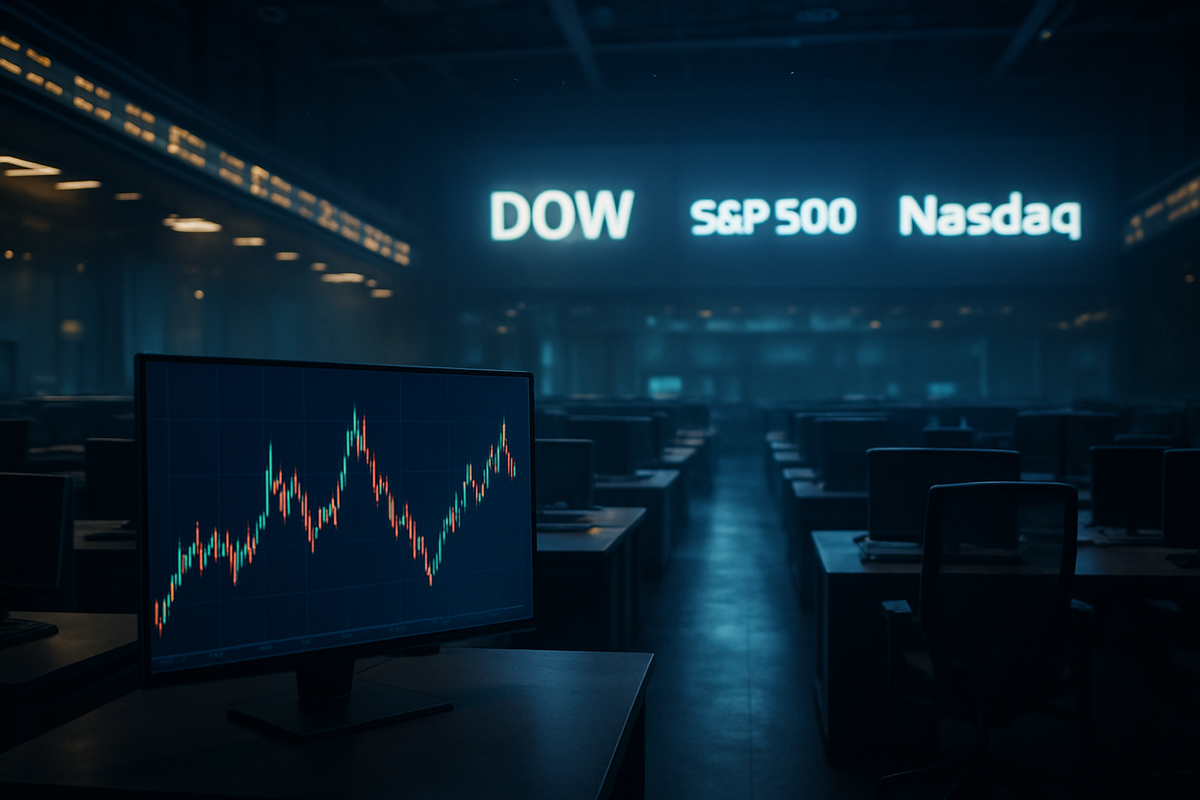
As the final week of 2025 unfolds, the hallowed halls of the New York Stock Exchange and the digital corridors of the Nasdaq have transformed into a "ghost town." With many institutional traders having shuttered their desks for the season, the markets are grappling with a classic year-end phenomenon: the liquidity vacuum. While the "Santa Claus Rally" appears to be in full swing, the lack of depth in the order books is amplifying price swings, turning minor trades into major market movers for the Dow Jones Industrial Average, the S&P 500, and the Nasdaq Composite.
The current atmosphere is one of precarious optimism. As of December 26, 2025, the major indices are hovering near historic highs, bolstered by a recent pivot in Federal Reserve policy and a collective sigh of relief following the resolution of a record-breaking 43-day government shutdown earlier this fall. However, beneath the surface of these record levels lies a fragile infrastructure. Daily trading volume has plummeted to approximately 7.6 billion shares—less than half of the 20-session average—leaving the market vulnerable to "phantom" price action and sudden spikes in volatility that could catch unwary investors off guard.
The Mechanics of a "Ghost Town" Rally
The final week of 2025 is defined by a unique confluence of seasonal trends and structural shifts. The official "Santa Claus Rally" window—defined as the last five trading days of December and the first two of the new year—began on Wednesday, December 24. Historically, the S&P 500 (NYSE: SPY) has gained an average of 1.3% during this period, finishing higher nearly 80% of the time since 1950. This year, the rally is being fueled by the Federal Reserve’s decision on December 10 to cut interest rates for the third consecutive time, bringing the federal funds rate to a range of 3.50%–3.75%.
This "soft landing" narrative has encouraged retail investors and automated algorithms to push prices higher in the absence of institutional "Big Money." However, the timeline leading to this moment was fraught with tension. The market spent much of October and November reeling from a historic government shutdown that delayed critical economic data, including CPI inflation prints. As the data backlog finally cleared in early December, showing inflation cooling toward the 2.7% mark, the "Goldilocks" scenario—not too hot, not too cold—became the dominant market thesis.
The primary stakeholders currently steering the ship are not the traditional hedge fund titans, but rather high-frequency trading (HFT) firms and retail-driven 0DTE (zero-days-to-expiration) options. These short-term contracts now account for over 60% of daily market volume. In a low-liquidity environment, the mechanical hedging required by market makers to balance these 0DTE positions can lead to "gamma squeezes," where the market moves violently in one direction as participants are forced to buy or sell to manage risk. This has resulted in the Nasdaq Composite (NASDAQ: QQQ) experiencing intraday swings of nearly 2% on negligible news.
AI Titans and Retail Laggards: The Holiday Winners and Losers
In this environment of thin trading, the "winners" are often those stocks favored by "window dressing"—the practice where fund managers buy top-performing assets to ensure they appear on their year-end balance sheets. Nvidia (NASDAQ: NVDA) remains the undisputed champion of this trend, as it targets a staggering $170 billion revenue milestone for the upcoming fiscal year. Alongside Nvidia, Broadcom (NASDAQ: AVGO) and Microsoft (NASDAQ: MSFT) have seen outsized gains this week as thin volume allows even modest buying pressure to catapult their share prices to new heights.
On the retail front, the "Santa Rally" has provided a much-needed boost to consumer giants. Amazon (NASDAQ: AMZN) and Walmart (NYSE: WMT) are benefiting from data suggesting a record-breaking $1 trillion holiday shopping season. Amazon, in particular, is enjoying a dual tailwind from its retail dominance and its expanding AI cloud infrastructure. Meanwhile, specialty retailers like Ralph Lauren (NYSE: RL) are living up to their reputation as seasonal specialists, often outperforming the broader market during this specific seven-day window.
Conversely, the "losers" in this low-volume environment are often the laggards of the previous year who are subject to final-hour tax-loss harvesting. Companies like Nike (NYSE: NKE) and Lululemon (NASDAQ: LULU), which faced headwinds throughout 2025 due to shifting consumer preferences and high interest rates, have seen continued pressure as investors sell off their remaining shares to offset capital gains elsewhere. However, these "beaten-down" names are also the primary candidates for the "January Effect," where selling pressure abruptly vanishes on January 1, often leading to a sharp rebound.
Wider Significance: The Fiscal Cliff and Structural Risks
The current market volatility is more than just a seasonal quirk; it is a reflection of broader industry trends and looming policy shifts. The most significant shadow hanging over the market is the "Fiscal Cliff" deadline on December 31, 2025. This marks the expiration of several key provisions from the 2017 Tax Cuts and Jobs Act (TCJA). The uncertainty surrounding whether Congress will extend these tax breaks or allow them to lapse has prompted significant tax-motivated repositioning, adding another layer of complexity to the thin holiday trading.
Furthermore, the dominance of 0DTE options represents a structural evolution in the market. What used to be a multi-day rally can now be compressed into a few hours of intense, mechanically driven activity. This shift has raised concerns among regulators about "fragile liquidity." When volume is low, the impact of these high-leverage instruments is magnified, potentially leading to "flash" events where prices move so quickly that traditional stop-loss orders fail to execute at intended prices.
Historically, periods of extreme low volume have often preceded significant market turns. The late-December lull of 2025 is being compared by some analysts to the end of 2021, where record highs were met with a sudden shift in Fed rhetoric just as the new year began. While the Fed is currently in an easing cycle, any surprise in the FOMC meeting minutes scheduled for release on December 30 could shatter the holiday peace and trigger a rapid deleveraging event across the Dow Jones Industrial Average (NYSE: DIA).
What Lies Ahead: The January Pivot
Looking into the first weeks of 2026, the market faces several potential strategic pivots. The short-term focus will remain on the "January Effect," particularly for small-cap stocks. The Russell 2000 index, represented by the iShares Russell 2000 ETF (NYSE: IWM), typically sees a surge in early January as capital rotates back into the market following year-end tax selling. Investors will be watching for a potential breakout in small-cap biotech and infrastructure names, such as Amicus Therapeutics (NASDAQ: FOLD), which have been coiled for a move throughout the fourth quarter.
Long-term, the focus will shift from seasonal rallies to the reality of the 2026 economic cycle. While futures markets currently price in a less than 15% chance of another rate cut in January, the narrative could shift quickly if the "soft landing" begins to show cracks. The expiration of the TCJA tax provisions will also force corporations to adapt their capital allocation strategies, potentially slowing the record-breaking pace of stock buybacks that characterized much of 2025.
Strategic opportunities may emerge in "value" sectors that were overlooked during the AI-led frenzy of 2025. If the volatility of late December leads to a broader correction in January, it may provide a more attractive entry point for defensive growth plays like Costco (NASDAQ: COST) or infrastructure-focused small caps that are poised to benefit from the 2026 capex cycle.
Final Wrap-Up: Navigating the Year-End Fog
The final week of 2025 serves as a potent reminder of the stock market's dual nature: it is both a reflection of long-term economic fundamentals and a playground for short-term liquidity dynamics. The current "Santa Claus Rally" is a welcome gift for investors, but it is one wrapped in the thin, fragile paper of low volume. The key takeaway for the market is that while the trend remains bullish, the lack of depth means that the "floor" is further away than it appears.
As we move into 2026, investors should keep a close eye on the "January Effect" and the potential for a volatility "snap-back" once institutional volume returns. The interplay between the Fed’s easing cycle and the looming fiscal changes will likely define the first quarter of the new year. For now, the market is content to ride the wave of holiday optimism, even as the "ghost town" trading floor warns of the risks inherent in a liquidity vacuum.
The coming months will test whether the record highs of late 2025 were a sustainable peak or merely a product of the year-end fog. Investors would be wise to maintain a balanced perspective, enjoying the rally while remaining vigilant for the sudden shifts that often accompany the return of the "Big Money" in January.
This content is intended for informational purposes only and is not financial advice.