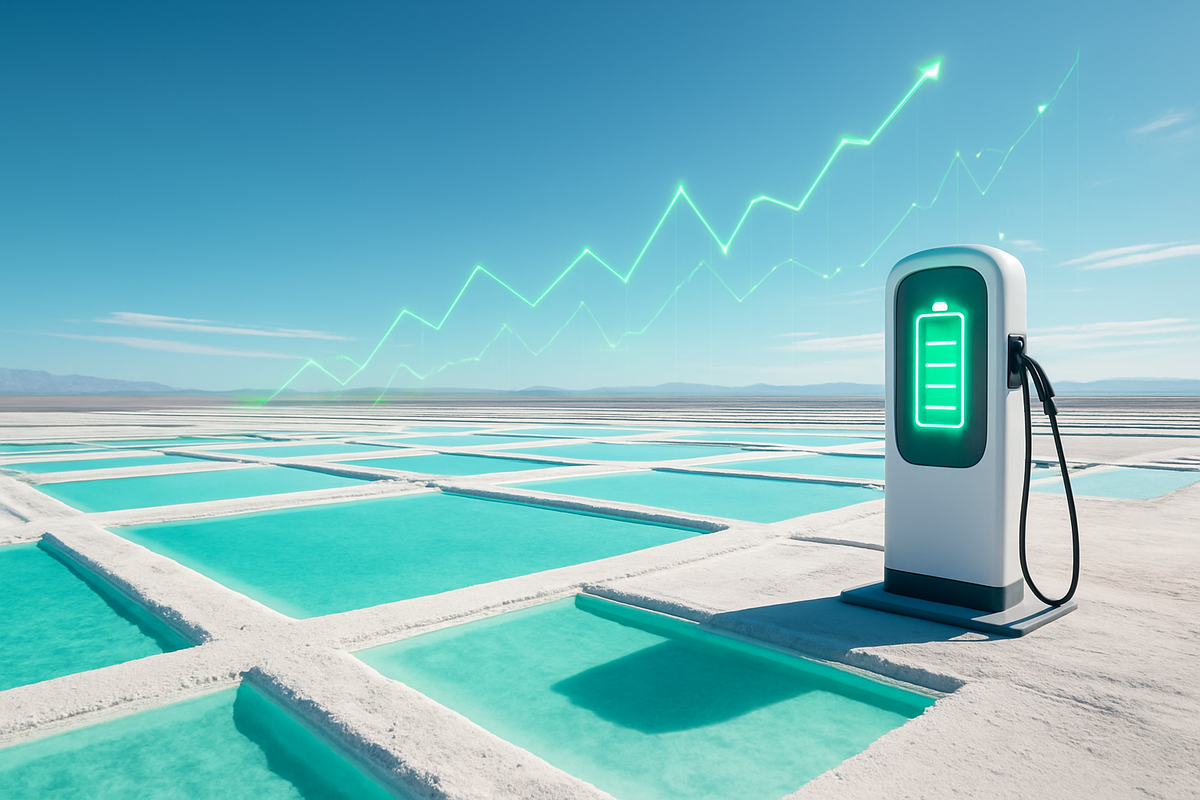
In a move that has sent ripples through the specialty chemicals sector, Scotiabank (NYSE: BNS) has officially upgraded Albemarle Corporation (NYSE: ALB) to a "Sector Outperform" rating. The upgrade, issued early this morning on January 12, 2026, marks a definitive shift in sentiment for the world’s largest lithium producer. Alongside the rating change, Scotiabank analyst Ben Isaacson delivered a staggering price target hike, raising the projection from $85.00 to $200.00—a move that suggests a 135% upside and signals the end of a multi-year bear cycle for the "white gold" essential to the global energy transition.
The immediate implications of this upgrade are profound. Market participants are viewing the report as a "buy signal" for the broader lithium and battery metals complex, which has struggled with oversupply and fluctuating electric vehicle (EV) adoption rates since 2023. By identifying a firm "price floor" and a tightening supply-demand balance for late 2026, Scotiabank has effectively called the bottom of the lithium market, prompting a surge in pre-market trading for Albemarle and its closest competitors.
The Inflection Point: Scotiabank’s Bullish Pivot
The upgrade by Scotiabank is not merely a technical adjustment but a fundamental re-evaluation of the lithium lifecycle. Analyst Ben Isaacson’s research note highlights that the market has finally cleared the excess inventory that plagued the industry throughout 2024 and 2025. According to the report, the aggressive "supply discipline" practiced by major producers—including the suspension of high-cost lepidolite mines in China and the scaling back of expansion projects by Western firms—has successfully tightened the market. This discipline, combined with a 30-40% projected growth in global lithium demand for 2026, has created the conditions for a "V-shaped" recovery.
The timeline leading to this moment was defined by extreme volatility. After lithium prices crashed nearly 90% from their 2022 peaks, many analysts remained cautious, fearing a prolonged "L-shaped" recovery. However, Isaacson argues that current spot prices are no longer sufficient to incentivize the "greenfield" projects necessary to meet the 2027–2030 demand surge. He estimates that lithium carbonate prices must rise to at least $20,000 per tonne to bring new supply online, suggesting a significant price appreciation is imminent throughout the coming year.
Albemarle’s internal transformation played a critical role in securing this upgrade. The company spent much of 2025 executing a rigorous cost-cutting strategy, which is expected to deliver approximately $450 million in operational gains by the end of 2026. By leaning into its highest-quality assets, such as the Salar de Atacama in Chile and the Greenbushes mine in Australia, Albemarle has positioned itself to capture massive profit margins as prices recover, even if they do not return to the historic highs of the early 2020s.
Winners and Losers in the Tightening Market
The primary winner of this shift is undoubtedly Albemarle Corporation (NYSE: ALB), which stands to regain its status as a premier growth stock in the materials sector. However, the bullish sentiment is lifting other major players as well. Sociedad Química y Minera de Chile (NYSE: SQM) and Arcadium Lithium (NYSE: ALTM) are expected to see similar valuation re-ratings as investors seek exposure to established producers with low-cost production profiles. Smaller developers with advanced North American projects, such as Lithium Americas Corp. (NYSE: LAC), are also seeing renewed interest as the urgency for domestic supply chains intensifies.
Conversely, the "losers" in this scenario may be the downstream electric vehicle manufacturers who have benefited from two years of falling battery costs. Companies like Tesla, Inc. (NASDAQ: TSLA) and Ford Motor Company (NYSE: F) may face renewed input cost pressures as lithium prices climb back toward the $20,000/tonne level. While these automakers have worked to diversify their battery chemistries, the cost-reduction trend for Lithium Iron Phosphate (LFP) batteries—a staple for mass-market EVs—could stall, potentially forcing a choice between thinner margins or higher sticker prices for consumers.
Battery manufacturers, including the likes of Panasonic (OTC:PCRFY) and Contemporary Amperex Technology Co. Limited (SZSE:300750), will also need to navigate this transition. While higher demand for batteries is a positive, the shift from a "buyer's market" to a "seller's market" for raw materials will require these giants to lock in long-term offtake agreements at higher prices than they have enjoyed over the past 18 months, potentially squeezing their short-term operational cash flows.
Broader Industry Trends and the AI Factor
This event fits into a broader trend of "commodity realism" in the energy transition. The market is moving away from speculative hype and toward a focus on operational excellence and supply security. Scotiabank’s report emphasizes that lithium is no longer just an "EV story." A significant portion of the projected demand growth in 2026 is attributed to Battery Energy Storage Systems (BESS) and the burgeoning needs of AI-driven data centers. As tech giants scramble to secure 24/7 carbon-free power for their massive computing clusters, lithium-ion backup systems have become a critical infrastructure component, creating a new, price-insensitive pillar of demand.
Furthermore, the geopolitical implications cannot be ignored. The tightening of the lithium market in 2026 is occurring against a backdrop of increased regulatory focus on supply chain independence. Policies such as the U.S. Inflation Reduction Act continue to incentivize domestic sourcing, making Albemarle’s North American refining capacity a strategic asset rather than just a commercial one. This mirrors historical precedents in the oil and gas industry, where supply security often overrides short-term price fluctuations in strategic importance.
The ripple effects will likely extend to the M&A space. With Scotiabank signaling that valuations are still in the early stages of recovery, diversified mining giants like Rio Tinto (NYSE: RIO) or BHP Group (NYSE: BHP) may accelerate their efforts to acquire pure-play lithium producers. The window for "cheap" acquisitions is closing, and the industry is bracing for a wave of consolidation as companies look to secure their position in the 2026-2030 growth cycle.
Looking Ahead: Strategic Pivots and Market Scenarios
In the short term, investors should expect increased volatility as the market adjusts to the new price targets and the reality of a tightening supply. Albemarle is likely to prioritize the completion of its refining expansions in the United States and Europe, shifting from a defensive "cost-containment" posture to an offensive "capacity-capture" strategy. The ability to bring new capacity online exactly as the market enters a deficit could lead to record-breaking quarterly earnings by the second half of 2026.
Long-term, the industry may see a strategic pivot toward "circularity" and recycling. If lithium prices remain elevated as Scotiabank predicts, the economic case for battery recycling will become undeniable. This could lead to a new sub-sector of the market gaining prominence, where companies specialize in urban mining to supplement the primary supply from traditional mines. Challenges remain, however, particularly in the form of permitting delays and the potential for new battery chemistries (like sodium-ion) to gain market share if lithium prices spike too aggressively.
A New Chapter for the Lithium Market
The Scotiabank upgrade of Albemarle marks a watershed moment for the 2026 financial year. It signifies a transition from a period of painful correction to one of disciplined growth. The key takeaway for investors is the shift in the supply-demand equilibrium; the "glut" is over, and the era of strategic scarcity is returning. Albemarle’s massive price target increase reflects a belief that the company’s high-quality assets and improved cost structure make it the ideal vehicle for playing this recovery.
Moving forward, the market will be watching for two critical indicators: the pace of EV sales growth in emerging markets and the speed at which "idled" capacity in China returns to the market. If Chinese producers remain disciplined and demand from AI and BESS continues to exceed expectations, the $200.00 price target for ALB may be just the beginning. For now, the message from Scotiabank is clear: the lithium winter has ended, and the spring of 2026 looks exceptionally bright for those positioned at the top of the supply chain.
This content is intended for informational purposes only and is not financial advice.