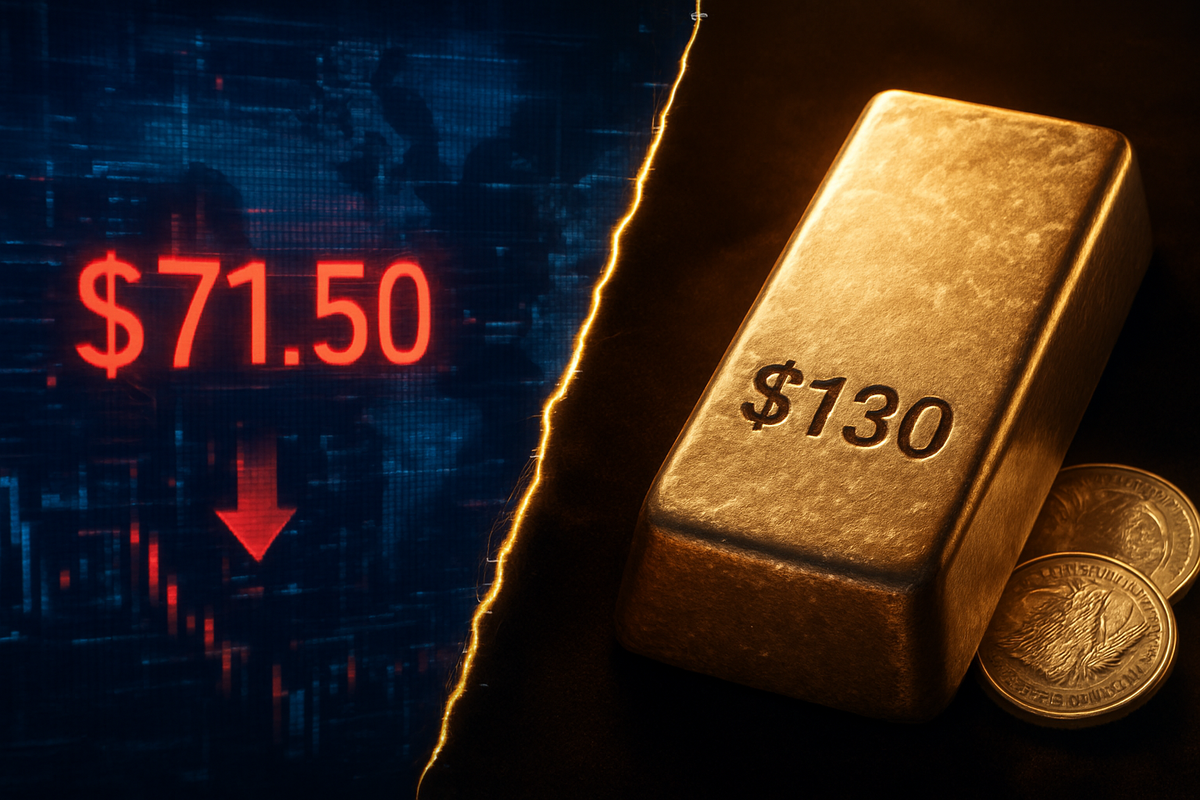
As of January 2, 2026, the global silver market has entered a state of unprecedented structural fracture. While digital ticker tapes and Western derivatives exchanges like the COMEX quote silver at approximately $71.50 per ounce, the reality on the ground for physical bullion is starkly different. In major trading hubs such as Tokyo and Dubai, physical silver is reportedly changing hands at premiums as high as 80%, with some spot transactions reaching a staggering $130 per ounce. This massive divergence—the largest in the history of precious metals trading—signals a fundamental breakdown in the "paper" pricing mechanism that has governed the silver market for decades.
The immediate implications of this "two-tier" market are profound. Industrial users in the semiconductor, electric vehicle, and solar sectors are increasingly bypassing Western exchanges to secure physical metal at any cost, fearing a total depletion of available inventories. Meanwhile, the financial world is bracing for a "physicalization" event, where the hundreds of paper claims for every one ounce of silver in a vault are finally being called due, threatening the solvency of major bullion banks and the stability of silver-linked financial products.
A Perfect Storm: China’s Export Ban and the COMEX Inventory Drain
The current crisis reached a breaking point in late December 2025, following a year of relentless inventory drawdowns. According to data from the London Bullion Market Association (LBMA) and the CME Group (NASDAQ: CME), registered silver inventories in Western vaults have plummeted by over 70% since 2020. The final catalyst arrived on January 1, 2026, when China—the world’s largest refiner of silver—implemented strict new export licensing requirements. This move effectively "ring-fenced" nearly 65% of the global refined silver supply for domestic use, leaving Western markets in a desperate scramble for remaining stocks.
The timeline leading to this moment was marked by a fifth consecutive year of structural supply deficits. Throughout 2025, industrial demand from AI hardware and renewable energy infrastructure consumed an estimated 60% of total global production. By late December, the COMEX faced a delivery demand of nearly 65 million ounces, a volume that the exchange reportedly struggled to fulfill, leading to rumors of "cash-only" settlements. This failure to deliver physical metal at the quoted screen price is what ultimately drove the physical market to decouple, with Tokyo markets hitting the $130 mark in the first trading sessions of the new year.
Key stakeholders, including sovereign wealth funds and large-scale industrial buyers, have reportedly shifted their procurement strategies entirely. Rather than relying on futures contracts, these entities are now participating in direct "off-take" agreements with miners or purchasing physical bars from secondary markets in Asia and the Middle East. This shift has exposed the staggering paper-to-physical ratio, which analysts now estimate at 378:1, meaning there are over 370 paper contracts for every physical ounce of silver held in registered vaults.
Winners and Losers: Miners Surge as Bullion Banks Face the Brink
In this environment of extreme price divergence, the primary beneficiaries are the silver producers. Companies like First Majestic Silver (NYSE: AG), Pan American Silver (NYSE: PAAS), and Wheaton Precious Metals (NYSE: WPM) have seen their valuations soar as they move toward selling their production directly into the high-premium physical markets rather than through traditional benchmark-linked contracts. For these miners, the "real" price of silver is $130, not $71, leading to a massive windfall in free cash flow and a re-rating of their stock prices as the market anticipates a permanent shift in silver’s valuation.
Conversely, the "losers" in this scenario are the major financial institutions that have historically maintained large net-short positions in silver derivatives to hedge their books or facilitate market making. JPMorgan Chase (NYSE: JPM), Citigroup (NYSE: C), and Bank of America (NYSE: BAC) are reportedly facing intense margin pressure. As the physical price pulls the paper price upward, these institutions must either post billions in additional collateral or attempt to close out their positions in a market with no liquidity. Rumors of "margin call stress" at firms like HSBC (NYSE: HSBC) and UBS (NYSE: UBS) have already begun to circulate, with the CME Group recently hiking silver margins by 50% in a desperate attempt to curb volatility and protect the clearinghouse.
Major silver ETFs are also caught in the crosshairs. The iShares Silver Trust (NYSEARCA:SLV) and the abrdn Physical Silver Shares ETF (NYSEARCA:SIVR) have seen historic inflows, but they face a looming credibility crisis. If the gap between the physical price and the Net Asset Value (NAV) of the paper-based silver they hold continues to widen, investors may demand physical redemption—a process that is notoriously difficult for retail holders of SLV. This could lead to a scenario where these ETFs trade at a massive discount to the physical metal, or worse, face a suspension of shares if they cannot verify the physical backing of their holdings in an increasingly tight market.
The End of the Paper Era: Geopolitics and Industrial Inelasticity
The wider significance of this disconnect cannot be overstated. For over 50 years, the global price of silver has been discovered in the futures markets of New York and London. The current $60-per-ounce gap suggests that this era of "paper discovery" is coming to an end. This shift fits into a broader trend of "commodity de-dollarization," where BRICS+ nations and Asian markets are establishing their own physical-backed exchanges, such as the Shanghai Gold Exchange, which has consistently traded silver at a premium to the COMEX throughout 2025.
Furthermore, the industrial inelasticity of silver has reached a tipping point. Unlike jewelry, which consumers might forgo if prices rise, silver is an essential component in modern technology. There is no known substitute for silver’s conductivity in high-end AI chips or solar cells. As a result, tech giants are now forced to compete with financial speculators for a dwindling supply of metal. This has created a "feedback loop" where industrial panic buying drives physical premiums higher, which in turn forces paper shorts to cover, creating a recursive upward spiral in price.
Historically, such disconnects in commodity markets—like the nickel squeeze of 2022—have led to regulatory intervention and the temporary closure of exchanges. However, the scale of the silver market and its dual role as both an industrial metal and a monetary asset make this situation far more complex. Regulators at the CFTC are now under immense pressure to investigate allegations of price manipulation by bullion banks, while the public is beginning to realize that the "spot price" they see on news tickers may no longer represent the cost of owning the actual metal.
What Comes Next: Force Majeure or a New Price Floor?
In the short term, the market is bracing for the possibility of a "Force Majeure" declaration on the COMEX. If the exchange officially admits it cannot fulfill physical delivery requests, the paper price of $71 would likely collapse or cease to exist, as participants flee to the physical market. This would lead to a "gap up" where the paper price suddenly aligns with the $130 physical reality, potentially overnight. Strategic pivots are already underway, with industrial users signing long-term supply contracts directly with miners, effectively bypassing the traditional exchange system altogether.
Long-term, the silver market is likely to remain bifurcated until a new global pricing standard is established—one that is more closely tied to physical inventory than derivative volume. This presents a significant market opportunity for new physical-only exchanges and "vaulted" silver products that offer direct ownership without the counterparty risk of the banking system. However, the challenge for the broader financial market will be managing the systemic risk posed by the massive derivative positions held by the "Too Big to Fail" banks, which could require central bank intervention if the silver squeeze triggers a wider liquidity crisis.
Final Thoughts: A Paradigm Shift for Investors
The silver market disconnect of 2026 is a watershed moment for the financial system. It represents the first major failure of a paper-based pricing mechanism for a critical industrial and monetary commodity in the modern era. The key takeaway for investors is that "price" and "value" have officially diverled; the digital number on a screen is no longer a reliable indicator of the cost to acquire the physical asset.
Moving forward, the market will likely be defined by extreme volatility and a "scramble for stuff." Investors should closely watch COMEX inventory levels and any further margin hikes by the CME Group, as these will be the first signs of a total exchange breakdown. The lasting impact of this event will be a permanent re-rating of silver as a strategic industrial resource, potentially ending its decades-long period of underperformance relative to other assets. In the coming months, the focus will remain on whether the paper market can survive this "physicalization" or if the $130 price tag in the East is simply the new global floor.
This content is intended for informational purposes only and is not financial advice.