In late January 2026, Apple Inc. (NASDAQ: AAPL) once again silenced skeptics by reporting a record-shattering $143.8 billion in quarterly revenue, marking its most successful holiday season in history. This milestone, driven by a massive "AI supercycle" for the iPhone 17 and a burgeoning high-margin services business, has propelled the company’s market capitalization to new heights. The immediate implication is clear: Apple remains the gravity-defying force of the modern economy, maintaining its dominance even as the broader technology sector faces a "valuation reset" and intensified regulatory scrutiny.
For investors, the significance of this performance extends beyond mere numbers. It represents a rare and prolonged defiance of the historical "Curse of the Most Admired," a financial phenomenon where companies at the pinnacle of corporate reputation eventually underperform the market. By early 2026, Apple has held the top spot on major reputation indices for 19 consecutive years, yet it continues to outpace the S&P 500—a feat that has traditionally signaled a "mean reversion" or a looming collapse for other industry titans.
Record-Shattering Earnings and the AI Pivot
The catalyst for this latest surge was the Q1 2026 earnings report, which revealed a company operating at an unprecedented financial scale. Apple reported a record earnings per share (EPS) of $2.84, a 19% increase year-over-year, alongside a net income of $42.1 billion. The primary driver was the iPhone 17 lineup, which generated $85.3 billion in revenue. Notably, the "Pro" models accounted for over 52% of total sales, as consumers gravitated toward the high-end hardware required to run the company's sophisticated "Apple Intelligence" suite.
The timeline leading to this moment began in late 2024 and throughout 2025, when Apple strategically pivoted toward "Agentic AI." By partnering with Alphabet Inc. (NASDAQ: GOOGL) to integrate Gemini-powered reasoning into a revamped Siri 2.0, Apple transformed its most criticized feature into a primary selling point. This rollout culminated in the launch of the "Apple Intelligence Pro" subscription tier in late 2025, a $9.99 monthly service that analysts credit for keeping Apple’s Services margins above the 70% threshold.
Key stakeholders, including CEO Tim Cook and CFO Luca Maestri, have emphasized that this success is rooted in "operational brilliance" rather than luck. Despite a global memory chip shortage in early 2026, Apple’s supply chain management allowed it to maintain inventory levels that its competitors could not match. The initial market reaction was a mix of awe and tactical profit-taking; while the stock saw a brief 6% pullback in early January due to broader market volatility, the blowout earnings report triggered a swift recovery, with analysts raising price targets toward the $330 range.
However, the road has not been entirely without hurdles. The experimental "iPhone 17 Air," an ultra-slim model launched alongside the flagship series, saw mixed results, capturing only 6% of early sales and suffering from steep resale value drops in secondary markets like China. Additionally, the Vision Pro remains a niche product, with shipments estimated at just 45,000 units in the final quarter of 2025, prompting the company to pivot toward a more affordable "non-Pro" version slated for later this year.
Strategic Winners and the Supplier Paradox
The primary beneficiary of Apple’s continued dominance is Taiwan Semiconductor Manufacturing Company (NYSE: TSM), which has become Apple’s "strategic sovereign." By early 2026, Apple has reportedly secured nearly 50% of TSMC’s total 2nm chip capacity. This exclusive access ensures that Apple’s A20 and M5 chips will maintain a hardware performance lead of at least six to twelve months over rivals like Qualcomm and MediaTek, who are forced to wait for secondary production windows.
Alphabet Inc. (NASDAQ: GOOGL) also emerges as a significant winner in this ecosystem. The formalization of the Apple-Google Gemini Alliance—a deal estimated to be worth billions annually—has provided Google with a massive distribution network of over 2.5 billion active devices. This partnership has helped Alphabet’s market cap touch the $4 trillion mark, as it effectively counters the competitive threat posed by the Microsoft-OpenAI partnership by becoming the cognitive backbone of the world's most popular smartphone.
On the losing side of this resiliency are traditional rivals like Samsung Electronics (KRX: 005930). While Samsung remains a vital supplier of OLED displays for the iPhone, it faces a "supplier-competitor paradox." Apple’s deep integration of Google’s AI models into iOS threatens Samsung’s ability to differentiate its own "Galaxy AI" features. Furthermore, as Apple prepares to enter the foldable market in late 2026, Samsung’s long-held monopoly on premium foldable devices is under direct threat, forcing the South Korean giant to seek new partnerships with firms like Perplexity AI to stay relevant.
Niche players in the augmented and virtual reality space are also feeling the squeeze. As Apple consumes the oxygen in the "spatial computing" conversation, smaller hardware manufacturers are struggling to find venture capital, leading to a consolidation phase in the wearable tech industry. Even established players are finding that Apple’s "walled garden" approach to AI and services makes it increasingly difficult to lure users away from the iOS ecosystem, regardless of hardware specifications.
Breaking the Curse: Historical Context and Industry Shifts
The broader significance of Apple’s performance lies in its ability to break a historical pattern known as the "Curse of the Most Admired." Financial history is littered with companies that reached the top of reputation lists only to see their stock prices crater. General Electric Company (NYSE: GE), for instance, was the most valuable company on Earth in 2000, led by "Manager of the Century" Jack Welch. Yet, a reliance on financial engineering and overpriced acquisitions led to a two-decade fall from grace, with its stock only returning to its 2000 peak in late 2025.
Similarly, Cisco Systems, Inc. (NASDAQ: CSCO) and International Business Machines Corporation (NYSE: IBM) were once the "admired" darlings of the tech world. Cisco took exactly 25 years to eclipse its dot-com bubble record, while IBM has spent decades struggling to pivot away from legacy businesses. These companies fell victim to "mean reversion," where extreme success leads to overconfidence, unsustainable valuations, and an eventual collapse. Apple, however, has remained the "Most Admired" for 19 years while consistently delivering top-tier shareholder returns, effectively redefining the "ego trap" theory.
Apple’s resiliency is also shaping the regulatory landscape. The Department of Justice (DOJ) and European regulators have intensified their antitrust trials against the company, focusing on the very "walled garden" that provides its financial floor. The outcome of these trials, which are expected to reach critical milestones in mid-2026, could force Apple to decouple its services or open its proprietary App Store to third-party payment systems. This creates a historical precedent where a company’s sheer success becomes its primary legal liability.
Furthermore, Apple’s dominance in the AI space represents a shift in industry trends. Unlike the early 2000s, where hardware was the primary differentiator, the 2026 market is defined by "Agentic AI"—software that can perform complex tasks on behalf of the user. By successfully monetizing AI through a subscription model rather than just hardware sales, Apple is proving that the "razor-and-blade" strategy can be applied to silicon and software, a move that competitors are now scrambling to emulate.
The Horizon: Foldables and Future Pivots
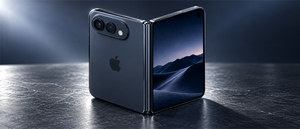
Looking ahead, the next 12 to 24 months will test whether Apple can sustain this momentum as it enters new product categories. The most anticipated move is the rumored launch of the "iPhone Fold" in late 2026, a device that could either revolutionize the smartphone form factor once again or prove to be an expensive misstep in a maturing market. Simultaneously, the company must execute on its promise of a more affordable Vision headset to prevent its spatial computing ambitions from remaining a high-priced curiosity.
In the short term, the market will be watching the ongoing DOJ antitrust proceedings. A potential strategic pivot may be required if the courts mandate significant changes to the App Store’s commission structure. However, Apple has already shown an ability to adapt; its pivot to services over the last decade has already partially insulated it from hardware sales volatility. The "Apple Intelligence" platform provides a new frontier for growth, with potential scenarios including the integration of AI into home robotics or automotive interfaces, further deepening the ecosystem's "stickiness."
Market opportunities will also emerge from the 2nm chip cycle. If Apple can maintain its exclusive yield from TSMC, it will effectively own the "high-performance" segment of the consumer market for the foreseeable future. The challenge, however, will be managing the rising costs of this technology—with 2nm wafers reportedly costing $30,000 each—without alienating the "Prosumer" base that currently drives its record-breaking margins.
Investor Outlook and Lasting Impact
Apple’s Q1 2026 results and its continued market resiliency serve as a masterclass in ecosystem management and capital allocation. By returning $32 billion to shareholders in a single quarter through dividends and buybacks, the company has created a financial floor that makes it an "all-weather" stock for institutional investors. The key takeaway is that Apple is no longer just a hardware company; it is a global utility for personal computing and artificial intelligence.
Moving forward, the market will likely remain bullish on Apple’s ability to navigate macroeconomic headwinds, provided it can successfully manage its regulatory challenges. Investors should watch for the "Services-to-AI" revenue mix in upcoming quarters and the public’s reception of the "Agentic AI" features as they become more integrated into daily life. If Apple continues to defy the "Most Admired" curse, it will not only be a testament to its current leadership but a fundamental rewrite of modern financial theory.
The lasting impact of this era will be defined by how Apple balances its immense power with the increasing demands for platform openness. For now, the "Apple Exception" remains the most compelling story in the financial markets, proving that in the world of high-stakes technology, the most admired players can, occasionally, keep winning long after the rules say they should have lost.
This content is intended for informational purposes only and is not financial advice.