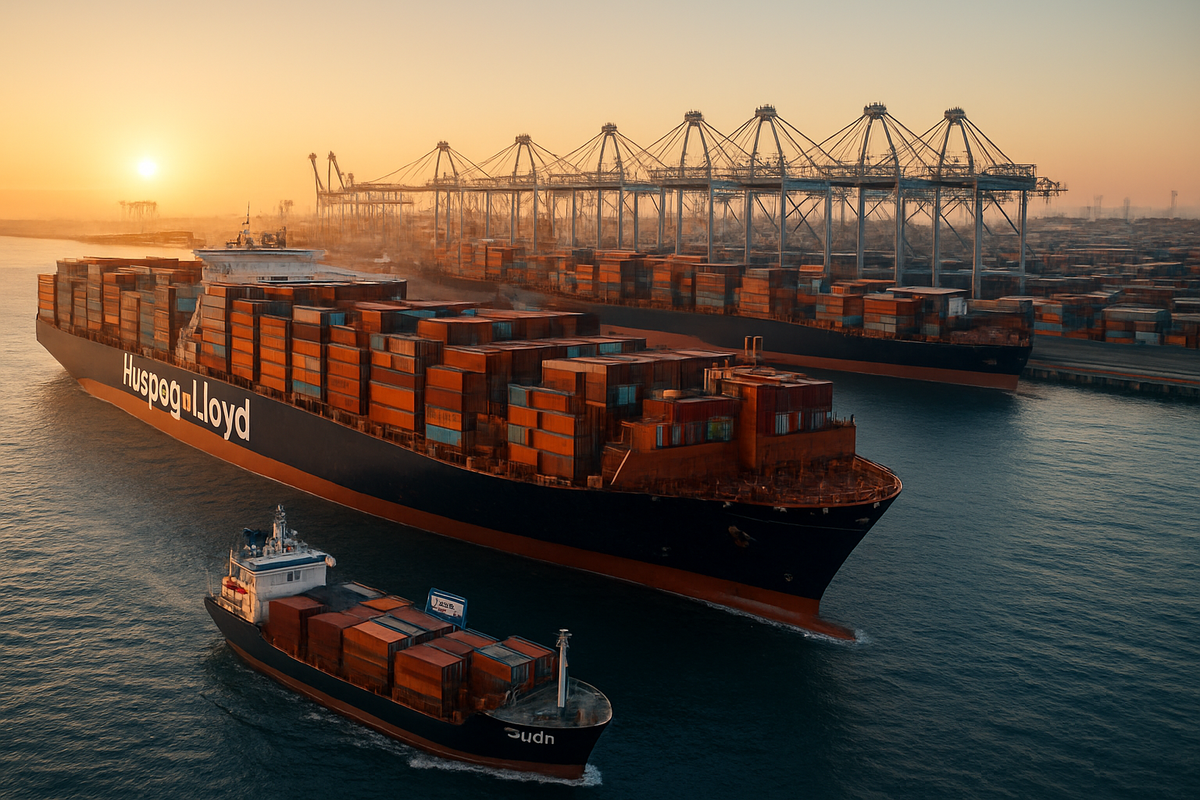
In a move that has sent shockwaves through the maritime industry, German shipping giant Hapag-Lloyd (XETRA: HLAG) announced a definitive agreement to acquire ZIM Integrated Shipping Services (NYSE: ZIM) for approximately $4.2 billion. The all-cash deal, valued at $35.00 per share, represents a staggering 58% premium over the company’s recent closing price and marks one of the most significant consolidations in the sector in recent years.
The acquisition is not a straightforward merger; it includes a complex "New ZIM" carve-out designed to satisfy Israeli national security concerns. By splitting the company, Hapag-Lloyd secures ZIM’s global network and modern fleet while ensuring that Israel maintains a strategic, domestic shipping capability through a newly formed entity.
A Massive Premium and a Complex Israeli Carve-Out
The $35.00 per share offer is a bold statement from Hapag-Lloyd, reflecting a 126% increase over ZIM’s "unaffected" share price in mid-2025, before rumors of a buyout began to circulate. To finance the $4.2 billion equity value, Hapag-Lloyd plans to utilize its robust cash reserves of $7.5 billion, supplemented by a $2.5 billion bridge facility. This financial firepower underscores the German carrier's determination to cement its position as the world’s fifth-largest container line.
The deal’s complexity stems from ZIM’s unique status as a national asset for Israel. To navigate regulatory hurdles and political opposition, the parties have agreed to a carve-out of a business unit dubbed "New ZIM." This entity will be owned by FIMI Opportunity Funds, Israel's largest private equity firm led by Ishay Davidi. New ZIM will operate a fleet of 16 modern vessels and focus on strategic trade lanes vital to the Israeli economy, including routes to Europe and the United States.
Central to this arrangement is the transfer of the State of Israel’s "Golden Share" to New ZIM. This special share grants the Israeli government the right to requisition ships during times of war or national emergency to ensure the continuous flow of food, fuel, and essential supplies. By preserving this right within an Israeli-owned entity, the deal addresses the concerns of the Israeli Shipping Authority and local leaders like Haifa Mayor Yona Yahav, who had initially voiced skepticism about foreign ownership.
The Winners and Losers of the Maritime Megadeal
The primary winners in this transaction are ZIM’s shareholders, who are seeing a massive windfall from the 58% premium. Following the announcement on February 16, 2026, ZIM shares surged over 33%, approaching the $30 mark as the market priced in the likelihood of a successful close. FIMI Opportunity Funds also stands to gain, acquiring a lean, strategically positioned shipping line with the backing of Hapag-Lloyd’s "Gemini" cooperation network, which it shares with Maersk (CPH: MAERSK-B).
On the other side of the ledger, Hapag-Lloyd’s investors showed initial caution, with shares in Frankfurt experiencing a slight dip. The high premium and the operational complexities of integrating ZIM’s global staff and assets—while simultaneously managing the carve-out—present significant execution risks. Furthermore, ZIM’s workforce in Haifa has already begun staged strikes. Labor unions, fearing job losses and the erosion of an "Israeli icon," represent a significant hurdle for Hapag-Lloyd as it seeks to maintain industrial peace during the transition.
Competitors like Mediterranean Shipping Company (MSC) and COSCO Shipping (HKG: 1919) may find themselves facing a more formidable rival. The combined entity will operate over 400 vessels with a capacity exceeding 3 million TEU. However, smaller regional players might find new opportunities if the Hapag-ZIM merger leads to service rationalization on specific trade lanes.
Industry Consolidation and National Sovereignty
This acquisition fits into a broader trend of consolidation in the shipping industry as carriers seek scale to manage volatile freight rates and invest in expensive decarbonization technologies. By absorbing ZIM, Hapag-Lloyd gains immediate access to a modernized fleet and specialized routes, particularly in the Mediterranean and Transpacific trades. It also expects to realize annual synergies between $300 million and $500 million through network optimization.
However, the deal also highlights the growing tension between global corporate consolidation and national security. The requirement for a "New ZIM" carve-out demonstrates that shipping is not just a commercial enterprise but a critical infrastructure. As global tensions rise, more nations may look to the "Israeli model" of the Golden Share to protect their supply chains from being entirely dependent on foreign-owned conglomerates.
Historically, this deal mirrors the 2017 acquisition of Hamburg Süd by Maersk, which also required significant regulatory concessions. Yet, the Hapag-ZIM deal is unique because of the active "carve-out" of a secondary national carrier, setting a potential precedent for future cross-border acquisitions in sensitive sectors.
The Long Voyage to Late 2026
The road to completion is long, with an expected closing date in late 2026. In the short term, Hapag-Lloyd must navigate a gauntlet of antitrust approvals from regulators in the United States, Europe, and Asia. Domestically, the Israeli government must finalize the transfer of the Golden Share and ensure that the New ZIM entity is financially viable enough to serve its national security purpose.
Strategically, Hapag-Lloyd will need to prove to the market that it can integrate ZIM’s digital-forward culture into its more traditional German corporate structure. The "Gemini" network, Hapag-Lloyd’s landmark cooperation with Maersk, will likely be the framework into which ZIM’s assets are integrated, potentially shifting the balance of power within that alliance.
Investors and industry analysts will be watching closely for any signs of regulatory pushback or further labor unrest. If the strikes in Haifa escalate, Hapag-Lloyd may be forced to offer more ironclad job guarantees, which could eat into the projected $500 million in synergies.
Final Assessment: A High-Stakes Bet on Scale
The Hapag-Lloyd acquisition of ZIM represents a high-stakes bet that scale and strategic positioning are the only ways to survive in the modern shipping landscape. By paying a 58% premium, Hapag-Lloyd is signaling its belief that the maritime industry’s future belongs to a few dominant giants with global reach and diversified service offerings.
The takeaway for investors is clear: the era of shipping consolidation is far from over. While the $4.2 billion price tag is steep, the strategic value of ZIM’s niche routes and modern fleet could provide Hapag-Lloyd with the competitive edge it needs for the next decade. Moving forward, the market will focus on two key metrics: the progress of regulatory approvals and Hapag-Lloyd’s ability to pacify a restless Israeli workforce.
This deal is a landmark event that successfully balances the needs of global capital with the requirements of national sovereignty. Whether it becomes a blueprint for future mergers or a cautionary tale of overpayment remains to be seen, but for now, Hapag-Lloyd has positioned itself at the center of the global maritime stage.
This content is intended for informational purposes only and is not financial advice.