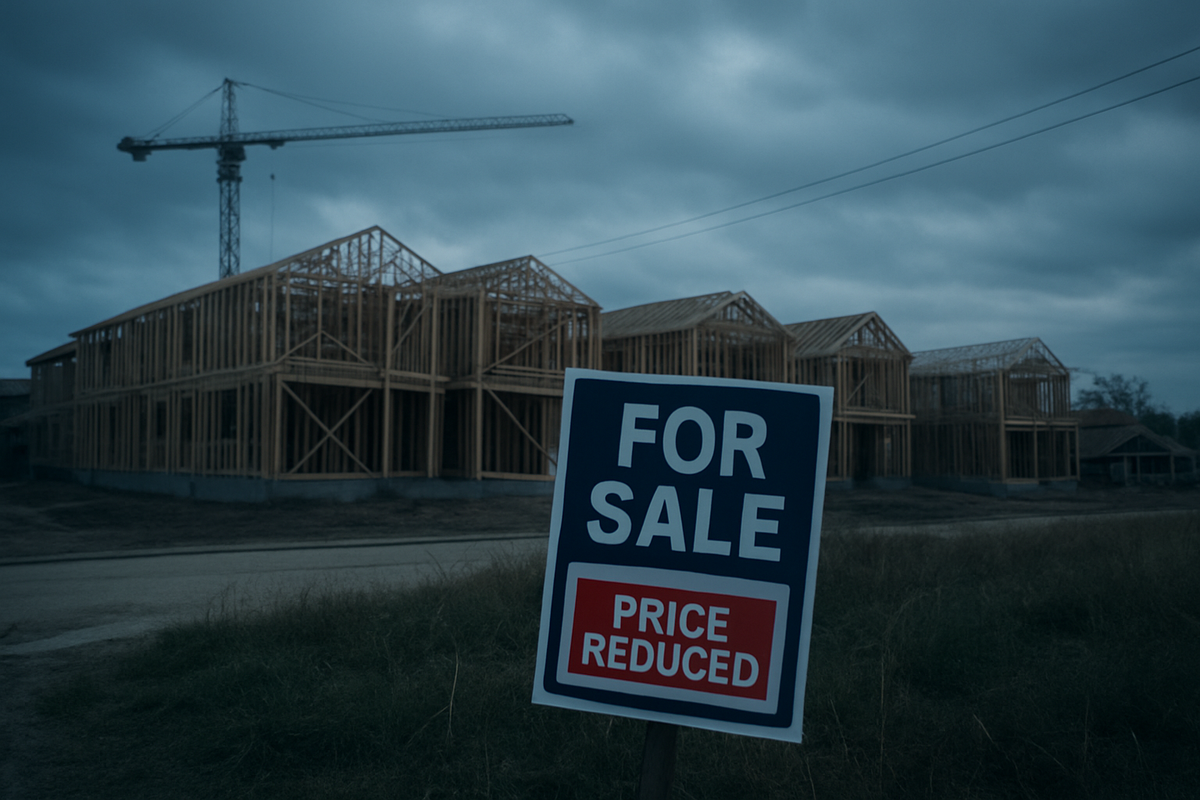
The U.S. housing market faced a sobering reality check this week as the National Association of Home Builders (NAHB)/Wells Fargo (NYSE: WFC) Housing Market Index (HMI) slumped to a reading of 36 for February 2026. This unexpected decline, down from 37 in January, marks the 22nd consecutive month that builder confidence has remained in negative territory, underscoring a persistent malaise that has gripped the residential construction industry for nearly two years.
The continued erosion of confidence highlights a "new normal" where high interest rates and elevated construction costs have created a formidable barrier for prospective buyers. Despite some stabilization in mortgage rates compared to the peaks of 2024, the "lock-in effect" and a chronic shortage of affordable inventory continue to keep American homebuyers on the sidelines, forcing builders to rely heavily on expensive sales incentives to maintain volume at the expense of profit margins.
Unexpected Drop Signals Stagnant Spring
The February reading caught many market observers off guard, as analysts had broadly anticipated a modest uptick to 38. Instead, the index’s fall to 36 signals that the anticipated "spring thaw" in the housing market may be more of a "spring freeze." The HMI is a weighted average of three components: current sales conditions, sales expectations for the next six months, and the traffic of prospective buyers. While the current sales component held steady at 41, the forward-looking expectations component fell three points to 46, reflecting a growing skepticism among builders regarding a near-term recovery.
The most concerning metric in the report was the traffic of prospective buyers, which dropped two points to 22. This suggests that despite a marginal improvement in borrowing costs—with 30-year fixed mortgage rates hovering between 6.04% and 6.18% in early February—potential homeowners are simply not visiting model homes. Regionally, the sentiment was particularly bleak in the West and South, which saw readings of 33 and 35 respectively, while the Northeast and Midwest showed slightly more resilience but still remained well below the 50-point threshold that separates growth from contraction.
The timeline leading to this 22nd consecutive negative reading is rooted in the Federal Reserve’s prolonged battle with inflation and the subsequent era of "higher-for-longer" interest rates. Since mid-2024, the housing market has struggled to find a floor. Even as inflation cooled, the structural costs of building—driven by a labor shortage of nearly 500,000 workers and significant tariffs on essential materials like steel and lumber—have kept home prices out of reach for the average American family.
Giants vs. Small Builders: A Widening Gap
The current environment has created a stark divide between massive public homebuilders and smaller, private developers. Industry giants like D.R. Horton (NYSE: DHI) and Lennar (NYSE: LEN) have managed to maintain sales volume by leveraging their massive balance sheets to offer aggressive mortgage rate buydowns. In February, roughly 65% of builders reported using some form of sales incentive, with D.R. Horton specifically targeting first-time buyers who now make up over 60% of their business. However, these incentives come at a cost; Lennar recently guided for lower gross margins in the 15-16% range as they prioritize "volume over price" to capture market share.
Conversely, smaller builders who lack the capital to buy down interest rates are finding it increasingly difficult to compete. These firms are more vulnerable to the rising costs of construction, which are estimated to have increased by over $10,000 per home due to 2026's new trade policies. Furthermore, PulteGroup (NYSE: PHM) has attempted to pivot toward the "active-adult" 55+ demographic, which tends to be less sensitive to interest rate fluctuations. While this strategy has bolstered their margins, the company recently warned that new tariffs on imported materials could add significant overhead to every new project started this year.
Investors are also closely watching the regulatory landscape. The administration has recently increased scrutiny on the capital allocation strategies of these public builders. Figures within the Federal Housing Finance Agency (FHFA) have criticized the "Big Three" for spending billions on stock buybacks—such as D.R. Horton's $4.3 billion repurchase program in fiscal 2025—while housing supply remains critically low. This political pressure could eventually lead to mandates or tax penalties that discourage buybacks in favor of reinvesting capital into "attainable" housing projects.
A Structural Shift in the American Dream
The broader significance of the February HMI reading lies in how it reflects a fundamental shift in the American housing economy. This 22-month streak of negative sentiment is not just a cyclical downturn; it is a symptom of a structural supply-demand mismatch. The "Trump Homes" initiative, a recently proposed government-backed plan to develop one million attainable housing units, represents a potential paradigm shift. If enacted, this could provide the necessary stimulus to break the 50-point barrier, but it also signals that the market may no longer be able to correct itself without significant federal intervention.
Historically, the housing market has been the engine of U.S. economic recoveries, but the current "lock-in effect"—where homeowners with 3% mortgages refuse to sell and move into 6% loans—has paralyzed the resale market. This has forced the entire burden of inventory growth onto new construction. However, with builders facing a "perfect storm" of high labor costs, 35%+ tariffs on lumber, and 50% tariffs on steel and aluminum, the cost to produce a "starter home" has climbed to levels that are fundamentally incompatible with current wage growth.
The ripple effects are being felt across the broader real estate ecosystem. Real estate platforms like Zillow Group (NASDAQ: Z) and Redfin (NASDAQ: RDFN) are seeing reduced transaction volumes, while home improvement retailers like Home Depot (NYSE: HD) face cooling demand as fewer people move into new residences. This stagnation suggests that the housing market may remain a drag on GDP growth through the remainder of 2026 unless there is a significant shift in either mortgage rates or federal housing policy.
The Path to Recovery: Short-Term Pain, Long-Term Pivot
Looking ahead, the next six months will be a critical litmus test for the industry. The spring selling season, typically the most active time for the market, is approaching with a sense of trepidation. Builders are expected to continue their "asset-light" strategies, focusing on finishing existing inventory rather than breaking ground on speculative new communities. We may see an increase in strategic pivots toward "build-to-rent" communities, as companies like Lennar and Toll Brothers (NYSE: TOL) seek to capitalize on the growing population of "renters by necessity" who have been priced out of homeownership.
If mortgage rates remain stuck above the 6% mark, the industry may see a wave of consolidation. Smaller, regional builders may be forced to sell to larger entities like D.R. Horton or Lennar, who can better absorb the volatility. Furthermore, if the "Trump Homes" initiative gains legislative traction, it could create a massive opportunity for builders who are willing to pivot their business models toward high-volume, lower-margin government contracts, potentially ending the streak of negative HMI readings by late 2026.
Conclusion: A Market in Search of a Floor
The February drop in the NAHB Housing Market Index to 36 is a stark reminder that the housing sector remains the most interest-rate-sensitive part of the U.S. economy. After 22 consecutive months of contractionary sentiment, it is clear that the "higher-for-longer" interest rate environment has fundamentally reshaped the builder-consumer dynamic. The reliance on incentives and the looming impact of new trade tariffs suggest that while the "Big Three" builders may survive through sheer scale, the path to a broad market recovery is fraught with obstacles.
For investors, the key metrics to watch in the coming months will be the "Traffic of Prospective Buyers" component and any shifts in the Federal Reserve’s rhetoric regarding long-term rate cuts. Until buyer traffic sees a sustained rebound, the housing market will likely remain in this holding pattern. The persistence of this downturn suggests that the 2026 housing market will be defined not by a sudden boom, but by a slow, grueling slog toward affordability.
This content is intended for informational purposes only and is not financial advice.