As the global financial markets prepare for the most anticipated corporate event of the year, all eyes are on Nvidia (NASDAQ: NVDA). On February 25, 2026, the semiconductor titan is scheduled to report its fiscal 2026 fourth-quarter earnings, a report that is expected to serve as a definitive health check for the trillion-dollar artificial intelligence industry. With analyst revenue expectations coalescing around a staggering $66 billion for the single quarter, the report comes at a time when Nvidia has moved beyond being just a chipmaker to becoming the foundational "central bank" of the global compute economy.
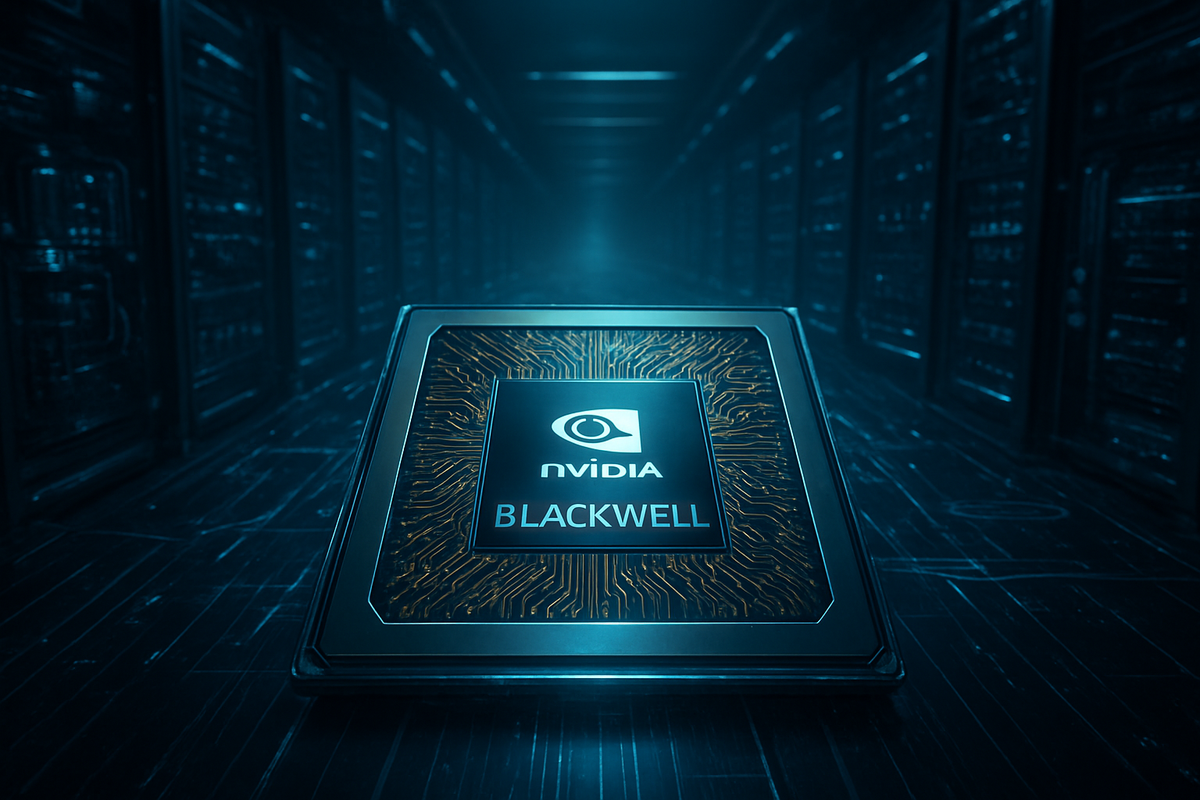
The stakes could not be higher. One week out from the announcement, investors are laser-focused on the production ramp-up of the Blackwell GPU architecture and the early whispers surrounding its successor, the Rubin platform. As Blackwell remains sold out through the middle of 2026, the upcoming call will likely determine whether the massive capital expenditure cycles of Big Tech can continue to support Nvidia’s vertical ascent or if the market has reached a temporary plateau in the "AI Factory" era.
The $66 Billion Target: Inside the Blackwell Supply Chain
Nvidia’s projected $66 billion in quarterly revenue—a nearly 67% increase year-over-year—is primarily fueled by the peak production phase of its Blackwell (B200 and GB200) systems. Since their initial rollout in 2025, these chips have become the standard for large-scale AI training and inference. The timeline leading to this Q4 report has been marked by a relentless push to solve early engineering hurdles, specifically surrounding the liquid-cooling requirements and the integration of high-bandwidth memory (HBM4). By the close of 2025, Nvidia had successfully streamlined its production yields with its primary foundry partner, Taiwan Semiconductor Manufacturing Co. (NYSE: TSM), effectively ending the supply-side volatility that characterized earlier quarters.
Key stakeholders, including the "Big Five" hyperscalers—Microsoft (NASDAQ: MSFT), Alphabet (NASDAQ: GOOGL), Meta (NASDAQ: META), Amazon (NASDAQ: AMZN), and Oracle (NYSE: ORCL)—have remained the primary drivers of this demand. Initial market reactions in the weeks leading up to the February 25 announcement suggest that these companies have not yet hit the brakes on their infrastructure spending. In fact, total cloud capital expenditure for 2026 is projected to approach an unprecedented $680 billion. The market's immediate concern is not the lack of demand, but rather Nvidia's ability to maintain its 75% gross margins as it transitions to the more complex Rubin architecture later this year.
Winners and Losers in the Compute Gold Rush
The upcoming earnings report will create a "halo effect" for a specific group of suppliers while casting a shadow over those struggling to keep pace. TSMC (NYSE: TSM) stands as the most prominent winner, having secured the lion's share of 3nm and early 2nm capacity for Nvidia's next-generation "Feynman" GPUs. Similarly, the memory sector is seeing a massive windfall. SK Hynix (KRX:000660) remains the dominant supplier of HBM4, though Samsung Electronics (KRX:005930) has recently made strides in qualifying its chips for Nvidia’s Rubin platform, potentially introducing much-needed competition to the supply chain and easing costs for the end-user.
On the competitive front, Advanced Micro Devices (NASDAQ: AMD) has emerged as a formidable "open-source" alternative. While Nvidia dominates the high-end training market, AMD’s Instinct MI400 series, expected to launch later this year, is gaining traction among enterprises focused on inference-heavy workloads where cost-per-token is the primary metric. Meanwhile, the "losers" in this environment are primarily legacy data center players who failed to pivot toward accelerated computing. Traditional CPU sales have stagnated as budgets are cannibalized to fund GPU clusters, leaving general-purpose server manufacturers in a difficult position to defend their shrinking market share.
The Shift to Sovereign AI and the "AI Factory"
Beyond the hardware specs, Nvidia's Q4 report will highlight a critical shift in the broader industry: the rise of "Sovereign AI." No longer is AI the exclusive playground of Silicon Valley. Nations such as Saudi Arabia, the United Arab Emirates, and several European Union member states are now building domestic AI clouds to ensure data sovereignty and economic independence. This segment is expected to contribute over $20 billion to Nvidia’s annual revenue in 2026, providing a buffer against any potential slowdown in US-based hyperscaler spending.
However, this global expansion brings regulatory and geopolitical risks. As of early 2026, export restrictions on advanced semiconductors to China and other "entities of concern" remain a significant headwind. Nvidia has navigated these waters by developing region-specific chips, but the tightening of US policy could limit the company's total addressable market. Historically, this mirrors the semiconductor cycles of the late 1990s, but with a crucial difference: AI is now being integrated into physical infrastructure—from autonomous power grids to robot-managed logistics—creating a level of "stickiness" that the dot-com era lacked.
Looking Ahead: The Rubin Era and Agentic AI
As the fiscal year concludes, the focus shifts to what comes next: the Rubin platform. Nvidia stunned the industry by accelerating the production of the Vera Rubin (R100) GPU, which promises a tenfold reduction in inference costs. This is essential for the burgeoning "Agentic AI" market, where autonomous software agents perform complex, multi-step tasks that require constant, low-latency compute. The transition to Rubin will necessitate a strategic pivot toward even more advanced cooling technologies and higher power density in data centers, presenting both a challenge and an opportunity for infrastructure partners.
In the short term, investors should watch for Nvidia’s guidance for the first quarter of fiscal 2027. If the company signals that the Rubin ramp-up will be faster than anticipated, it could trigger a new wave of upgrades. Conversely, any mention of delays in HBM4 yields or a potential "air pocket" in demand from smaller cloud providers could introduce volatility to a stock that has become a proxy for the entire technology sector.
Conclusion: A High-Stakes Forecast for the Global Economy
Nvidia’s Q4 FY2026 earnings report is more than just a financial statement; it is a barometer for the second half of the decade’s technological progress. If the company meets or exceeds the $66 billion revenue target, it will validate the belief that we are still in the early innings of a multi-decade shift toward accelerated computing. Key takeaways for investors include the stability of gross margins, the success of the Blackwell-to-Rubin transition, and the growth of the Sovereign AI segment.
Moving forward, the market will likely reward companies that can prove their AI infrastructure is translating into real-world productivity gains. While the "Big Five" have deep pockets, the next phase of the market will require Nvidia to show that AI is moving from the "cost center" of training to the "profit center" of inference and agents. For now, Nvidia remains the undisputed leader of this revolution, but with the eyes of the world watching on February 25, there is no room for error.
This content is intended for informational purposes only and is not financial advice.