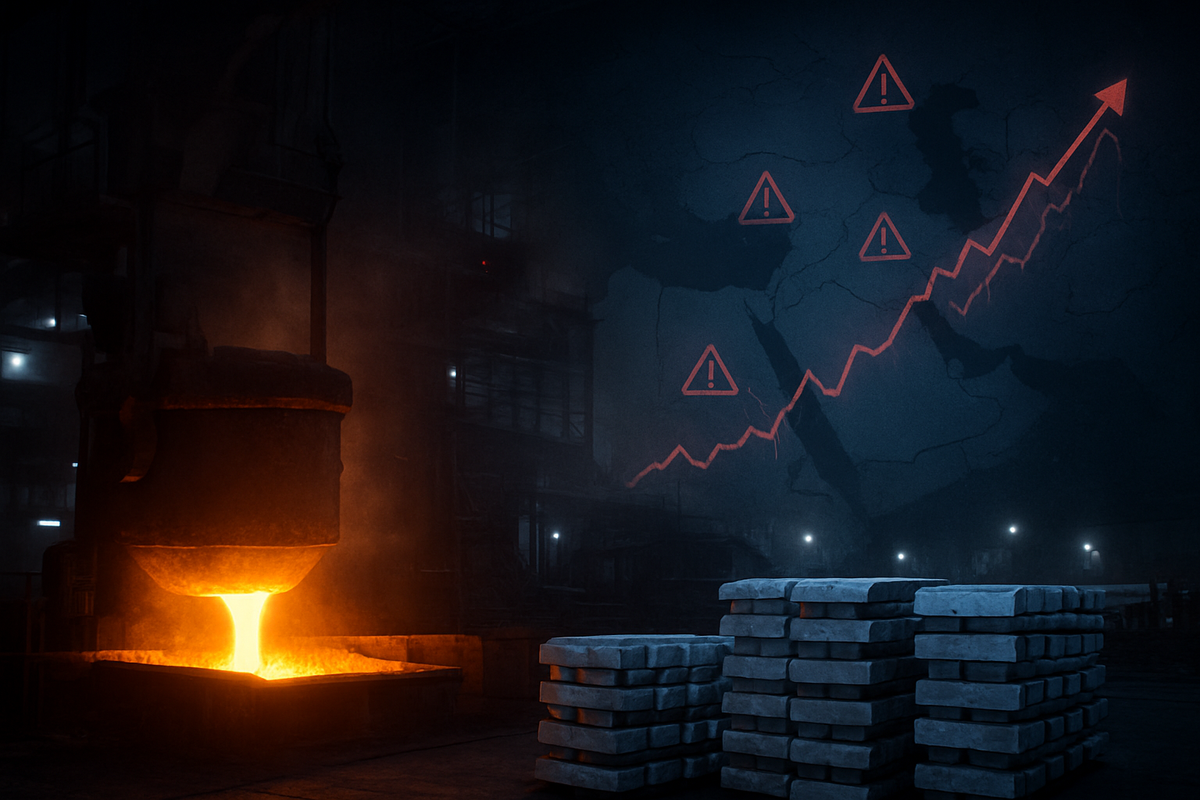
LONDON — The global aluminum market has been plunged into a state of high-alert volatility as escalating military conflict in the Middle East threatens to sever the world’s most critical supply arteries. As of March 26, 2026, prices for the "winged metal" have surged past $3,500 per tonne on the London Metal Exchange (LME), driven by a compounding crisis of shuttered smelting capacity and a vertical spike in electricity costs. With the Strait of Hormuz effectively a high-risk zone, the industry is grappling with a supply shock that analysts warn could push spot pricing toward the psychological $4,000 mark before the summer.
The immediate implications are being felt across the manufacturing spectrum, from aerospace and automotive to consumer electronics. Because aluminum is essentially "solidified electricity"—requiring immense amounts of power to smelt—the simultaneous disruption of Middle Eastern energy exports and local smelting operations has created a perfect storm. Regional premiums have hit historic highs, with the U.S. Midwest Premium eclipsing $1.00 per pound for the first time, signaling a desperate scramble for physical metal as inventories in the Persian Gulf remain stranded behind a wall of geopolitical risk.
The crisis reached a tipping point in early March 2026, following a series of retaliatory strikes involving Iranian assets that led to the partial closure of regional shipping lanes. While the United Arab Emirates’ Emirates Global Aluminium (EGA) has managed to maintain operations at its Jebel Ali and Al Taweelah facilities, the logistical blockade has prevented the export of its 2.4 million tonnes of annual output. Simultaneously, the Qatalum smelter—a critical joint venture between Norsk Hydro (OTCMKTS: NHYDY) and Qatar Aluminium Manufacturing Company—was forced into a controlled "warm shutdown" after gas deliveries were diverted for emergency domestic use. Qatalum is currently operating at just 60% capacity, a move intended to prevent the total freezing of electrolytic pots, which would take years to recover.
In Iran, the smelting sector is facing its own internal collapse. Despite a nominal capacity of nearly 800,000 tonnes per annum across producers like South Aluminum Company (SALCO) and IRALCO, the Iranian government has mandated aggressive production cuts to divert electricity to its strained national grid. The timeline of this crisis has been swift; what began as localized maritime tension in late February evolved into a full-scale energy emergency within three weeks. Market participants, who had already been navigating a tight supply-demand balance, were caught off-guard by the speed at which Qatar and the UAE were forced to curtail or stockpile production rather than ship to international markets.
The landscape of winners and losers is being drawn along the lines of energy source and geographic isolation. Century Aluminum (NASDAQ: CENX) has emerged as a primary beneficiary of the chaos. As a major U.S.-based producer, Century is shielded from the Strait of Hormuz blockade and is currently reaping the benefits of the record-high Midwest premiums. The company has announced it will accelerate the restart of its Mt. Holly plant to reach 100% capacity by June, capitalizing on the vacuum left by Middle Eastern imports. Similarly, Rio Tinto (NYSE: RIO) is showing remarkable resilience; its heavy reliance on hydroelectric power, particularly in its Canadian operations, provides a natural hedge against the natural gas price spikes currently crippling European and Middle Eastern competitors.
Conversely, Norsk Hydro (OTCMKTS: NHYDY) is facing significant headwinds. Beyond the partial curtailment at Qatalum, the company’s European smelting assets are under immense pressure from wholesale electricity prices that have surged to over €120/MWh in key markets. While Hydro's strategic hedging in late 2025 has provided a temporary cushion, a prolonged conflict could erode its margins rapidly. Alcoa (NYSE: AA) also finds itself in a precarious position; while its global footprint is diversified, its European assets are highly vulnerable to the 50% spike in natural gas prices. Investors are closely watching Alcoa’s next moves regarding its high-cost smelters, as the company may be forced to choose between loss-making production or total idling of assets.
This event fits into a broader, decade-long trend of "de-globalizing" energy-intensive industries. The 2026 crisis mirrors the 1973 oil embargo and the 2018 sanctions on Russia’s Rusal, both of which forced a radical rethinking of supply chain concentration. We are seeing a historic shift where "energy security" is now synonymous with "material security." The current conflict has essentially invalidated the Middle East’s decade-long strategy of using cheap natural gas to dominate the primary aluminum market.
Furthermore, the regulatory implications are profound. Governments in the U.S. and EU are already discussing emergency subsidies for domestic "green" smelting to reduce reliance on volatile regions. There is a clear precedent here: just as the 2022 energy crisis accelerated Europe’s pivot to renewables, the 2026 Middle East war is likely to trigger a permanent migration of smelting capacity toward "Tier 1" jurisdictions with stable, renewable power. The "Middle East Premium" is no longer just a logistical cost; it is now a permanent risk factor that will likely lead to long-term reshoring of aluminum production to North America and Australia.
In the short term, market participants should prepare for extreme volatility. If the blockade of the Strait of Hormuz persists through the next quarter, we could see LME aluminum break all-time records. Strategic pivots are already underway; large-scale consumers in the automotive sector are reportedly looking to secure long-term bilateral contracts with hydro-powered producers like Rio Tinto to bypass the spot market entirely. This could lead to a "two-tier" market: one for "secure" metal and another for "at-risk" Middle Eastern or fossil-fuel-dependent metal.
Long-term, the industry may see a surge in M&A activity as larger players seek to acquire assets in energy-stable regions. We might also see a faster adoption of secondary (recycled) aluminum, which requires 95% less energy than primary smelting. This crisis may serve as the ultimate catalyst for the "circular economy" in metals, as the cost of primary production becomes too volatile for modern manufacturing to bear. The strategic challenge for the next 18 months will be managing the "Suez-style" bottleneck of raw alumina moving into the Middle East and finished bullion moving out.
The 2026 Aluminum Crisis is a stark reminder of the fragility of the globalized industrial base. The key takeaway for investors is that the geographic location of a smelter is now as important as its technological efficiency. The market is moving toward a period of structural deficit, where the "surplus" metal traditionally held in Middle Eastern warehouses is effectively inaccessible. As we move forward, the "Solidified Electricity" thesis will dominate market analysis, with energy-independent producers holding the clear advantage.
Investors should keep a close eye on three critical metrics over the coming months: the operational status of the Qatalum pots, the trend of natural gas prices in the European Union, and the potential for a "Green Premium" to emerge as hydro-powered metal becomes the only reliable source of supply. While the current spike in prices offers a windfall for some, the lasting impact will be a fundamentally restructured global market that prizes stability over low-cost energy.
This content is intended for informational purposes only and is not financial advice.