HAIFA, Israel — In a dramatic escalation of regional tensions that has sent shockwaves through the global technology sector, Iran’s Islamic Revolutionary Guard Corps (IRGC) has officially designated NVIDIA Corporation’s (NASDAQ: NVDA) Haifa-based research and development facilities as a high-priority military target. The announcement, which came via the state-affiliated Tasnim News Agency on March 11, 2026, marks a pivotal shift in the ongoing Middle East conflict, transitioning from conventional military engagements into what analysts are calling "infrastructure warfare" against the backbone of the global AI economy.
The immediate fallout has been felt most acutely in the public markets, where NVIDIA shares experienced a sharp 4.2% sell-off on Friday, March 27, erasing approximately $180 billion in market capitalization in a single session. As the conflict intensifies, the threat to NVIDIA’s "Israel-1" AI supercomputer and its massive local workforce has raised urgent questions about the vulnerability of U.S. tech infrastructure in volatile regions and the potential for a "geopolitical tax" to permanently depress valuations in the semiconductor industry.
Infrastructure Warfare: The Targeting of Silicon Valley in the Levant
The IRGC’s "New Targets" list, published earlier this month, explicitly identifies NVIDIA alongside other titans such as Amazon.com, Inc. (NASDAQ: AMZN), Microsoft Corp (NASDAQ: MSFT), and Alphabet Inc. (NASDAQ: GOOGL). However, NVIDIA was singled out due to its critical role in providing the high-performance computing power that Tehran claims is being leveraged by both Israeli and U.S. intelligence services. The IRGC issued a chilling warning to civilians, advising them to stay at least one kilometer away from major tech offices and data centers across the region.
This escalation follows a series of reported Israeli strikes on Iranian economic assets, including central banking infrastructure in Tehran. By targeting NVIDIA's Haifa hub—the crown jewel of its international R&D operations—Iran is signaling its intent to strike at the heart of the "AI Factory" model that has driven the global tech bull market of the mid-2020s. The Haifa center is not merely a satellite office; it is the heritage site of Mellanox Technologies, which NVIDIA acquired in 2020. This facility is responsible for the development of InfiniBand and Ethernet networking technologies that are indispensable for modern AI data centers.
Initial market reactions were a mix of localized panic and broader sector-wide de-risking. While NVIDIA’s stock showed relative resilience in the first half of March, trading between $170 and $187, the cumulative weight of the IRGC threats and a tightening supply chain led to the late-month rout. By the close of trading on March 30, 2026, the PHLX Semiconductor Index had entered correction territory, as investors grappled with the reality that the physical security of chip R&D is no longer a given.
Winners and Losers: A Fractured Semiconductor Landscape
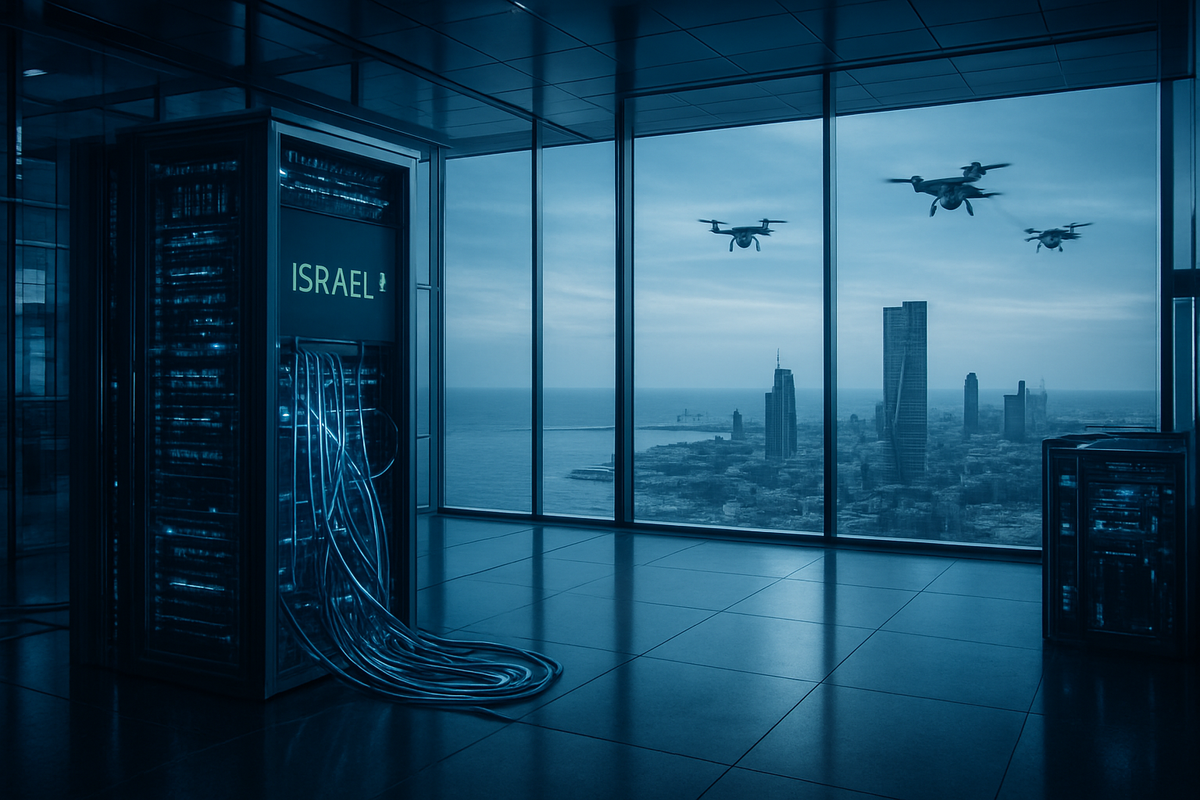
The primary "loser" in this geopolitical shift is undoubtedly NVIDIA (NASDAQ: NVDA), which has invested billions into making Israel its "second home." The company’s "Israel-1" supercomputer, currently being upgraded with the latest Blackwell architecture, sits in the crosshairs. Furthermore, NVIDIA’s ambitious plan to build a 10,000-employee "mega-campus" in Kiryat Tivon now faces significant logistical and insurance hurdles that could delay its completion indefinitely.
Intel Corporation (NASDAQ: INTC) is also suffering deeply from the regional instability. Its "Fab 28" facility in Kiryat Gat is reportedly struggling with "human capital shortages" as key engineering staff are called up for military reserves. More critically, the closure of the Strait of Hormuz has choked off the supply of helium and bromine—materials essential for Intel’s advanced lithography processes. In the wake of these disruptions, Intel has been forced to "right-size" its workforce, leading to middle-management layoffs that have further dampened morale.
Conversely, companies with minimal physical footprints in the Levant are emerging as relative safe havens. MediaTek Inc. (TPE:2454) has seen a surge in orders as enterprise customers look to diversify away from Intel-based platforms, which are seeing 15% price hikes due to supply constraints. Similarly, firms focused on domestic U.S. manufacturing under the latest rounds of the CHIPS Act are finding renewed favor with institutional investors who are prioritizing "onshoring" over "offshoring" in the current 2026 climate.
The Broader Implications: A "Tech-Exodus" and the Death of Globalization
The targeting of NVIDIA represents a watershed moment for the tech industry, highlighting a broader trend where intellectual property hubs have become frontline combat zones. The "infrastructure warfare" doctrine practiced by the IRGC suggests that data centers and R&D labs are now viewed as dual-use military facilities. This has prompted a documented "talent drain," with a March 2026 survey by the Israel Advanced Technology Industries (IATI) indicating that over 50% of multinational firms in the region are processing relocation requests for senior staff.
Furthermore, the situation has created a ripple effect on consumer electronics. Apple Inc. (NASDAQ: AAPL), which designs its M-series chips in Israeli R&D centers, has reportedly been forced to operate under shelter-in-place protocols. Analysts suggest this disruption may delay the standard iPhone 18 launch until 2027, as the company prioritizes its premium foldable models to preserve dwindling component inventories. This mirrors the supply chain shocks of the early 2020s but with an added layer of physical security risk that complicates traditional disaster recovery plans.
Historically, tech companies have been able to stay above the fray of regional conflicts, but the integration of AI into military logistics has stripped away that neutrality. Policy implications are already emerging in Washington, where there is bipartisan pressure to provide enhanced federal security guarantees for U.S. tech assets abroad, effectively treating R&D centers as quasi-sovereign territory.
Looking Ahead: Strategic Pivots and Scenarios
In the short term, NVIDIA and its peers must decide whether to "stay and defend" or "relocate and rebuild." While CEO Jensen Huang has publicly reaffirmed his commitment to the Israeli tech ecosystem, the "mass exodus" of expatriate workers—fleeing via private charters due to the closure of Ben Gurion Airport—suggests that the ground reality is shifting faster than corporate PR can manage.
Potential strategic pivots could include a rapid expansion of R&D facilities in India or Eastern Europe, though replicating the specialized expertise of the Haifa networking teams would take years. Investors should watch for a possible "security surcharge" on AI services as companies pass on the rising costs of insurance, private security, and supply chain redundancies to end-users.
If the conflict continues to escalate into the summer of 2026, we may see a formal partitioning of the global tech supply chain. In this scenario, NVIDIA could be forced to bifurcate its operations, creating a "Fortress America" division that operates entirely within the continental United States, protected from the "infrastructure warfare" now threatening its Middle Eastern assets.
Summary and Market Outlook
The IRGC's targeting of NVIDIA’s Haifa R&D center is a stark reminder that the "cloud" has a very real, very vulnerable physical address. For NVIDIA, the loss of market value in late March 2026 is a reflection of the geopolitical risk that now shadows its astronomical growth. Investors must now weigh the company’s technological lead against the physical proximity of its most important innovations to an active war zone.
Moving forward, the market will likely remain volatile as it monitors the status of the Strait of Hormuz and the operational continuity of "Israel-1." The "geopolitical tax" is no longer a theoretical concept—it is a line item on the balance sheets of the world’s most valuable companies.
What to watch for in the coming months:
- Progress on NVIDIA’s Kiryat Tivon mega-campus and any announcements regarding the relocation of the "Israel-1" hardware.
- Intel’s ability to secure alternative sources of helium and bromine to maintain its 2026 production schedule.
- Regulatory moves by the U.S. Department of Commerce to provide "security subsidies" for tech firms operating in high-risk zones.
This content is intended for informational purposes only and is not financial advice.