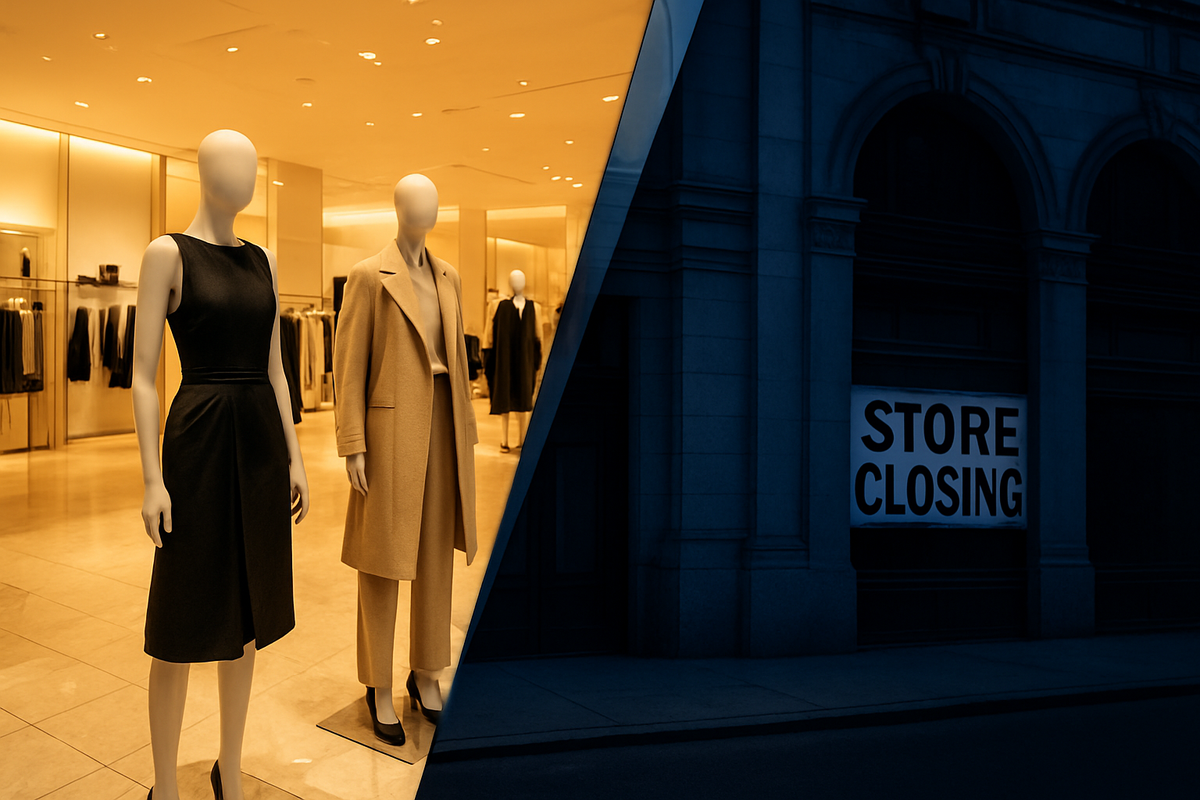
As of April 2, 2026, the American department store landscape is undergoing its most radical transformation in a generation. While legacy giants like Saks Global continue to navigate the choppy waters of bankruptcy restructuring, Macy’s Inc. (NYSE: M) has emerged as an unlikely victor in the high-stakes battle for the luxury consumer. By pivoting away from its mass-market roots and doubling down on its prestige banners, Bloomingdale’s and Bluemercury, Macy’s is successfully capturing the "HENRY" (High Earner, Not Rich Yet) demographic that its competitors have struggled to retain.
The divergence in fortunes was highlighted today as Saks Global, the entity formed by the $2.7 billion merger of Saks Fifth Avenue and Neiman Marcus, secured $500 million in exit financing to move past its January 2026 Chapter 11 filing. In stark contrast, Macy’s enters the second quarter of 2026 with a bolstered balance sheet and a retail footprint that is smaller, more curated, and significantly more profitable than it was two years ago.
A Bold New Chapter: The Strategy Behind the Surge
The current momentum at Macy’s is the culmination of the "A Bold New Chapter" strategy launched by CEO Tony Spring in early 2024. The initiative was designed to trim the fat from the company’s sprawling portfolio—closing 150 underperforming namesake stores—while aggressively reinvesting in its high-margin luxury assets. By the start of 2026, Macy’s had successfully expanded its "Reimagine" program to 200 locations. These stores, which feature upgraded visual merchandising and enhanced staffing levels, reported a 3.4% increase in comparable sales through the 2025 fiscal year, significantly outperforming the broader retail sector.
The real stars of the Macy’s portfolio, however, have been Bloomingdale’s and Bluemercury. During the 2025 holiday season, Bloomingdale’s reported a staggering 10% growth in comparable sales, driven by a surge in "premium contemporary" fashion. Simultaneously, the company’s beauty arm, Bluemercury, has capitalized on the booming prestige skincare market, opening 30 new locations and remodeling dozens more to meet the demand for clinical-grade beauty products. This pivot to luxury is not merely a branding exercise; it is a calculated bet that higher-income consumers are more resilient to the inflationary pressures that have dampened middle-market spending.
The timeline leading to this moment was marked by aggressive pruning and reinvestment. While the company initially planned to shutter its 150 underperforming stores by the end of 2026, management recently extended that timeline through 2028. This strategic delay allows the company to maximize the real estate value of its holdings—a move that has been applauded by activist investors who had previously pushed for a REIT spin-off. By focusing on "right-sizing" rather than just "down-sizing," Macy’s has avoided the death spiral that claimed many of its 20th-century peers.
Winners and Losers in the Prestige Pivot
The primary winner in this reshaped market is undoubtedly Macy’s Inc. (NYSE: M). The company has effectively filled the vacuum left by the financial instability of its primary luxury rivals. With Saks Global currently shuttering 20 Saks Fifth Avenue and four Neiman Marcus locations as part of its restructuring, Bloomingdale’s has become the primary destination for luxury vendors who were burned by Saks’ 2025 payment delays. Industry insiders report that major fashion houses, including LVMH and Chanel, have shifted significant inventory allocations to Bloomingdale’s to ensure consistent shelf presence and reliable payment cycles.
Conversely, the losers include the creditors and vendors of the privately-held Saks Global. The 2024 merger between Saks and Neiman Marcus, intended to create a luxury powerhouse, instead became a cautionary tale of debt-heavy consolidation. The combined entity struggled under a $4.7 billion debt load, leading to its January bankruptcy. While the exit financing secured today provides a lifeline, the brand’s prestige has been tarnished by empty shelves and legal disputes with suppliers. Meanwhile, Kohl’s (NYSE: KSS) has found its own niche in the "middle-to-high" transition by leaning into its partnership with Sephora, which surpassed $2 billion in sales in late 2025.
Another notable player is Dillard’s (NYSE: DDS), which has maintained its status as a "fortress of capital discipline." By focusing on a governance reorganization in early 2026 and maintaining a cash reserve of over $1.1 billion, Dillard’s has avoided the volatility of its peers. However, the company remains a regional powerhouse rather than a national luxury contender, leaving the "national prestige" crown largely to Macy’s and the now-private Nordstrom. Nordstrom’s exit from the public markets in May 2025 has allowed it to focus on its off-price "Rack" division, but it lacks the current momentum of Macy’s reinvested full-line department stores.
The Great Luxury Bifurcation and Broader Industry Trends
The events of the past two years underscore a phenomenon known as the "Great Luxury Bifurcation." The retail market has split into two extremes: ultra-luxury and value-driven. The "middle ground" of the department store sector—once the heart of American retail—is effectively dead. Macy’s success stems from its realization that it could not survive as a generalist. By pushing the Macy’s brand toward "reimagined" experiences and using Bloomingdale’s to court the top 5% of earners, the company has successfully jumped the gap.
This trend fits into a wider shift toward "experience-led" retail. Today’s high-end consumer is no longer satisfied with rows of inventory; they demand storytelling, personalization, and high-touch service. Macy’s "Reimagine" stores have prioritized these elements, turning physical locations into "discovery hubs" rather than mere points of sale. This shift is also a response to the "digital fatigue" observed in late 2025, where high-margin sales began migrating back to physical stores as consumers sought the tactile reassurance of luxury shopping.
The regulatory and policy environment has also played a role. The Federal Trade Commission’s (FTC) scrutiny of retail mergers in 2024 and 2025 initially stalled the Saks-Neiman deal, but it was ultimately the market—not the regulators—that punished the consolidation. The historical precedent of the Sears-Kmart merger looms large here; like those retailers, Saks Global attempted to merge two struggling entities into one, only to find that two negatives do not make a positive when debt is the denominator.
What Comes Next: Navigating the Restructured Future
Looking toward the remainder of 2026 and 2027, the retail sector will be defined by how well these companies can adapt to a "smaller but better" footprint. For Macy’s, the challenge will be maintaining the growth of Bloomingdale’s as it opens 15 new locations. Expansion always carries the risk of brand dilution, and the company must ensure that the "exclusivity" of the Bloomingdale’s name isn't compromised by its rapid growth. Furthermore, the final wave of 150 store closures will test Macy's ability to transition its suburban customers to digital or small-format "Bloomie’s" locations.
For the newly restructured Saks Global, the immediate goal is re-establishing vendor trust. If the company can successfully emerge from bankruptcy by Summer 2026, it will face a leaner, more agile Macy’s that has already captured much of its former market share. We may also see further consolidation in the sector, possibly through private equity acquisitions of mid-market players who haven't yet committed to a luxury or value pivot.
Market opportunities will likely emerge in the "small-format" space. As massive malls continue to be decommissioned, both Macy’s and Nordstrom have signaled a shift toward 30,000-to-50,000-square-foot stores in affluent strip centers. This "neighborhood luxury" model could be the next frontier for capturing the high-end consumer’s daily spend.
The Verdict: A New Hierarchy in American Retail
The events of April 2, 2026, mark a symbolic end to the era of the "debt-fueled mega-merger" in retail. The successful securing of exit financing for Saks Global is a sigh of relief for the industry, but it does not change the fundamental shift in power. Macy’s Inc. has proved that internal reinvestment and a clear focus on the luxury consumer are more sustainable paths to growth than aggressive M&A.
As we look forward, the market will continue to reward retailers that prioritize gross margin and customer experience over raw store count. Investors should closely monitor the performance of the "First 200" reimagined Macy’s locations and the pace of the Bloomingdale’s expansion. The "Bold New Chapter" is no longer just a strategy—it is the blueprint for survival in an industry where the middle ground has disappeared.
For the public and for investors, the takeaway is clear: in the new world of retail, being "everything to everyone" is a recipe for bankruptcy. Success belongs to those who choose a side, and Macy’s has chosen the high road.
This content is intended for informational purposes only and is not financial advice.