The global financial landscape underwent a seismic shift in the first quarter of 2026, as a "perfect storm" of stabilizing interest rates and technological urgency triggered a historic wave of mergers and acquisitions. Total deal volume for the quarter reached a staggering $1.25 trillion, marking a 26% increase over the previous year and signaling an end to the cautious "wait-and-see" era that defined much of 2024 and 2025. This resurgence was punctuated by an unprecedented 22 megadeals valued at over $10 billion each, a new record for any single quarter in financial history.
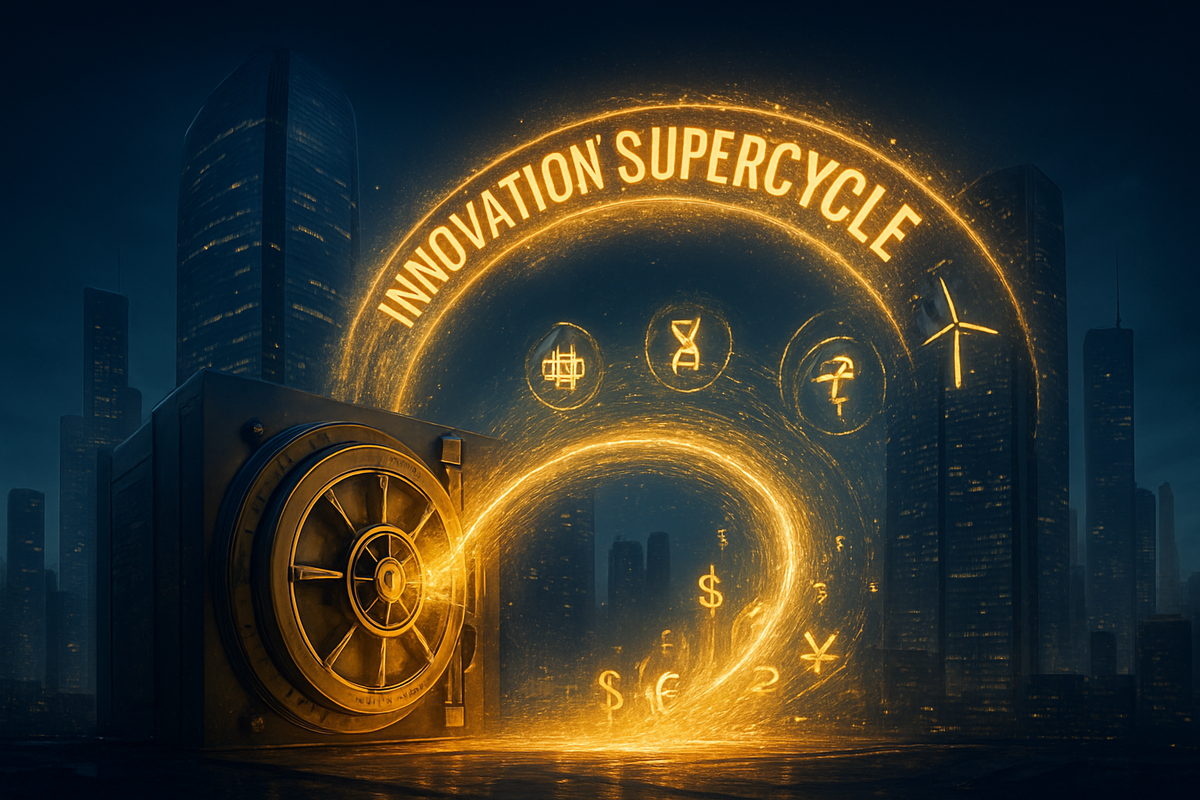
This explosion in activity is being described by analysts as the dawn of the "Innovation Supercycle," where capital is no longer chasing speculative growth but is instead being deployed to secure foundational dominance in artificial intelligence, energy infrastructure, and logistics. At the heart of this movement is a massive "wall of capital"—approximately $3.2 trillion in private equity dry powder—that fund managers have finally begun to unleash. The result is a market that is consolidating at a pace rarely seen, as corporate titans and private equity syndicates race to reposition themselves for a decade of AI-driven disruption.
A Record-Breaking Quarter: 22 Megadeals Redefining Industry Boundaries
The sheer scale of Q1 2026 activity was driven by a "flight to scale" that saw massive consolidations across technology, energy, and consumer goods. Leading the charge was the blockbuster restructuring of OpenAI, which saw a consortium including Nvidia (NASDAQ: NVDA) and Amazon (NASDAQ: AMZN) back a $122 billion valuation move to secure critical AI infrastructure. Close behind was the massive move by SpaceX into the AI sphere via a $125 billion deal with xAI, creating a vertically integrated powerhouse in aerospace and machine intelligence. The quarter also saw the largest private equity buyout in history: a $56.6 billion take-private acquisition of Electronic Arts Inc. (NASDAQ: EA) by a syndicate of firms looking to capitalize on the convergence of gaming and generative media.
The timeline for this surge can be traced back to the late months of 2025, when the Federal Reserve signaled a final pause in its tightening cycle, stabilizing interest rates between 3.5% and 3.75%. This stability provided the valuation certainty that had been missing for years. By January 2026, the floodgates opened. In the media sector, Netflix (NASDAQ: NFLX) moved to consolidate its dominance with an $80 billion acquisition of Warner Bros. Discovery (NASDAQ: WBD), a deal that effectively ended the "streaming wars" by creating a content library of unmatched scale. Initial market reactions have been overwhelmingly positive for the "survivors," with the S&P 500 reaching new highs as investors reward companies that are successfully scaling through strategic acquisitions.
Winners, Losers, and the Shifting Competitive Landscape
In this new era of consolidation, the clearest winners are the large-cap "aggregators" and the investment banks facilitating these gargantuan trades. Financial institutions like Goldman Sachs and Morgan Stanley are reporting record advisory fees as they navigate the complexities of 22 simultaneous megadeals. On the corporate side, Alphabet Inc. (NASDAQ: GOOGL) bolstered its cloud defense strategy with a $32 billion acquisition of Wiz, while Abbott Laboratories (NYSE: ABT) secured a lead in the diagnostics space by acquiring Exact Sciences Corp (NASDAQ: EXAS) for $21 billion. These moves suggest that in 2026, the winning strategy is one of "technological moat building," where companies use their cash reserves to acquire the specialized IP they cannot build fast enough.
However, the "K-shaped" nature of this recovery suggests there are losers in the mix. Small to mid-cap companies that lack the scale to attract private equity interest or the balance sheets to make their own acquisitions are finding themselves increasingly marginalized. Furthermore, companies in the consumer staples sector are facing a harsh reality of "shrink or be swallowed." For instance, the $66 billion combination of the food division of Unilever PLC (NYSE: UL) with McCormick & Company (NYSE: MKC) highlights a trend of legacy giants divesting non-core assets to remain lean, leaving smaller, less diversified players vulnerable to predatory bids.
The Innovation Supercycle: Beyond Financial Engineering
The "Innovation Supercycle" is the thematic engine driving this M&A frenzy. Unlike the 2021 cycle, which was fueled by cheap debt and retail speculation, the 2026 cycle is characterized by a "tangible" need for infrastructure. This is evident in the energy and industrials sectors, where Devon Energy Corp (NYSE: DVN) and Coterra Energy Inc. (NYSE: CTRA) announced a $58 billion merger to create an shale giant capable of powering the massive data centers required by the AI boom. Similarly, the $33.4 billion acquisition of AES Corp (NYSE: AES) by a private equity consortium involving EQT and GIP highlights the desperate grab for renewable energy and grid stability assets.
The broader significance of this trend is a massive "re-platforming" of the global economy. Companies are no longer buying competitors just for market share; they are buying to transform their entire operating models. The "Innovation Supercycle" implies that every legacy industry—from the food distribution of Sysco Corp (NYSE: SYY) to the med-tech solutions of Boston Scientific (NYSE: BSX)—must now be an AI and data company. This historical precedent mirrors the early 2000s internet boom, but with one key difference: the capital being deployed today is supported by $3.2 trillion in existing private equity commitments, providing a floor for valuations that did not exist in previous cycles.
Strategic Pivots and the Regulatory Horizon
As we look toward the remainder of 2026, the market must navigate a tightening regulatory environment. The sheer volume of $10 billion-plus deals has already caught the attention of the FTC and EU competition commissions. Strategic pivots will be required as companies like Charter Communications (NASDAQ: CHTR), which is currently pursuing a $34.5 billion merger with Cox Communications, may have to offer significant divestitures to gain approval. The challenge for many firms will be transitioning from the "acquisition phase" to the "integration phase," where they must prove that these multi-billion dollar premiums can actually deliver the promised AI-driven efficiencies.
In the short term, expect the "take-private" trend to continue. With $3 trillion still seeking a home, more public companies in the $10B–$30B range may be targeted for delisting. We are also likely to see more "capability-driven" deals in the financial sector, as seen with Banco Santander (NYSE: SAN) acquiring Webster Financial (NYSE: WBS) for $12.2 billion to bolster its digital banking footprint in the U.S. The primary risk remains a potential "indigestion" period if the global economy slows down before these newly formed giants can realize their projected synergies.
Investor Wrap-Up: Navigating the New Megadeal Reality
The first quarter of 2026 has rewritten the rulebook for M&A. The emergence of the Innovation Supercycle and the deployment of record-breaking PE dry powder have created a high-stakes environment where scale is the ultimate currency. Investors should keep a close eye on the closing timelines of these 22 megadeals, as regulatory roadblocks remain the largest threat to the current market momentum. Key players like Kimberly-Clark (NYSE: KMB) and Kenvue Inc. (NYSE: KVUE), whose $48.7 billion merger is currently under review, will serve as bellwethers for the government's tolerance of further consolidation.
Moving forward, the focus will shift to "operational alpha." It is no longer enough to simply buy a competitor; the market will now demand proof that these acquisitions can leverage AI and infrastructure to drive superior margins. For the rest of 2026, the watchwords are "integration" and "infrastructure." As the Innovation Supercycle continues to turn, the companies that successfully bridge the gap between legacy operations and future-tech dominance will likely be the ones to lead the market into the next decade.
This content is intended for informational purposes only and is not financial advice.