Colorectal cancer is now the leading cause of cancer-related death for both men and women under age 50 in the U.S., but it’s a highly curable form of cancer and has a 90% survival rate when detected early.
(PRUnderground) March 29th, 2026
March is Colon Cancer Awareness and Prevention Month. According to a January 2026 by the Journal of American Medical Association study, colorectal cancer is now the leading cause of cancer-related death for both men and women under age 50 in the U.S.
The American Cancer Society says rates of colon cancer have been rising about 1 percent a year since 2005. And this is despite declines in the death rates from other common cancers such as breast, lung, and brain cancer, as well as leukemia. One in 24 people will be diagnosed with colon cancer in their lifetime. Each year, about 150,000 Americans are diagnosed with colon cancer.
Colon cancer is a life-threatening disease, but it’s a highly curable form of cancer and has a 90% survival rate when detected early. When colon cancer isn’t found until late stages, the survival rate drops dramatically. Colonoscopies save lives.
About 75% of colon cancers occur in people with no family history, meaning most people who develop this cancer did not know they were at risk.
People born around 1990 have twice the risk of colon cancer and four times the risk of rectal cancer, compared with those born around 1950.
“We are still trying to figure out why there is such an increase in younger people getting diagnosed with colon cancer. But a lot of factors can be definitely tied to diet, exercise, lifestyle factors, tobacco use, alcohol use, sedentary lifestyle nowadays,” said Dr. Kabir Vohra, senior care focused provider with Intermountain Health.
It is not just those with the familiar risk with colon cancer either getting diagnosed at a younger age. “Most of the people (who have been diagnosed), we are finding about 75 percent don’t have any family risk of colon cancer,” Dr. Vohra added.
The recommended age for people at average risk for colon cancer is age 45. A colonoscopy is the gold standard of screening for colon cancer because if pre-cancerous polyps are identified, they can be removed easily during the screening colonoscopy.
According to experts, the data shows a third of people who could get checked for colon cancer don’t. A missed or delayed screening gives colon cancer a chance to grow and become more dangerous, long before any symptoms might appear.
Providers encourage everyone to talk to our family members about any family history of colon cancer, polyps, ulcerative colitis, or Chrohn’s disease. If you have any of those in your family history, you may be at higher risk for colon cancer. Talk to your doctor about getting screened earlier than age 45 if this is the case.
Symptoms to discuss with your doctor
If you have any of these symptoms, they need attention. Contact your primary care physician and make an appointment.
- Rectal bleeding or bleeding with a bowel movement. It may show up on toilet paper, in the toilet bowl, or in your stool.
- Anemia or low iron levels
- Changes in bowel habits
- Persistent abdominal pain
- Unexplained weight loss
Don’t dismiss symptoms of rectal bleeding, assuming it’s just hemorrhoids. Ask your doctor about how to determine the cause of rectal bleeding and rule out colon cancer or other serious gastrointestinal conditions, even if you’re young.
The most effective way to prevent colon cancer is to get screened. Colon cancer is preventable, treatable, and beatable.
Lifestyle changes that may help reduce your risk of colon cancer
- Maintain a healthy weight
- Limit red meat and processed meat
- Avoid ultra-processed foods
- Exercise regularly: aim for 150 minutes per week
- Don’t use tobacco products.
- Limit alcoholic beverages
Other healthy lifestyle behaviors that can be helpful in general or for hemorrhoids are to stay hydrated and eat enough fiber in your diet to keep things moving and help prevent hard stools or straining.
A colonoscopy is the preferred screening for colon cancer because it detects and prevents colon cancer in one step. If pre-cancerous polyps are identified, they can be removed easily during the screening colonoscopy. To schedule a colon cancer screening visit the Colon Cancer Screening page at intermountainhealth.org/colonoscopy
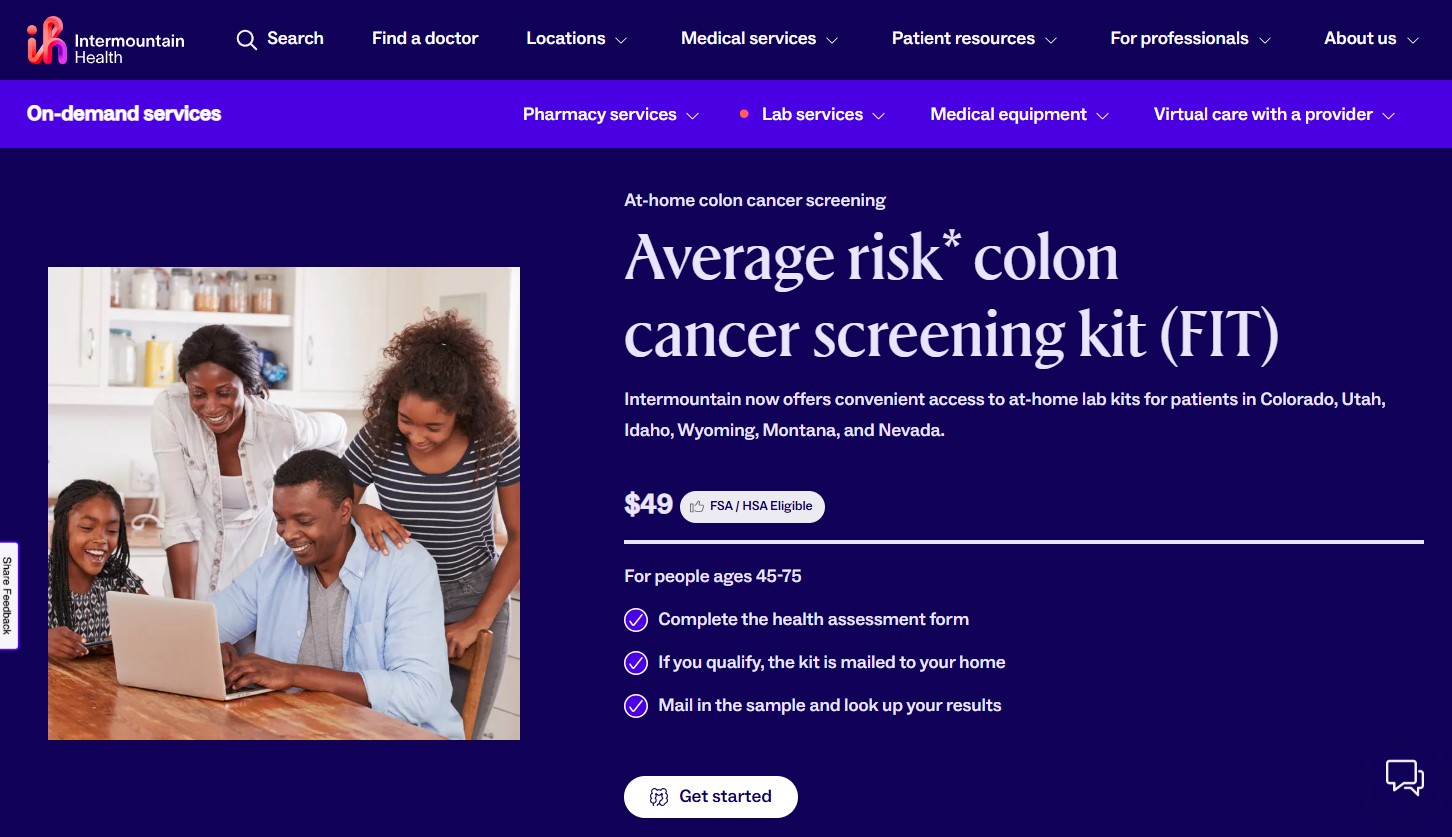
People of average risk for colon cancer may qualify for an at-home stool-based colon cancer screening kit. For patients with positive stool test results, a colonoscopy would likely be recommended.
For more information visit the On-Demand Services page at intermountainhealth.org.
About Intermountain Health
Headquartered in Utah with locations in six states and additional operations across the western U.S., Intermountain Health is a nonprofit system of 34 hospitals, approximately 400 clinics, medical groups with some 4,600 employed physicians and advanced care providers, a nonprofit health plan called Select Health with more than one million members, and other health services. Helping people live the healthiest lives possible, Intermountain is committed to improving community health and is widely recognized as a leader in transforming healthcare by using evidence-based best practices to consistently deliver high-quality outcomes at sustainable costs. For up-to-date information and announcements, please see the Intermountain Health newsroom at https://news.intermountainhealth.org/. For more information, see intermountainhealth.org/ or call 801-442-2000.
The post Colon Cancer Prevention and Awareness Month with Intermountain Health first appeared on
Original Press Release.