Autonomous driving technology company Mobileye (NASDAQ: MBLY) beat Wall Street’s revenue expectations in Q3 2026, but revenue fell by 2.4% year on year to $492 million. The company expects the full year’s revenue to be around $2.01 billion, close to analysts’ consensus estimates. Its non-GAAP profit of $0.11 per share was in line with analysts’ consensus estimates.
For more on Mobileye, read our full research report, available free.
Mobileye (MBLY) Q3 2026 highlights:
- Revenue $492 million vs S&P analysts’ consensus estimates of $476.8 million (2.4% year-on-year decline, 3.2% beat)
- Adjusted EPS $0.11 vs S&P analysts’ consensus estimates of $0.10 (in line)
- Adjusted operating income $89 million vs analysts’ consensus estimates of $77.52 million (18.1% margin, 14.8% beat)
- Revenue guidance The company slightly lifted its revenue guidance for the full year to $2.01 billion at the midpoint from $2 billion
- Operating margin -16.7%, up from -21.6% in the same quarter last year
- Market capitalization $6 billion
“Mobileye delivered another quarter of strong results from its ADAS products. In the first nine months of 2026, our 2026 EyeQ shipment volume was up 11% compared to 2025. This was well ahead of global automotive production, which declined an estimated 1%,” said Mobileye President and CEO Prof. Amnon Shashua. “Our multi-year growth opportunity in the consumer-owned vehicle space has two reinforcing drivers: ADAS reaching more vehicles and Mobileye delivering more value in each vehicle. Recent Surround ADAS and Cloud-Enhanced ADAS design wins demonstrate our expanding role beyond front-camera perception, creating a path to higher content per vehicle as these programs enter production. In robotaxi, permits, public deployments and partner vehicle selections mark progress toward commercialization, with driver-out performance remaining a critical milestone. Our broader participation in the value chain is intended to accelerate deployment and capture recurring revenue opportunities alongside our capital-light self-driving system supply business.”
Revenue growth
Reviewing a company’s long-term revenue performance reveals insights into its quality. Any business can deliver a good quarter or two, but many enduring ones grow for years. Mobileye’s 8% annualized revenue growth over the last five years was decent. Its growth was slightly above the average industrials company and shows its offerings resonate with customers.
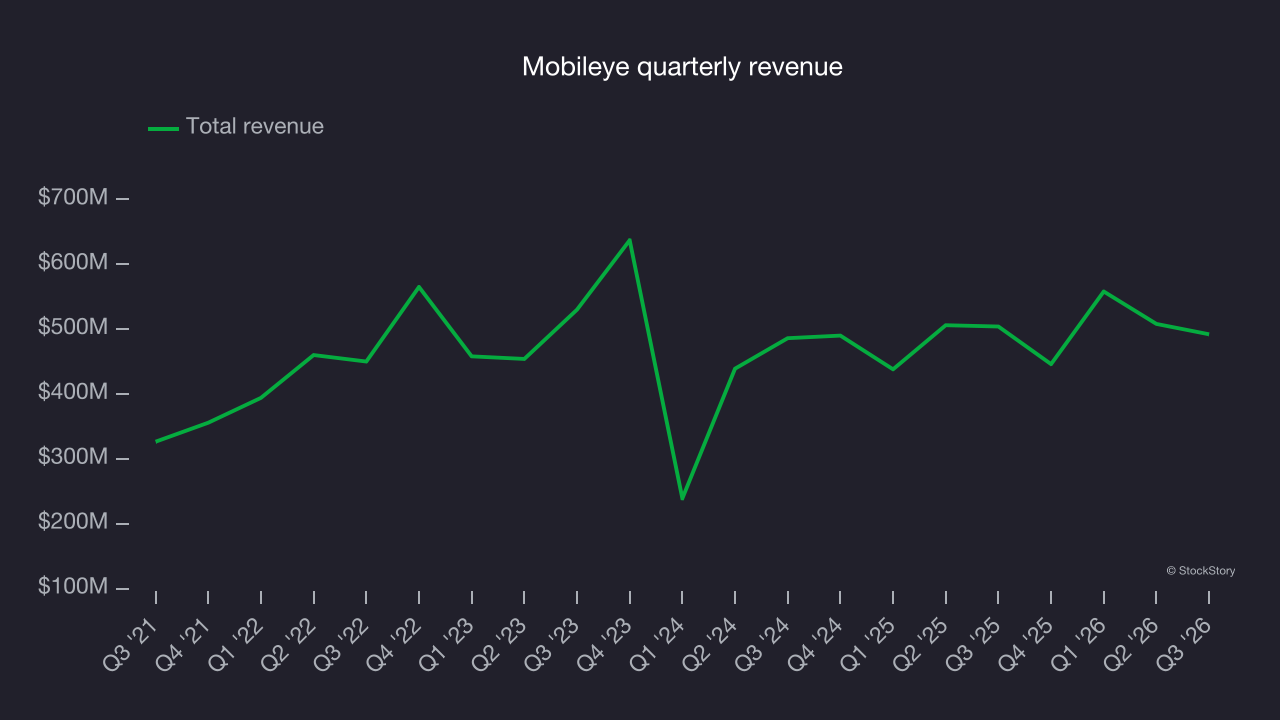
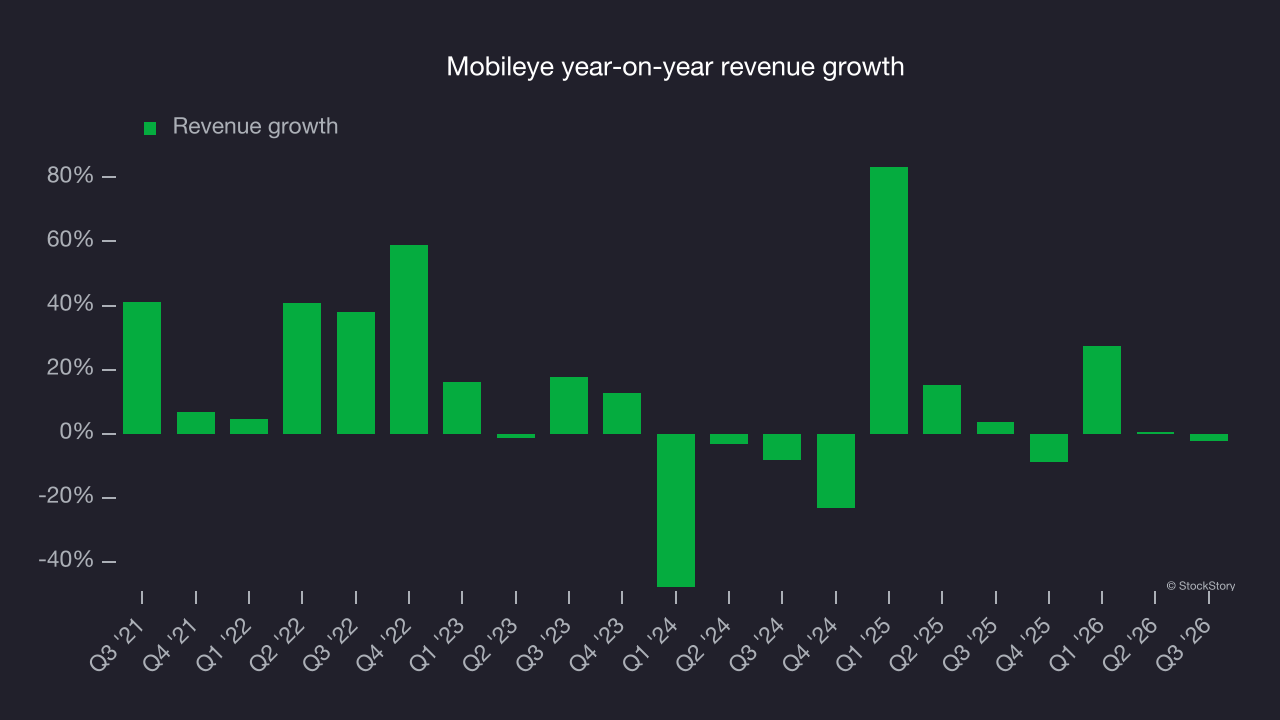
This quarter, Mobileye’s revenue fell by 2.4% year on year to $492 million but beat Wall Street’s consensus estimates by 3.2%.
Looking ahead, sell-side analysts expect revenue to grow 2.7% over the next 12 months, according to S&P, a slight deceleration versus the last two years. This projection is underwhelming and suggests its products and services will face some demand challenges.
Operating margin
Mobileye’s high expenses have contributed to an average operating margin of negative 82.8% over the last five years. Unprofitable industrials companies require extra scrutiny because they can be vulnerable in a downturn. It’s hard to trust that the business can endure a full cycle.
Looking at the trend in its profitability, Mobileye’s operating margin decreased significantly over the last five years. This raises questions about the company’s expense base because its revenue growth should have given it leverage on its fixed costs, resulting in better economies of scale and profitability. Mobileye’s performance was poor, showing that costs were rising and it couldn’t pass them on to its customers.
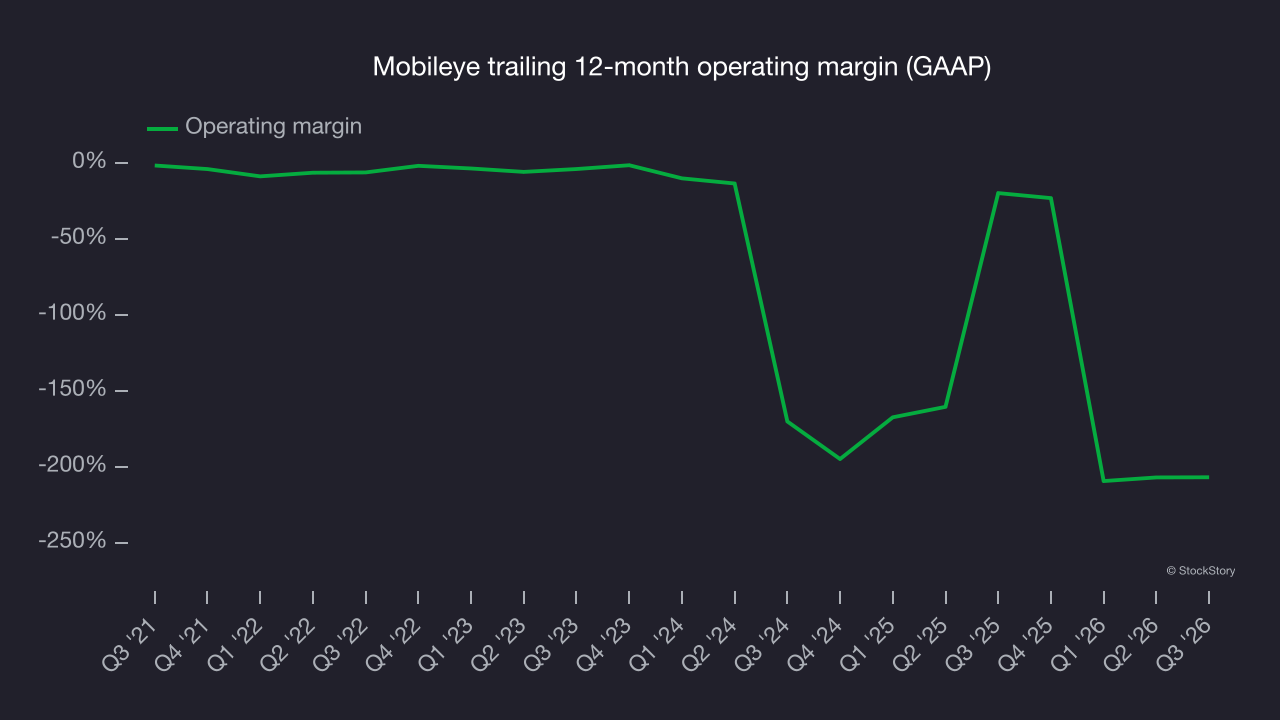
This quarter, Mobileye generated a negative 16.7% operating margin.
Earnings per share
Revenue trends explain a company’s historical growth, but the long-term change in earnings per share (EPS) points to the profitability of that growth – for example, a company could inflate its revenue through excessive spending on advertising and promotions.
Mobileye’s full-year EPS dropped 90.6%, or 24% annually, over the last three years. Companies with falling revenue and EPS warrant caution, as diminishing earnings could imply changing secular trends and preferences. If the tide turns unexpectedly, Mobileye’s low margin of safety could leave its stock price susceptible to large downswings.
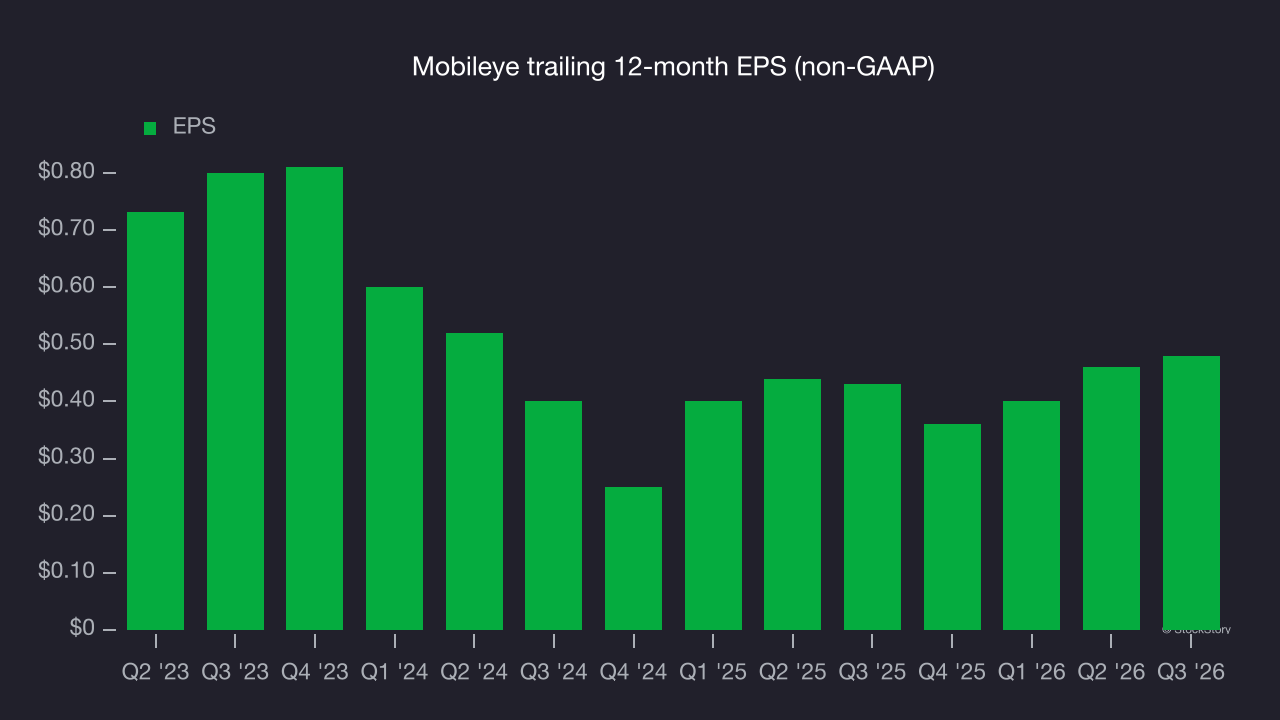
As with revenue, examining EPS over a more recent period can provide insight into an emerging theme or development for the business.
For Mobileye, its two-year annual EPS growth of 9.5% was higher than its three-year trend. Accelerating earnings growth is almost always an encouraging data point.
In Q3, Mobileye reported adjusted EPS of $0.11, up from $0.09 in the same quarter last year. This result beat analysts’ consensus estimates by 8.8%. Over the next 12 months, Wall Street expects Mobileye’s full-year EPS to shrink by 5.4% from $0.48 to $0.45, according to S&P.
Key takeaways from Mobileye’s Q3 results
Mobileye delivered a solid quarter, with adjusted operating income well above analysts’ consensus estimates and revenue also topping Wall Street’s consensus. Those beats were key positives, but the market seemed to be hoping for more. Shares fell 4.7% to $6.72 immediately after the report.
To assess Mobileye at its current price, consider its valuation, business quality and what happened in the latest quarter. For more, read our full research report here (it’s free).