Athletic apparel company Under Armour (NYSE: UAA) reported revenue ahead of Wall Street’s expectations in calendar Q3 2026 (fiscal Q2 2027), but revenue fell by 6.9% year on year to $1.24 billion. Its non-GAAP loss of $0 per share was in line with analysts’ consensus estimates.
For more on Under Armour, read our free full research report.
Under Armour (UAA) Q3 CY2026 highlights:
- Revenue $1.24 billion vs S&P analysts’ consensus estimates of $1.23 billion (6.9% year-on-year decline, 0.9% beat)
- Adjusted EPS $0 vs S&P analysts’ consensus estimates of -$0.01 (in line)
- Adjusted operating income $24.94 million vs analysts’ consensus estimates of $13.83 million (2% margin, 80.4% beat)
- Adjusted EPS guidance Management reiterated its full-year adjusted EPS guidance of $0.10 at the midpoint
- Operating margin 1.2%, in line with the same quarter last year
- Free cash flow -$101.7 million compared to -$90.32 million in the same quarter last year
- Constant currency revenue fell 7.3% year on year (-6% in the same quarter last year)
- Market capitalization $2.35 billion
"We delivered against our revenue expectation and exceeded our operating income outlook," said Kevin Plank, Under Armour President and CEO. "As we progress in this transformation, we are driving greater efficiency across our business, sharpening our product offering, and amplifying global marketing to strengthen our brand and improve financial performance."
Revenue growth
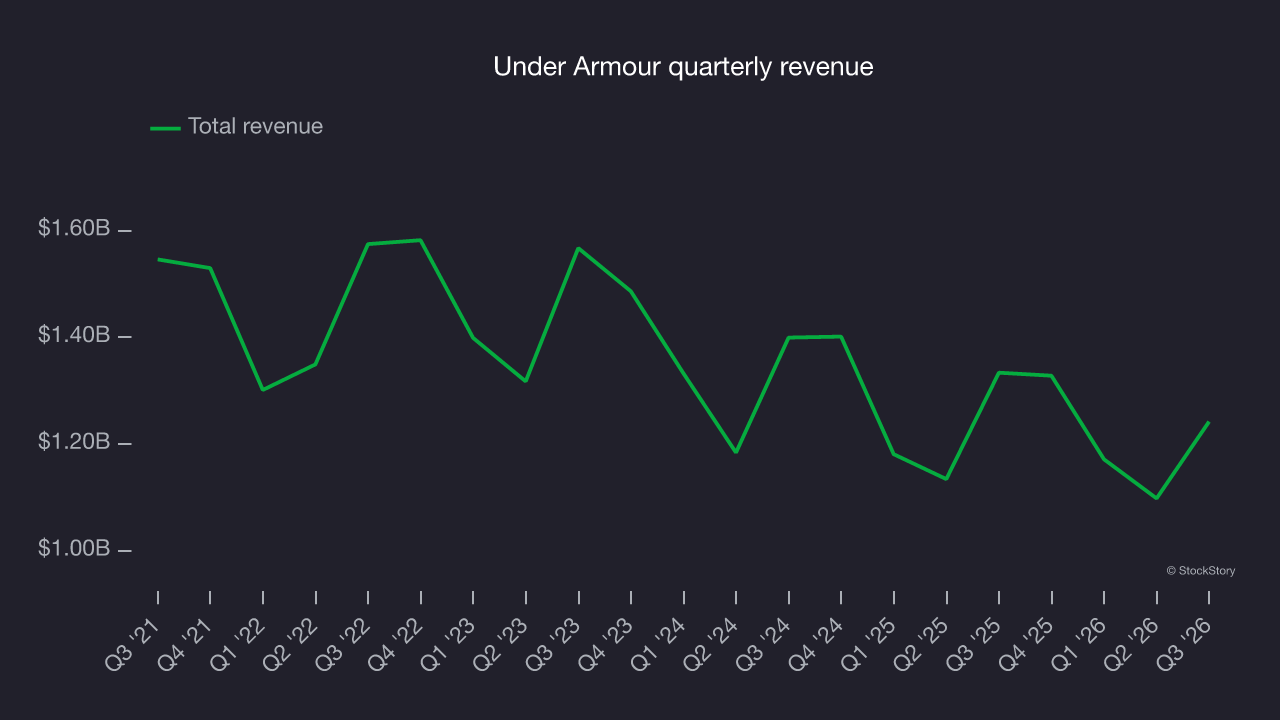
A company’s long-term revenue performance is one signal of its overall quality. Any business can deliver a good quarter or two, but the best consistently grow over the long haul. Under Armour’s demand was weak over the last five years as its revenue fell at a 2.7% annual rate. That underwhelming result suggests poor business quality.
Long-term growth matters the most, but within consumer discretionary, a stretched historical view may miss a company riding a successful new product or trend. Under Armour’s recent performance shows its demand remained suppressed as its revenue has declined by 5.3% annually over the last two years. 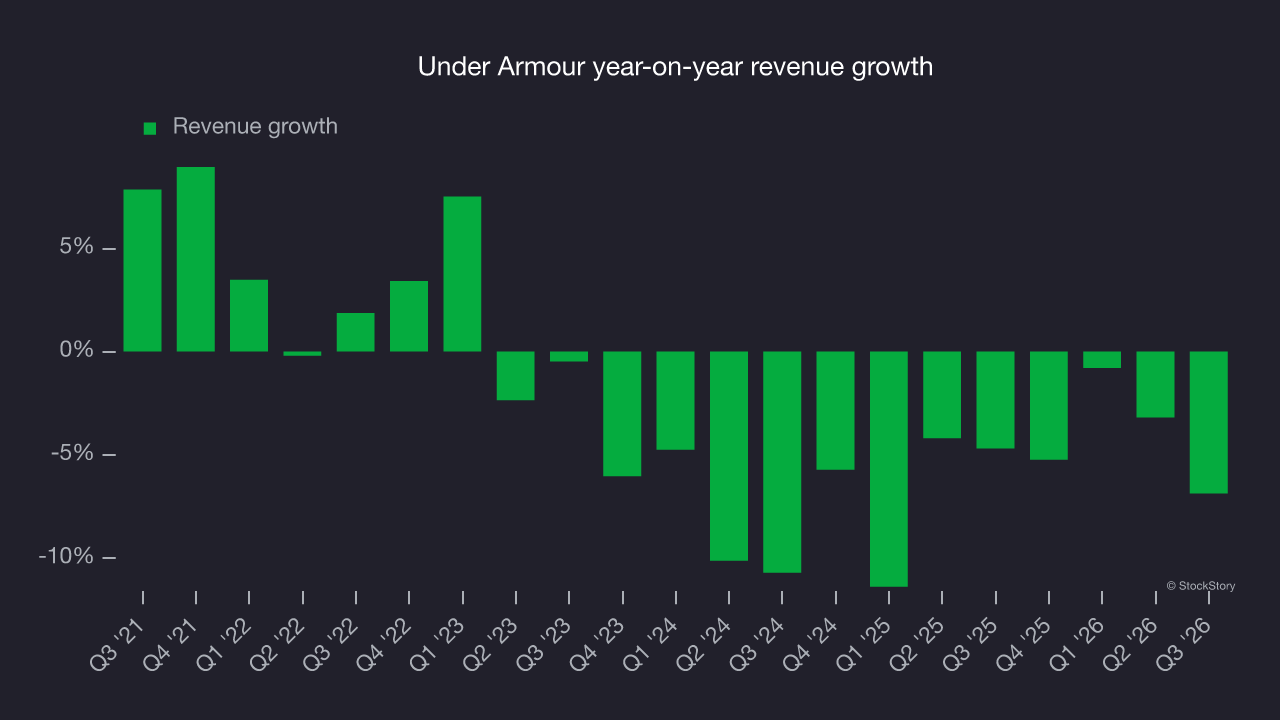
Constant currency revenue helps clarify the company’s revenue dynamics by excluding currency movements that are outside its control and not indicative of demand. Over the last two years, its constant currency revenue averaged 6% year-on-year declines. This was in line with its reported revenue growth, indicating that foreign exchange has not had a meaningful impact on revenue. 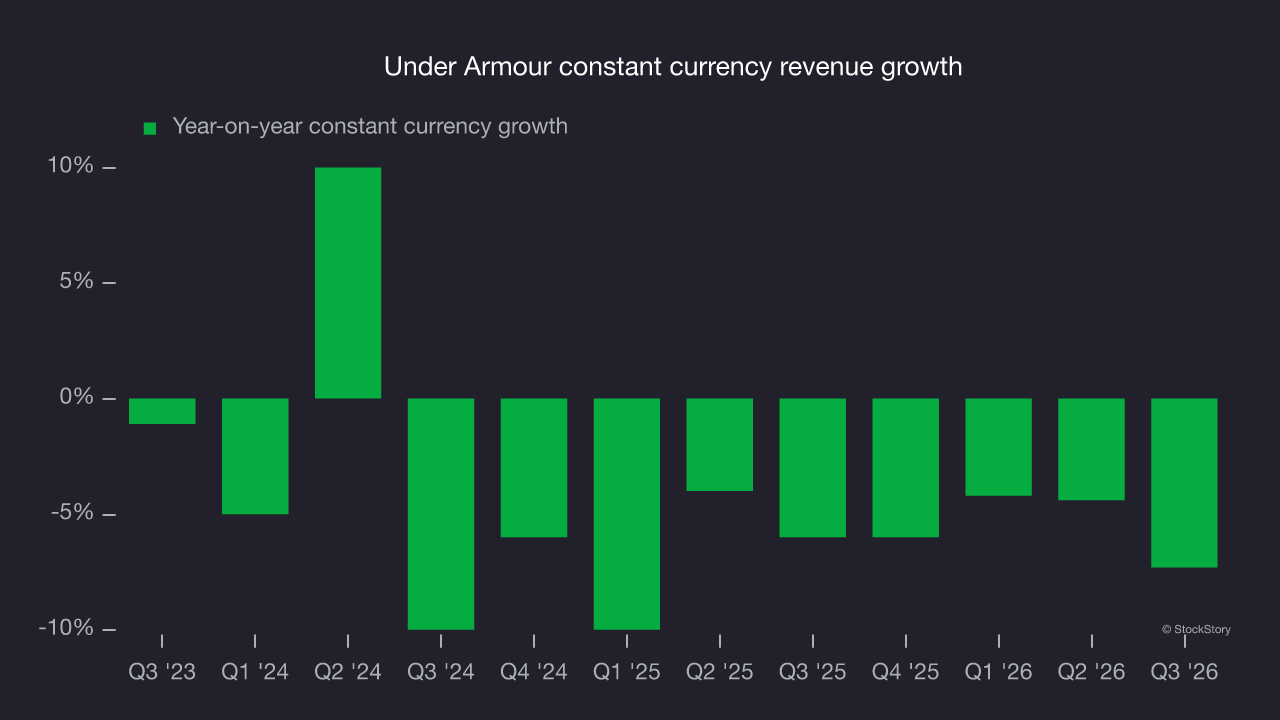
This quarter, Under Armour’s revenue fell by 6.9% year on year to $1.24 billion but beat Wall Street’s consensus estimates by 0.9%.
Looking ahead, sell-side analysts expect revenue to decline by 1% over the next 12 months, according to S&P. Although this projection is better than its two-year trend, the company’s demand difficulties remain a concern.
Operating margin
Operating margin is an important measure of profitability as it shows the portion of revenue left after accounting for all core expenses, from the cost of goods sold to advertising and wages. It’s also useful for comparing profitability across companies with different levels of debt and tax rates because it excludes interest and taxes.
Under Armour’s operating margin has been trending down over the last 12 months and averaged negative 1.6% over the last two years. Unprofitable consumer discretionary companies with falling margins deserve extra scrutiny because they’re spending heavily to stay relevant, an unsustainable practice.
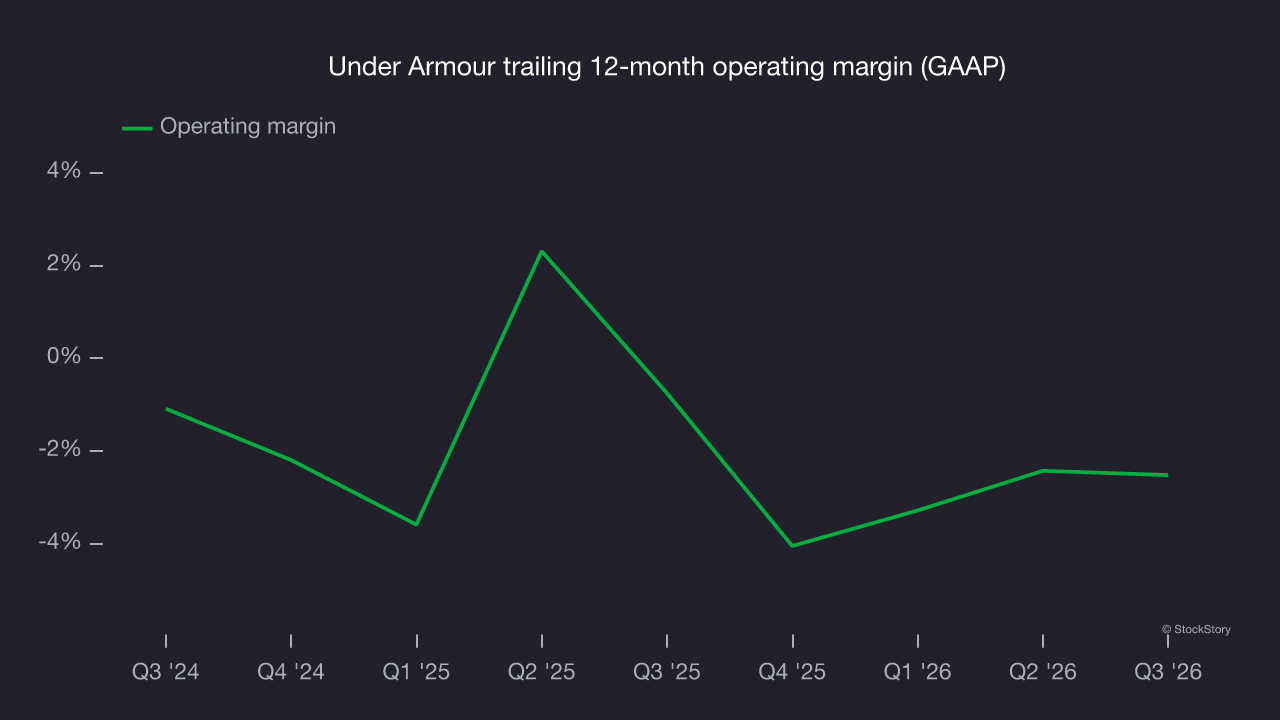
In Q3, Under Armour generated an operating margin of 1.2%, in line with the same quarter last year. This indicates the company’s overall cost structure has been relatively stable.
Earnings per share
Long-term changes in earnings per share, or EPS, matter for the same reason as long-term revenue growth. Compared to revenue, however, EPS highlights whether a company’s growth is profitable.
Under Armour’s EPS declined by 33.2% annually over the last five years, more than its revenue. This indicates the company struggled because its fixed cost base made it difficult to adjust to shrinking demand.
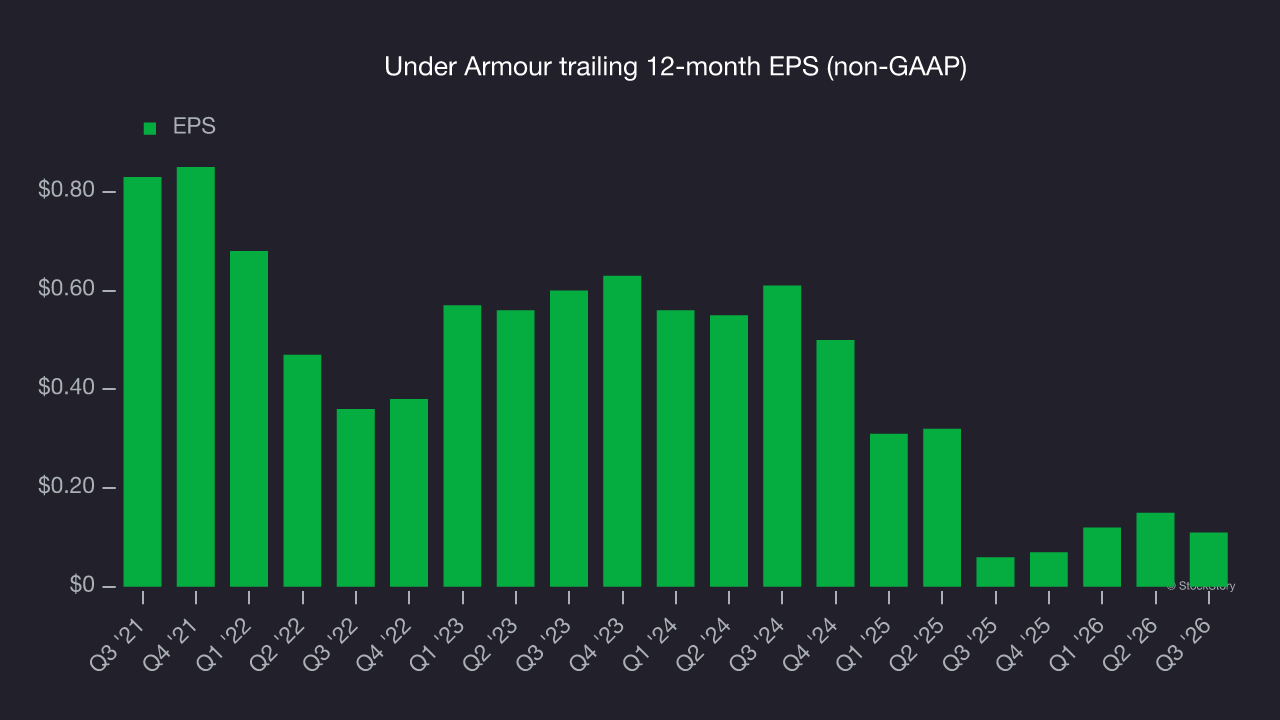
In Q3, Under Armour reported adjusted EPS of $0, down from $0.04 in the same quarter last year. Despite falling year on year, this result comfortably beat analysts’ consensus estimates. Over the next 12 months, Wall Street expects Under Armour’s full-year EPS to grow 7.7% from $0.11 to $0.12, according to S&P.
Key takeaways from Under Armour’s Q3 results
Under Armour’s quarter had some key positives, led by adjusted operating income that beat Wall Street’s consensus estimates by a wide margin. EPS also met analysts’ consensus estimates, but full-year EPS guidance fell short of expectations. The market appeared to be hoping for more, and shares plunged 12.7% to $4.85 immediately after the release.
Assessing whether Under Armour is a buy at its current price means considering its valuation, business quality and latest quarterly results. Read the full research report here (it’s free).