Power conversion and control solutions provider Vicor Corporation (NASDAQ: VICR) met Wall Street’s revenue expectations in Q4 CY2025, with sales up 11.5% year on year to $107.3 million. Its GAAP profit of $1.01 per share was significantly above analysts’ consensus estimates.
Is now the time to buy Vicor? Find out by accessing our full research report, it’s free.
Vicor (VICR) Q4 CY2025 Highlights:
- Revenue: $107.3 million vs analyst estimates of $107.8 million (11.5% year-on-year growth, in line)
- EPS (GAAP): $1.01 vs analyst estimates of $0.37 (significant beat)
- Operating Margin: 14.6%, up from 10% in the same quarter last year
- Backlog: $176.9 million at quarter end, up 13.8% year on year
- Market Capitalization: $6.95 billion
Commenting on the outlook for 2026, Chief Executive Officer Dr. Patrizio Vinciarelli stated: “Rising demand across high-performance compute, automatic test equipment, and industrial, aerospace and defense applications, should lead to a record year for Vicor’s product revenues.
Company Overview
Founded by a researcher at the Massachusetts Institute of Technology, Vicor (NASDAQ: VICR) provides electrical power conversion and delivery products for a range of industries.
Revenue Growth
A company’s long-term sales performance is one signal of its overall quality. Any business can have short-term success, but a top-tier one grows for years. Luckily, Vicor’s sales grew at a decent 8.8% compounded annual growth rate over the last five years. Its growth was slightly above the average industrials company and shows its offerings resonate with customers.
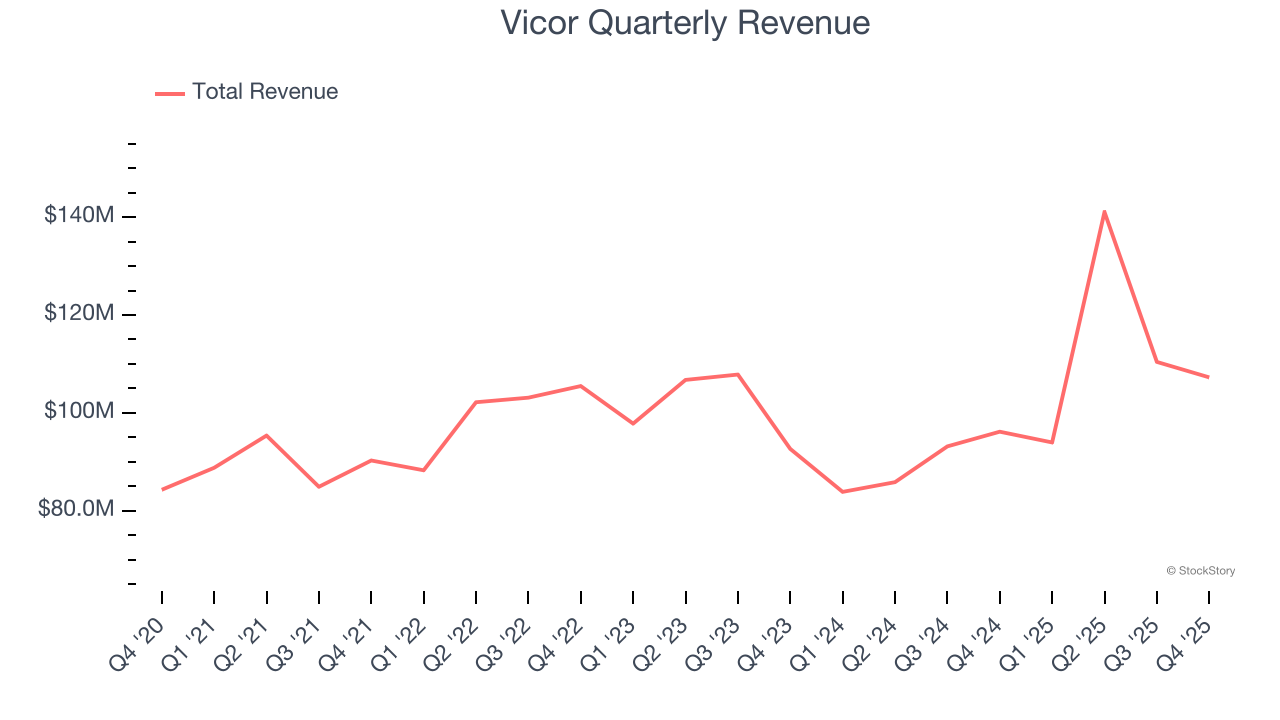
Long-term growth is the most important, but within industrials, a half-decade historical view may miss new industry trends or demand cycles. Vicor’s recent performance shows its demand has slowed as its annualized revenue growth of 5.7% over the last two years was below its five-year trend. We’re wary when companies in the sector see decelerations in revenue growth, as it could signal changing consumer tastes aided by low switching costs. 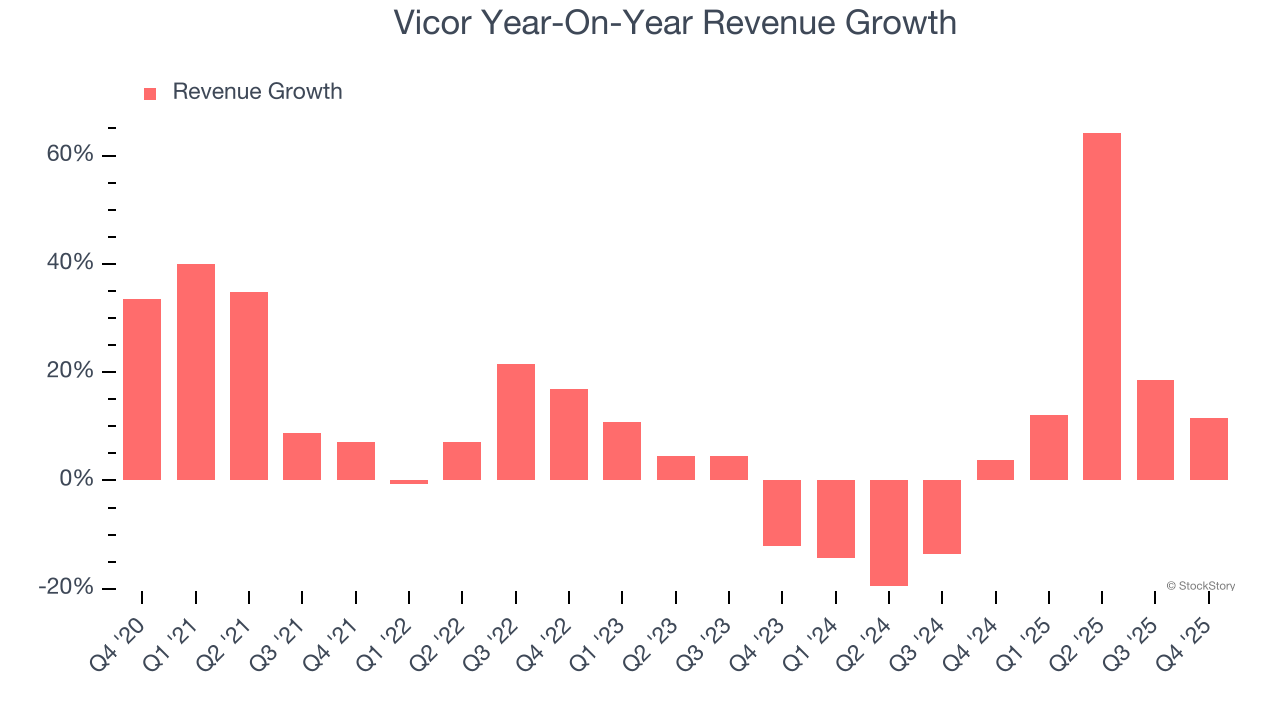
Vicor also reports its backlog, or the value of its outstanding orders that have not yet been executed or delivered. Vicor’s backlog reached $176.9 million in the latest quarter and averaged 5.4% year-on-year growth over the last two years. Because this number is in line with its revenue growth, we can see the company effectively balanced its new order intake and fulfillment processes. 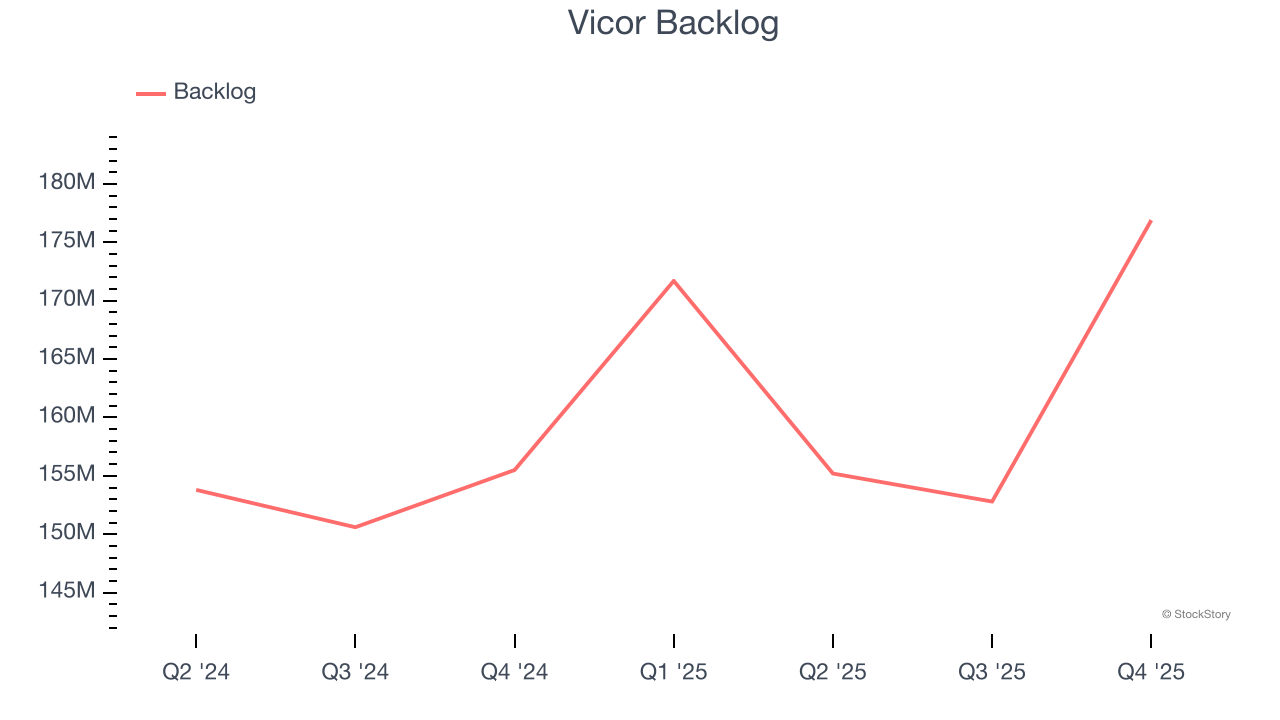
This quarter, Vicor’s year-on-year revenue growth was 11.5%, and its $107.3 million of revenue was in line with Wall Street’s estimates.
Looking ahead, sell-side analysts expect revenue to grow 3.6% over the next 12 months, a slight deceleration versus the last two years. This projection is underwhelming and implies its products and services will face some demand challenges. At least the company is tracking well in other measures of financial health.
Software is eating the world and there is virtually no industry left that has been untouched by it. That drives increasing demand for tools helping software developers do their jobs, whether it be monitoring critical cloud infrastructure, integrating audio and video functionality, or ensuring smooth content streaming. Click here to access a free report on our 3 favorite stocks to play this generational megatrend.
Operating Margin
Vicor has been an efficient company over the last five years. It was one of the more profitable businesses in the industrials sector, boasting an average operating margin of 12.5%. This result isn’t surprising as its high gross margin gives it a favorable starting point.
Looking at the trend in its profitability, Vicor’s operating margin rose by 4 percentage points over the last five years, as its sales growth gave it operating leverage.
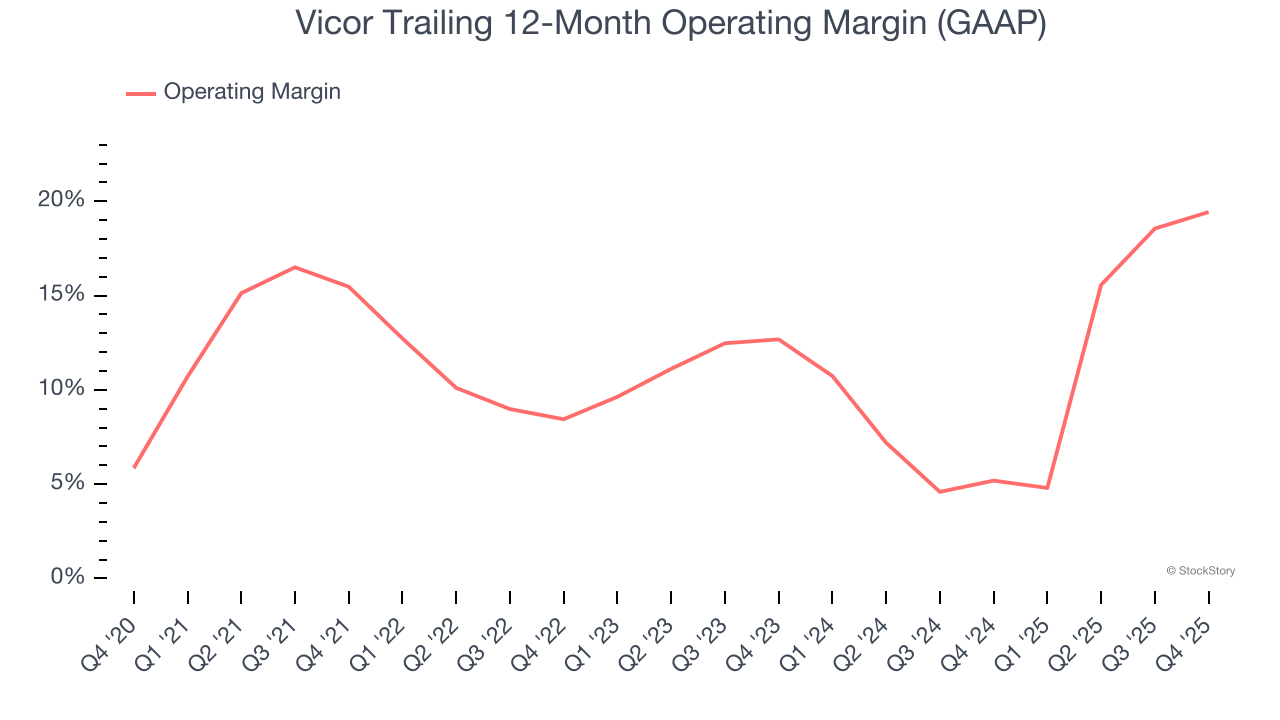
This quarter, Vicor generated an operating margin profit margin of 14.6%, up 4.6 percentage points year on year. The increase was encouraging, and because its operating margin rose more than its gross margin, we can infer it was more efficient with expenses such as marketing, R&D, and administrative overhead.
Earnings Per Share
Revenue trends explain a company’s historical growth, but the long-term change in earnings per share (EPS) points to the profitability of that growth – for example, a company could inflate its sales through excessive spending on advertising and promotions.
Vicor’s EPS grew at an astounding 45.5% compounded annual growth rate over the last five years, higher than its 8.8% annualized revenue growth. This tells us the company became more profitable on a per-share basis as it expanded.
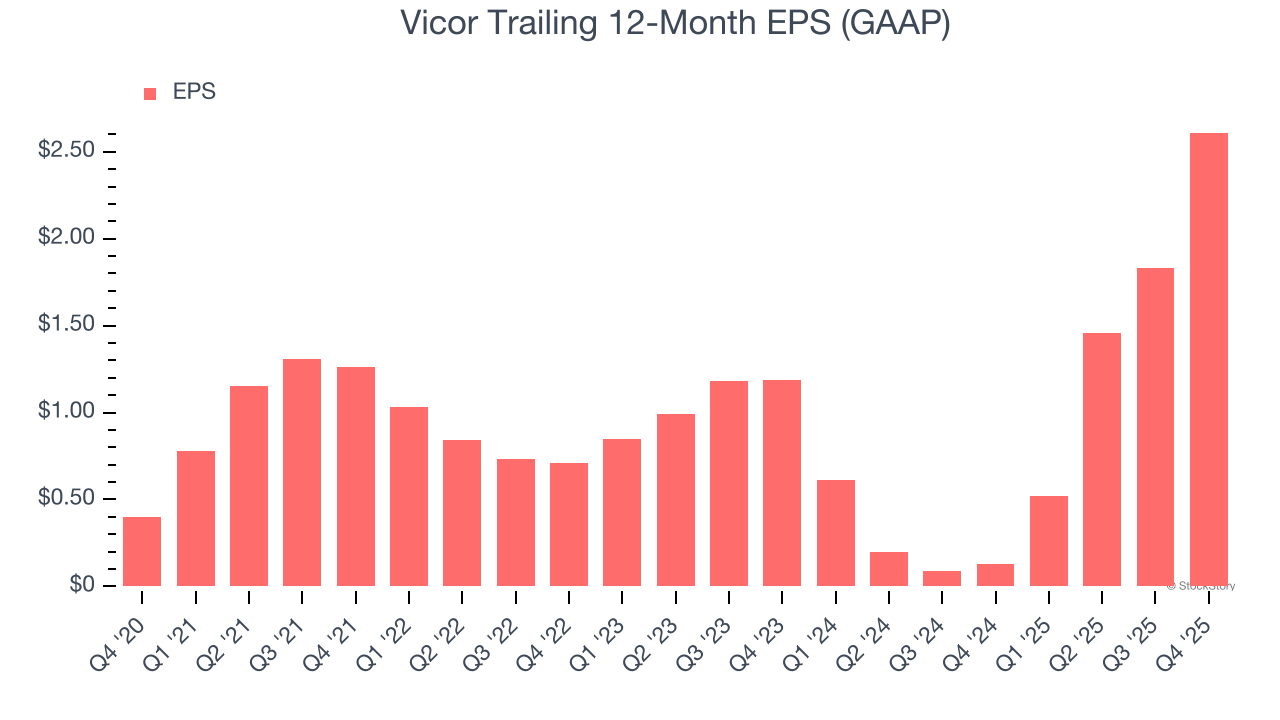
We can take a deeper look into Vicor’s earnings to better understand the drivers of its performance. As we mentioned earlier, Vicor’s operating margin expanded by 4 percentage points over the last five years. This was the most relevant factor (aside from the revenue impact) behind its higher earnings; interest expenses and taxes can also affect EPS but don’t tell us as much about a company’s fundamentals.
Like with revenue, we analyze EPS over a shorter period to see if we are missing a change in the business.
For Vicor, its two-year annual EPS growth of 48.1% was higher than its five-year trend. We love it when earnings growth accelerates, especially when it accelerates off an already high base.
In Q4, Vicor reported EPS of $1.01, up from $0.23 in the same quarter last year. This print easily cleared analysts’ estimates, and shareholders should be content with the results. Over the next 12 months, Wall Street expects Vicor’s full-year EPS of $2.61 to shrink by 33%.
Key Takeaways from Vicor’s Q4 Results
It was good to see Vicor beat analysts’ EPS expectations this quarter. On the other hand, its revenue was in line. Overall, we think this was a solid quarter with some key areas of upside. The market seemed to be hoping for more, and the stock traded down 4.1% to $146.72 immediately after reporting.
Should you buy the stock or not? The latest quarter does matter, but not nearly as much as longer-term fundamentals and valuation, when deciding if the stock is a buy. We cover that in our actionable full research report which you can read here (it’s free).