
Earnings results often indicate what direction a company will take in the months ahead. With Q2 behind us, let’s have a look at WEBTOON (NASDAQ: WBTN) and its peers.
AI-driven content creation, personalized media experiences, and digital advertising are evolving, which could benefit companies investing in these themes. For example, companies with a portfolio of licensed visual content or platforms facilitating direct monetization models could see increased demand for years. On the other hand, headwinds include growing regulatory scrutiny on AI-generated content, with many publishers balking at anything that gets no human oversight. Additional areas to navigate include the phasing out of third-party cookies, which could make traditional ways of tracking the online behavior of consumers (a secret sauce in digital marketing) much less effective.
The 6 digital media & content platforms stocks we track reported a slower Q2. As a group, revenues beat analysts’ consensus estimates by 5% while next quarter’s revenue guidance was 5.8% below.
While some digital media & content platforms stocks have fared somewhat better than others, they have collectively declined. On average, share prices are down 2.6% since the latest earnings results.
WEBTOON (NASDAQ: WBTN)
Pioneering a vertical-scrolling format optimized for mobile devices, WEBTOON Entertainment (NASDAQ: WBTN) operates a global platform where creators publish serialized web-comics and web-novels that users can read in bite-sized episodes.
WEBTOON reported revenues of $338.5 million, down 2.8% year on year. This print fell short of analysts’ expectations by 1.6%. Overall, it was a slower quarter for the company with revenue guidance for next quarter missing analysts’ expectations significantly.
Junkoo Kim, Founder and CEO, said, “We delivered another quarter of solid financial performance, with revenue of $338.5 million, in line with our expectations, and an Adjusted EBITDA of $5.5 million, exceeding the high-end of our previous guidance range.”
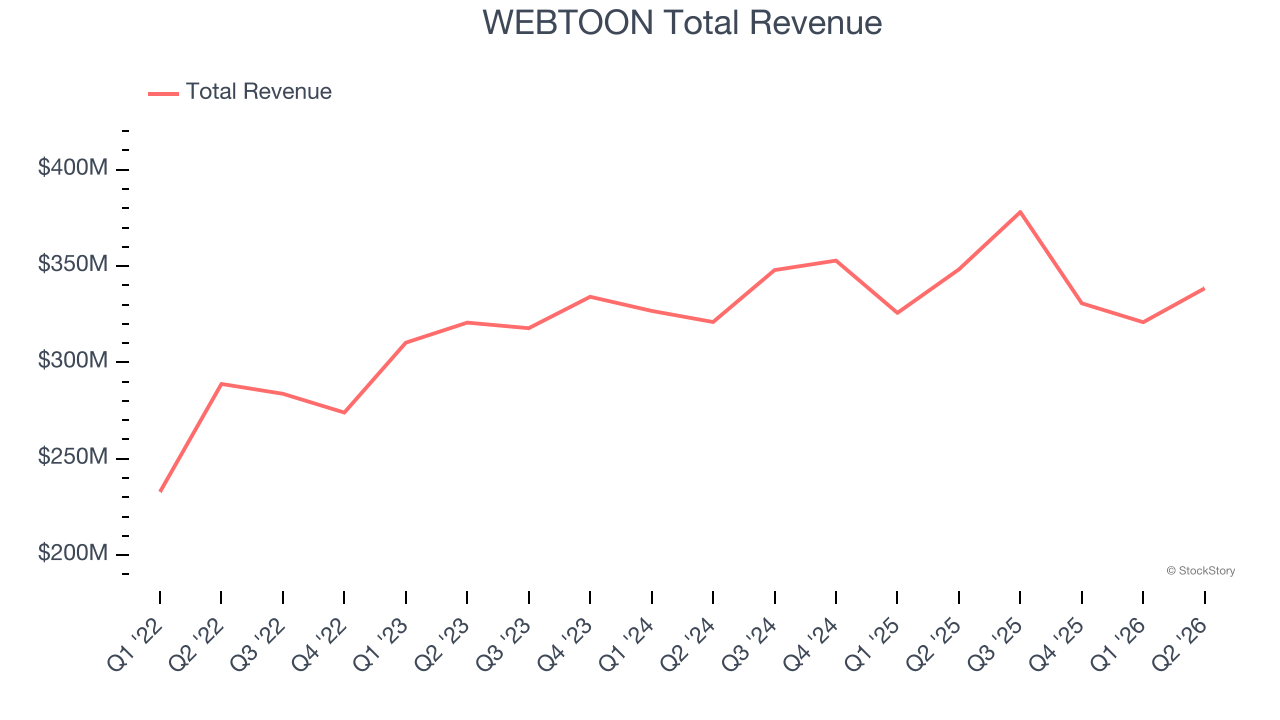
WEBTOON delivered the slowest revenue growth in the group. Interestingly, the stock is up 5.9% since reporting and currently trades at $10.01.
Read our full report on WEBTOON here, it’s free.
Best Q2: Ziff Davis (NASDAQ: ZD)
Originally a pioneering technology publisher founded in 1927 that became famous for PC Magazine, Ziff Davis (NASDAQ: ZD) operates a portfolio of digital media brands and subscription services across technology, shopping, gaming, healthcare, and cybersecurity markets.
Ziff Davis reported revenues of $286.7 million, down 2.7% year on year, in line with analysts’ expectations. The business had a very strong quarter with a beat of analysts’ EPS estimates.
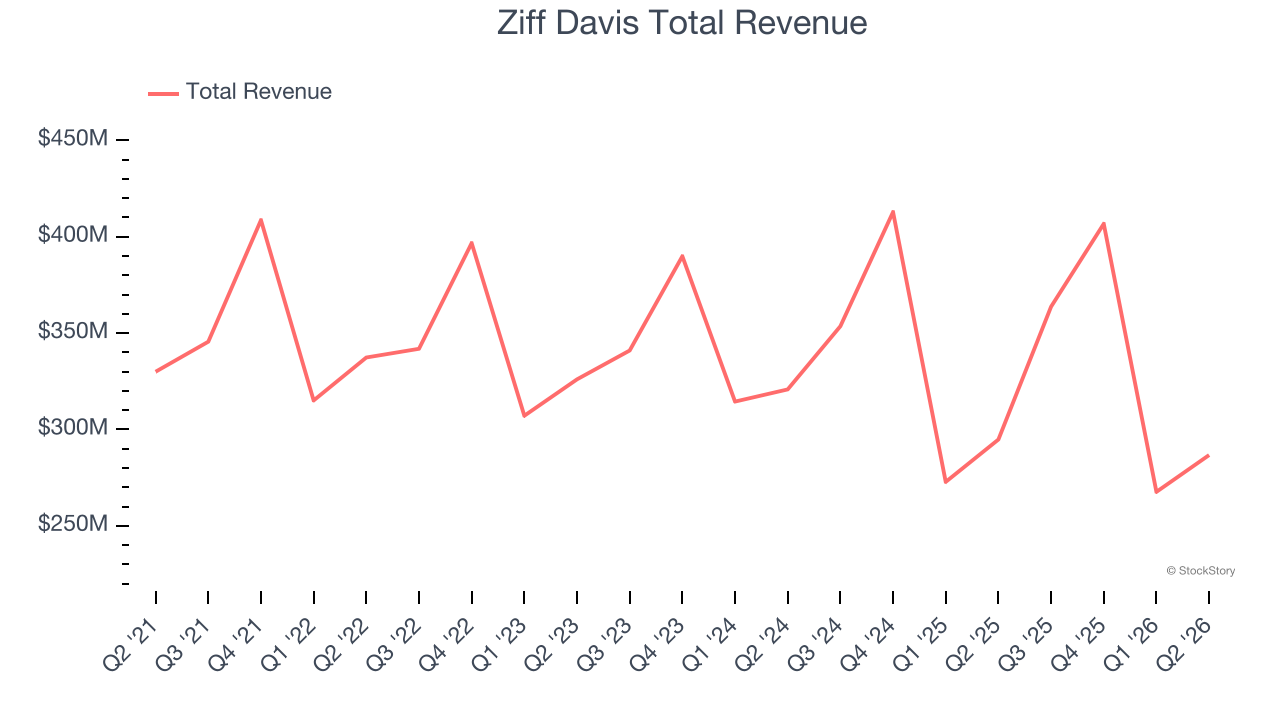
The market seems happy with the results as the stock is up 8.6% since reporting. It currently trades at $55.31.
Is now the time to buy Ziff Davis? Access our full analysis of the earnings results here, it’s free.
Weakest Q2: Getty Images (NYSE: GETY)
With a vast library of over 562 million visual assets documenting everything from breaking news to iconic historical moments, Getty Images (NYSE: GETY) is a global visual content marketplace that licenses photos, videos, illustrations, and music to businesses, media outlets, and creative professionals.
Getty Images reported revenues of $229.1 million, down 2.5% year on year, falling short of analysts’ expectations by 2.5%. It was a disappointing quarter as it posted a significant miss of analysts’ EPS estimates.
Getty Images delivered the weakest performance against analyst estimates among its peers. As expected, the stock is down 43.2% since the results and currently trades at $0.25.
Read our full analysis of Getty Images’s results here.
People (NASDAQ: PPLI)
Originally known as InterActiveCorp and built through Barry Diller's strategic acquisitions since the 1990s, People (NASDAQ: PPLI) operates a portfolio of category-leading digital businesses including Dotdash Meredith, Angi, and Care.com, focusing on digital publishing, home services, and caregiving platforms.
People reported revenues of $436.7 million, down 1.5% year on year. This print topped analysts’ expectations by 0.9%. Aside from that, it was a softer quarter as it logged a significant miss of analysts’ EPS estimates.
The stock is down 10.3% since reporting and currently trades at $37.72.
Read our full, actionable report on People here, it’s free.
RUM Group (NASDAQ: RUM)
Founded in 2013 as a champion for content creator rights and free expression, RUM Group (NASDAQ: RUM) is a video sharing platform that positions itself as a free speech alternative to mainstream platforms, offering creators more favorable revenue-sharing opportunities.
RUM Group reported revenues of $40.37 million, up 60.9% year on year. This result surpassed analysts’ expectations by 31.7%. Taking a step back, it was a slower quarter as it produced a significant miss of analysts’ EPS estimates.
RUM Group achieved the biggest analyst estimate beat and fastest revenue growth in the group. The stock is up 22.1% since reporting and currently trades at $7.58.
Read our full, actionable report on RUM Group here, it’s free.
Market Update
Over the past year, investors have been forced to repeatedly answer the same question: what is the market’s biggest risk? The answer has changed several times, and each shift has reshaped market leadership.
Late in 2025 and early 2026, artificial intelligence became the market’s primary uncertainty. Investors questioned whether AI would erode software pricing power and weaken competitive moats as AI made it easier to replicate once-differentiated products.
By the spring, technology took a back seat to geopolitics. The U.S. conflict with Iran briefly became the market’s dominant narrative, raising concerns about oil prices, inflation, and global growth. But as energy markets remained orderly and fears of a prolonged supply disruption faded, investors quickly turned their focus back to fundamentals.
Want to invest in winners with rock-solid fundamentals? Check out our Top 6 Stocks and add them to your watchlist. These companies are poised for growth regardless of the political or macroeconomic climate.