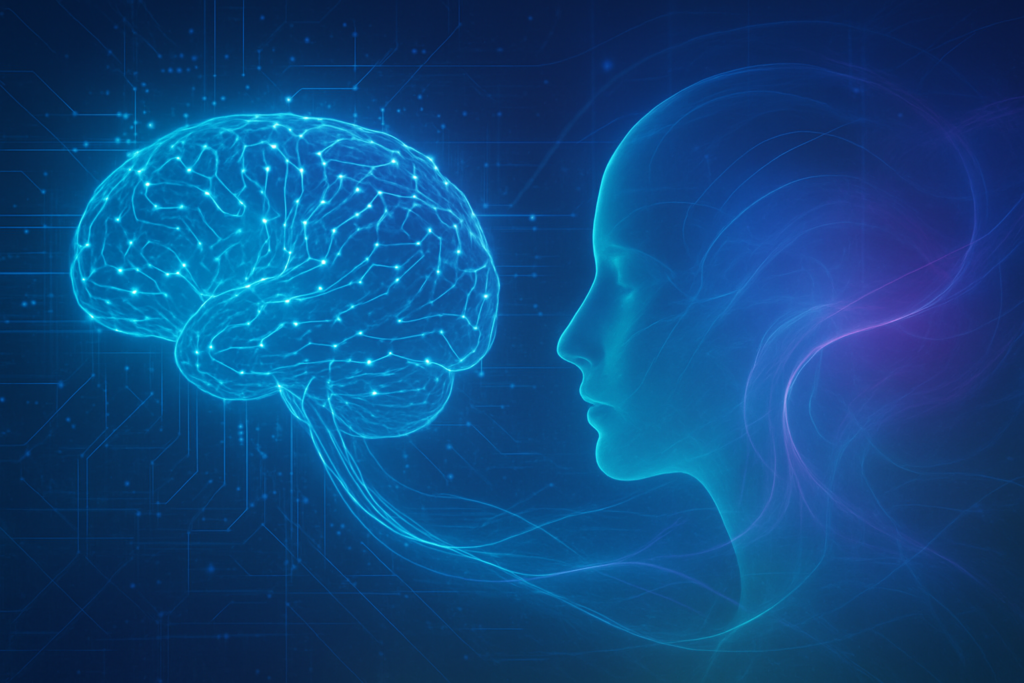
The field of psychology is undergoing a significant transformation as Artificial Intelligence (AI) tools increasingly find their way into clinical practice. A 2025 survey by the American Psychological Association (APA) revealed a rapid surge in adoption, with over half of psychologists now utilizing AI, primarily for administrative tasks, a substantial leap from 29% in the previous year. This growing integration promises to revolutionize mental healthcare delivery by enhancing efficiency and expanding accessibility, yet it simultaneously ignites a fervent debate around profound ethical considerations and safety implications in such a sensitive domain.
This burgeoning trend signifies AI's evolution from a purely technical innovation to a practical, impactful force in deeply human-centric fields. While the immediate benefits for streamlining administrative burdens are clear, the psychology community, alongside AI researchers, is meticulously navigating the complex terrain of data privacy, algorithmic bias, and the irreplaceable role of human empathy in mental health treatment. The coming years will undoubtedly define the delicate balance between technological advancement and the core principles of psychological care.
The Technical Underpinnings of AI in Mental Health
The integration of AI into psychological practice is driven by sophisticated technical capabilities that leverage diverse AI technologies to enhance diagnosis, treatment, and administrative efficiencies. These advancements represent a significant departure from traditional, human-centric approaches.
Natural Language Processing (NLP) stands at the forefront of AI applications in mental health, focusing on the analysis of human language in both written and spoken forms. NLP models are trained on vast text corpora to perform sentiment analysis and emotion detection, identifying emotional states and linguistic cues in transcribed conversations, social media, and clinical notes. This allows for early detection of distress, anxiety, or even suicidal ideation. Furthermore, advanced Large Language Models (LLMs) like those from Google (NASDAQ: GOOGL) and OpenAI (private) are capable of engaging in human-like conversations, understanding complex issues, and generating personalized advice or therapeutic content, moving beyond rule-based chatbots to offer nuanced interactions.
Machine Learning (ML) algorithms are central to predictive modeling in psychology. Supervised learning algorithms such as Support Vector Machines (SVM), Random Forest (RF), and Neural Networks (NN) are trained on labeled data from electronic health records, brain scans (e.g., fMRI), and even genetic data to classify mental health conditions, predict severity, and forecast treatment outcomes. Deep Learning (DL), a subfield of ML, utilizes multi-layered neural networks to capture complex relationships within data, enabling the prediction and diagnosis of specific disorders and comorbidities. These systems analyze patterns invisible to human observation, offering data-driven insights for risk stratification, such as identifying early signs of relapse or treatment dropout.
Computer Vision (CV) allows AI systems to "see" and interpret visual information, applying this to analyze non-verbal cues. CV systems, often employing deep learning models, track and analyze facial expressions, gestures, eye movements, and body posture. For example, a system developed at UCSF can detect depression from facial expressions with 80% accuracy by identifying subtle micro-expressions. In virtual reality (VR) based therapies, computer vision tracks user movements and maps spaces, enabling real-time feedback and customization of immersive experiences. CV can also analyze physiological signs like heart rate and breathing patterns from camera feeds, linking these to emotional states.
These AI-driven approaches differ significantly from traditional psychological practices, which primarily rely on self-reported symptoms, clinical interviews, and direct observations. AI's ability to process and synthesize massive, complex datasets offers a level of insight and objectivity (though with caveats regarding algorithmic bias) that human capacity alone cannot match. It also offers unprecedented scalability and accessibility for mental health support, enabling early detection and personalized, real-time interventions. However, initial reactions from the AI research community and industry experts are a mix of strong optimism regarding AI's potential to address the mental health gap and serious caution concerning ethical considerations, the risk of misinformation, and the irreplaceable human element of empathy and connection in therapy.
AI's Impact on the Corporate Landscape: Giants and Startups Vie for Position
The increasing adoption of AI in psychology is profoundly reshaping the landscape for AI companies, from established tech giants to burgeoning startups, by opening new market opportunities and intensifying competition. The market for AI in behavioral health is projected to surpass USD 18.9 billion by 2033, signaling a lucrative frontier.
Companies poised to benefit most are those developing specialized AI platforms for mental health. Startups like Woebot Health (private), Wysa (private), Meru Health (private), and Limbic (private) are attracting significant investment by offering AI-powered chatbots for instantaneous support, tools for personalized treatment plans, and remote therapy platforms. Similarly, companies like Eleos Health (private), Mentalyc (private), and Upheal (private) are gaining traction by providing administrative automation tools that streamline note-taking, scheduling, and practice management, directly addressing a major pain point for psychologists.
For major AI labs and tech companies like Google (NASDAQ: GOOGL), Microsoft (NASDAQ: MSFT), Apple (NASDAQ: AAPL), and IBM (NYSE: IBM), this trend presents both opportunities and challenges. While they can leverage their vast resources and existing AI research, general-purpose AI models may not meet the nuanced needs of psychological practice. Therefore, these giants may need to develop specialized AI models trained on psychological data or forge strategic partnerships with mental health experts and startups. For instance, Calm (private) has partnered with the American Psychological Association to develop AI-driven mental health tools. However, these companies also face significant reputational and regulatory risks if they deploy unregulated or unvetted AI tools in mental health, as seen with Meta Platforms (NASDAQ: META) and Character.AI (private) facing criticism for their chatbots. This underscores the need for responsible AI development, incorporating psychological science and ethical considerations from the outset.
The integration of AI is poised to disrupt traditional services by increasing the accessibility and affordability of therapy, potentially reaching wider audiences. This could shift traditional therapy models reliant solely on in-person sessions. While AI is not expected to replace human therapists, it can automate many administrative tasks, allowing psychologists to focus on more complex clinical work. However, concerns exist about "cognitive offloading" and the potential erosion of diagnostic reasoning if clinicians become overly reliant on AI.
In terms of market positioning and strategic advantages, companies that prioritize clinical validation and evidence-based design are gaining investor confidence and user trust. Woebot Health, for example, bases its chatbots on clinical research and employs licensed professionals. Ethical AI and data privacy are paramount, with companies adhering to "privacy-by-design" principles and robust ethical guidelines (e.g., HIPAA compliance) gaining a significant edge. Many successful AI solutions are adopting hybrid models of care, where AI complements human-led care rather than replacing it, offering between-session support and guiding patients to appropriate human resources. Finally, user-centric design and emotional intelligence in AI, along with a focus on underserved populations, are key strategies for competitive advantage in this rapidly evolving market.
A Broader Lens: AI's Societal Resonance and Uncharted Territory
The adoption of AI in psychology is not an isolated event but a significant development that resonates deeply within the broader AI landscape and societal trends. It underscores the critical emphasis on responsible AI and human-AI collaboration, pushing the boundaries of ethical deployment in deeply sensitive domains.
This integration reflects a global call for robust AI governance, with organizations like the United Nations and the World Health Organization (WHO) issuing guidelines to ensure AI systems in healthcare are developed responsibly, prioritizing autonomy, well-being, transparency, and accountability. The concept of an "ethics of care," focusing on AI's impact on human relationships, is gaining prominence, complementing traditional responsible AI frameworks. Crucially, the prevailing model in psychology is one of human-AI collaboration, where AI augments, rather than replaces, human therapists, allowing professionals to dedicate more time to empathetic, personalized care and complex clinical work.
The societal impacts are profound. AI offers a powerful solution to the persistent challenges of mental healthcare access, including high costs, stigma, geographical barriers, and a shortage of qualified professionals. AI-powered chatbots and conversational therapy applications provide immediate, 24/7 support, making mental health resources more readily available for underserved populations. Furthermore, AI's ability to analyze vast datasets aids in early detection of mental health concerns and facilitates personalized treatment plans by identifying patterns in medical records, voice, linguistic cues, and even social media activity.
However, beyond the ethical considerations, other significant concerns loom. The specter of job displacement is real, as AI automates routine tasks, potentially leading to shifts in workforce demands and the psychological impact of job loss. More subtly, skill erosion, or "cognitive offloading," is a growing concern. Over-reliance on AI for problem-solving and decision-making could diminish psychologists' independent analytical and critical thinking skills, potentially reducing cognitive resilience. There's also a risk of individuals developing psychological dependency and unhealthy attachments to AI chatbots, particularly among vulnerable populations, potentially leading to emotional dysregulation or social withdrawal.
Comparing AI's trajectory in psychology to previous milestones in other fields reveals a nuanced difference. While AI has achieved remarkable feats in game-playing (IBM's Deep Blue, Google DeepMind's AlphaGo), pattern recognition, and scientific discovery (DeepMind's AlphaFold), its role in mental health is less about outright human superiority and more about augmentation. Unlike radiology or pathology, where AI can achieve superior diagnostic accuracy, the mental healthcare field emphasizes the irreplaceable human elements of empathy, intuition, non-verbal communication, and cultural sensitivity – areas where AI currently falls short. Thus, AI's significance in psychology lies in its capacity to enhance human care and expand access, while navigating the intricate dynamics of the therapeutic relationship.
The Horizon: Anticipating AI's Evolution in Psychology
The future of AI in psychology promises a continuous evolution, with both near-term advancements and long-term transformations on the horizon, alongside persistent challenges that demand careful attention.
In the near term (next 1-5 years), psychologists can expect AI to increasingly streamline operations and enhance foundational aspects of care. This includes further improvements in accessibility and affordability of therapy through more sophisticated AI-driven chatbots and virtual therapists, offering initial support and psychoeducation. Administrative tasks like note-taking, scheduling, and assessment analysis will see greater automation, freeing up clinician time. AI algorithms will continue to refine diagnostic accuracy and early detection by analyzing subtle changes in voice, facial expressions, and physiological data. Personalized treatment plans will become more adaptive, leveraging AI to track progress and suggest real-time therapeutic adjustments. Furthermore, AI-powered neuroimaging and enhanced virtual reality (VR) therapy will offer new avenues for diagnosis and treatment.
Looking to the long term (beyond 5 years), AI's impact is expected to become even more profound, potentially reshaping our understanding of human cognition. Predictive analytics and proactive intervention will become standard, integrating diverse data sources to anticipate mental health issues before they fully manifest. The emergence of Brain-Computer Interfaces (BCIs) and neurofeedback systems could revolutionize treatment for conditions like ADHD or anxiety by providing real-time feedback on brain activity. Generalist AI models will evolve to intuitively grasp and execute diverse human tasks, discerning subtle psychological shifts and even hypothesizing about uncharted psychological territories. Experts also predict AI's influence on human cognition and personality, with frequent interaction potentially shaping individual tendencies, raising concerns about both enhanced intelligence and potential decreases in critical thinking skills for a majority. The possibility of new psychological disorders emerging from prolonged AI interaction, such as AI-induced psychosis or co-dependent relationships, is also a long-term consideration.
On the horizon, potential applications include continuous mental health monitoring through behavioral analytics, more sophisticated emotion recognition in assessments, and AI-driven cognitive training to strengthen memory and attention. Speculative innovations may even include technologies capable of decoding dreams and internal voices, offering new avenues for treating conditions like PTSD and schizophrenia. Large Language Models are already demonstrating the ability to predict neuroscience study outcomes more accurately than human experts, suggesting a future where AI assists in designing the most effective experiments.
However, several challenges need to be addressed. Foremost are the ethical concerns surrounding the privacy and security of sensitive patient data, algorithmic bias, accountability for AI-driven decisions, and the need for informed consent and transparency. Clinician readiness and adoption remain a hurdle, with many psychologists expressing skepticism or a lack of understanding. The potential impact on the therapeutic relationship and patient acceptance of AI-based interventions are also critical. Fears of job displacement and cognitive offloading continue to be significant concerns, as does the critical gap in long-term research on AI interventions' effectiveness and psychological impacts.
Experts generally agree that AI will not replace human psychologists but will profoundly augment their capabilities. By 2040, AI-powered diagnostic tools are expected to be standard practice, particularly in underserved communities. The future will involve deep "human-AI collaboration," where AI handles administrative tasks and provides data-driven insights, allowing psychologists to focus on empathy, complex decision-making, and building therapeutic alliances. Psychologists will need to proactively educate themselves on how to safely and ethically leverage AI to enhance their practice.
A New Era for Mental Healthcare: Navigating the AI Frontier
The increasing adoption of AI tools by psychologists marks a pivotal moment in the history of mental healthcare and the broader AI landscape. This development signifies AI's maturation from a niche technological advancement to a transformative force capable of addressing some of society's most pressing challenges, particularly in the realm of mental well-being.
The key takeaways are clear: AI offers unparalleled potential for streamlining administrative tasks, enhancing research capabilities, and significantly improving accessibility to mental health support. Tools ranging from sophisticated NLP-driven chatbots to machine learning algorithms for predictive diagnostics are already easing the burden on practitioners and offering more personalized care. However, this progress is tempered by profound concerns regarding data privacy, algorithmic bias, the potential for AI "hallucinations," and the critical need to preserve the irreplaceable human element of empathy and connection in therapy. The ethical and professional responsibilities of clinicians remain paramount, necessitating vigilant oversight of AI-generated insights.
This development holds immense significance in AI history. It represents AI's deep foray into a domain that demands not just computational power, but a nuanced understanding of human emotion, cognition, and social dynamics. Unlike previous AI milestones that often highlighted human-like performance in specific, well-defined tasks, AI in psychology emphasizes augmentation – empowering human professionals to deliver higher quality, more accessible, and personalized care. This ongoing "crisis" and mutual influence between psychology and AI will continue to shape more adaptable, ethical, and human-centered AI systems.
The long-term impact on mental healthcare is poised to be revolutionary, democratizing access, enabling proactive interventions, and fostering hybrid care models where AI and human expertise converge. For the psychology profession, it means an evolution of roles, demanding new skills in AI literacy, ethical reasoning, and the amplification of uniquely human attributes like empathy. The challenge lies in ensuring AI enhances human competence rather than diminishes it, and that robust ethical frameworks are consistently developed and enforced to build public trust.
In the coming weeks and months, watch for continued refinement of ethical guidelines from professional organizations like the APA, increasingly rigorous validation studies of AI tools in clinical settings, and more seamless integration of AI with electronic health records. There will be a heightened demand for training and education for psychologists to ethically leverage AI, alongside pilot programs exploring specialized applications such as AI for VR exposure therapy or suicide risk prediction. Public and patient engagement will be crucial in shaping acceptance, and increased regulatory scrutiny will be inevitable as the field navigates this new frontier. The ultimate goal is a future where AI serves as a "co-pilot," enabling psychologists to provide compassionate, effective care to a wider population.
This content is intended for informational purposes only and represents analysis of current AI developments.
TokenRing AI delivers enterprise-grade solutions for multi-agent AI workflow orchestration, AI-powered development tools, and seamless remote collaboration platforms.
For more information, visit https://www.tokenring.ai/.