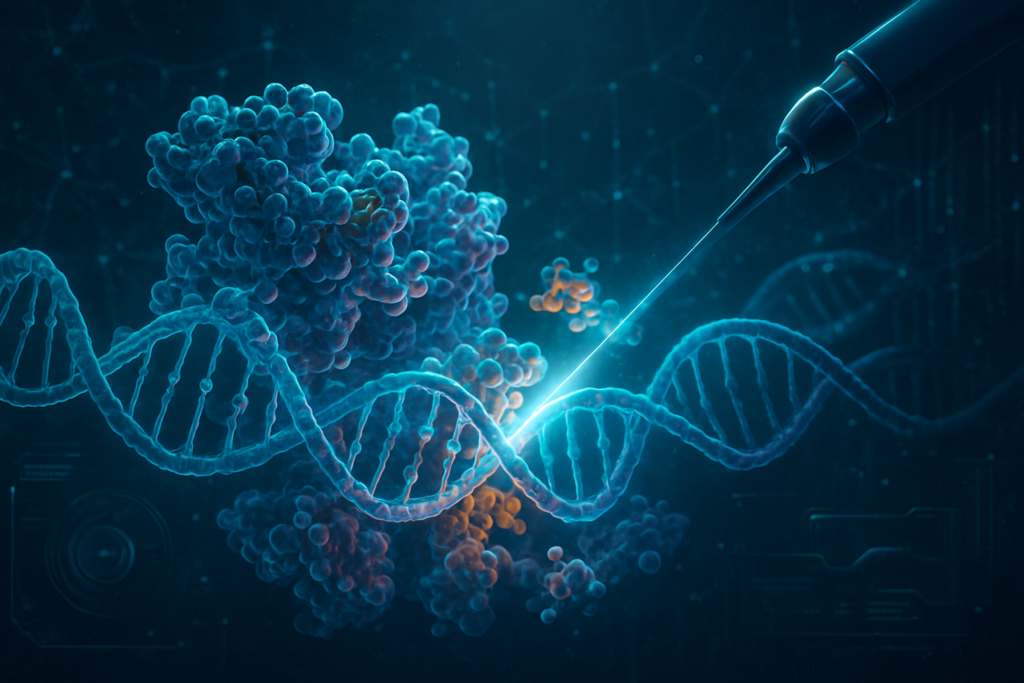
The decision by Google DeepMind and its commercial sister company, Isomorphic Labs, to fully open-source AlphaFold 3 (AF3) has emerged as a watershed moment for the life sciences. As of January 2026, the global research community is reaping the rewards of a "two-tier" ecosystem where the model's source code and weights are now standard tooling for every molecular biology lab on the planet. By transitioning from a restricted web server to a fully accessible architecture in late 2024, Alphabet Inc. (NASDAQ: GOOGL) effectively democratized the ability to predict the "atomic dance" of life, turning what was once a multi-year experimental bottleneck into a computational task that takes mere minutes.
The immediate significance of this development cannot be overstated. By providing the weights for non-commercial use, DeepMind catalyzed a global surge in "hit-to-lead" optimization for drug discovery. In the fourteen months since the open-source release, the scientific community has moved beyond simply folding proteins to modeling complex interactions between proteins, DNA, RNA, and small-molecule ligands. This shift has not only accelerated the pace of basic research but has also forced a strategic realignment across the entire biotechnology sector, as startups and incumbents alike race to integrate these predictive capabilities into their proprietary pipelines.
Technical Specifications and Capabilities
Technically, AlphaFold 3 represents a radical departure from its predecessor, AlphaFold 2. While the previous version relied on the "Evoformer" and a specialized structure module to predict amino acid folding, AF3 introduces a generative Diffusion Module. This architecture—similar to the technology powering state-of-the-art AI image generators—starts with a cloud of atoms and iteratively "denoises" them into a highly accurate 3D structure. This allows the model to predict not just the shape of a single protein, but how that protein docks with nearly any other biological molecule, including ions and synthetic drug compounds.
The capability leap is substantial: AF3 provides a 50% to 100% improvement in predicting protein-ligand and protein-DNA interactions compared to earlier specialized tools. Unlike previous approaches that often required templates or "hints" about how a molecule might bind, AF3 operates as an "all-atom" model, treating the entire complex as a single physical system. Initial reactions from the AI research community in late 2024 were a mix of relief and awe; experts noted that by modeling the flexibility of "cryptic pockets" on protein surfaces, AF3 was finally making "undruggable" targets accessible to computational screening.
Market Positioning and Strategic Advantages
The ripple effects through the corporate world have been profound. Alphabet Inc. (NASDAQ: GOOGL) has utilized Isomorphic Labs as its spearhead, securing massive R&D alliances with giants like Eli Lilly and Company (NYSE: LLY) and Novartis AG (NYSE: NVS) totaling nearly $3 billion. While the academic community uses the open-source weights, Isomorphic maintains a competitive edge with a proprietary, high-performance version of the model integrated into a "closed-loop" discovery engine that links AI predictions directly to robotic wet labs. This has created a significant strategic advantage, positioning Alphabet not just as a search giant, but as a foundational infrastructure provider for the future of medicine.
Other tech titans have responded with their own high-stakes maneuvers. NVIDIA Corporation (NASDAQ: NVDA) has expanded its BioNeMo platform to provide optimized inference microservices, allowing biotech firms to run AlphaFold 3 and its derivatives up to five times faster on H200 and B200 clusters. Meanwhile, the "OpenFold Consortium," backed by Amazon.com, Inc. (NASDAQ: AMZN), released "OpenFold3" in late 2025. This Apache 2.0-licensed alternative provides a pathway for commercial entities to retrain the model on their own proprietary data without the licensing restrictions of DeepMind’s official weights, sparking a fierce competition for the title of the industry’s "operating system" for biology.
Broader AI Landscape and Societal Impacts
In the broader AI landscape, the AlphaFold 3 release is being compared to the 2003 completion of the Human Genome Project. It signals a shift from descriptive biology—observing what exists—to engineering biology—designing what is needed. The impact is visible in the surge of "de novo" protein design, where researchers are now creating entirely new enzymes to break down plastics or capture atmospheric carbon. However, this progress has not come without friction. The initial delay in open-sourcing AF3 sparked a heated debate over "biosecurity," with some experts worrying that highly accurate modeling of protein-ligand interactions could inadvertently assist in the creation of novel toxins or pathogens.
Despite these concerns, the prevailing sentiment is that the democratization of the tool has done more to protect global health than to endanger it. The ability to rapidly model the surface proteins of emerging viruses has shortened the lead time for vaccine design to a matter of days. Comparisons to previous milestones, like the 2012 breakthrough in deep learning for image recognition, suggest that we are currently in the "exponential growth" phase of AI-driven biology. The "licensing divide" between academic and commercial use remains a point of contention, yet it has served to create a vibrant ecosystem of open-source innovation and high-value private enterprise.
Future Developments and Use Cases
Looking toward the near-term future, the industry is bracing for the results of the first "fully AI-designed" molecules to enter human clinical trials. Isomorphic Labs and its partners are expected to dose the first patients with AlphaFold 3-optimized oncology candidates by the end of 2026. Beyond drug discovery, the horizon includes the development of "Digital Twins" of entire cells, where AI models like AF3 will work in tandem with generative models like ESM3 from EvolutionaryScale to simulate entire metabolic pathways. The challenge remains one of "synthesizability"—ensuring that the complex molecules AI dreams up can actually be manufactured at scale in a laboratory setting.
Experts predict that the next major breakthrough will involve "Agentic Discovery," where AI systems like the recently released GPT-5.2 from OpenAI or Claude 4.5 from Anthropic are granted the autonomy to design experiments, run them on robotic platforms, and iterate on the results. This "lab-in-the-loop" approach would move the bottleneck from human cognition to physical throughput. As we move further into 2026, the focus is shifting from the structure of a single protein to the behavior of entire biological systems, with the ultimate goal being the "programmability" of human health.
Summary of Key Takeaways
In summary, the open-sourcing of AlphaFold 3 has successfully transitioned structural biology from a niche academic pursuit to a foundational pillar of the global tech economy. The key takeaways from this era are clear: the democratization of high-fidelity AI models accelerates innovation, compresses discovery timelines, and creates a massive new market for specialized AI compute and "wet-lab" services. Alphabet’s decision to share the model’s weights has solidified its legacy as a pioneer in "AI for Science," while simultaneously fueling a competitive fire that has benefited the entire industry.
As we look back from the vantage point of early 2026, the significance of AlphaFold 3 in AI history is secure. It represents the moment AI moved past digital data and began to master the physical world’s most complex building blocks. In the coming weeks and months, the industry will be watching closely for the first data readouts from AI-led clinical trials and the inevitable arrival of "AlphaFold 4" rumors. For now, the "Atomic Revolution" is in full swing, and the map of the molecular world has never been clearer.
This content is intended for informational purposes only and represents analysis of current AI developments.
TokenRing AI delivers enterprise-grade solutions for multi-agent AI workflow orchestration, AI-powered development tools, and seamless remote collaboration platforms.
For more information, visit https://www.tokenring.ai/.