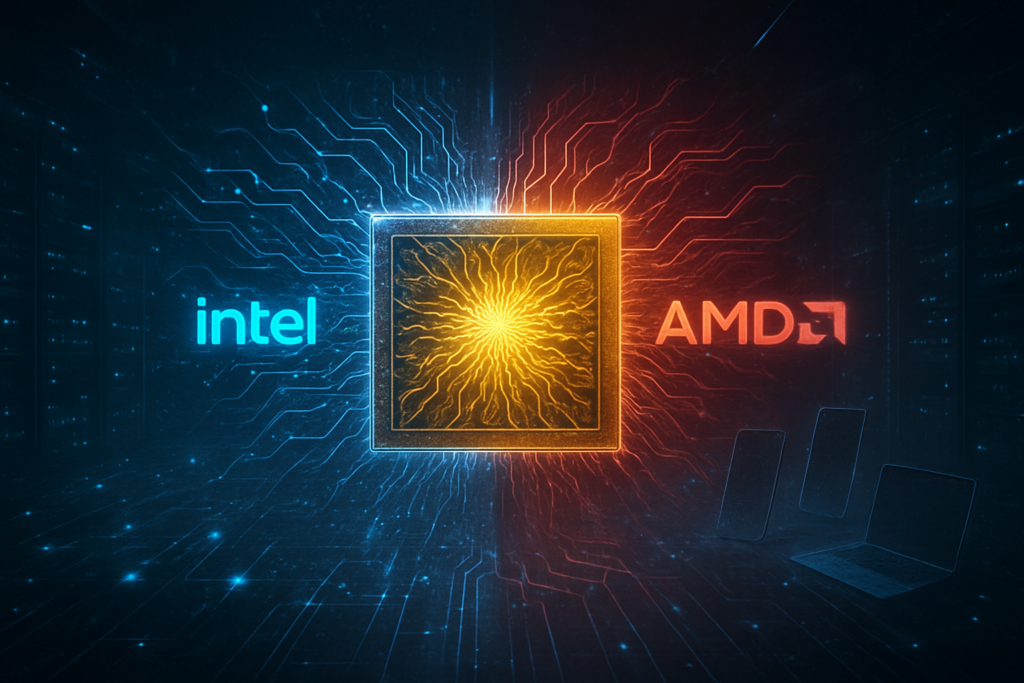
In a move once considered unthinkable in the cutthroat world of semiconductor manufacturing, lifelong rivals Intel Corporation (NASDAQ: INTC) and Advanced Micro Devices, Inc. (NASDAQ: AMD) have solidified their "hell freezes over" alliance through the x86 Ecosystem Advisory Group (EAG). Formed in late 2024 and reaching a critical technical maturity in early 2026, this partnership marks a strategic pivot from decades of bitter competition to a unified front. The objective is clear: defend the aging but dominant x86 architecture against the relentless encroachment of ARM-based silicon, which has rapidly seized territory in both the high-end consumer laptop and hyper-scale data center markets.
The significance of this development cannot be overstated. For forty years, Intel and AMD defined their success by their differences, often introducing incompatible instruction set extensions that forced software developers to choose sides or write complex, redundant code. Today, the x86 EAG—which includes a "founding board" of industry titans such as Microsoft Corporation (NASDAQ: MSFT), Alphabet Inc. (NASDAQ: GOOGL), Meta Platforms, Inc. (NASDAQ: META), and Broadcom Inc. (NASDAQ: AVGO)—represents a collective realization that the greatest threat to their future is no longer each other, but the energy-efficient, highly customizable architecture of the ARM ecosystem.
Standardizing the Instruction Set: A Technical Renaissance
The technical cornerstone of this alliance is a commitment to "consistent innovation," which aims to eliminate the fragmentation that has plagued the x86 instruction set architecture (ISA) for years. Leading into 2026, the group has finalized the specifications for AVX10, a unified vector instruction set that solves the long-standing "performance vs. efficiency" core dilemma. Unlike previous versions of AVX-512, which were often disabled on hybrid chips to maintain consistency across cores, AVX10 allows high-performance AI and scientific workloads to run seamlessly across all processor types, ensuring developers no longer have to navigate the "ISA tax" of targeting different hardware features within the same ecosystem.
Beyond vector processing, the advisory group has introduced critical security and system modernizations. A standout feature is ChkTag (x86 Memory Tagging), a hardware-level security layer designed to combat buffer overflows and memory-corruption vulnerabilities. This is a direct response to ARM's Memory Tagging Extension (MTE), which has become a selling point for security-conscious enterprise clients. Additionally, the alliance has pushed forward the Flexible Return and Event Delivery (FRED) framework, which overhauls how CPUs handle interrupts—a legacy system that had not seen a major update since the 1980s. By streamlining these low-level operations, Intel and AMD are significantly reducing system latency and improving reliability in virtualized cloud environments.
This unified approach differs fundamentally from the proprietary roadmaps of the past. Historically, Intel might introduce a feature like Intel AMX, only for it to remain unavailable on AMD hardware for years, leaving developers hesitant to adopt it. By folding initiatives like the "x86-S" simplified architecture into the EAG, the two giants are ensuring that major changes—such as the eventual removal of 16-bit and 32-bit legacy support—happen in lockstep. This coordinated evolution provides software vendors like Adobe or Epic Games with a stable, predictable target for the next decade of computing.
Initial reactions from the technical community have been cautiously optimistic. Linus Torvalds, the creator of Linux and a technical advisor to the group, has noted that a more predictable x86 architecture simplifies kernel development immensely. However, industry experts point out that while standardizing the ISA is a massive step forward, the success of the EAG will ultimately depend on whether Intel and AMD can match the "performance-per-watt" benchmarks set by modern ARM designs. The era of brute-force clock speeds is over; the alliance must now prove that x86 can be as lean as it is powerful.
The Competitive Battlefield: AI PCs and Cloud Sovereignty
The competitive implications of this alliance ripple across the entire tech sector, particularly benefiting the "founding board" members who oversee the world’s largest software ecosystems. For Microsoft, a unified x86 roadmap ensures that Windows 11 and its successors can implement deep system-level optimizations that work across the vast majority of the PC market. Similarly, server-side giants like Dell Technologies Inc. (NYSE: DELL), HP Inc. (NYSE: HPQ), and Hewlett Packard Enterprise (NYSE: HPE) gain a more stable platform to market to enterprise clients who are increasingly tempted by the custom ARM chips of cloud providers.
On the other side of the fence, the alliance is a direct challenge to the momentum of Apple Inc. (NASDAQ: AAPL) and Qualcomm Incorporated (NASDAQ: QCOM). Apple’s transition to its M-series silicon demonstrated that a tightly integrated, ARM-based stack could deliver industry-leading efficiency, while Qualcomm’s Snapdragon X series has brought competitive battery life to the Windows ecosystem. By modernizing x86, Intel and AMD are attempting to neutralize the "legacy bloat" argument that ARM proponents have used to win over OEMs. If the EAG succeeds in making x86 chips significantly more efficient, the strategic advantage currently held by ARM in the "always-connected" laptop space could evaporate.
Hyperscalers like Amazon.com, Inc. (NASDAQ: AMZN) and Google stand in a complex position. While they sit on the EAG board, they also develop their own ARM-based processors like Graviton and Axion to reduce their reliance on third-party silicon. However, the x86 alliance provides these companies with a powerful hedge. By ensuring that x86 remains a viable, high-performance option for their data centers, they maintain leverage in price negotiations and ensure that the massive library of legacy enterprise software—which remains predominantly x86-based—continues to run optimally on their infrastructure.
For the broader AI landscape, the alliance's focus on Advanced Matrix Extensions (ACE) provides a strategic advantage for on-device AI. As AI PCs become the standard in 2026, having a standardized instruction set for matrix multiplication ensures that AI software developers don't have to optimize their models separately for Intel Core Ultra and AMD Ryzen processors. This standardization could potentially disrupt the specialized NPU (Neural Processing Unit) market, as more AI tasks are efficiently offloaded to the standardized, high-performance CPU cores.
A Strategic Pivot in Computing History
The x86 Ecosystem Advisory Group arrives at a pivotal moment in the broader history of computing, echoing the seismic shifts seen during the transition from 32-bit to 64-bit architecture. For decades, the tech industry operated under the assumption that x86 was the permanent king of the desktop and server, while ARM was relegated to mobile devices. That boundary has been permanently shattered. The Intel-AMD alliance is a formal acknowledgment that the "Wintel" era of unchallenged dominance has ended, replaced by an era where architecture must justify its existence through efficiency and developer experience rather than just market inertia.
This development is particularly significant in the context of the current AI revolution. The demand for massive compute power has traditionally favored x86’s raw performance, but the high energy costs of AI data centers have made ARM’s efficiency increasingly attractive. By collaborating to strip away legacy baggage and standardize AI-centric instructions, Intel and AMD are attempting to bridge the gap between "big iron" performance and modern efficiency requirements. It is a defensive maneuver, but one that is being executed with an aggressive focus on the future of the AI-native cloud.
There are, however, potential concerns regarding the "duopoly" nature of this alliance. While the involvement of companies like Google and Meta is intended to provide a check on Intel and AMD’s power, some critics worry that a unified x86 standard could stifle niche architectural innovations. Comparisons are being drawn to the early days of the USB or PCIe standards—while they brought order to chaos, they also shifted the focus from radical breakthroughs to incremental, consensus-based updates.
Ultimately, the EAG represents a shift from "competition through proprietary lock-in" to "competition through execution." By commoditizing the instruction set, Intel and AMD are betting that they can win based on who builds the best transistors, the most efficient power delivery systems, and the most advanced packaging, rather than who has the most unique (and frustrating) software extensions. It is a gamble that the x86 ecosystem is stronger than the sum of its rivals.
Future Roadmaps: Scaling the AI Wall
Looking ahead to the remainder of 2026 and into 2027, the first "EAG-compliant" silicon is expected to hit the market. These processors will be the true test of the alliance, featuring the finalized AVX10 and FRED standards out of the box. Near-term developments will likely focus on the "64-bit only" transition, with the group expected to release a formal timeline for the phasing out of native 16-bit and 32-bit hardware support. This will allow for even leaner chip designs, as silicon real estate currently dedicated to legacy compatibility is reclaimed for more cache or additional AI accelerators.
In the long term, we can expect the x86 EAG to explore deeper integration with the software stack. There is significant speculation that the group is working on a "Universal Binary" format for Windows and Linux that would allow a single compiled file to run with maximum efficiency on any x86 chip from any vendor, effectively matching the seamless experience of the ARM-based macOS ecosystem. Challenges remain, particularly in ensuring that the many disparate members of the advisory group remain aligned as their individual business interests inevitably clash.
Experts predict that the success of this alliance will dictate whether x86 remains the backbone of the enterprise world for the next thirty years or if it eventually becomes a legacy niche. If the EAG can successfully deliver on its promise of a modernized, unified, and efficient architecture, it will likely slow the migration to ARM significantly. However, if the group becomes bogged down in committee-level bureaucracy, the agility of the ARM ecosystem—and the rising challenge of the open-source RISC-V architecture—may find an even larger opening to exploit.
Conclusion: The New Era of Unified Silicon
The formation and technical progress of the x86 Ecosystem Advisory Group represent a watershed moment in the semiconductor industry. By uniting against a common threat, Intel and AMD have effectively ended a forty-year civil war to preserve the legacy and future of the architecture that powered the digital age. The key takeaways from this alliance are the standardization of AI and security instructions, the coordinated removal of legacy bloat, and the unprecedented collaboration between silicon designers and software giants to create a unified developer experience.
As we look at the history of AI and computing, this alliance will likely be remembered as the moment when the "old guard" finally adapted to the realities of a post-mobile, AI-first world. The significance lies not just in the technical specifications, but in the cultural shift: the realization that in a world of custom silicon and specialized accelerators, the ecosystem is the ultimate product.
In the coming weeks and months, industry watchers should look for the first third-party benchmarks of AVX10-enabled software and any announcements regarding the next wave of members joining the advisory group. As the first EAG-optimized servers begin to roll out to data centers in mid-2026, we will see the first real-world evidence of whether this "hell freezes over" pact is enough to keep the x86 crown from slipping.
This content is intended for informational purposes only and represents analysis of current AI developments.
TokenRing AI delivers enterprise-grade solutions for multi-agent AI workflow orchestration, AI-powered development tools, and seamless remote collaboration platforms.
For more information, visit https://www.tokenring.ai/.