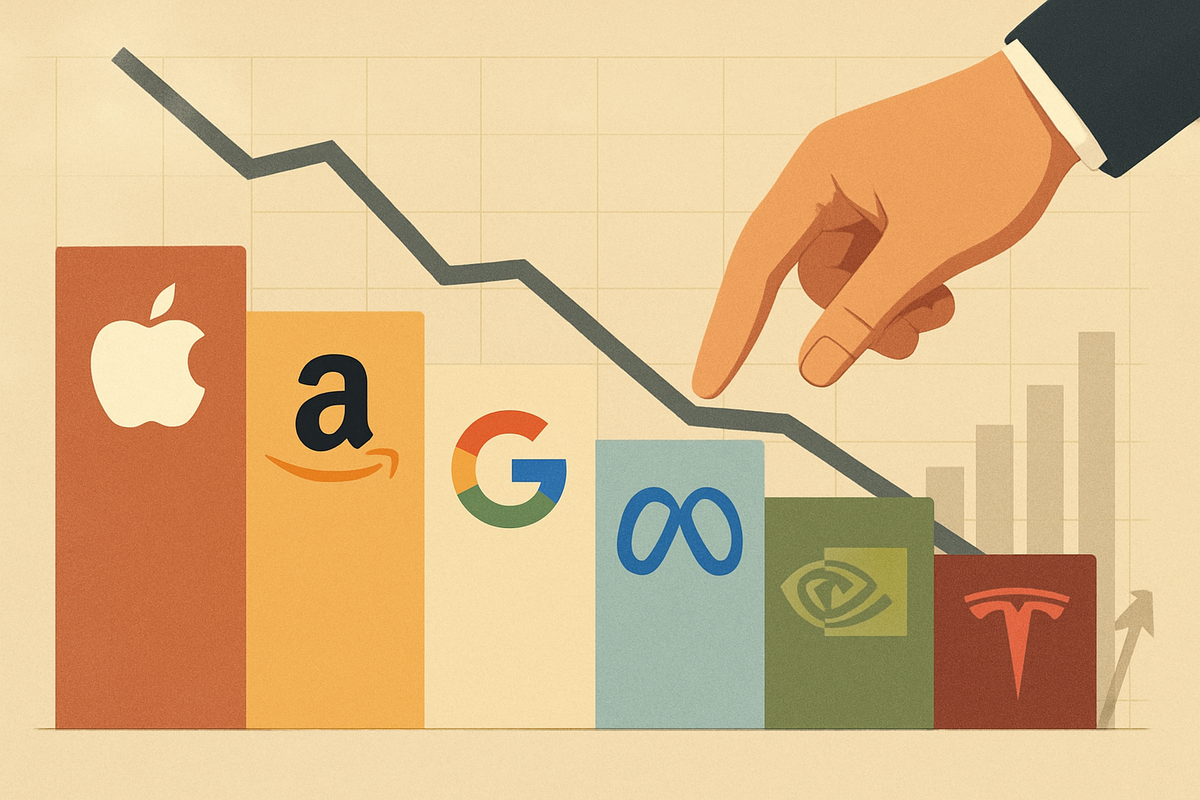
New York, NY – December 8, 2025 – In a move that sent ripples through the financial markets today, veteran Wall Street strategist Ed Yardeni of Yardeni Research, a long-standing "Tech Bull," delivered a surprising downgrade to the coveted "Magnificent Seven" (Mag7) technology stocks. After maintaining an overweight recommendation on the Information Technology and Communication Services sectors since 2010, Yardeni Research has now advised investors to reduce their exposure to these mega-cap tech giants, shifting to a market-weight position. The unexpected call signals a potential inflection point for a market that has been heavily reliant on the performance of these seven companies.
The downgrade immediately sparked discussions among investors and analysts, questioning the sustainability of the concentrated tech-led rally that has defined much of the past decade. While the initial market reaction on Monday, December 8, 2025, was somewhat mixed, with some Mag7 stocks showing resilience while others experienced modest declines, the underlying message from Yardeni is clear: the era of overwhelming dominance by a handful of tech behemoths may be nearing its end, paving the way for a broader market leadership. This strategic pivot from a respected voice in the financial community underscores growing concerns about market concentration and the evolving landscape of technological innovation.
The Shifting Sands: Yardeni's Rationale for a Tech Reassessment
The decision by Yardeni Research to downgrade the Magnificent Seven – comprising Apple (NASDAQ: AAPL), Amazon (NASDAQ: AMZN), Alphabet (NASDAQ: GOOGL), Meta Platforms (NASDAQ: META), Microsoft (NASDAQ: MSFT), Nvidia (NASDAQ: NVDA), and Tesla (NASDAQ: TSLA) – marks a significant departure from their long-held bullish stance. The firm's analysis points to several critical factors that suggest a maturing bull market and a necessary rebalancing of investment portfolios. This isn't merely a tactical adjustment but a strategic re-evaluation of the tech sector's future trajectory.
At the core of Yardeni's rationale is the expectation of moderating growth and intensifying competition for these previously unassailable giants. Ed Yardeni highlighted that the Mag7's exceptional earnings growth is likely to normalize, as "more competitors are coming for the juicy profit margins of the Magnificent 7." Furthermore, the pervasive integration of technology across all industries means that "every company is evolving into a technology company," thereby boosting productivity and profitability across a broader spectrum of American corporations, rather than just the elite few.
Another pressing concern cited by Yardeni Research is the alarming level of market concentration. The Information Technology and Communication Services sectors, dominated by the Mag7, now collectively account for approximately 45% of the S&P 500's market capitalization, nearing 50% by the close of the previous week. This level of concentration is reminiscent of the dot-com bubble era of the late 1990s, raising red flags about potential systemic risks and making it increasingly difficult to justify an overweight recommendation. The firm argues that such an imbalance is unsustainable and unhealthy for long-term market stability.
Adding to these concerns, Yardeni Research observed a "cooling" of the tech bull run throughout 2025. Several Mag7 members, notably Apple and Tesla, have significantly underperformed the broader S&P 500, both down over 20% year-to-date. The group's forward price-to-earnings ratios have seen a decrease, and an elevated "Buffett Ratio" for the Mag7 compared to the rest of the S&P 500 further emphasizes the valuation risks associated with their overconcentration. Finally, the firm issued a cautionary note about a potential "melt-up" scenario—a speculative rally driven by valuations rather than fundamentals—which could be triggered by aggressive Federal Reserve rate cuts in a robust economy, echoing the speculative excesses of past market bubbles.
The Shifting Landscape: Who Wins and Who Loses in a Post-Mag7 Dominance Era
The downgrade by Yardeni Research carries significant implications for the "Magnificent Seven" stocks themselves, as well as for the broader market and other sectors. While an immediate collapse is not predicted, the shift in sentiment could lead to a re-evaluation of these companies' growth trajectories and market valuations, potentially impacting their stock performance in the short to medium term.
The Mag7 companies – Apple (NASDAQ: AAPL), Amazon (NASDAQ: AMZN), Alphabet (NASDAQ: GOOGL), Meta Platforms (NASDAQ: META), Microsoft (NASDAQ: MSFT), Nvidia (NASDAQ: NVDA), and Tesla (NASDAQ: TSLA) – have enjoyed unparalleled investor confidence and capital inflows for years. A sustained downgrade from influential firms like Yardeni Research could trigger a reallocation of funds away from these tech giants. While some, like Microsoft and Nvidia, showed initial resilience on December 8th, others such as Tesla, Alphabet, Meta, Apple, and Amazon experienced modest declines, indicating that investor sentiment is indeed sensitive to such pronouncements. Reduced capital inflows could impact their ability to fund aggressive R&D, acquisitions, or share buybacks at the same pace, potentially slowing their growth engines.
Conversely, the downgrade signals a potential boon for other market segments. Yardeni Research explicitly advises investors to diversify their portfolios by increasing allocations to mid- and small-cap equities, international markets, and value-oriented sectors. This suggests that areas such as financials, industrials, healthcare, and even traditional consumer staples could see renewed interest and capital inflows. Companies outside the tech mega-cap sphere, which have often been overshadowed, might finally get their moment in the sun, leading to a broader market rally and more diversified returns. This shift could particularly benefit companies with strong fundamentals but lower growth multiples, as investors seek value and broader market exposure.
The competitive landscape for the Mag7 is also expected to intensify. As Yardeni noted, "more competitors are coming for the juicy profit margins." This could mean increased pressure from emerging tech players, innovative startups, or even traditional companies that are successfully integrating technology into their core operations. For instance, companies in enterprise software, cloud services, or AI development that are not part of the Mag7 could see accelerated growth as investors seek out the "next big thing" beyond the established leaders. This rebalancing of focus from the Mag7 to a wider array of companies could foster a healthier, less concentrated market environment in the long run.
Broader Implications: A Market at a Crossroads
The downgrade of the Magnificent Seven by Yardeni Research transcends a mere stock recommendation; it signals a potential paradigm shift in market dynamics with wider implications for the industry, regulatory landscape, and investor psychology. This event fits into a broader trend of increasing scrutiny over market concentration and the sustainability of tech-led growth, echoing concerns that have simmered beneath the surface for several years.
One significant ripple effect could be a shift in capital allocation strategies across institutional and retail investors. If a respected "Tech Bull" is calling for diversification, it could prompt a move away from passive indexing strategies that are heavily weighted towards the Mag7. This could lead to increased flows into actively managed funds, sector-specific ETFs focusing on value or international markets, and individual stocks outside the tech mega-cap realm. Competitors and partners of the Mag7 could also see a recalibration of their market positions. Smaller tech companies, which have often struggled for visibility against the giants, might find it easier to attract investment and talent, fostering a more competitive and innovative ecosystem.
From a regulatory standpoint, this market rebalancing could alleviate some pressure on the Mag7. These companies have faced intense antitrust scrutiny globally due to their immense market power and influence. A perceived reduction in their singular dominance, or a broadening of market leadership, might temper some of the most aggressive regulatory pushes. However, the underlying concerns about data privacy, market manipulation, and competitive practices will likely persist, requiring these companies to remain vigilant and adaptable to evolving policy landscapes. Historically, periods of extreme market concentration have often preceded significant market corrections or shifts in leadership, as seen during the dot-com bust of 2000, when a few dominant tech stocks eventually gave way to a broader market recovery led by different sectors. Yardeni's warning about a "melt-up" scenario further reinforces these historical parallels, suggesting that unchecked speculative rallies often end in painful corrections.
The event also highlights the cyclical nature of market leadership. Just as the Nifty Fifty dominated in the 1960s and 70s, and dot-coms in the late 90s, the Mag7's reign may be entering a new phase. This doesn't necessarily mean a collapse, but rather a transition to a more diversified market where growth is distributed more broadly. Such a transition, while potentially unsettling in the short term, could ultimately lead to a more robust and resilient market structure, less susceptible to the fortunes of a few select companies.
What Comes Next: Navigating the New Market Frontier
The downgrade of the Magnificent Seven by Yardeni Research Ushers in a period of re-evaluation and potential strategic shifts for investors and companies alike. In the short term, the market is likely to exhibit increased volatility as investors digest the implications of this prominent analyst call. We can expect continued rotation out of heavily concentrated tech positions into other sectors, particularly those identified as undervalued or poised for growth in a more diversified market. This could manifest as continued pressure on some Mag7 stocks while mid-cap and small-cap value stocks see renewed buying interest.
In the long term, this event could catalyze a broader strategic pivot among corporations. The Mag7 themselves may need to adapt their strategies, focusing more on sustainable, diversified growth engines rather than relying solely on their established dominance. This could involve increased M&A activity to acquire innovative smaller companies, deeper dives into emerging markets, or a renewed focus on cost efficiencies and shareholder returns in a less growth-obsessed environment. For companies outside the Mag7, particularly those in sectors like industrials, financials, and healthcare, this presents a significant opportunity to attract capital and talent, potentially accelerating their own technological transformations and market penetration.
Market opportunities will likely emerge in areas previously overshadowed by the tech giants. Investors might find compelling value in companies with strong balance sheets, consistent earnings, and reasonable valuations that are not part of the current tech narrative. The emphasis on "every company is evolving into a technology company" suggests that sectors traditionally not considered "tech" will increasingly leverage digital innovation for productivity and profitability, offering new avenues for growth. Challenges will include navigating increased competition as more players vie for market share, and adapting to a potentially higher interest rate environment if the Federal Reserve continues its hawkish stance or if inflation proves stickier than anticipated.
Potential scenarios range from a gradual rebalancing of the market, where the Mag7's influence slowly wanes as other sectors rise, to a more abrupt correction if investor confidence in mega-cap tech Erodes rapidly. A "soft landing" scenario, where the economy avoids recession while market leadership broadens, remains a possibility. However, the "melt-up" warning also suggests a risk of speculative excess followed by a sharp downturn. Investors will need to be agile, focusing on fundamental analysis and diversification to navigate these evolving market conditions effectively.
Comprehensive Wrap-up: A New Chapter for the Market
The downgrade of the Magnificent Seven by Yardeni Research represents a pivotal moment for the financial markets, signaling a potential end to an era of concentrated tech dominance and the beginning of a new chapter characterized by broader market leadership. The key takeaway from this event is the imperative for diversification and a critical re-evaluation of long-held investment strategies. The reasons behind the downgrade—moderating growth, increased competition, and unsustainable market concentration—underscore fundamental shifts occurring within the global economy and technological landscape.
Moving forward, the market is poised for a period of rebalancing. While the immediate impact on the Mag7 stocks was mixed, the long-term implications suggest a recalibration of valuations and a reallocation of capital towards a wider array of companies and sectors. This shift, though potentially unsettling for those heavily invested in mega-cap tech, could ultimately lead to a healthier and more resilient market structure. The focus will likely move from pure growth at any cost to sustainable profitability and diversified revenue streams across industries.
The lasting impact of Yardeni's call could be a renewed emphasis on fundamental analysis and a more balanced approach to portfolio construction. Investors should watch for continued rotation out of highly concentrated tech positions, sustained interest in mid- and small-cap equities, and the performance of value-oriented sectors like financials, industrials, and healthcare. Furthermore, monitoring regulatory developments and the pace of technological adoption across non-tech industries will be crucial. This event serves as a powerful reminder that market leadership is cyclical, and even the most dominant players are subject to the forces of competition and evolving market dynamics.
This content is intended for informational purposes only and is not financial advice