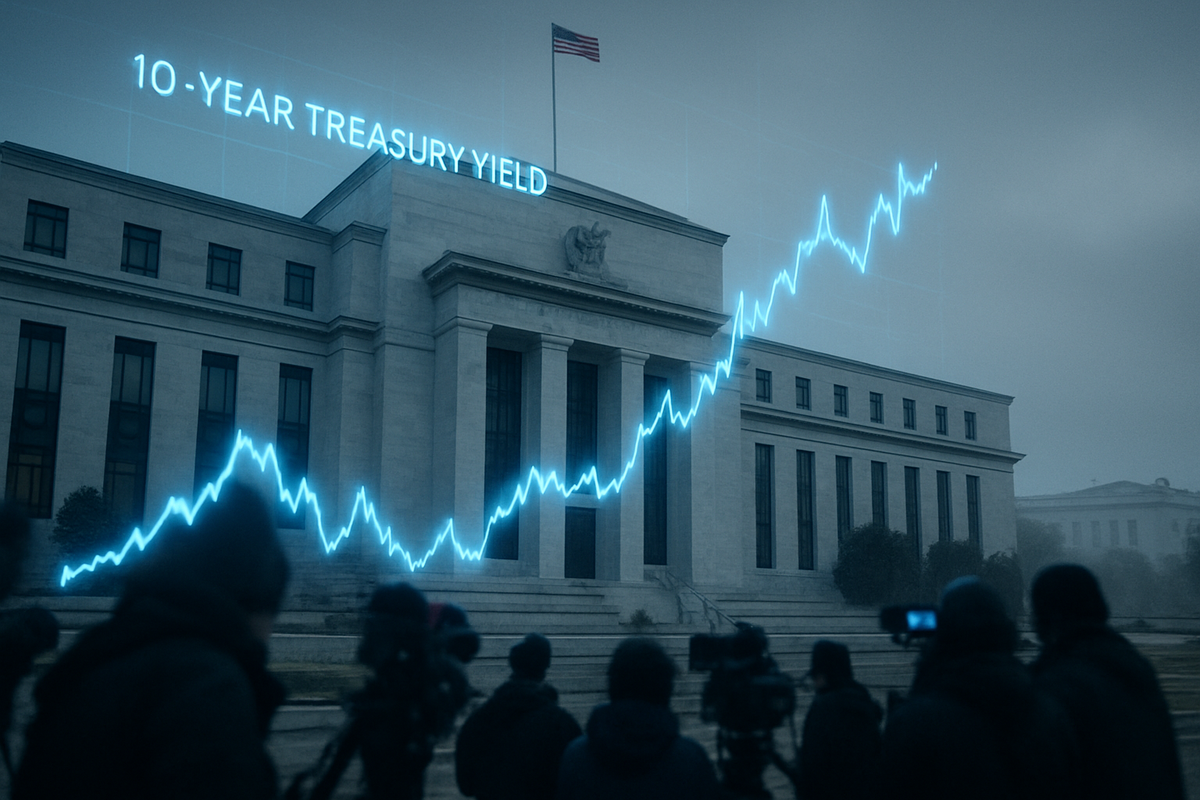
As of February 11, 2026, the marble halls of the Marriner S. Eccles Federal Reserve Building are at the center of a constitutional and economic tug-of-war that has not been seen in over seventy years. With Chairman Jerome Powell’s second term as Chair set to expire on May 15, 2026, the United States finds itself in a "lame duck" window that has emboldened critics of central bank autonomy. The current political atmosphere is thick with proposals that would essentially strip the Fed of its "independent" status, potentially granting the executive branch a seat at the table during interest rate deliberations.
This shift represents a departure from the norms that have governed U.S. monetary policy since the mid-20th century. For investors, the immediate implications are stark: the "politicization premium" is beginning to manifest in the bond market, as traders price in the risk of a Federal Reserve that might prioritize short-term political gains—such as lower rates ahead of mid-term elections—over long-term price stability. The debate has moved past academic circles and into the heart of the 2026 legislative agenda, creating a period of heightened uncertainty for the global financial system.
The Architecture of a Power Struggle: From the 1951 Accord to Today
The current friction is the latest chapter in a long history of tension between the White House and the central bank. Historically, the most significant milestone was the Treasury-Fed Accord of 1951, which freed the Fed from an obligation to "peg" interest rates at low levels to help the government finance war debt. Since then, while presidents have often grumbled about high rates, the "Eccles Building" has largely functioned as an independent technocracy. However, the current timeline of events leading into February 2026 suggests a systematic effort to undo that separation. Throughout 2025, various policy think tanks and congressional caucuses began floating "consultation" frameworks, where the President would be briefed on rate decisions before they are finalized.
Key players in this drama include Jerome Powell, who has spent the last year of his term defending the institution against increasingly vocal attacks from populist factions in both parties. On the legislative front, proponents of change argue that the Fed has become an "unaccountable fourth branch of government." Initial market reactions to these proposals have been defensive; the 10-year Treasury yield has seen significant volatility as investors weigh the possibility of a "shadow" rate-setting committee operating out of the West Wing. The stakeholder list has also grown to include global central banks, which are closely watching to see if the world’s reserve currency is about to lose its primary anchor of stability.
Winners and Losers: Financial Titans and Growth Goliaths in the Crosshairs
The prospect of a politicized Fed creates a stark divide among public companies. Major financial institutions like JPMorgan Chase & Co. (NYSE: JPM) and Goldman Sachs Group Inc. (NYSE: GS) stand at a critical crossroads. On one hand, these banks benefit from the market volatility that political uncertainty brings, often leading to surges in trading revenue. On the other hand, their core business models rely on a predictable yield curve. If political pressure forces the Fed to keep rates artificially low, the resulting "stop-go" economic cycles could devastate net interest margins and increase the risk of a systemic credit crisis. Morgan Stanley (NYSE: MS), where potential Fed successor Kevin Warsh once served as an executive, is being watched by analysts for any clues on the future direction of the central bank's leadership.
Conversely, "Growth" stocks in the technology sector, such as Microsoft Corp. (NASDAQ: MSFT) and Apple Inc. (NASDAQ: AAPL), have a more complex relationship with this debate. Historically, these companies have benefited from the low-interest-rate environments that political actors often demand, as lower rates increase the present value of their future cash flows. However, as of February 2026, even these tech giants are expressing concern through trade groups. Their primary fear is not higher rates, but rather the long-term devaluation of the U.S. dollar. If the Fed loses its inflation-fighting credibility, the global purchasing power of these multinational corporations could be eroded, and their massive overseas cash reserves could face significant currency risk.
Historical Precedents and the Global Ripple Effect
The current atmosphere bears a haunting resemblance to the early 1970s, when President Richard Nixon successfully pressured Fed Chair Arthur Burns to keep rates low ahead of the 1972 election. That interference is widely credited with igniting the "Great Inflation" of the 1970s, a decade of economic stagnation that was only broken by the drastic (and unpopular) rate hikes of Paul Volcker in the 1980s. The significance of the 2026 debate is that it mirrors this era, but with the added complexity of a much larger federal debt. Today’s critics argue that the Fed’s independence is an obstacle to managing the national debt, a sentiment echoed by the Reagan administration’s clashes with Volcker in 1984.
The ripple effects extend far beyond U.S. borders. The Federal Reserve acts as the "world's central bank," and any perceived loss of independence could accelerate "de-dollarization." If foreign central banks in Europe and Asia believe the Fed is being steered by the White House, they may pivot away from Treasuries toward alternative assets, including gold or digital currencies. This would fundamentally change the regulatory landscape, potentially forcing the Fed to adopt more rigid, rules-based monetary policies to regain lost trust—a move that would ironically limit the very flexibility that current politicians are trying to seize.
What Comes Next: The Succession and the May Deadline
With only three months remaining before Jerome Powell’s term officially ends on May 15, 2026, the short-term focus is entirely on the "Short List" of potential successors. The names circulating in Washington range from traditionalists like Christopher Waller, a current Fed Governor known for his hawkish stance, to more controversial figures like Judy Shelton, who has advocated for a return to the gold standard. The selection will be a definitive signal to the markets: a "loyalist" appointment would likely trigger a massive sell-off in the bond market, while an "institutionalist" choice might stabilize the current volatility.
In the long term, we may see a strategic pivot in how the Federal Reserve operates. To protect itself from political interference, the Fed might seek to automate certain aspects of its policy, relying more on transparent mathematical models rather than discretionary committee votes. However, the more likely scenario involves a protracted legislative battle over the Federal Reserve Act. Markets should prepare for a "new normal" where the Fed’s every move is viewed through a political lens, potentially leading to more frequent and unpredictable rate shifts as administrations change.
Closing Thoughts for the 2026 Investor
The debate over Federal Reserve independence is more than a technical dispute over monetary policy; it is a fundamental question about the stability of the American economy. The key takeaway for February 2026 is that the "neutral" central bank is a concept currently under siege. As we move closer to the May transition, investors should expect continued pressure on the U.S. dollar and a potential widening of the "term premium" on long-dated bonds.
Moving forward, the market will likely be hypersensitive to any communication between the White House and the Eccles Building. For the next several months, the most important data point won't be the Consumer Price Index (CPI) or the unemployment rate—it will be the Senate confirmation hearings for the next Fed Chair. The independence of the central bank has been the bedrock of global finance for three-quarters of a century; whether that bedrock remains intact or begins to crumble will be the defining story of the 2026 financial year.
This content is intended for informational purposes only and is not financial advice