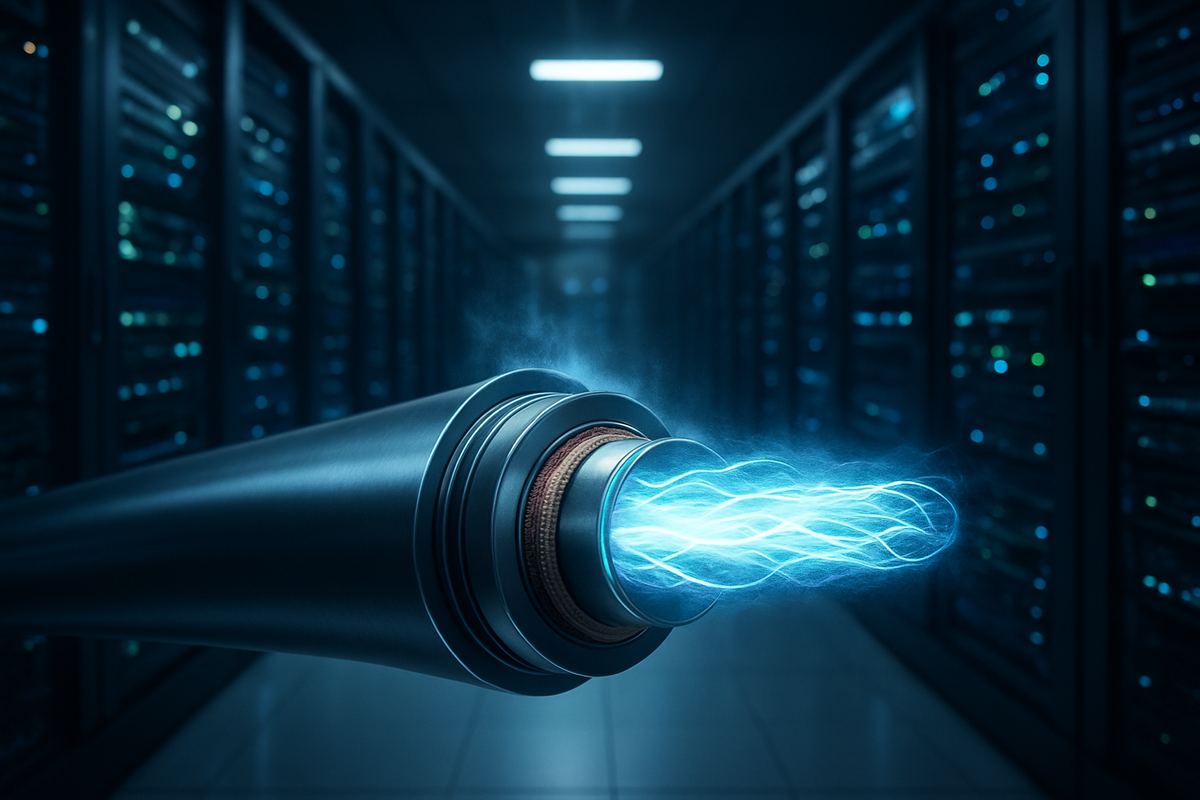
As the artificial intelligence arms race accelerates, the physical limitations of the power grid have become the primary bottleneck for tech giants. In a bold move to bypass these constraints, Microsoft (NASDAQ: MSFT) has begun pilot testing High-Temperature Superconductor (HTS) power lines for its next-generation data centers. This "lossless" technology, which allows electricity to flow with zero resistance, aims to solve the dual crises of grid capacity and extreme power density required by modern AI clusters.
The shift comes at a critical juncture for Microsoft, which is looking to scale its Azure infrastructure to support massive generative AI workloads. By utilizing superconducting materials cooled to cryogenic temperatures, Microsoft intends to deliver an order of magnitude more power into its facilities without the heat generation or physical bulk of traditional copper cabling. This breakthrough is not merely an efficiency upgrade; it is a strategic maneuver to ensure that the infrastructure of the future can fit within the physical and regulatory constraints of today.
Breaking the Tradeoff: The Push for Superconducting Infrastructure
The transition to superconducting power lines was officially detailed following the Open Compute Project (OCP) 2025 Summit, where Microsoft showcased a vision for a "superconducting backbone" for the modern data center. The project involves a multi-stage rollout, beginning with a successful 3-megawatt (3MW) pilot test conducted in late 2025 in collaboration with VEIR, an energy startup backed by the Microsoft Climate Innovation Fund. This test demonstrated that HTS cables could achieve a 10x to 20x reduction in cable size and weight compared to traditional copper systems while carrying the same electrical load.
Alistair Speirs, Microsoft’s General Manager of Global Infrastructure Marketing, has been a vocal proponent of the technology's necessity. During a recent industry briefing in early 2026, Speirs noted that traditional data center designs were hitting a physical wall. "Superconductors break this tradeoff: they increase electrical density without expanding the physical footprint," Speirs stated. This allows Microsoft to pack more computing power into existing sites, effectively bypassing the need for massive land acquisitions and the construction of new, sprawling substations.
The timeline for this initiative has moved rapidly. Following the 2025 OCP reveal, Microsoft transitioned from lab simulations to "last-mile" delivery tests, where HTS lines deliver power directly to the top of server racks. This eliminates the voltage drops and heat dissipation issues that plague traditional AC and DC power distribution in high-density environments. By February 2026, the company has begun exploring broader deployments that involve replacing overhead line corridors with compact underground HTS trenches.
Market Ripple Effects: Winners and Losers in the Superconducting Era
Microsoft (NASDAQ: MSFT) stands as the primary beneficiary of this technology, as it gains a significant competitive advantage in AI scaling. By solving the "electricity bottleneck," Microsoft can deploy AI clusters in markets where the grid is already saturated, potentially leapfrogging competitors who remain dependent on traditional infrastructure. However, the success of this technology also shines a spotlight on specialized partners. American Superconductor (NASDAQ: AMSC), a leader in HTS wire and system technology, has seen increased interest as a primary supplier for the components required to build these lossless systems.
Utility companies and grid operators are also poised to win. Companies like NextEra Energy (NYSE: NEE) and Exelon (NASDAQ: EXC)—the parent company of ComEd—stand to benefit from HTS technology's ability to stabilize the grid. Superconducting lines often include fault-current limiting capabilities, which protect the grid from surges. For utilities, the ability to transmit massive amounts of power through narrow 2-meter underground trenches rather than 70-meter-wide overhead corridors drastically reduces permitting times and "Not In My Backyard" (NIMBY) social resistance, accelerating the modernization of the national grid.
Conversely, traditional raw material suppliers may face long-term headwinds if this technology scales globally. While the demand for copper remains high for general construction, a widespread shift toward superconductors in hyperscale data centers could reduce the growth trajectory for industrial copper and aluminum cabling in the high-voltage transmission sector. Furthermore, legacy data center REITs that fail to adapt their cooling and power delivery infrastructure to accommodate cryogenic systems may find their facilities becoming obsolete as power density requirements for AI continue to skyrocket.
The Broader Significance: AI and the Energy Transition
The adoption of superconducting power lines is more than just a corporate infrastructure play; it is a response to a global energy crisis. As AI models grow in complexity, the energy required to train and run them has threatened to outpace grid capacity in major hubs like Northern Virginia and Dublin. This event fits into a broader industry trend where "Big Tech" is increasingly forced to become its own utility and energy innovator. Microsoft’s move follows its recent investments in nuclear fusion and small modular reactors (SMRs), signaling that the future of AI is inseparable from the future of energy.
Historically, superconducting technology was confined to niche scientific applications like MRI machines and particle accelerators due to the complexity of maintaining cryogenic temperatures. Microsoft’s pilot programs in 2026 represent one of the first successful attempts to commercialize HTS at a hyperscale level. If successful, this could spark a ripple effect across the technology sector, forcing rivals like Amazon (NASDAQ: AMZN) and Alphabet (NASDAQ: GOOGL) to accelerate their own experimental power delivery programs.
From a regulatory perspective, this technology offers a potential solution to the "social footprint" of the AI boom. By moving power lines underground and reducing the need for massive substations, tech companies can mitigate the environmental and aesthetic concerns of local communities. This could lead to a shift in policy where regulators incentivize "lossless" transmission to meet carbon neutrality goals, as superconducting lines virtually eliminate the 5-10% of electricity typically lost during transmission and distribution.
The Road Ahead: 2027 and Beyond
Looking toward the remainder of 2026 and into 2027, the industry is watching for the first "full-scale" superconducting data center deployment. Microsoft’s current pilots are focused on validating reliability and the long-term maintenance costs of the liquid nitrogen cooling systems required for HTS. A successful transition to commercial-scale operations would likely trigger a massive capital expenditure shift, as Microsoft and its partners begin retrofitting existing hubs with "superconducting backbones."
The potential for strategic pivots is high. If superconductors become the standard for high-density power, we may see the emergence of "Cryogenic-as-a-Service" providers specializing in the specialized cooling infrastructure required for these lines. Furthermore, the ability to transport power over longer distances without loss could lead to a geographic shift in data center placement, allowing companies to build facilities even further away from traditional power sources while maintaining high efficiency.
Challenges remain, particularly regarding the supply chain for HTS materials and the specialized labor required to install and maintain cryogenic systems. However, the "AI-era" power requirements are so extreme that these challenges are increasingly viewed as necessary hurdles rather than deal-breakers. The market should expect to see more partnerships between tech giants and specialized superconducting firms throughout the coming year.
Summary and Investor Outlook
Microsoft’s venture into superconducting power lines marks a pivotal moment in the evolution of AI infrastructure. By addressing the "lossless" delivery of power, the company is attempting to solve the most pressing constraint on its growth: the physical limits of electricity. The ability to "break the tradeoff" between electrical density and physical footprint, as Alistair Speirs noted, provides a blueprint for how the digital economy can continue to expand within a resource-constrained world.
Moving forward, the market will be characterized by an "infrastructure divergence," where companies that master energy efficiency and distribution will command higher valuations than those struggling with legacy grid limitations. Investors should keep a close eye on Microsoft’s 2026 progress reports regarding the reliability of these systems and monitor shares of American Superconductor (NASDAQ: AMSC) and major utility partners for signs of broader HTS adoption.
In the coming months, the key milestones will be the integration of HTS lines into a live, multi-tenant Azure region and any potential regulatory fast-tracking of underground superconducting projects. For the public and investors alike, this marks the beginning of an era where the "plumbing" of the internet is as innovative as the software running on it.
This content is intended for informational purposes only and is not financial advice.