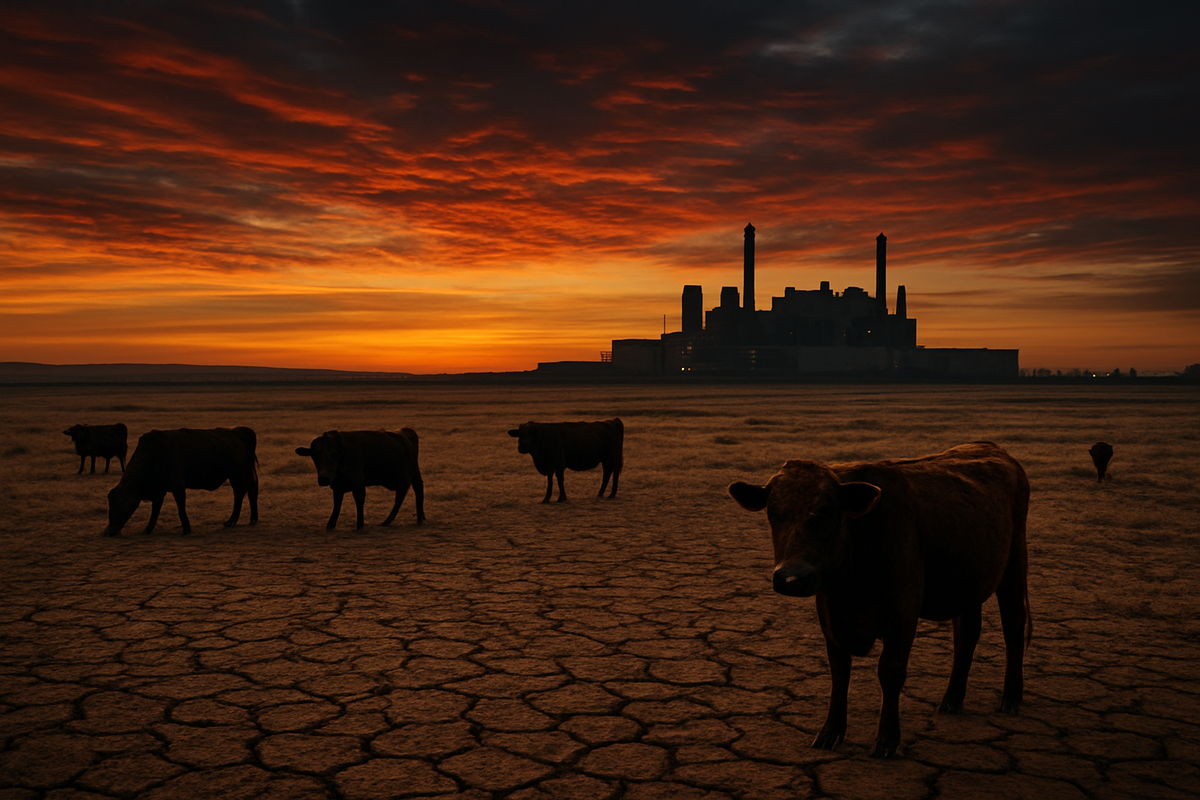
The American ranching industry has reached a historic inflection point as the United States Department of Agriculture (USDA) released its annual Cattle Inventory report on January 30, 2026. The data reveals a staggering contraction of the national herd to just 86.2 million head, the lowest total count since 1951. More alarmingly for consumers and meatpackers alike, the beef cow inventory has plummeted to 27.6 million head, a figure not seen since 1961, signaling a generational supply squeeze that is sending shockwaves through the global protein market.
This acute shortage has already translated into record-breaking prices at the grocery store and "negative leverage" for the nation’s largest processors. As the industry grapples with the fallout of multi-year droughts and soaring operational costs, the implications are clear: the era of cheap beef in America has come to a definitive end, at least for the foreseeable future. Investors and analysts are now closely monitoring the fallout, with significant volatility hitting major equities and specialized tracking products like the iPath Series B Bloomberg Livestock Subindex Total Return ETN (NYSE Arca: COW), which has historically served as a benchmark for livestock price movements.
The Perfect Storm: Drought, Costs, and Liquidation
The road to this historic low has been paved by a "perfect storm" of environmental and economic pressures that began intensifying in 2022. A persistent, multi-year drought across the Great Plains and the Western U.S. decimated grazing lands, forcing many multi-generational ranching families to sell off their breeding stock early. What began as a strategic thinning of herds turned into a wholesale liquidation as the cost of supplemental hay and feed spiked, making it financially impossible for many producers to maintain their cattle numbers.
The timeline of this decline is stark. By the start of 2024, the herd had already dropped below 1951 levels in terms of total volume, but the expected "rebuilding phase" failed to materialize in 2025. Instead, high interest rates and the lure of record-high cash prices for calves prompted ranchers to sell their heifers (young females) for immediate profit rather than retaining them to produce the next generation of calves. The 2025 calf crop was estimated at a mere 32.9 million head, the smallest since 1941, ensuring that the supply of "market-ready" cattle will remain extremely tight through 2027 and 2028.
Initial market reactions to the 2026 USDA report were swift. Cash steer prices in the 5-market weighted average surged to nearly $240 per hundredweight (cwt) in early February, while wholesale Choice beef cutout values climbed past $350. For the "Big Four" meatpackers—who process roughly 85% of U.S. grain-fed cattle—the situation has moved from difficult to dire. The lack of available cattle has left massive processing facilities underutilized, driving up the "per-head" cost of production and obliterating profit margins that were already under pressure.
Corporate Fallout: Processors Under Pressure
The primary "losers" in this cycle are the heavy-hitting meatpackers, most notably Tyson Foods (NYSE: TSN). In its Q1 2026 earnings report released today, Tyson revealed an adjusted operating loss of $143 million in its beef segment, a dramatic swing from the profitable years of 2021-2022. The company has been forced into a defensive posture, recently announcing the permanent closure of its Lexington, Nebraska processing plant and reduced shifts at other major facilities. For Tyson, the shrinking herd represents an existential challenge to its beef-heavy business model, forcing a strategic pivot toward its poultry and prepared foods segments to sustain its dividend and share price.
JBS S.A. (OTCMKTS: JBSAY), the world’s largest meat producer, is similarly feeling the heat in its North American operations. While JBS has the advantage of a diversified global footprint—benefiting from robust exports and lower cattle prices in Brazil and Australia—its U.S. margins have tightened to razor-thin levels. However, companies specializing in alternative proteins or poultry, such as Pilgrim’s Pride Corporation (NASDAQ: PPC), may emerge as "winners" as consumers trade down from expensive ribeyes and ground beef to more affordable chicken and pork options.
Retailers and specialized food companies like Hormel Foods Corporation (NYSE: HRL) are also navigating a minefield. While Hormel’s diversified portfolio provides some protection, the rising cost of beef inputs for its various prepared food lines is a significant headwind. For investors, the volatility in this sector has traditionally been captured by the iPath Series B Bloomberg Livestock Subindex Total Return ETN (NYSE Arca: COW). While the ETN has faced structural changes and redemptions in recent years, the underlying index it tracks has seen massive gains due to the surge in live cattle and lean hog futures, highlighting the disconnect between soaring commodity prices and the struggling profitability of the companies that process them.
A National Supply Crisis: Broader Market Significance
The current crisis fits into a broader trend of agricultural volatility driven by climate instability and the "industrialization" of the American food supply. The fact that the herd is at its smallest level since 1951—a time when the U.S. population was roughly 155 million, compared to over 340 million today—highlights a massive per-capita supply deficit. This has significant implications for food security and inflation. With ground beef prices hitting record highs of $6.69 per pound in late 2025, beef is increasingly becoming a "luxury protein," which could permanently alter American dietary habits and retail landscapes.
Regulatory scrutiny is also intensifying. The Department of Justice (DOJ) and the USDA have increased their oversight of the "Big Four" meatpackers, investigating whether the current price spikes are purely a result of supply dynamics or if there are elements of price gouging at the retail level. This political pressure could lead to new mandates for more transparent "cash market" trading, which proponents argue would help independent ranchers get a fairer price for their dwindling numbers of cattle.
Historically, this event is being compared to the cattle cycle of 2014-2015, which followed a similarly devastating drought. However, the current situation is regarded as more severe because of the added layers of high labor costs, expensive financing, and a more fragile global supply chain. Unlike previous cycles, the "ripple effects" are now global, as the U.S. transitions from being a major beef exporter to a significant importer of lean beef trimmings from South America and Oceania to meet the domestic demand for ground beef.
The Long Road to Recovery: What Comes Next
Looking ahead, the short-term outlook remains grim for beef supplies. Because of the biological "time lag" in cattle production—it takes roughly three years from the time a rancher decides to keep a heifer until her offspring is ready for market—no significant increase in beef production is possible before 2028. The first signs of a turnaround will not be found in slaughter numbers, but in the USDA’s "Replacement Heifer" data. While the 2026 report showed a modest 1% uptick in heifers held back for breeding, it will take several consecutive years of such growth to rebuild the herd to sustainable levels.
The market may see a wave of consolidation. Smaller, independent feedlots and processors that lack the capital reserves to weather years of negative margins are likely to be acquired by larger conglomerates or simply shut down. This could lead to a more "vertically integrated" industry, similar to the poultry sector, where packers have more direct control over the birth-to-slaughter lifecycle. For consumers, the adaptation will likely involve a permanent shift in portion sizes and a continued migration toward "blended" meat products or plant-based alternatives to stretch the value of expensive beef.
Market Outlook and Final Thoughts
The contraction of the U.S. cattle herd to a 75-year low is more than just a statistical anomaly; it is a fundamental restructuring of the American protein economy. The takeaway for the market is clear: supply will remain the dominant driver of price for the next 24 to 36 months, placing immense pressure on the earnings of major meatpackers like Tyson and JBS. While the 27.6 million beef cow figure represents a historic trough, the slow pace of heifer retention suggests that the road to recovery will be long and paved with high retail prices.
Moving forward, the market will likely remain in a state of "tight supply" equilibrium. Investors should keep a close watch on the USDA’s quarterly "Cattle on Feed" reports and the mid-year inventory update in July 2026 for any signs that ranchers are accelerating their herd-building efforts. Until a significant reversal is confirmed, the livestock sector will continue to be a primary driver of food inflation, keeping the "Big Four" processors in the hot seat and forcing a reimagining of the American dinner plate.
This content is intended for informational purposes only and is not financial advice.