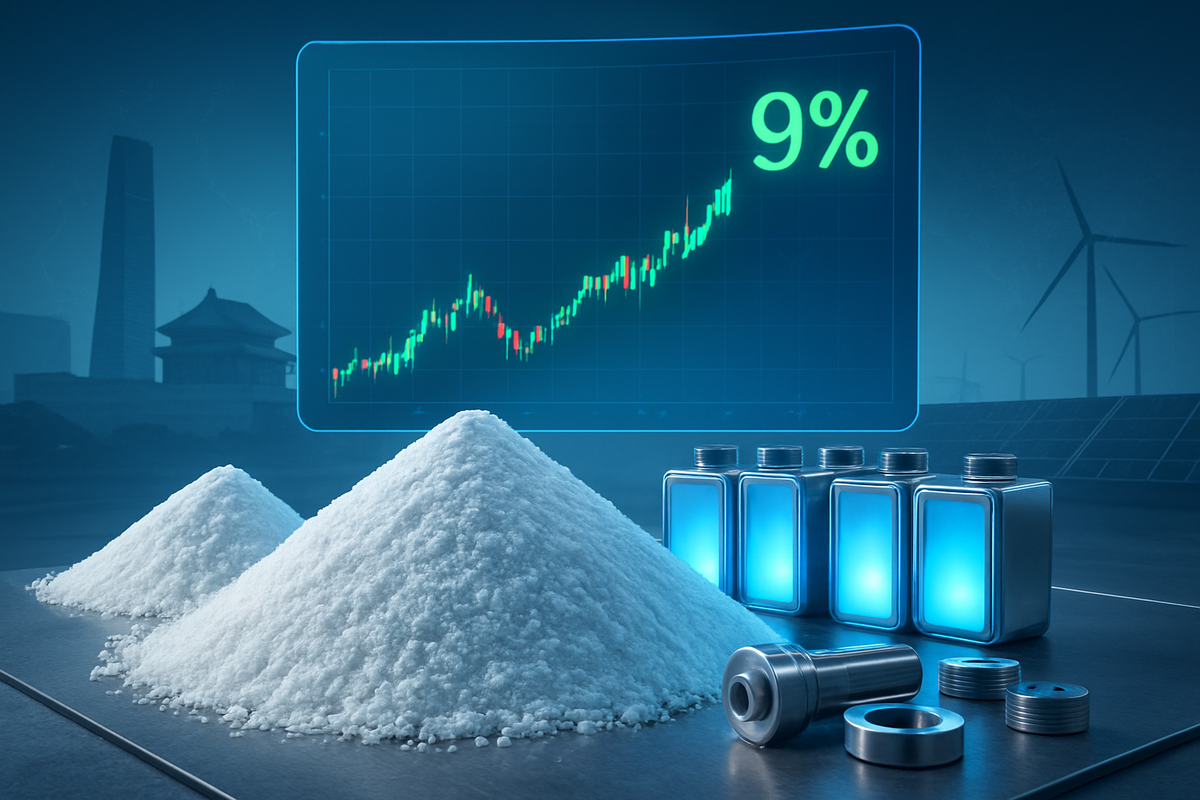
The lithium market, long dormant following a two-year supply glut, erupted into a frenzied rally on January 12, 2026, as a fundamental shift in Chinese fiscal policy sent shockwaves through the global battery supply chain. Lithium carbonate futures on the Guangzhou Futures Exchange (GFEX) hit their 9% daily upward limit, closing at 156,060 yuan ($22,372) per metric ton—the highest level since late 2023. This explosive move has reignited investor interest in the "white gold" sector, signaling a potential end to the era of oversupply and the beginning of a strategic consolidation phase.
The immediate catalyst for the rally was a joint announcement by China’s Ministry of Finance and the State Taxation Administration, which detailed a phased elimination of Value-Added Tax (VAT) export rebates for battery and solar products. By removing the 9% rebate that has long subsidized Chinese exports, Beijing is effectively raising the global price floor for battery materials and forcing an "anti-involution" strategy designed to curb domestic price wars and eliminate inefficient producers. For major Western and South American producers, this move levels the playing field, sparking a massive capital rotation back into the sector.
A Policy Shift Triggers a Market Limit
The timeline for this dramatic market turn began on Friday, January 9, 2026, when Chinese regulators caught the market off-guard with a sweeping overhaul of export incentives. The new policy mandates that the current 9% VAT rebate for battery products will be slashed to 6% on April 1, 2026, before being completely abolished by January 1, 2027. This shift covers the entire upstream and downstream spectrum, from lithium-ion battery packs to critical chemicals like lithium hexafluorophosphate.
When markets opened on Monday, January 12, the reaction was instantaneous. Traders, anticipating a massive "front-loaded" export rush as manufacturers scramble to ship products before the April deadline, began bidding up lithium contracts to secure dwindling immediate inventories. The 9% spike in futures was mirrored in the physical spot market, where the SMM battery-grade lithium carbonate index jumped by over 13,000 yuan per metric ton in a single session. This "export rush" is expected to drain Chinese inventories through the first quarter of 2026, creating a tight supply environment that few analysts had predicted just months ago.
Key stakeholders, including the world’s largest battery manufacturer, CATL, and major refiners, are now recalibrating their 2026 guidance. While the policy adds immediate cost pressure to Chinese exporters, the broader industry reaction has been surprisingly bullish. The removal of subsidies is seen as a "maturity signal" from Beijing, indicating that the government is no longer willing to fund global market-share grabs at the expense of domestic profitability.
Winners and Losers in the New Lithium Landscape
The primary beneficiary of this policy shift has been Sociedad Química y Minera de Chile (NYSE: SQM). As the world’s lowest-cost brine producer, SQM’s stock surged 14% following the news. Investors are betting that the removal of Chinese export subsidies will allow SQM to capture higher realized prices for its Chilean production without the competitive drag of subsidized Chinese refined products. Analysts now project SQM’s 2026 earnings-per-share to surge by over 100% as the company targets a record 240,000 metric tons of production.
Albemarle Corporation (NYSE: ALB) also saw its shares climb between 12% and 15%, hitting two-year highs. Albemarle has spent much of 2025 pivoting its operations toward "G7-aligned" supply chains in Australia and the United States. With China’s tax-rebate removal effectively increasing the cost of Chinese-refined lithium, Albemarle’s domestic and friendly-nation assets have become significantly more valuable to Western automakers seeking to minimize geopolitical risk.
On the other side of the ledger, smaller, high-cost Chinese lepidolite miners and Tier-2 battery assemblers are facing an existential crisis. Without the 9% VAT rebate to pad their thin margins, many of these "marginal" players are expected to be forced out of the market or absorbed by giants like Ganfeng Lithium (HKG: 1772) and Tianqi Lithium (SHE: 002466). While Ganfeng and Tianqi saw their stocks rise 8% and 10% respectively due to the overall price lift, they must now navigate a domestic environment where only the most efficient and innovative will survive.
The Strategic Importance of Commodity Giants
This event highlights a broader shift in the 2026 market environment: the transformation of major commodity companies from cyclical "price-takers" into strategic "supply anchors." In early 2026, institutional investors are increasingly viewing companies like SQM and Albemarle as bellwethers for global macroeconomic health and the security of the energy transition. Their stock performance is now being used by analysts to gauge the strength of the industrial rebound and the persistence of inflation.
The rally also underscores a critical inflection point in the energy transition. While electric vehicles (EVs) remain a primary driver, 2026 has seen the emergence of two new demand pillars: grid-scale Energy Storage Systems (BESS) and the massive power requirements of AI data centers. Energy storage is now forecast to account for 31% of global lithium demand, up from 23% just a year ago. As companies like Microsoft (NASDAQ: MSFT) and Tesla (NASDAQ: TSLA) seek to secure "green" molecules for their infrastructure, the major lithium miners are finding themselves in a position of unprecedented bargaining power.
Furthermore, this lithium spike fits into a wider trend of "commodity-driven inflation" and the "Great Rotation" of institutional capital. After two years of favoring high-growth tech and cash, early 2026 has seen a migration into hard assets. With global manufacturing PMIs reaccelerating and geopolitical tensions in regions like Venezuela and the Middle East causing volatility in other commodities, lithium is being embraced as a strategic hedge.
The Road Ahead: Scenarios for 2026
In the short term, the market is bracing for a volatile first quarter. The "April 1 Cliff" will likely lead to record-breaking export volumes from China in February and March as companies race to lock in the 6% and 9% rebates. This could lead to a temporary supply vacuum in the second half of the year, potentially pushing lithium prices toward the $25,000 per metric ton mark if demand from the energy storage sector continues to accelerate.
Long-term, the removal of Chinese subsidies is expected to accelerate the "regionalization" of the battery supply chain. We are likely to see more joint ventures between miners and tech giants, as well as a flurry of M&A activity as major producers look to consolidate their hold on low-cost assets. The strategic pivot for many will be away from "growth at all costs" and toward "margin security" and "carbon-neutral production," as environmental, social, and governance (ESG) standards become more stringently enforced in the pricing of battery metals.
Market participants should also watch for potential retaliatory or compensatory policies from other jurisdictions. As China moves to protect its domestic margins, the U.S. and EU may face pressure to adjust their own subsidy frameworks under the Inflation Reduction Act (IRA) and the Critical Raw Materials Act to ensure their nascent domestic industries aren't undercut by a flood of "pre-deadline" Chinese exports.
Summary and Investor Outlook
The January 2026 lithium rally marks a definitive end to the post-2023 bear market. By shifting its tax policy, China has effectively signaled that the era of cheap, subsidized lithium is over, clearing the way for a more balanced and profitable global market. For investors, the takeaway is clear: the "surplus" narrative that dominated 2024 and 2025 has been replaced by a "strategic deficit" outlook, driven by the dual engines of the energy transition and the AI revolution.
Moving forward, the market will be characterized by a "flight to quality." Investors should focus on producers with the lowest cost curves and the most diversified geographic footprints. While volatility is guaranteed as the industry adjusts to the new Chinese tax regime, the underlying fundamentals of the lithium market have rarely looked more robust. In the coming months, the key metrics to watch will be Chinese export volumes in March and the pace of BESS deployments globally, both of which will determine if this 9% spike is merely a flash in the pan or the start of a multi-year bull run.
This content is intended for informational purposes only and is not financial advice.