Biotechnology company Moderna (NASDAQ: MRNA) reported Q3 2026 results topping the market’s revenue expectations, with revenue up 29.2% year on year to $1.31 billion. Its GAAP profit of $0.38 per share was significantly above analysts’ consensus estimates.
For more on Moderna, read our free full research report.
Moderna (MRNA) Q3 2026 highlights:
- Revenue $1.31 billion vs S&P analysts’ consensus estimates of $885.7 million (29.2% year-on-year growth, 48.2% beat)
- EPS (GAAP) $0.38 vs analysts’ consensus estimates of -$1.25 (significant beat)
- Operating margin 9.9%, up from -25.6% in the same quarter last year
- Free cash flow -$1.61 billion compared to -$880 million in the same quarter last year
- Market capitalization $96.4 billion
Revenue growth
Reviewing a company’s long-term revenue performance reveals insights into its quality. Any business can deliver a good quarter or two, but many enduring ones grow for years. Over the last five years, Moderna’s demand was weak and its revenue declined by 26.6% per year. That outcome points to poor business quality.
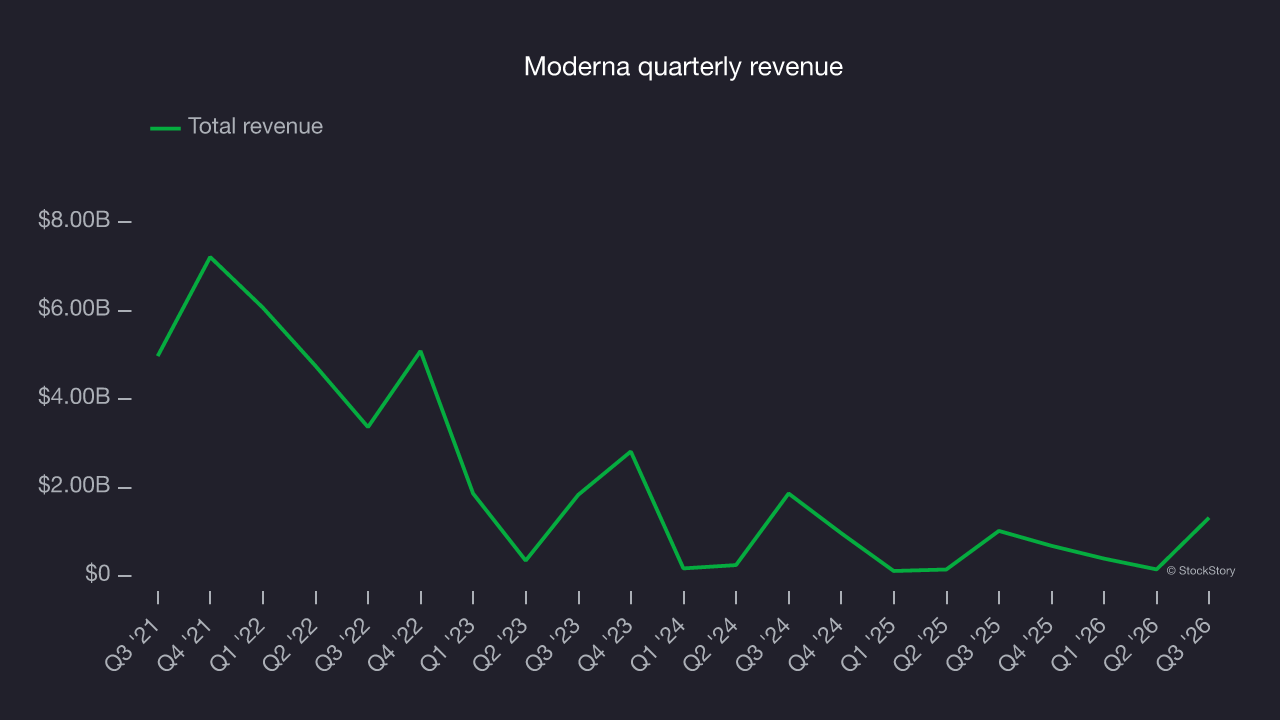
Long-term growth is the most important, but within healthcare, a half-decade historical view may miss new innovations or demand cycles. Moderna’s recent performance shows its demand remained suppressed as its revenue has declined by 29.5% annually over the last two years. 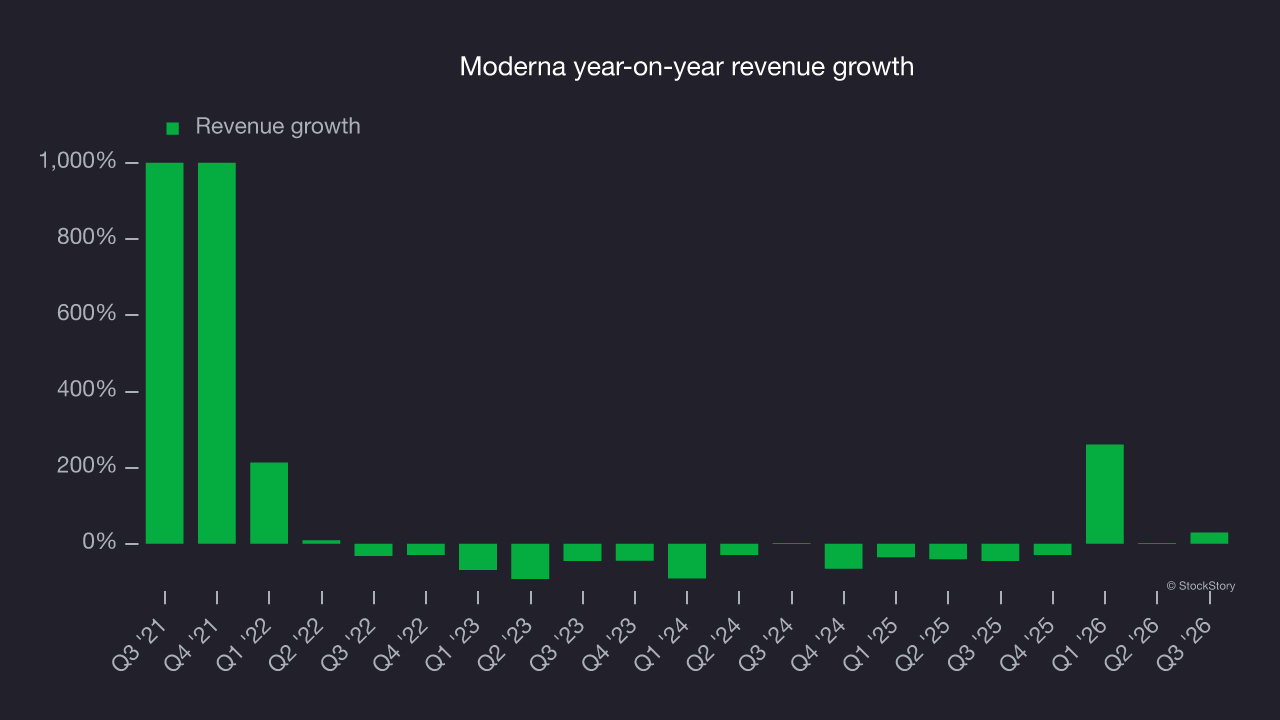
This quarter, Moderna reported strong year-on-year revenue growth of 29.2%, and its $1.31 billion in revenue topped Wall Street’s consensus estimates by 48.2%.
Looking ahead, sell-side analysts expect revenue to decline by 15.7% over the next 12 months, according to S&P. Although this projection is better than its two-year trend, the company’s demand difficulties remain a concern.
Adjusted operating margin
Moderna was profitable over the last five years but held back by its large cost base. Its average adjusted operating margin of 7.9% was weak for a healthcare business.
Moderna’s adjusted operating margin decreased significantly over the last five years. The company’s two-year trajectory also shows it failed to return to peak profitability as its margin fell by 57.6 percentage points. This performance was poor, showing that its expenses were rising and it couldn’t pass those costs on to its customers.
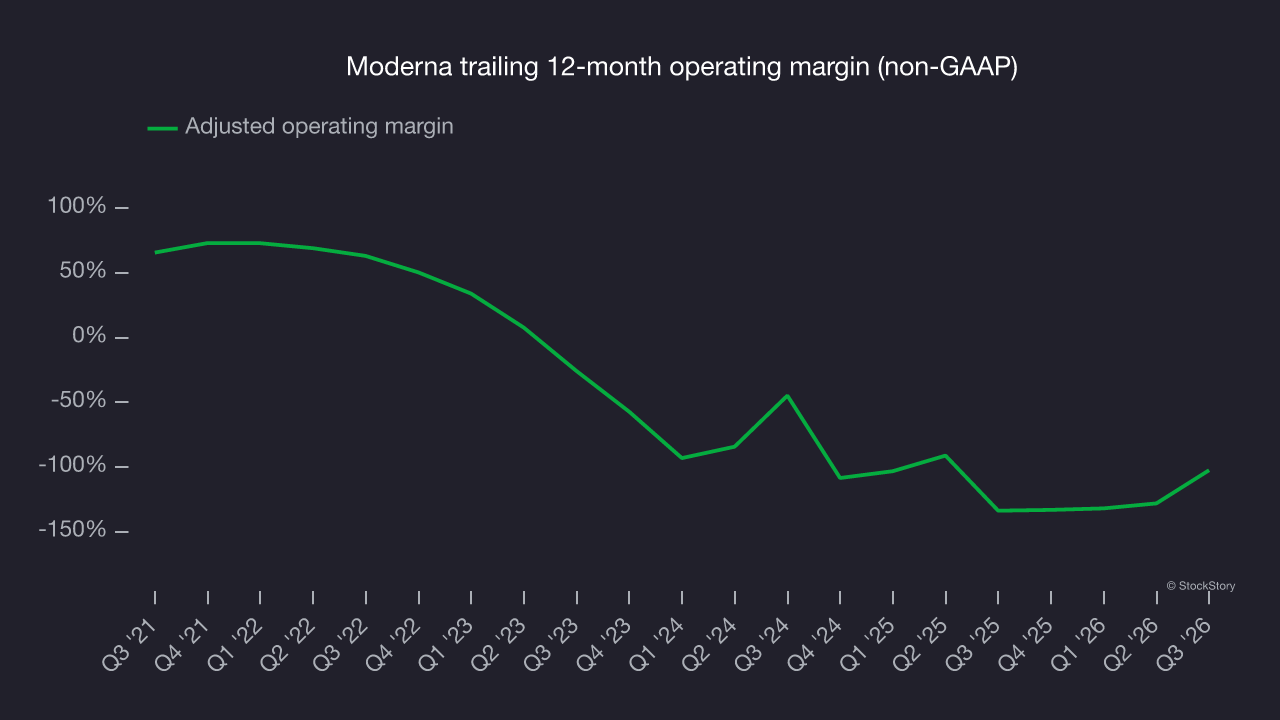
In Q3, Moderna generated an adjusted operating margin of 9.9%, up 23.2 percentage points year on year. This increase was a positive development and shows it was more efficient.
Earnings per share
Revenue trends explain a company’s historical growth, but the long-term change in earnings per share (EPS) points to the profitability of that growth. For example, a company could inflate its revenue through excessive spending on advertising and promotions.
Moderna’s EPS and revenue declined by 19.5% and 26.6% annually over the last five years. Companies with falling revenue and EPS warrant caution, as diminishing earnings could imply changing secular trends and preferences. If conditions change unexpectedly, Moderna’s low margin of safety could leave its stock price susceptible to large declines.
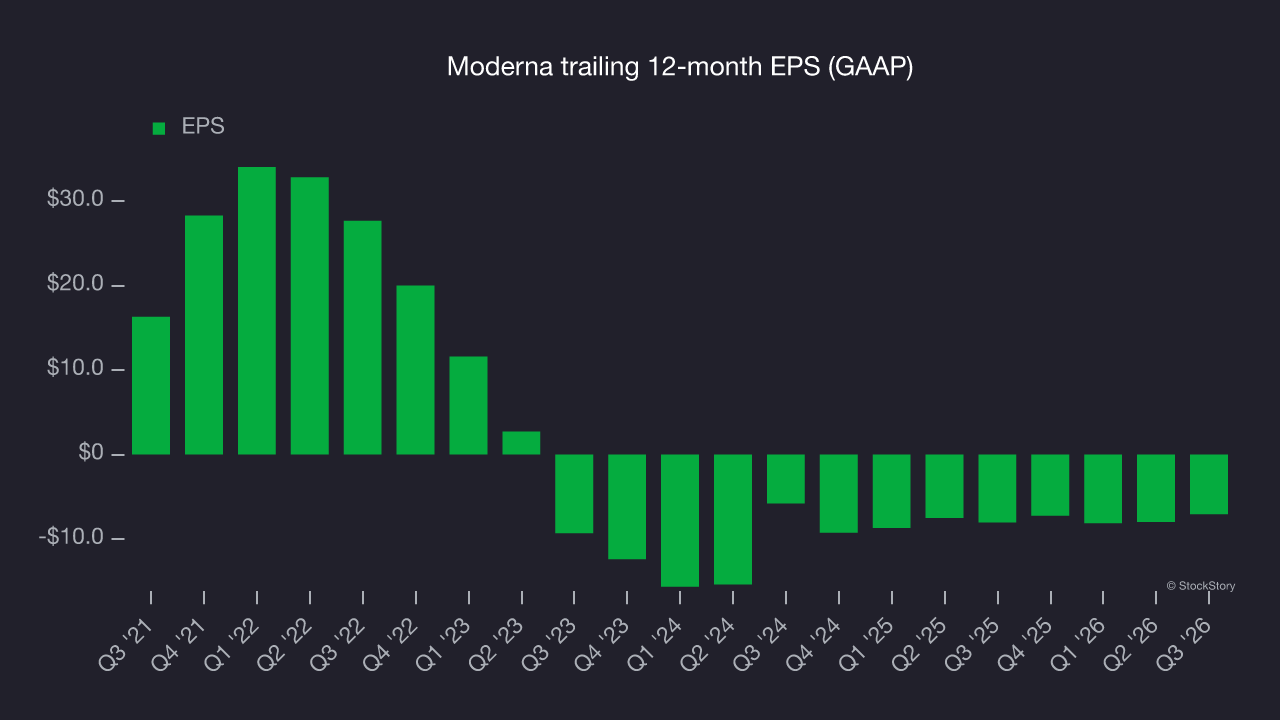
In Q3, Moderna reported EPS of $0.38, up from negative $0.51 in the same quarter last year. This result came in well above analysts’ consensus estimates, a positive for shareholders. Over the next 12 months, Wall Street expects Moderna to narrow its losses. Analysts forecast its full-year EPS will improve from negative $7.09 to negative $6.46, according to S&P. This is unusual as its revenue and operating margin are anticipated to fall, signaling the increase likely stems from “below-the-line” items such as taxes.
Key takeaways from Moderna’s Q3 results
Moderna delivered a strong quarter, beating analysts’ consensus EPS estimates and topping Wall Street’s revenue consensus by a wide margin. Shares surged 8.6% to $262.13 immediately after the results.
Moderna had a solid quarter, but one earnings result doesn’t necessarily make the stock a buy. The latest quarterly results matter, but longer-term business quality and valuation are more important when deciding whether to invest. For more on Moderna, read our full research report here (it’s free).