Homebuilder Taylor Morrison Home (NYSE: TMHC) reported Q1 CY2026 results beating Wall Street’s revenue expectations, but sales fell by 26.8% year on year to $1.39 billion. Its non-GAAP profit of $1.12 per share was 33.4% above analysts’ consensus estimates.
Is now the time to buy Taylor Morrison Home? Find out by accessing our full research report, it’s free.
Taylor Morrison Home (TMHC) Q1 CY2026 Highlights:
- Revenue: $1.39 billion vs analyst estimates of $1.33 billion (26.8% year-on-year decline, 4.1% beat)
- Adjusted EPS: $1.12 vs analyst estimates of $0.84 (33.4% beat)
- Adjusted EBITDA: $183.4 million vs analyst estimates of $145.4 million (13.2% margin, 26.1% beat)
- Operating Margin: 8.6%, down from 15.2% in the same quarter last year
- Backlog: $2.30 billion at quarter end, down 31.5% year on year
- Market Capitalization: $5.87 billion
"Our first quarter results reflected the effectiveness of our diversified strategy, the quality of our core locations, and the disciplined execution of our teams. We delivered 2,268 homes at an average price of $578,000 and an adjusted home closings gross margin of 20.6%, driving adjusted earnings per diluted share of $1.12 and 11% year-over-year growth in our book value per share to $64. On the capital front, we invested $503 million in land and development and $150 million in share repurchases and ended the quarter with $1.6 billion in liquidity," said Sheryl Palmer, Taylor Morrison Chairman and CEO.
Company Overview
Named “America’s Most Trusted Home Builder” in 2019, Taylor Morrison Home (NYSE: TMHC) builds single family homes and communities across the United States.
Revenue Growth
A company’s long-term sales performance can indicate its overall quality. Even a bad business can shine for one or two quarters, but a top-tier one grows for years. Regrettably, Taylor Morrison Home’s sales grew at a sluggish 4.2% compounded annual growth rate over the last five years. This was below our standard for the industrials sector and is a tough starting point for our analysis.
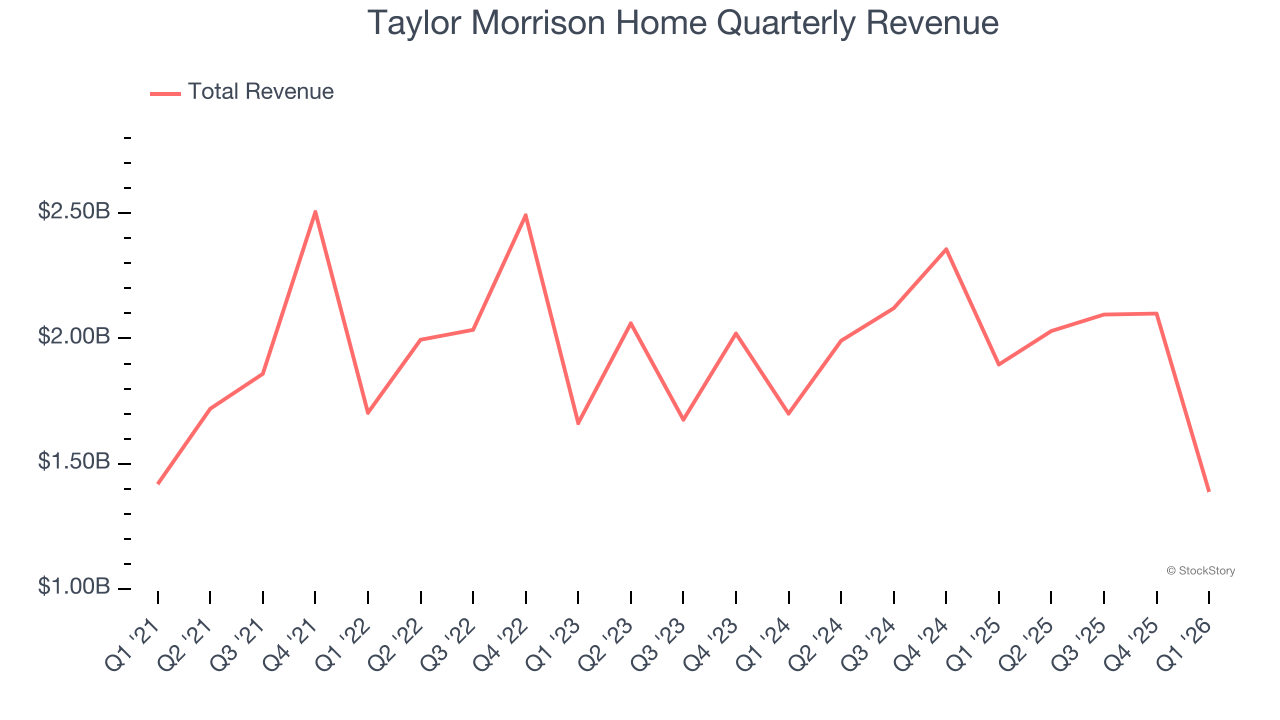
Long-term growth is the most important, but within industrials, a half-decade historical view may miss new industry trends or demand cycles. Taylor Morrison Home’s recent performance shows its demand has slowed as its annualized revenue growth of 1% over the last two years was below its five-year trend. We’re wary when companies in the sector see decelerations in revenue growth, as it could signal changing consumer tastes aided by low switching costs. 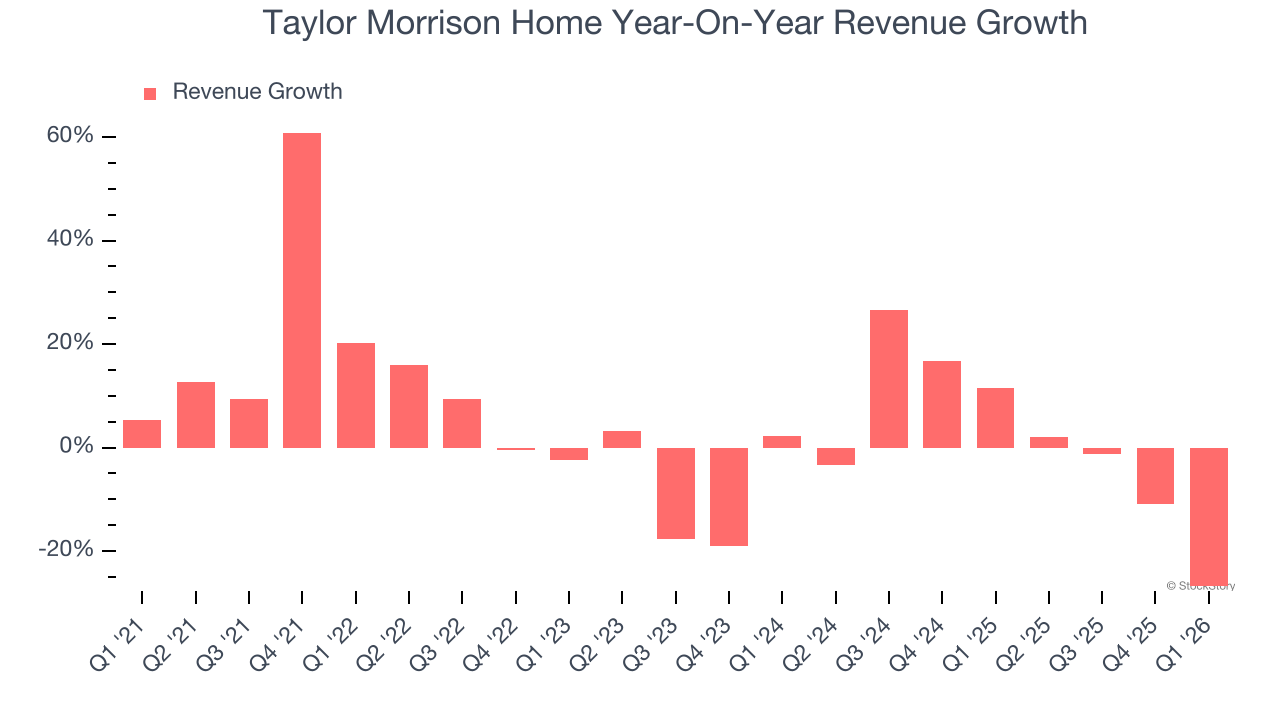
We can better understand the company’s revenue dynamics by analyzing its backlog, or the value of its outstanding orders that have not yet been executed or delivered. Taylor Morrison Home’s backlog reached $2.30 billion in the latest quarter and averaged 33.2% year-on-year declines over the last two years. Because this number is lower than its revenue growth, we can see the company hasn’t secured enough new orders to maintain its growth rate in the future. 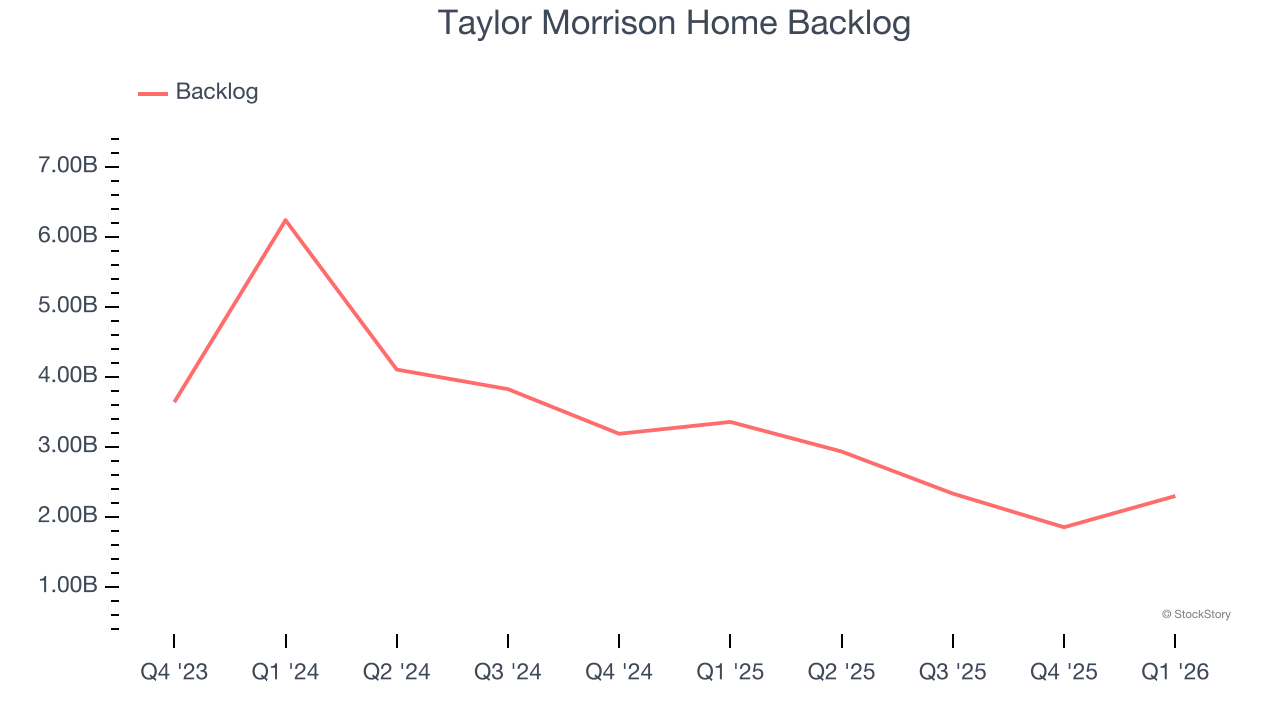
This quarter, Taylor Morrison Home’s revenue fell by 26.8% year on year to $1.39 billion but beat Wall Street’s estimates by 4.1%.
Looking ahead, sell-side analysts expect revenue to decline by 11% over the next 12 months, a deceleration versus the last two years. This projection is underwhelming and suggests its products and services will face some demand challenges.
WHILE YOU’RE HERE: The Next Palantir? One satellite company captures images of every point on Earth. Every single day. The Pentagon wants it. Hedge funds are using it to beat earnings. You’ve probably never heard of it.
This is what the early days of Palantir looked like before it became a $437 billion giant. Same playbook. Different technology. If you missed Palantir, you need to see this. Claim The Stock Ticker for Free HERE.
Operating Margin
Taylor Morrison Home’s operating margin has more or less stayed the same over the last 12 months , averaging 14.6% over the last five years. This profitability was top-notch for an industrials business, showing it’s an well-run company with an efficient cost structure. This result was particularly impressive because of its low gross margin, which is mostly a factor of what it sells and takes huge shifts to move meaningfully. Companies have more control over their operating margins, and it’s a show of well-managed operations if they’re high when gross margins are low.
Analyzing the trend in its profitability, Taylor Morrison Home’s operating margin might fluctuated slightly but has generally stayed the same over the last five years. We like to see margin expansion, but we’re still happy with Taylor Morrison Home’s performance considering most Home Builders companies saw their margins plummet.
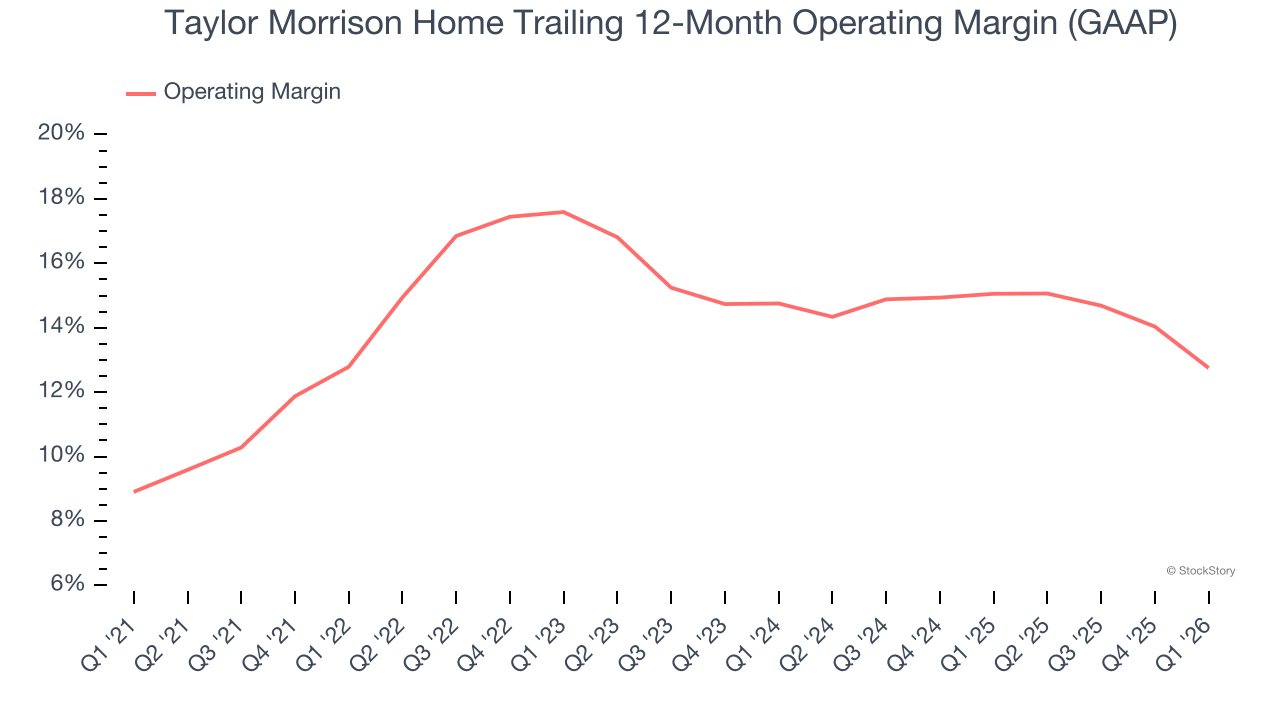
In Q1, Taylor Morrison Home generated an operating margin profit margin of 8.6%, down 6.6 percentage points year on year. Since Taylor Morrison Home’s operating margin decreased more than its gross margin, we can assume it was less efficient because expenses such as marketing, R&D, and administrative overhead increased.
Earnings Per Share
We track the long-term change in earnings per share (EPS) for the same reason as long-term revenue growth. Compared to revenue, however, EPS highlights whether a company’s growth is profitable.
Taylor Morrison Home’s EPS grew at 15.5% compounded annual growth rate over the last five years, higher than its 4.2% annualized revenue growth. However, this alone doesn’t tell us much about its business quality because its operating margin didn’t improve.
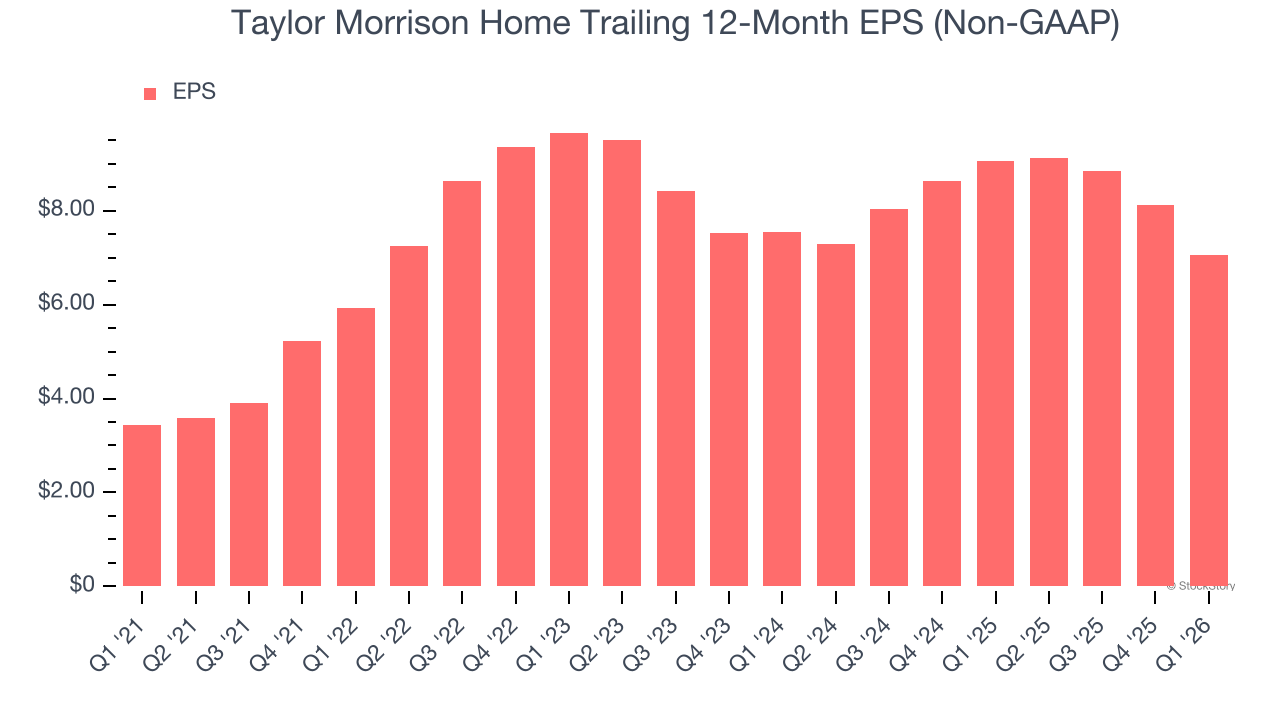
We can take a deeper look into Taylor Morrison Home’s earnings quality to better understand the drivers of its performance. A five-year view shows that Taylor Morrison Home has repurchased its stock, shrinking its share count by 25.7%. This tells us its EPS outperformed its revenue not because of increased operational efficiency but financial engineering, as buybacks boost per share earnings. 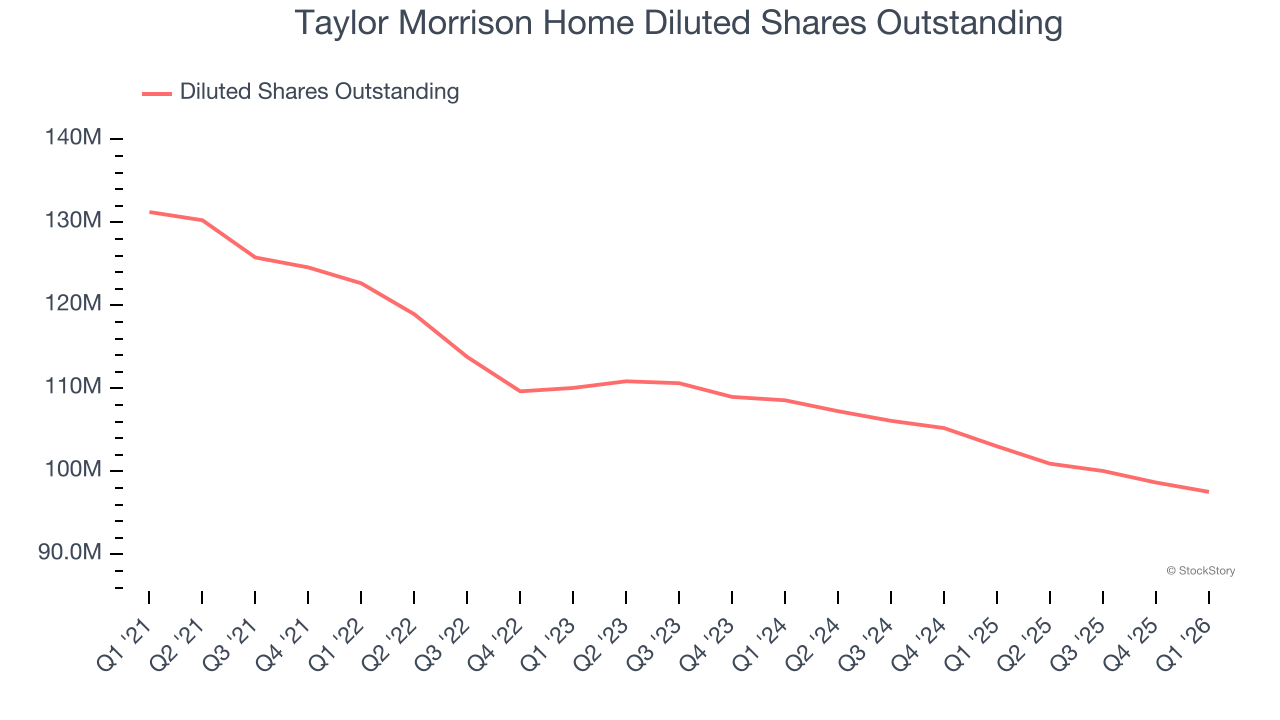
Like with revenue, we analyze EPS over a more recent period because it can provide insight into an emerging theme or development for the business.
For Taylor Morrison Home, its two-year annual EPS declines of 3.2% mark a reversal from its (seemingly) healthy five-year trend. We hope Taylor Morrison Home can return to earnings growth in the future.
In Q1, Taylor Morrison Home reported adjusted EPS of $1.12, down from $2.18 in the same quarter last year. Despite falling year on year, this print easily cleared analysts’ estimates. Over the next 12 months, Wall Street expects Taylor Morrison Home’s full-year EPS of $7.06 to shrink by 25.6%.
Key Takeaways from Taylor Morrison Home’s Q1 Results
It was good to see Taylor Morrison Home beat analysts’ EPS expectations this quarter. We were also excited its EBITDA outperformed Wall Street’s estimates by a wide margin. Zooming out, we think this quarter featured some important positives. The stock remained flat at $61.94 immediately following the results.
Is Taylor Morrison Home an attractive investment opportunity at the current price? When making that decision, it’s important to consider its valuation, business qualities, as well as what has happened in the latest quarter. We cover that in our actionable full research report which you can read here (it’s free).