Commercial real estate lender Ladder Capital (NYSE: LADR) missed Wall Street’s revenue expectations in Q1 CY2026 as sales only rose 1.2% year on year to $51.88 million. Its GAAP profit of $0.02 per share was 77.8% below analysts’ consensus estimates.
Is now the time to buy Ladder Capital? Find out by accessing our full research report, it’s free.
Ladder Capital (LADR) Q1 CY2026 Highlights:
- Net Interest Income: $23.02 million vs analyst estimates of $24 million (13.2% year-on-year growth, 4.1% miss)
- Revenue: $51.88 million vs analyst estimates of $52.41 million (1.2% year-on-year growth, 1% miss)
- EPS (GAAP): $0.02 vs analyst expectations of $0.09 (77.8% miss)
- Market Capitalization: $1.30 billion
Company Overview
Founded during the 2008 financial crisis when traditional lenders retreated from commercial real estate, Ladder Capital (NYSE: LADR) is a real estate investment trust that originates commercial real estate loans, owns commercial properties, and invests in real estate securities.
Sales Growth
Net interest income and and fee-based revenue are the two pillars supporting bank earnings. The former captures profit from the gap between lending rates and deposit costs, while the latter encompasses charges for banking services, credit products, wealth management, and trading activities. Over the last five years, Ladder Capital grew its revenue at a mediocre 8.9% compounded annual growth rate. This was below our standard for the banking sector and is a rough starting point for our analysis.
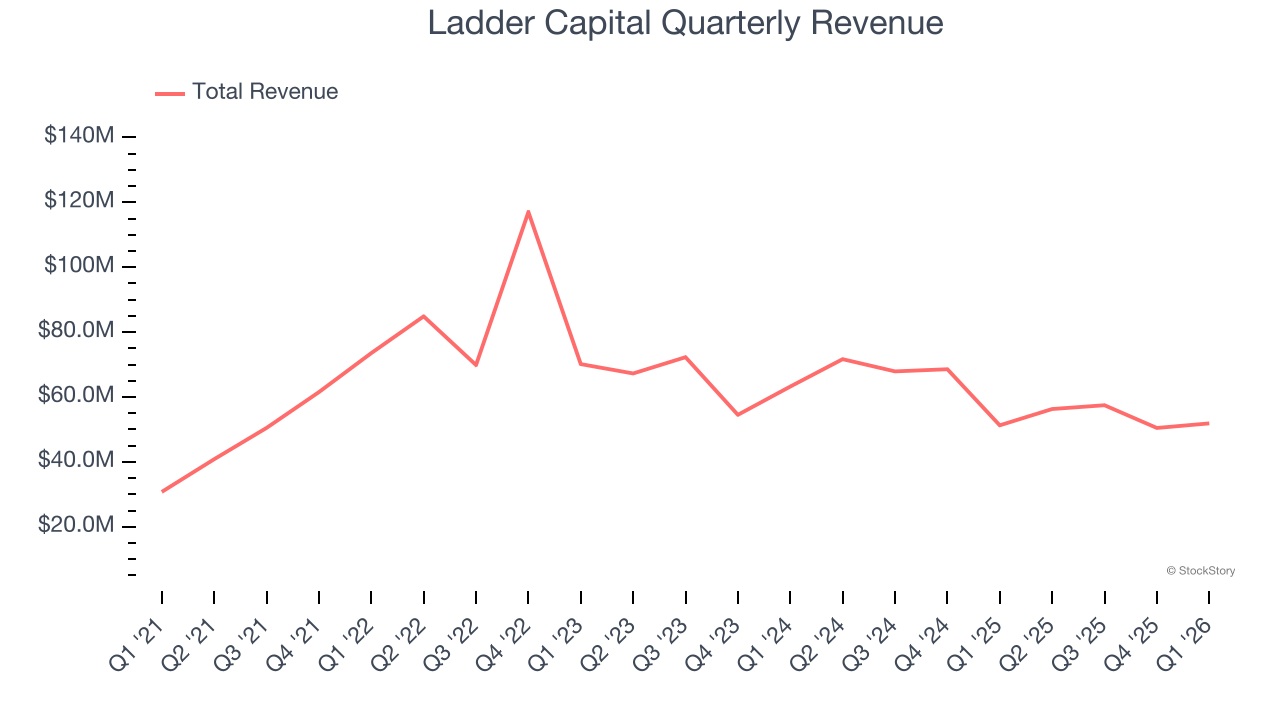
Long-term growth is the most important, but within financials, a half-decade historical view may miss recent interest rate changes and market returns. Ladder Capital’s performance shows it grew in the past but relinquished its gains over the last two years, as its revenue fell by 8.3% annually. 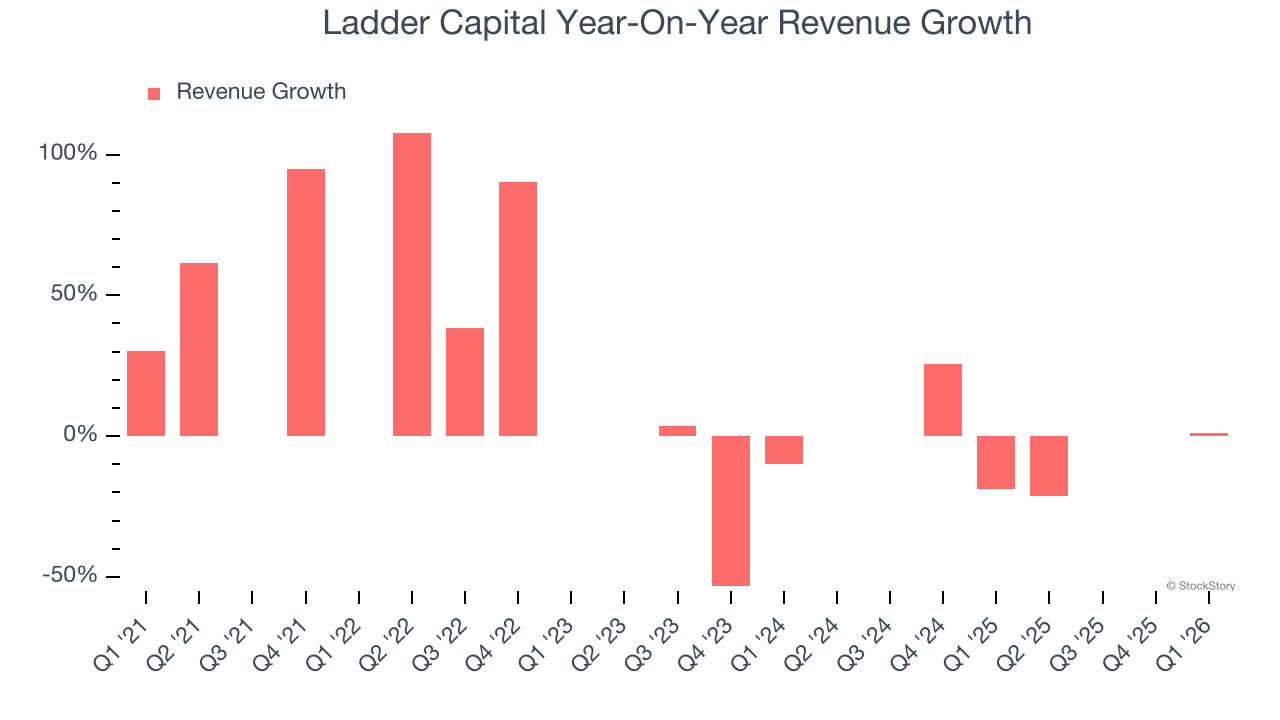 Note: Quarters not shown were determined to be outliers, impacted by outsized investment gains/losses that are not indicative of the recurring fundamentals of the business.
This quarter, Ladder Capital’s revenue grew by 1.2% year on year to $51.88 million, falling short of Wall Street’s estimates.
Net interest income made up 38.5% of the company’s total revenue during the last five years, meaning Ladder Capital is well diversified and has a variety of income streams driving its overall growth. Nevertheless, net interest income is critical to analyze for banks because they’re considered a higher-quality, more recurring revenue source by investors.
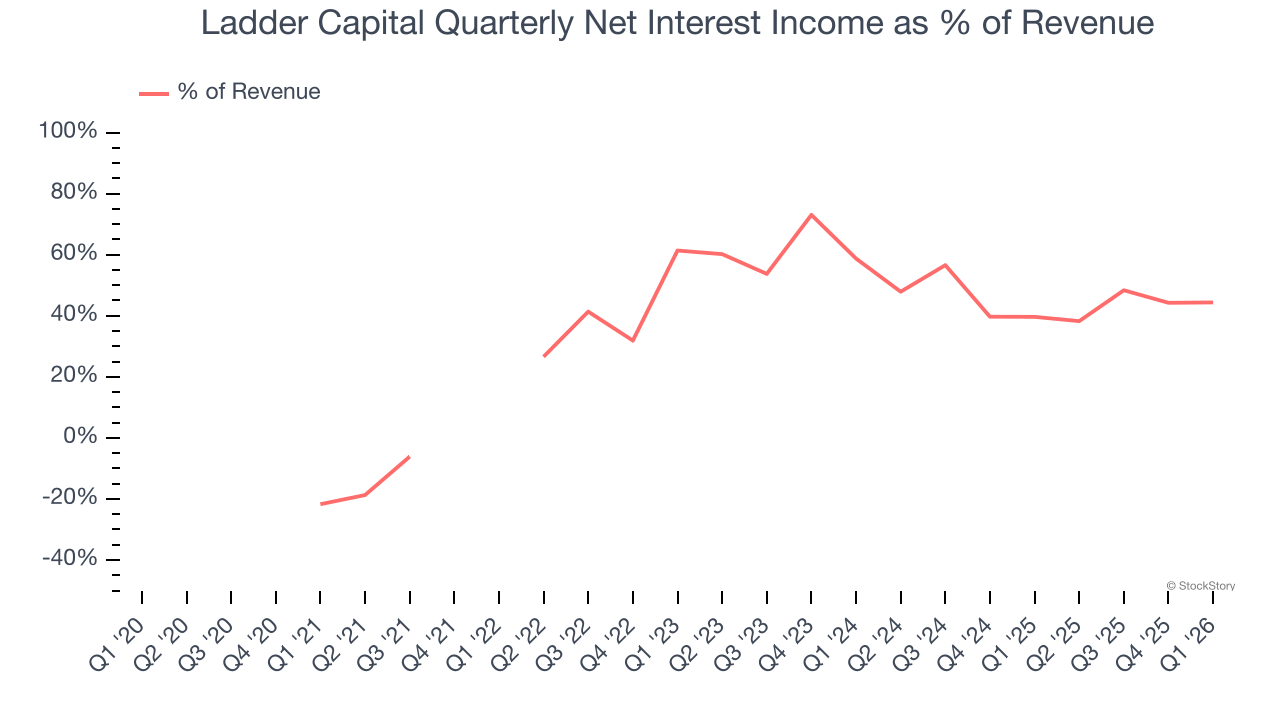 Note: Quarters not shown were determined to be outliers, impacted by outsized investment gains/losses that are not indicative of the recurring fundamentals of the business.
ALSO WORTH WATCHING: Nvidia’s Quiet Partner. Nvidia’s chips cost a hundred grand. The connectors that make them work cost even more. One company makes them all.
Every AI server needs specialized infrastructure the chip companies don’t make. High-speed cables. Power connectors. Thermal sensors. This 90-year-old company built a monopoly on it. The AI boom just started. This stock is still flying under the radar. Claim The Stock Ticker Here for FREE.
Key Takeaways from Ladder Capital’s Q1 Results
We struggled to find many positives in these results. Its net interest income missed and its EPS fell short of Wall Street’s estimates. Overall, this quarter could have been better. The stock traded down 1.7% to $10.07 immediately following the results.
Ladder Capital may have had a tough quarter, but does that actually create an opportunity to invest right now? What happened in the latest quarter matters, but not as much as longer-term business quality and valuation, when deciding whether to invest in this stock. We cover that in our actionable full research report which you can read here (it’s free).