
Insurance conglomerate Old Republic International (NYSE: ORI) reported Q1 CY2026 results topping the market’s revenue expectations, with sales up 16.5% year on year to $2.40 billion. Its non-GAAP profit of $0.68 per share was 13.9% below analysts’ consensus estimates.
Is now the time to buy Old Republic International? Find out by accessing our full research report, it’s free.
Old Republic International (ORI) Q1 CY2026 Highlights:
- Net Premiums Earned: $1.97 billion vs analyst estimates of $2.02 billion (10.6% year-on-year growth, 2.4% miss)
- Revenue: $2.40 billion vs analyst estimates of $2.27 billion (16.5% year-on-year growth, 5.7% beat)
- Combined Ratio: 96.6% vs analyst estimates of 95.9% (70 basis point miss)
- Adjusted EPS: $0.68 vs analyst expectations of $0.79 (13.9% miss)
- Book Value per Share: $24.53 vs analyst estimates of $25.21 (1.1% year-on-year growth, 2.7% miss)
- Market Capitalization: $10.13 billion
Company Overview
Founded during the Roaring Twenties in 1923 and weathering nearly a century of economic cycles, Old Republic International (NYSE: ORI) is a diversified insurance holding company that provides property, liability, title, and mortgage guaranty insurance through its various subsidiaries.
Revenue Growth
Insurers earn revenue three ways. The core insurance business itself, often called underwriting and represented in the income statement as premiums earned, is one way. Investment income from investing the “float” (premiums collected upfront not yet paid out as claims) in assets such as fixed-income assets and equities is the second way. Fees from various sources such as policy administration, annuities, or other value-added services is the third. Regrettably, Old Republic International’s revenue grew at a sluggish 2.1% compounded annual growth rate over the last five years. This was below our standards and is a tough starting point for our analysis.
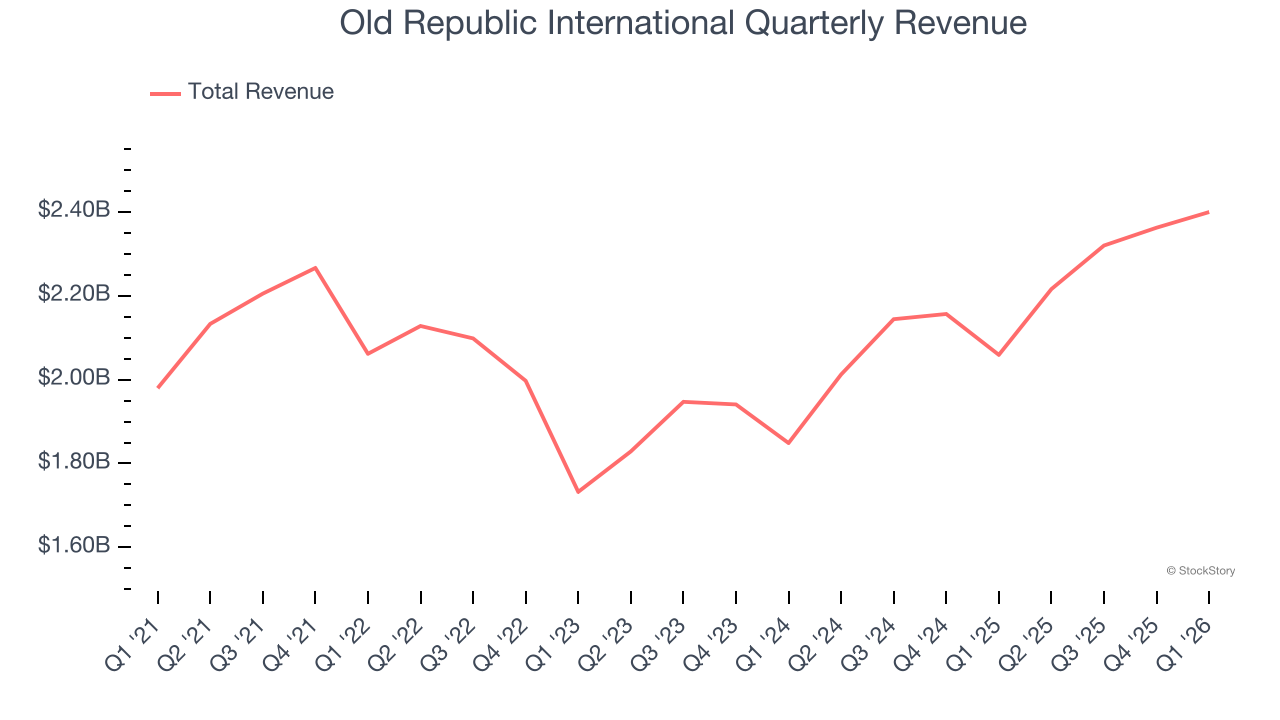
We at StockStory place the most emphasis on long-term growth, but within financials, a half-decade historical view may miss recent interest rate changes, market returns, and industry trends. Old Republic International’s annualized revenue growth of 10.9% over the last two years is above its five-year trend, suggesting its demand recently accelerated. 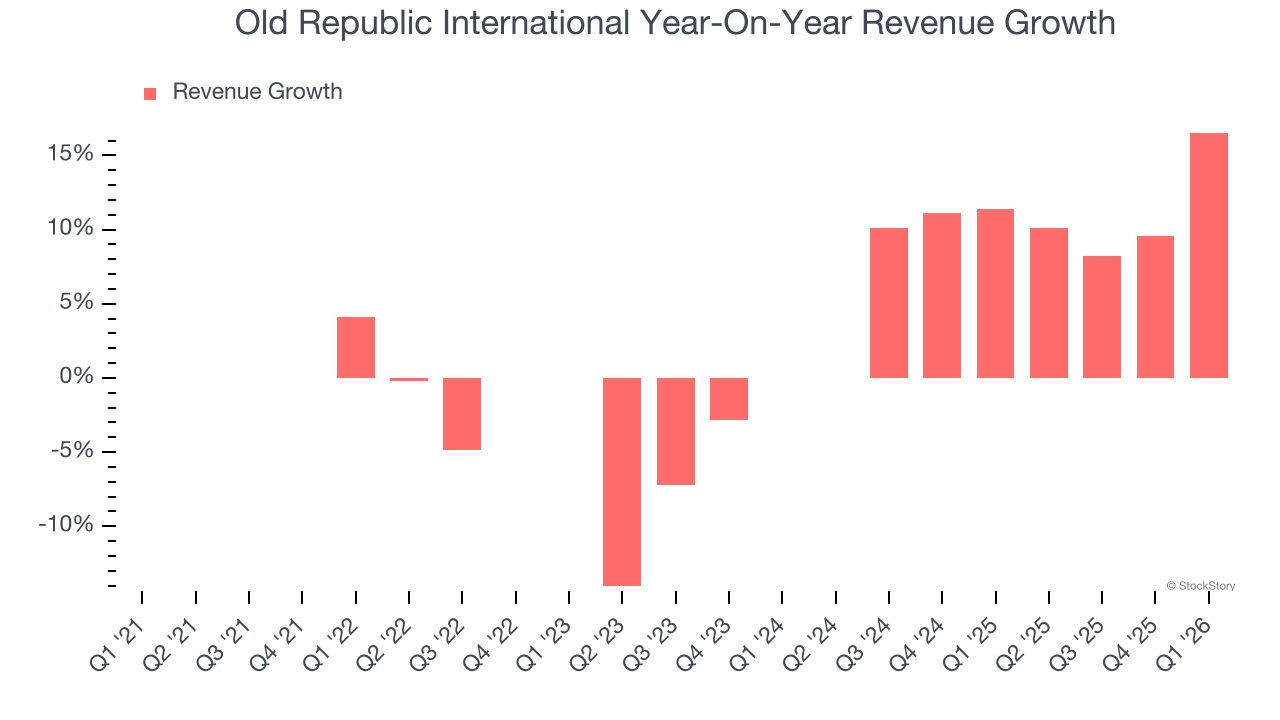 Note: Quarters not shown were determined to be outliers, impacted by outsized investment gains/losses that are not indicative of the recurring fundamentals of the business.
This quarter, Old Republic International reported year-on-year revenue growth of 16.5%, and its $2.40 billion of revenue exceeded Wall Street’s estimates by 5.7%.
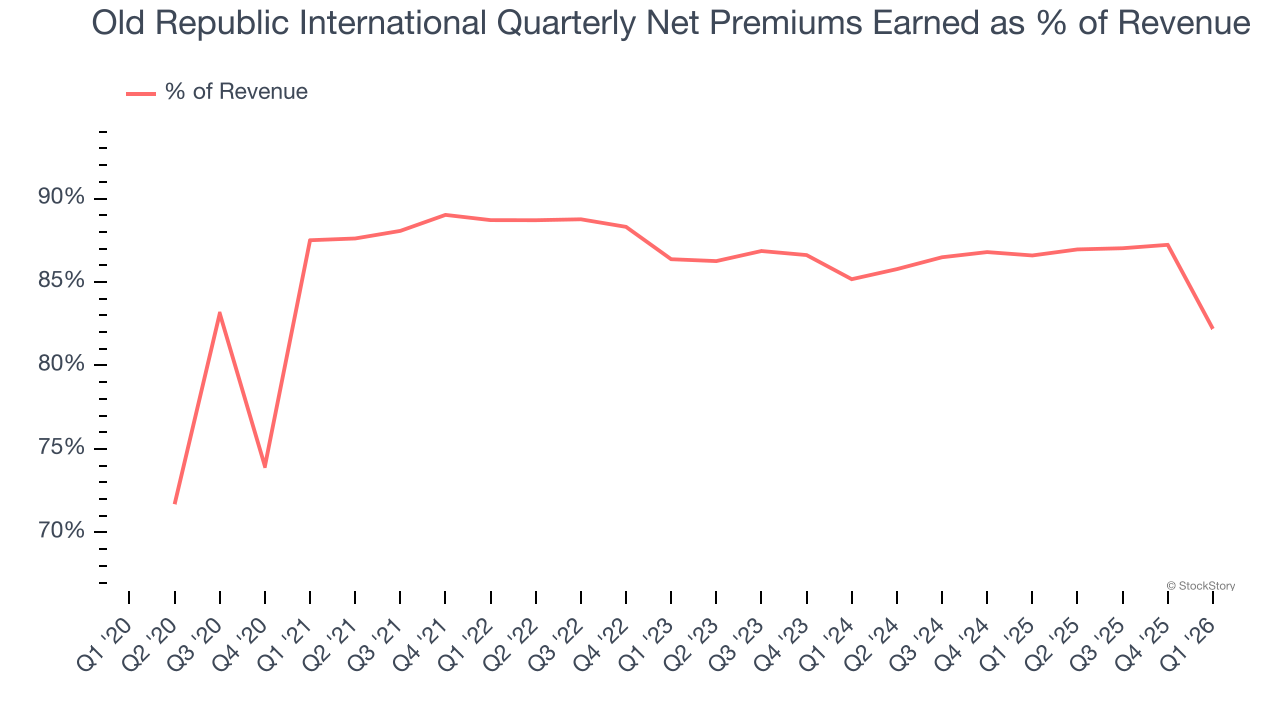
Net premiums earned made up 87% of the company’s total revenue during the last five years, meaning Old Republic International barely relies on non-insurance activities to drive its overall growth.
 Note: Quarters not shown were determined to be outliers, impacted by outsized investment gains/losses that are not indicative of the recurring fundamentals of the business.
While insurers generate revenue from multiple sources, investors view net premiums earned as the cornerstone - its direct link to core operations stands in sharp contrast to the unpredictability of investment returns and fees.
ONE MORE THING: The $21 AI Application Stock Wall Street Forgot. While Wall Street obsesses over who’s building AI, one company is already using it to print money. And nobody’s paying attention.
AI chip stocks trade at ridiculous valuations. This company processes a trillion consumer signals monthly using AI and trades at a third of the price. The gap won’t last. The institutions will figure it out. You need to see this first. Read the FREE Report Before They Notice.
Book Value Per Share (BVPS)
Insurance companies are balance sheet businesses, collecting premiums upfront and paying out claims over time. The float – premiums collected but not yet paid out – are invested, creating an asset base supported by a liability structure. Book value captures this dynamic by measuring:
- Assets (investment portfolio, cash, reinsurance recoverables) - liabilities (claim reserves, debt, future policy benefits)
BVPS is essentially the residual value for shareholders.
We therefore consider BVPS very important to track for insurers and a metric that sheds light on business quality. While other (and more commonly known) per-share metrics like EPS can sometimes be lumpy due to reserve releases or one-time items and can be managed or skewed while still following accounting rules, BVPS reflects long-term capital growth and is harder to manipulate.
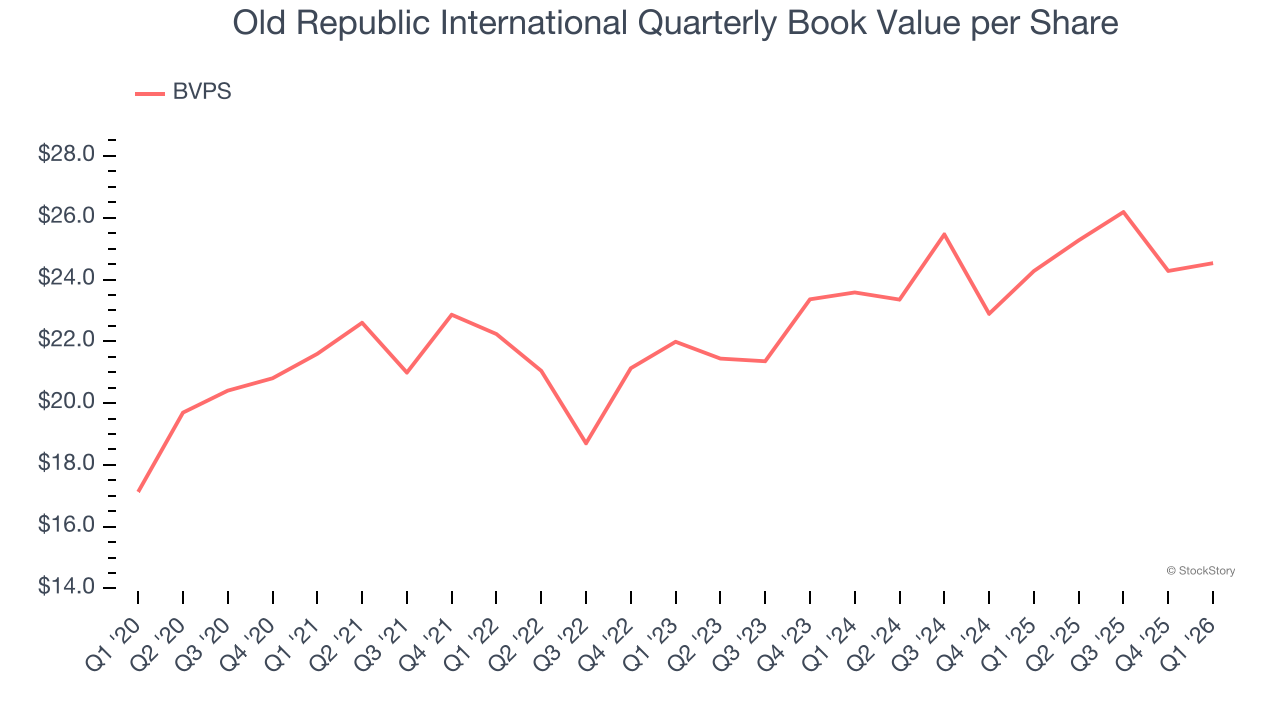
Old Republic International’s BVPS grew at a sluggish 2.6% annual clip over the last five years. The last two years show a similar trajectory as BVPS grew by 2% annually from $23.58 to $24.53 per share.
Key Takeaways from Old Republic International’s Q1 Results
We were impressed by how significantly Old Republic International blew past analysts’ revenue expectations this quarter. However, net premiums earned missed, making the revenue beat lower quality. Also, its EPS missed and its book value per share fell short of Wall Street’s estimates. Overall, this was a softer quarter. The stock traded down 3.1% to $40.78 immediately after reporting.
Old Republic International’s latest earnings report disappointed. One quarter doesn’t define a company’s quality, so let’s explore whether the stock is a buy at the current price. The latest quarter does matter, but not nearly as much as longer-term fundamentals and valuation, when deciding if the stock is a buy. We cover that in our actionable full research report which you can read here (it’s free).