Cloud data platform provider Snowflake (NYSE: SNOW) beat Wall Street’s revenue expectations in Q1 CY2026, with sales up 33.5% year on year to $1.39 billion. Its non-GAAP profit of $0.39 per share was 21.9% above analysts’ consensus estimates.
Is now the time to buy Snowflake? Find out by accessing our full research report, it’s free.
Snowflake (SNOW) Q1 CY2026 Highlights:
- Revenue: $1.39 billion vs analyst estimates of $1.32 billion (33.5% year-on-year growth, 5% beat)
- Adjusted EPS: $0.39 vs analyst estimates of $0.32 (21.9% beat)
- Adjusted Operating Income: $165.8 million vs analyst estimates of $120.2 million (11.9% margin, 37.9% beat)
- Product Revenue Guidance for Q2 CY2026 is $1.42 billion at the midpoint
- Operating Margin: -23.4%, up from -42.9% in the same quarter last year
- Free Cash Flow Margin: 16.7%, down from 59.6% in the previous quarter
- Customers: 779 customers paying more than $1 million annually
- Net Revenue Retention Rate: 126%, up from 125% in the previous quarter
- Billings: $862.4 million at quarter end, up 12% year on year
- Market Capitalization: $61.33 billion
Company Overview
Named after the unique architecture of its data warehouse which resembles a snowflake pattern, Snowflake (NYSE: SNOW) provides a cloud-based data platform that enables organizations to consolidate, analyze, and share data across multiple cloud providers.
Revenue Growth
Reviewing a company’s long-term sales performance reveals insights into its quality. Even a bad business can shine for one or two quarters, but a top-tier one grows for years. Thankfully, Snowflake’s 47.9% annualized revenue growth over the last five years was incredible. Its growth surpassed the average software company and shows its offerings resonate with customers, a great starting point for our analysis.
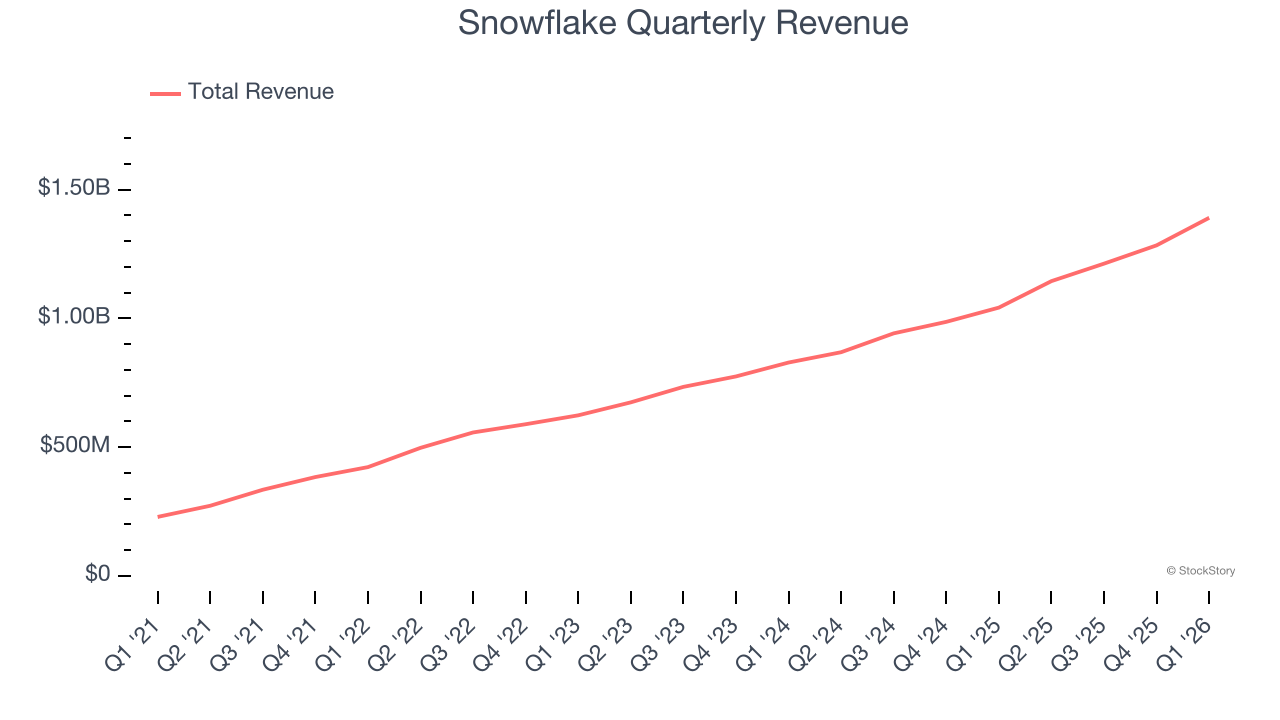
Long-term growth is the most important, but within software, a half-decade historical view may miss new innovations or demand cycles. Snowflake’s annualized revenue growth of 29.3% over the last two years is below its five-year trend, but we still think the results suggest healthy demand. 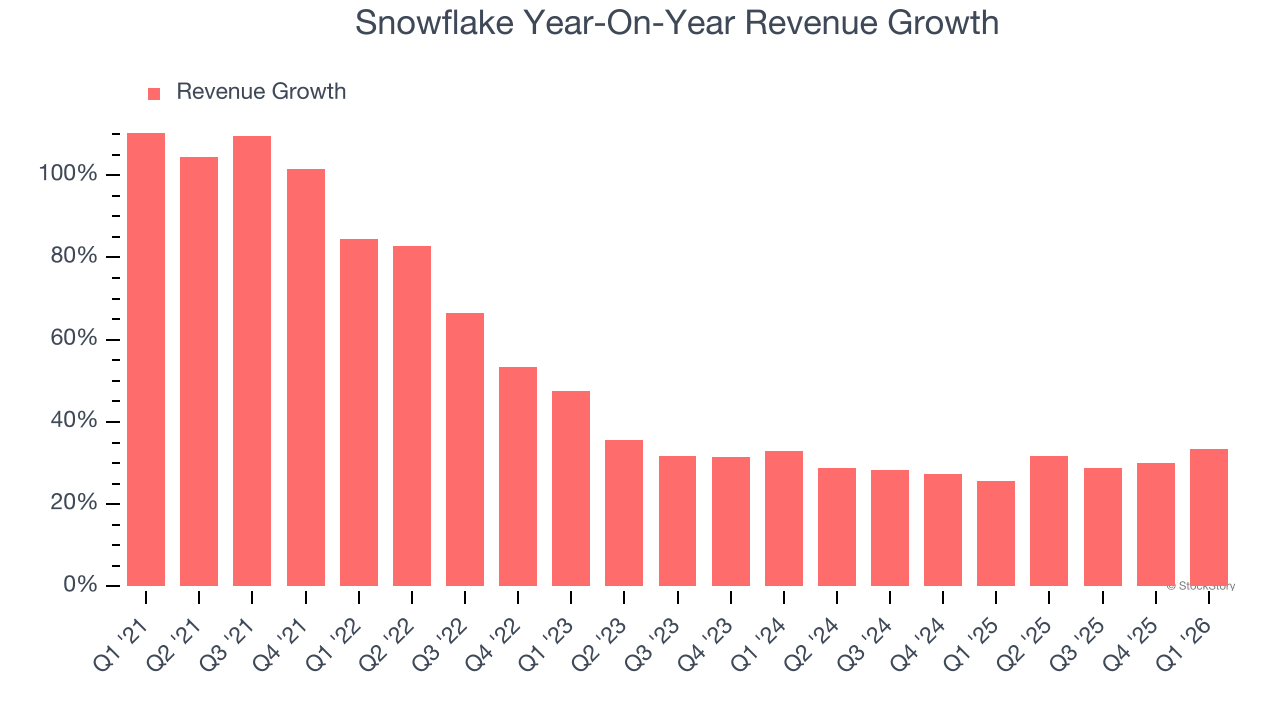
This quarter, Snowflake reported wonderful year-on-year revenue growth of 33.5%, and its $1.39 billion of revenue exceeded Wall Street’s estimates by 5%.
Looking ahead, sell-side analysts expect revenue to grow 24.2% over the next 12 months, a deceleration versus the last two years. Still, this projection is commendable and suggests the market sees success for its products and services.
WHILE YOU’RE HERE: The Next Palantir? One satellite company captures images of every point on Earth. Every single day. The Pentagon wants it. Hedge funds are using it to beat earnings. You’ve probably never heard of it.
This is what the early days of Palantir looked like before it became a $437 billion giant. Same playbook. Different technology. If you missed Palantir, you need to see this. Claim The Stock Ticker for Free HERE.
Billings
Billings is a non-GAAP metric that is often called “cash revenue” because it shows how much money the company has collected from customers in a certain period. This is different from revenue, which must be recognized in pieces over the length of a contract.
Snowflake’s billings punched in at $862.4 million in Q1, and over the last four quarters, its growth was fantastic as it averaged 30% year-on-year increases. This performance aligned with its total sales growth, indicating robust customer demand. The high level of cash collected from customers also enhances liquidity and provides a solid foundation for future investments and growth. 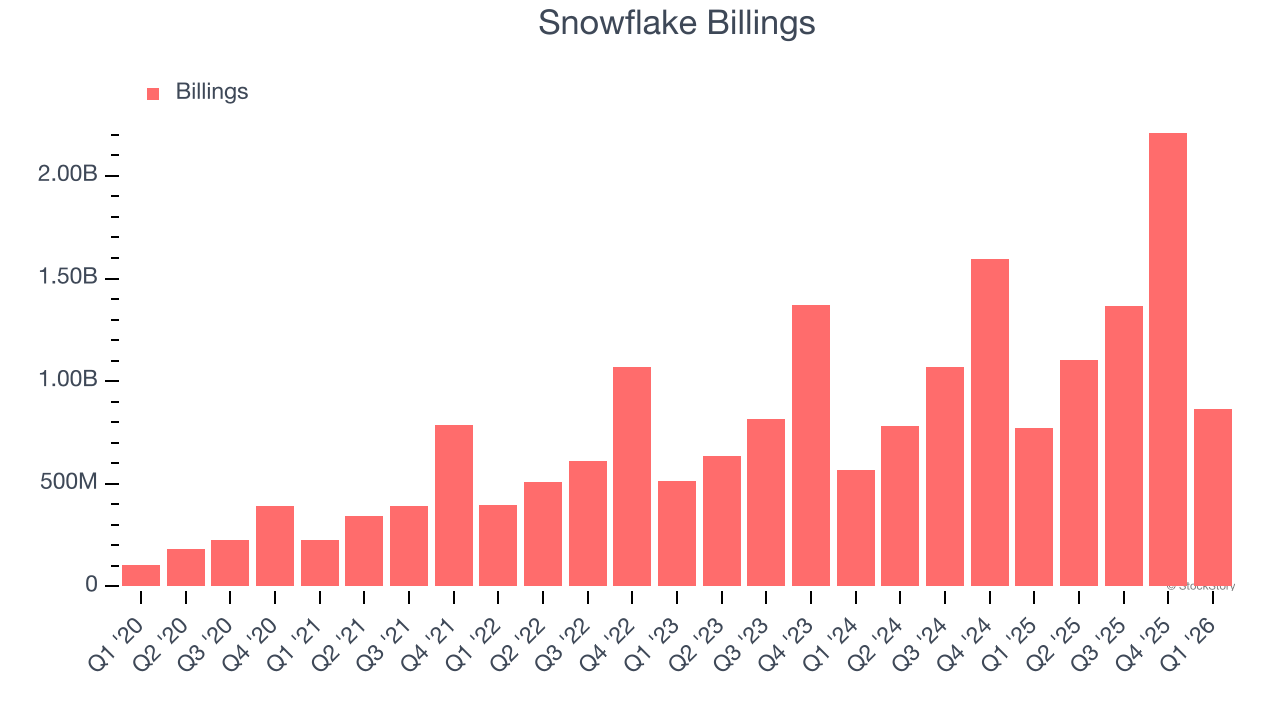
Customer Retention
One of the best parts about the software-as-a-service business model (and a reason why they trade at high valuation multiples) is that customers typically spend more on a company’s products and services over time.
Snowflake’s net revenue retention rate, a key performance metric measuring how much money existing customers from a year ago are spending today, was 126% in Q1. This means Snowflake would’ve grown its revenue by 26% even if it didn’t win any new customers over the last 12 months.
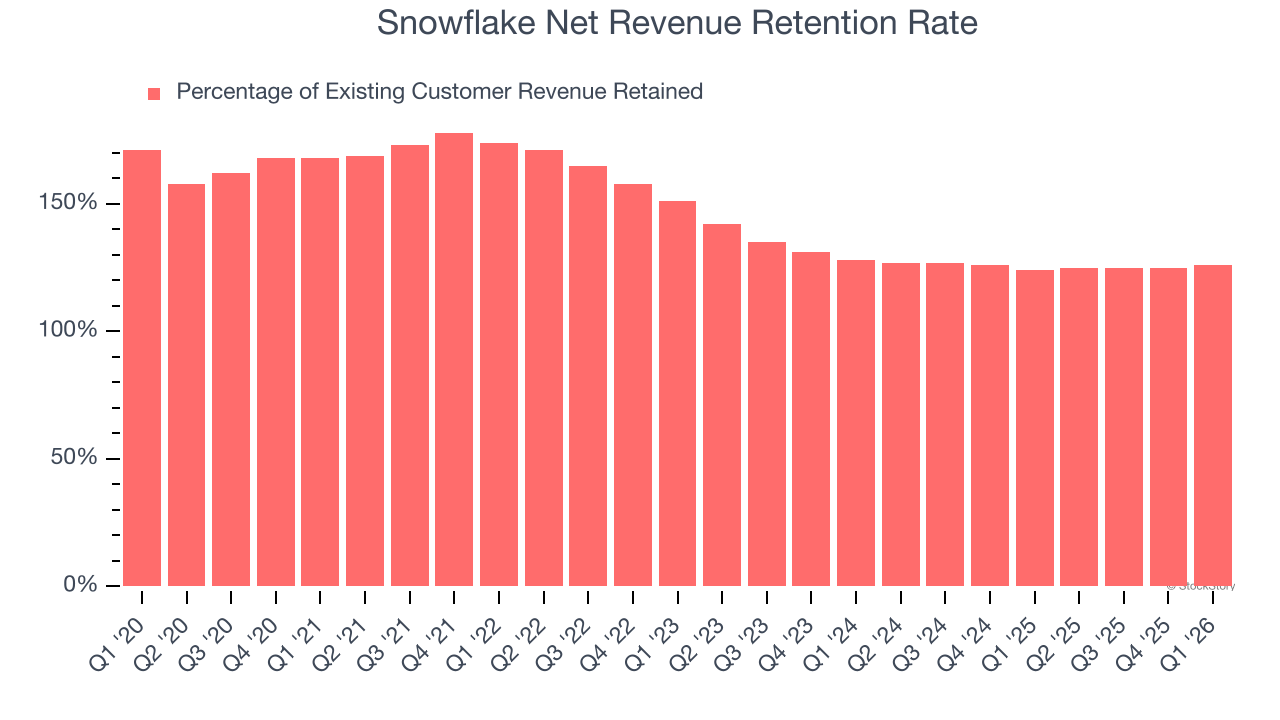
Snowflake has an excellent net retention rate. This data point proves that the company sells useful products, and we can see that its customers are satisfied and increasing their usage over time.
Key Takeaways from Snowflake’s Q1 Results
We enjoyed seeing Snowflake beat analysts’ revenue expectations this quarter. On the other hand, its billings missed. Overall, this was a weaker quarter. The stock traded up 29.1% to $227.36 immediately following the results.
So should you invest in Snowflake right now? What happened in the latest quarter matters, but not as much as longer-term business quality and valuation, when deciding whether to invest in this stock. We cover that in our actionable full research report which you can read here (it’s free).