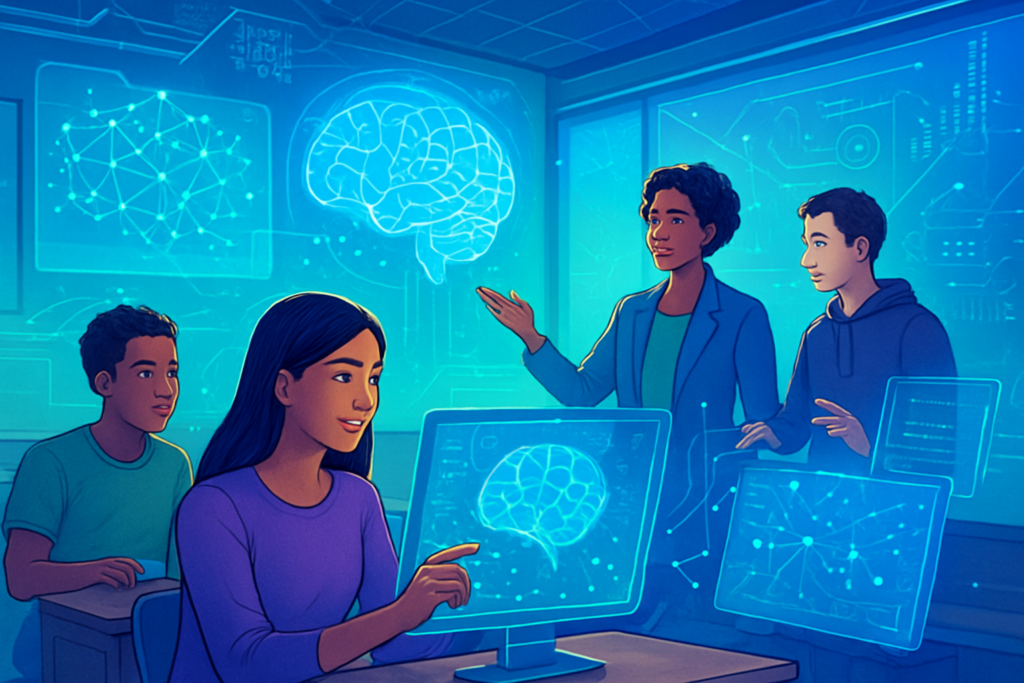
As artificial intelligence rapidly reshapes industries and daily life, the imperative for widespread AI literacy has never been more critical. In a forward-thinking move, Penn State Lehigh Valley is set to launch its comprehensive 2026 AI Training Series for faculty and staff, a strategic initiative designed to embed AI understanding, ethical practices, and innovative integration into the very fabric of higher education. This program, slated for the Spring 2026 semester, represents a proactive step towards equipping educators and academic professionals with the essential tools to navigate, utilize, and teach in an an AI-driven world, underscoring the profound and immediate significance of AI fluency in preparing both institutions and students for the future.
The series directly addresses the transformative impact of AI on learning, research, and administrative functions. By empowering its academic community, Penn State Lehigh Valley aims to not only adapt to the changing educational landscape but to lead in fostering an environment where AI is understood, leveraged responsibly, and integrated thoughtfully. This initiative highlights a growing recognition within academia that AI literacy is no longer an optional skill but a foundational competency essential for maintaining academic integrity, driving innovation, and ensuring that future generations are adequately prepared for a workforce increasingly shaped by intelligent technologies.
Cultivating AI Acumen: A Deep Dive into Penn State's Strategic Framework
The Penn State Lehigh Valley 2026 AI Training Series is a meticulously crafted program, offering eight free sessions accessible both in-person and virtually, and spearheaded by experienced Penn State Lehigh Valley faculty and staff. The core mission is to cultivate a robust understanding of AI, moving beyond superficial awareness to practical application and ethical stewardship. Key goals include empowering participants with essential AI literacy, fostering innovative teaching methodologies that integrate AI, alleviating apprehension surrounding AI instruction, and building an AI-aware community that prepares students for future careers.
Technically, the series delves into critical areas, providing actionable strategies for responsible AI integration. Sessions cover vital topics such as "Critical AI Literacy as a Foundation for Academic Integrity," "Designing For Integrity: Building AI-Resistant Learning Environments," "AI Literacy and Digital Privacy for Educators," and "From Prompt to Proof: Pedagogy for AI Literacy." This curriculum goes beyond mere tool usage, emphasizing pedagogical decisions within an AI-influenced environment, safeguarding student data, understanding privacy risks, and establishing clear expectations for responsible AI usage. This comprehensive approach differentiates it from more ad-hoc workshops, positioning it as a strategic institutional imperative rather than a series of isolated training events. While previous educational approaches might have focused on specific software or tools, this series addresses the broader conceptual, ethical, and pedagogical implications of AI, aiming for a deeper, more systemic integration of AI literacy. Initial reactions from the broader AI research community and industry experts generally laud such proactive educational initiatives, recognizing them as crucial for bridging the gap between rapid AI advancements and societal readiness, particularly within academic institutions tasked with shaping future workforces.
The Indirect Dividend: How Academic AI Literacy Fuels the Tech Industry
While the Penn State Lehigh Valley initiative directly targets faculty and staff, its ripple effects extend far beyond the campus, indirectly benefiting AI companies, tech giants like Alphabet (NASDAQ: GOOGL), Microsoft (NASDAQ: MSFT), and Amazon (NASDAQ: AMZN), and a myriad of innovative startups. A more AI-literate academic environment serves as a vital pipeline, enriching the talent pool with graduates who possess not only proficiency in AI tools but also a nuanced understanding of their ethical implications and broader business impact. This translates into a workforce that is job-ready, requiring less foundational training and enabling companies to onboard talent faster and more cost-effectively.
Furthermore, increased AI literacy in academia fosters enhanced collaboration and research opportunities. Universities with AI-savvy faculty are better positioned to engage in meaningful partnerships with industry, influencing curricula to remain relevant to market demands and undertaking joint research initiatives that drive innovation and accelerate product development cycles for companies. The widespread adoption and thoughtful integration of AI tools within academic settings also validate these technologies, creating a more receptive environment for their broader integration across various sectors. This familiarity reduces resistance to change, accelerating the pace at which AI solutions are embraced by the future workforce.
The competitive implications for major AI labs and tech companies are significant. Organizations with an AI-literate workforce are better equipped to accelerate innovation, leveraging employees who can effectively collaborate with AI systems, interpret AI-driven insights, and apply human judgment creatively. This leads to enhanced productivity, smarter data-driven decision-making, and increased operational efficiency, with some reports indicating a 20-25% increase in operational efficiency where AI skills are embedded. Companies that prioritize AI literacy are more adaptable to rapid technological advancements, ensuring resilience against disruption and positioning themselves for market leadership and higher return on investment (ROI) in a fiercely competitive landscape.
A Societal Imperative: AI Literacy in the Broader Landscape
The Penn State Lehigh Valley 2026 AI Training Series is more than an institutional offering; it represents a critical response to the broader societal imperative for AI literacy in an era where artificial intelligence is fundamentally reshaping human interaction, economic structures, and educational paradigms. AI is no longer a specialized domain but a pervasive force, demanding that individuals across all sectors possess the ability to understand, critically evaluate, and interact with AI systems safely and effectively. This shift underscores AI literacy's transition from a niche skill to a core competency essential for responsible and equitable AI adoption.
The societal impacts of AI are profound, ranging from redefining how we acquire information and knowledge to transforming global labor markets, necessitating widespread retraining and reskilling. AI promises enhanced productivity and innovation, capable of amplifying human intelligence and personalizing education to an unprecedented degree. However, without adequate literacy and ethical frameworks, the widespread adoption of AI presents significant concerns. The digital divide risks deepening existing inequalities, with disparities in access to technology and the requisite digital literacy leaving vulnerable populations susceptible to data exploitation and surveillance.
Ethical challenges are equally pressing, including algorithmic bias stemming from biased training data, critical data privacy risks in AI-driven programs, and a lack of transparency and accountability in "black box" algorithms. Insufficient AI literacy can also lead to the spread of misinformation and inappropriate use of AI systems, alongside the potential for deskilling educators and depersonalizing learning experiences. Penn State's initiatives, including the "AI Toolbox" and broader university-wide commitments to AI education, align seamlessly with global trends for responsible AI development. International bodies like the European Commission and OECD are actively developing AI Literacy Frameworks, while tech giants such as OpenAI (private), Google (NASDAQ: GOOGL), and Microsoft (NASDAQ: MSFT) are investing heavily in teacher training and professional AI literacy programs. These collaborative efforts, involving governments, businesses, and academic institutions, are crucial for setting ethical guardrails, fostering digital trust, and realizing AI's potential for a sustainable and equitable future.
Horizon of Understanding: Future Developments in AI Literacy
Looking ahead, the landscape of AI literacy and education is set for profound transformations, driven by both technological advancements and evolving societal needs. In the near term (1-5 years), we can expect to see an accelerated integration of personalized and adaptive learning experiences, where AI-powered tutoring systems and content generation tools become commonplace, tailoring educational pathways to individual student needs. The automation of administrative tasks for educators, from grading to lesson planning, will free up valuable time for more focused student interaction. Generative AI will become a staple for creating diverse educational content, while real-time feedback and assessment systems will provide continuous insights into student performance. Critically, AI literacy will gain increasing traction in K-12 education, with a growing emphasis on teaching safe and effective AI use from an early age, alongside robust professional development programs for educators.
Longer-term developments (beyond 5 years) envision AI education as a fundamental part of the overall educational infrastructure, embedded across all disciplines rather than confined to computer science. Lifelong learning will become the norm, driven by the rapid pace of AI innovation. The focus will shift towards developing "AI fluency"—the ability to effectively collaborate with AI as a "teammate," blending AI literacy with human judgment, creativity, and critical thinking. This will involve a holistic understanding of AI's ethical, social, and societal roles, including its implications for rights and democracy. Custom AI tools, tailored to specific learning contexts, and advanced AI-humanoid interactions capable of sensing student stress levels are also on the horizon.
However, significant challenges must be addressed. Ensuring equity and access to AI technologies and literacy programs remains paramount to prevent widening the digital divide. Comprehensive teacher training and support are crucial to build confidence and competence among educators. Developing coherent AI literacy curricula, integrating AI responsibly into existing subjects, and navigating complex ethical concerns like data privacy, algorithmic bias, academic integrity, and potential over-reliance on AI are ongoing hurdles. Experts universally predict that AI literacy will evolve into a core competency for navigating an AI-integrated world, necessitating system-wide training across all professional sectors. The emphasis will be on AI as a collaborative teammate, requiring a continuous evolution of teaching strategies and a strong focus on ethical AI, with teachers playing a central role in shaping its pedagogical use.
A New Era of Learning: The Enduring Significance of AI Literacy
The Penn State Lehigh Valley 2026 AI Training Series stands as a pivotal example of proactive engagement with the burgeoning AI era, encapsulating a crucial shift in educational philosophy. Its significance lies in recognizing AI literacy not as an academic add-on but as a fundamental pillar for future readiness. The key takeaways from this development are clear: institutions must prioritize comprehensive AI education for their faculty and staff to effectively mentor the next generation; ethical considerations must be woven into every aspect of AI integration; and a collaborative approach between academia, industry, and policymakers is essential to harness AI's potential responsibly.
This initiative marks a significant milestone in the history of AI education, moving beyond isolated technical training to a holistic, pedagogical, and ethical framework. It sets a precedent for how universities can strategically prepare their communities for a world increasingly shaped by intelligent systems. The long-term impact will be seen in a more AI-literate workforce, enhanced academic integrity, and a generation of students better equipped to innovate and navigate complex technological landscapes.
In the coming weeks and months, the rollout and initial feedback from similar programs will be crucial to watch. The development of standardized AI literacy frameworks, the evolution of AI tools specifically designed for educational contexts, and ongoing policy discussions around AI ethics and regulation will further define this critical domain. Penn State Lehigh Valley's foresight offers a compelling blueprint for how educational institutions can not only adapt to the AI revolution but actively lead in shaping a future where AI serves as a powerful force for informed, ethical, and equitable progress.
This content is intended for informational purposes only and represents analysis of current AI developments.
TokenRing AI delivers enterprise-grade solutions for multi-agent AI workflow orchestration, AI-powered development tools, and seamless remote collaboration platforms.
For more information, visit https://www.tokenring.ai/.